
A lot of North Texas homeowners make the same reasonable assumption. They walk the yard, look up at a big live oak, notice a limb hanging low over the driveway or shading a bed too heavily, and think, “I should trim that this weekend.”
That instinct makes sense. Oaks are valuable, beautiful, and often the anchor of the whole property. But with oak trees, a simple cut isn't always simple. In Dallas-Fort Worth, timing can be the difference between routine maintenance and exposing a healthy tree to a disease that can kill it.
I've seen homeowners do almost everything else right. They water in drought, mulch properly, and even support root health with services like deep root fertilization for trees. Then one badly timed pruning cut creates a problem that good maintenance can't undo.
Inquiries about the oak tree pruning best time often seek a specific date. What they really need is a risk calendar. Oaks don't care what's convenient on your Saturday schedule. They respond to biology, temperature, insect activity, and wound timing.
Your Oak Tree's Health Depends on Pruning at the Right Time
A mature oak changes how a property feels. It cools the yard, frames the house, and gives the grounds a sense of age that new plantings can't fake. That's why homeowners get nervous when they notice deadwood, a rubbing limb, or a branch starting to crowd the roofline.
The trouble starts when pruning gets treated like routine shrub trimming. It isn't. You can shear hollies whenever they need shaping. You can't approach a North Texas oak with that same mindset.
A homeowner might see one low limb and think the risk is only about making a clean cut. In reality, the first question isn't “Where should the cut go?” It's “Should this tree be cut at all today?”
A common mistake that feels harmless
Most bad outcomes begin with a small decision that feels responsible. A branch looks damaged after wind. Limbs seem dense in spring. A handyman says he can “open it up” quickly with a pole saw. The tree looks strong, so the job feels low-stakes.
It's not low-stakes in DFW.
For oaks here, the calendar's importance is often underestimated. The safest period for significant pruning is the dormant season. Outside that window, fresh cuts can create a serious exposure point. By the time leaf symptoms show up, the mistake is already behind you.
Practical rule: If you're unsure whether a cut is worth making, wait before you cut. A delayed cosmetic prune is usually harmless. A badly timed oak prune may not be reversible.
What concerned homeowners usually want to know
Individuals aren't asking for complicated arboriculture. They want clear answers:
- When is it safest to prune? During dormancy, not during active disease pressure.
- Can small cuts wait? In most cases, yes.
- What about storm damage? Safety work can't always wait, but it has to be handled differently.
- How often should mature oaks be pruned? On a long cycle, not constantly.
That last point surprises people. Oaks usually don't need frequent cutting. They need disciplined, strategic pruning done at the right time.
Why Pruning at the Wrong Time Can Be a Death Sentence for Oaks
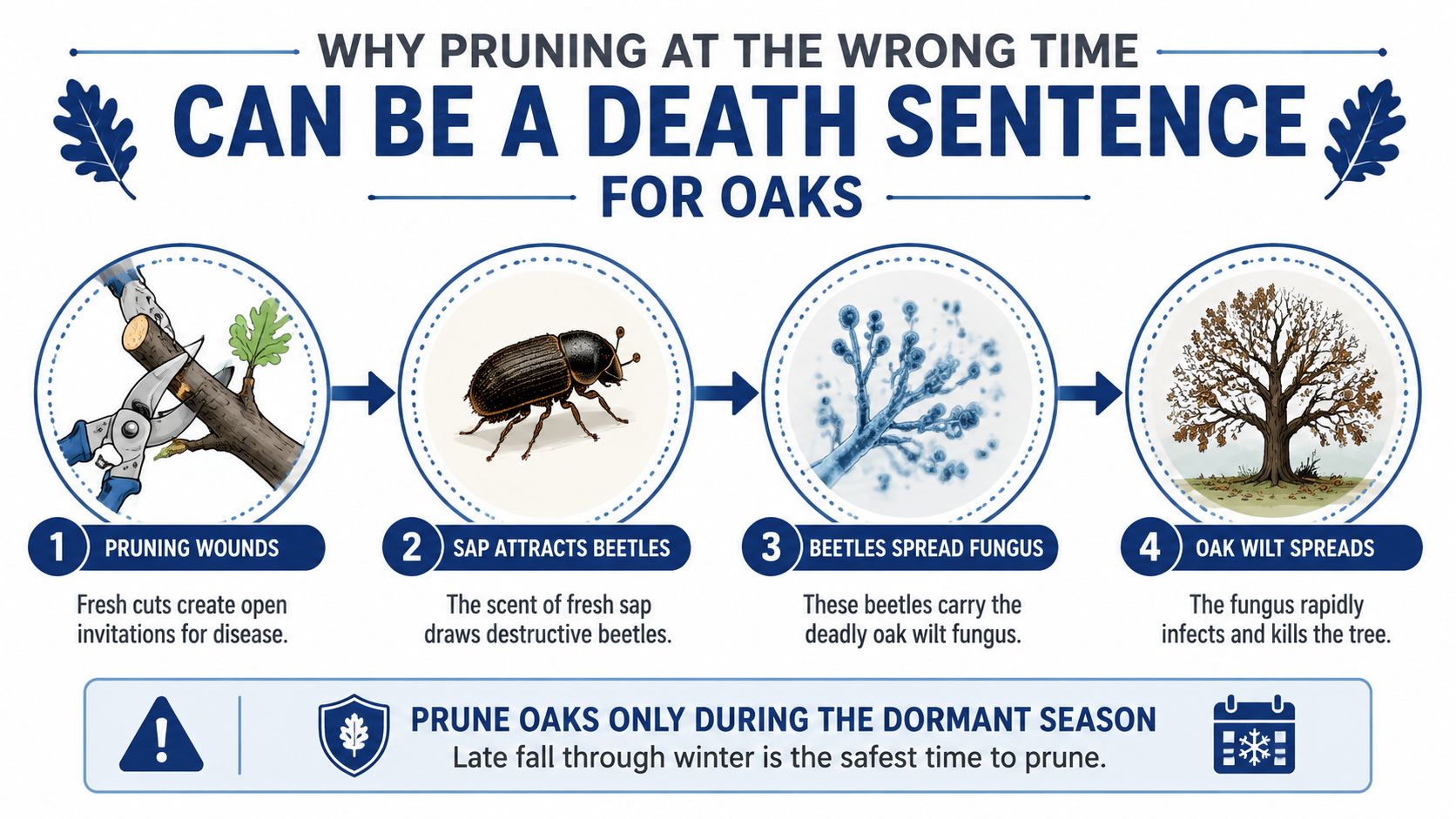
A fresh pruning cut on an oak is like an open wound. In North Texas, that wound can broadcast exactly the signal you don't want to send.
Sap-feeding beetles are attracted to fresh wounds. If those beetles have contacted infected material, they can carry the oak wilt pathogen to a healthy tree. That's why pruning timing isn't just a maintenance preference. It's disease prevention.
Think of beetles like dirty syringes
The easiest way to understand oak wilt is to stop thinking about pruning as woodworking and start thinking about it as wound care.
A fresh cut releases sap and scent. That attracts beetles the way a porch light attracts moths. If those beetles are carrying infectious fungal material, your healthy oak becomes the next stop. The cut itself didn't kill the tree. The cut invited the carrier.
That's why the oak tree pruning best time is so narrow compared with many other species. You're not only trying to reduce stress on the tree. You're trying to avoid creating an entry point when disease pressure is active.
The North Texas timing problem
In North Texas, where oak wilt is a real concern, the best practice for live oaks is to prune only from November through February, according to Davey Tree's guidance on pruning oak trees. That recommendation lines up with the broader dormant-season window used by arborists because the tree is less active and the risk tied to fresh wounds is lower.
Here's what homeowners often miss. Spring feels like the right time to tidy an outdoor space. Beds are being refreshed, turf is greening up, and everything is growing. For oaks, that instinct can be exactly backward.
When the tree is active and insects are active, every unnecessary cut raises the stakes.
Why this disease feels so unfair
Oak wilt is brutal because the pruning decision often looks normal at the time. The branch may even have needed removal. The homeowner wasn't neglectful. The job may have been done neatly. But neat cuts made in the wrong season are still risky cuts.
That's also why broad horticultural advice can be dangerous. A generic “prune in spring for shape” tip may be harmless for other plants, but it can be the wrong advice for an oak in DFW. If a tree already shows suspicious symptoms, it's smart to pause any cutting and get help with tree disease treatment before anyone opens the canopy further.
Fresh sap is an invitation. In oak country, timing determines who answers it.
The Official North Texas Oak Tree Pruning Calendar
Homeowners need a calendar they can put into practice. Not “winter is usually better.” Not “avoid warm weather if possible.” A real operating schedule.
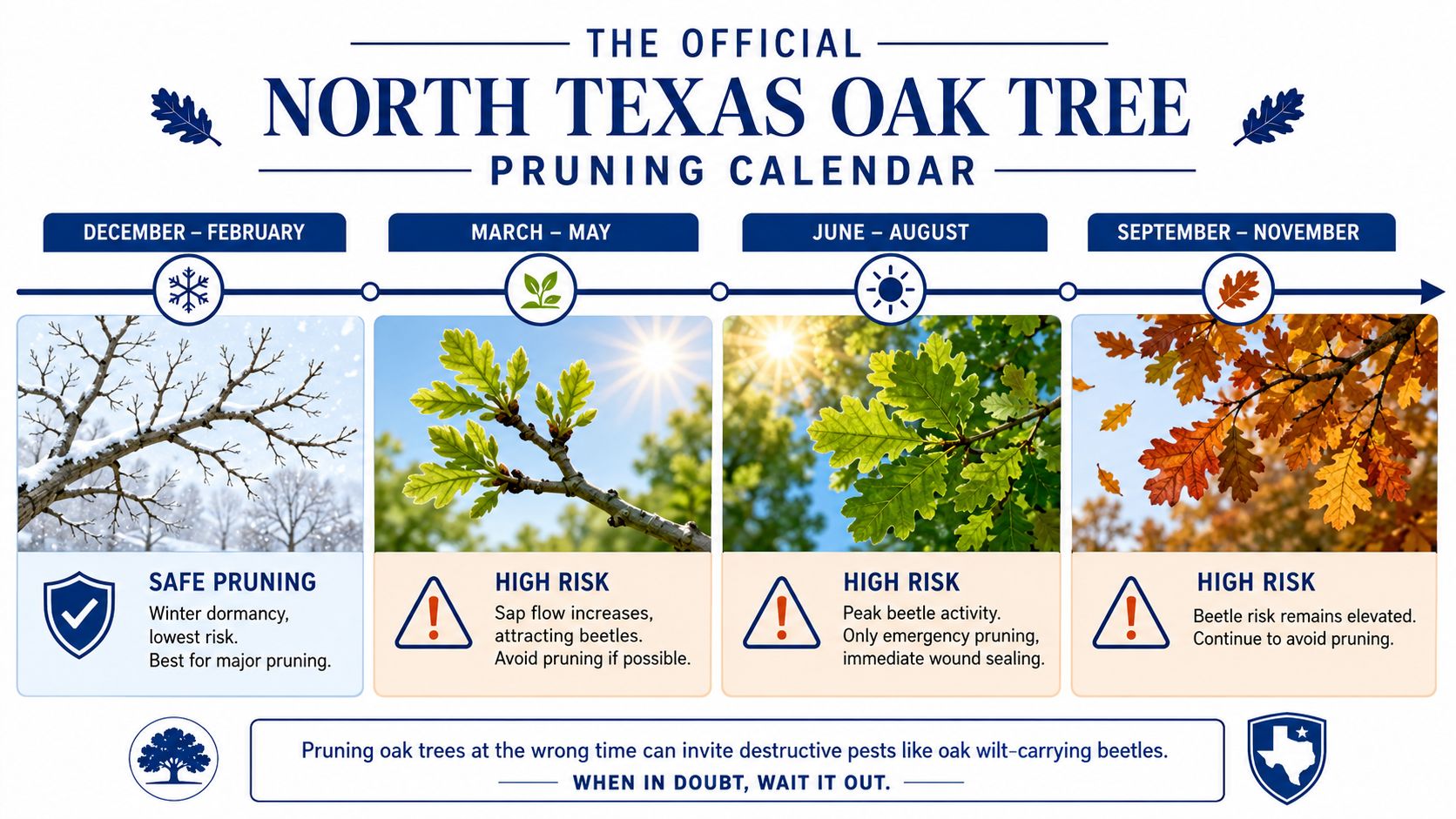
For North Texas oaks, the safest period for major pruning is November 15 through March 31. That timing is stated in the verified guidance above, and the same guidance says arborists advise avoiding pruning from February through June because beetle activity and oak wilt transmission risk peak in that span.
Green zone for planned pruning
If you want to schedule structural work, clearance pruning, deadwood removal, or canopy correction, target the dormant season.
A simple way to think about the green zone is this:
| Period | Risk level | Best use |
|---|---|---|
| November 15 through March 31 | Safest | Major pruning, structural correction, routine maintenance |
This is when the tree is dormant and pruning wounds are less likely to draw the wrong kind of attention. It's also the window most professionals in Texas follow for live oak maintenance. The verified data states that 95% of certified tree care professionals in Texas adhere to this schedule for live oak work.
Red zone for avoid-unless-for-safety work
North Texas homeowners need to be especially careful once spring pressure starts building. Verified guidance states the high-risk period for oak wilt infection is April 15 through July 15, when beetles are most active and fresh spore mats are abundant. The same verified data also says the Texas Oak Wilt Partnership advises never trimming oak trees in spring.
For practical yard decisions, treat spring and early summer as your no-routine-pruning season.
- Avoid cosmetic cuts: Don't thin for appearance, raise the canopy for convenience, or “clean up” live growth.
- Avoid contractor add-ons: If a crew is already on site doing other outdoor projects, don't let them tack on oak trimming just because the truck is there.
- Avoid overconfidence: A small wound can still be a meaningful wound.
The verified data is blunt about timing. It states that in urban areas, 88% of oak tree deaths are linked to improper pruning timing. That's why this schedule isn't optional housekeeping. It's risk control.
Yellow zone for judgment and patience
The months at the edges of dormancy create confusion because homeowners see cooler weather and assume that means green light. At such times, patience matters.
Field judgment: If the work can wait until the full dormant window, let it wait. Oaks reward restraint.
Use this simplified North Texas framework:
- Green zone: November 15 through March 31 for planned pruning
- Red zone: April 15 through July 15 for no routine cuts
- Yellow zone: The shoulder periods where homeowners should still avoid casual trimming and default to waiting unless a qualified arborist says the risk is acceptable
That framework removes the guesswork. If the branch is annoying but not dangerous, schedule it in the green zone. If it's dangerous, handle it as an emergency, not as regular pruning.
Essential Pruning Cuts for a Healthy Oak Tree
Once timing is right, the next question is what to cut. Good oak pruning isn't about making the tree smaller. It's about making the tree safer, stronger, and less prone to future failure.
Health cuts and safety cuts
Start with the least controversial work.
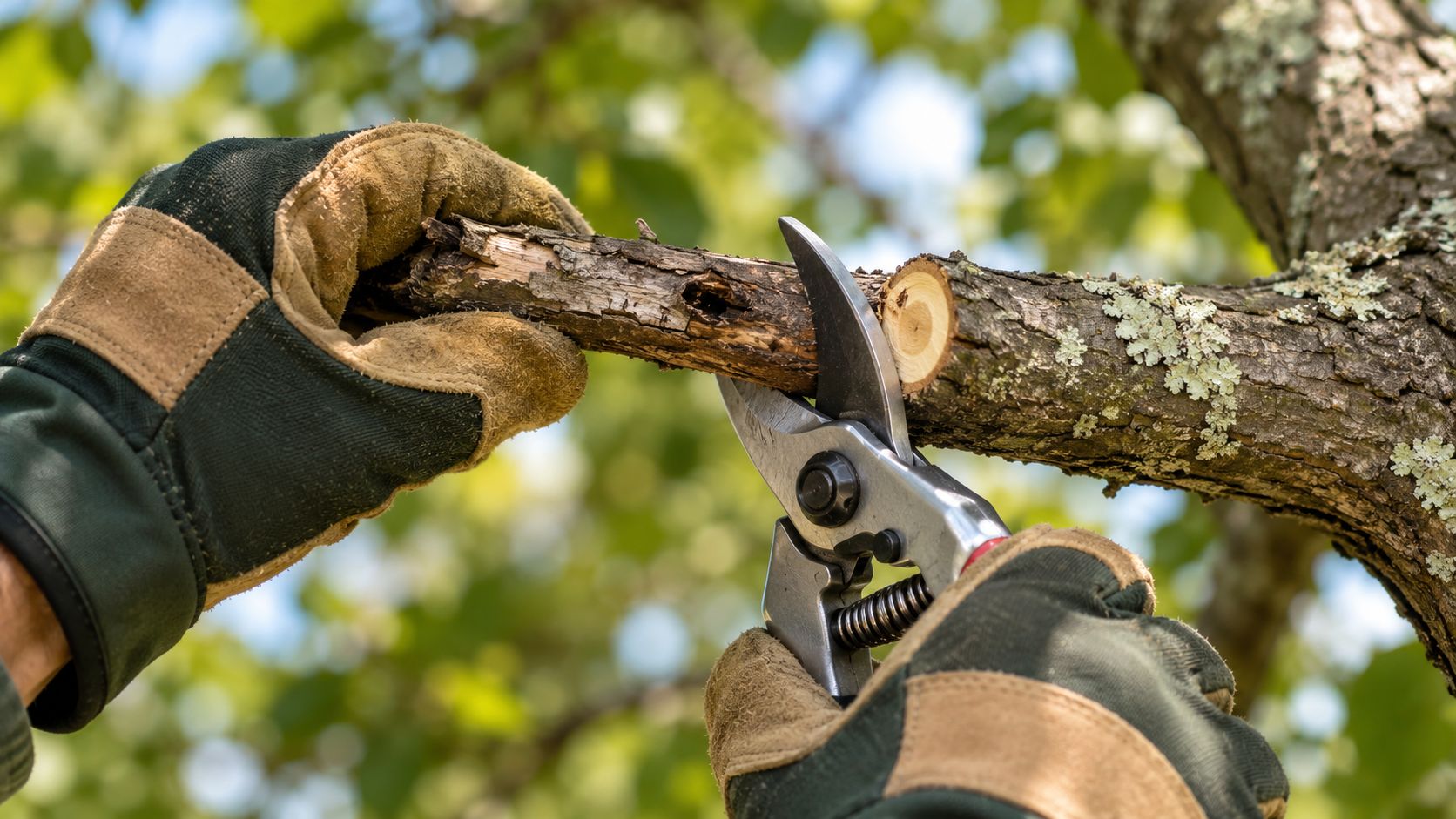
Dead, dying, or broken branches are the first candidates. They don't help the tree, and they can fail without warning. Branches that rub against each other also deserve attention because that repeated friction strips bark and creates ongoing injury.
Then there are clearance issues. Limbs scraping the roof, blocking sightlines, or hanging over a walkway may need selective reduction or removal. The goal isn't to hollow out the tree. The goal is to solve a defined problem with the fewest cuts possible.
Structure matters more than appearance
Mature oaks should be pruned on a 3 to 5-year cycle according to the verified data. That long interval tells you something important. These trees don't need constant shaping. They need occasional, disciplined correction.
The same verified guidance says to limit routine foliage removal to no more than 5% annually, and to cap heavier pruning done on that longer cycle at 15% to 20% of total crown volume, with certified arborists often using a conservative 15% threshold. That's a guardrail against over-pruning.
A good pruning plan avoids the common mistakes homeowners hear from untrained crews:
- Lion-tailing: stripping interior growth and leaving foliage only at branch ends
- Topping: cutting back major leaders to stubs
- Excessive thinning: removing so much canopy that the tree loses natural form
- Random interior cutting: making wounds without improving structure
The best pruning job often looks subtle from the street. The tree still looks like itself, just safer and better balanced.
How to judge whether a contractor is overcutting
If you want a quick gut check, use this table:
| What you see | Likely quality |
|---|---|
| The canopy still looks full and natural | Usually a good sign |
| Only problem limbs were targeted | Usually a good sign |
| Large interior voids after pruning | Warning sign |
| Stub cuts and flat-topped limbs | Bad practice |
For young oaks, the verified data is even stricter. Juvenile trees under three years old should be pruned only for dead or dying branches while they establish. That surprises homeowners who want to “train” a young tree aggressively. With oaks, restraint usually wins.
If a cut is larger than a broomstick or thumb diameter in an oak-rich, oak-wilt-affected area, the verified data says that cut surface should be coated with pruning paint or latex paint. That guidance applies to oak risk management, not to broad pruning of every species in the yard.
Handling Storm Damage and Emergency Pruning Exceptions
Storm damage doesn't wait for the safe season. In North Texas, that's the moment homeowners panic. A split limb is hanging over the driveway. A branch is resting on the fence. The usual advice says don't prune, but the hazard is right there.
In that situation, safety comes first. The key is understanding the difference between emergency hazard removal and ordinary pruning.
When a cut can't wait
If a limb is broken and could injure someone or damage property, remove the hazard. Don't leave a dangerous branch in place just to obey the calendar.
The verified guidance allows emergency pruning year-round for safety hazards. It also adds an important nuance. While most guides say avoid pruning from April to July, there's a practical exception for immediate safety cuts when beetles are inactive, which can occur when air temperatures stay below 60°F for six consecutive days or drop below 40°F, as noted in this arborist discussion of emergency oak trimming conditions.
That temperature rule doesn't turn spring into pruning season. It helps homeowners understand when a necessary safety cut may carry less risk.
A simple emergency decision process
Use this order of operations:
Assess the hazard
If the limb threatens people, vehicles, power access, rooflines, or entry paths, it's a safety issue.Make the smallest cut that solves the danger
Don't turn storm response into a full canopy cleanup. Remove the failed or unstable portion only.Keep the cut clean
Ragged tears should be corrected to a proper pruning cut so the tree isn't left with shredded wood.Seal if the emergency cut occurs in the high-risk period
The verified data states that emergency cuts made during the high-risk window should be immediately covered with tree wound paint or latex-based paint to block beetle entry.
What not to do after a storm
Homeowners often make the second mistake after the first break. They already have a saw out, so they keep going. They remove extra limbs for balance, thin the canopy “while they're up there,” or let a general cleanup crew reshape the tree.
Don't do that.
Handle the hazard. Stop there. Schedule any additional pruning in the safe season.
If the branch requires a ladder, chainsaw work overhead, or judgment about load and balance, the emergency is no longer a DIY cleanup problem. It's a technical tree risk problem.
DIY Pruning vs Hiring Rosewood Landscape Group
Some oak work is reasonable for a homeowner. Some of it absolutely isn't. The line isn't only about confidence. It's about disease control, cut quality, and personal safety.
A small dead twig you can reach from the ground in the safe season is one thing. A mature oak over a roof is another category entirely.
What a homeowner can handle
DIY pruning makes sense when all of these are true:
- Ground access only: No ladder needed
- Small target: Minor deadwood or a very small branch
- Safe timing: Work is done during the dormant season
- Clear purpose: You know exactly why the branch is being removed
Hand pruners, a pruning saw, gloves, and patience are enough for minor work. The second the job requires climbing, balancing, or guessing about branch weight, the risk shifts fast.
What professionals do differently
Older advice often focused heavily on painting every cut. The verified data shows a more current nuance. Modern arborist consensus prioritizes tool sterilization between trees, because wound paint can trap moisture and slow natural healing in some contexts, as described in this oak trimming guidance discussing sterilization versus wound paint.
That distinction matters. A homeowner may own a sharp saw. A professional should bring a disease-prevention protocol.

Here's the comparison:
| DIY approach | Professional approach |
|---|---|
| One saw used all day | Tools cleaned and managed between trees |
| Visual guess on what to remove | Structural assessment before cutting |
| Ladder and weekend timing | Scheduled work in the safest pruning window |
| Focus on convenience | Focus on tree health, safety, and disease risk |
For larger trees, proper pruning is less about cutting skill than about judgment. Which branch should stay because it carries future structure? Which limb can be reduced without creating a bigger wound later? Which storm-damaged branch is under tension and dangerous to release?
Those aren't homeowner questions. Those are arborist questions.
If you're comparing options for mature oaks, overhead limbs, or risk-sensitive timing, it makes sense to start with a professional tree trimming service in Dallas rather than treating a valuable shade tree like a weekend experiment.
A bad pruning job can cost more than a professional visit. Oaks take years to build structure and very little time to be compromised.
The biggest mistake homeowners make isn't calling for help too soon. It's waiting until someone with a ladder and a chainsaw has already made the wrong cuts.
If you want help protecting a mature oak without guessing at timing, cut selection, or disease risk, contact Rosewood Landscape Group. Their North Texas team handles grounds care and tree care with the local context these decisions require, especially when storm damage, seasonal timing, and property safety all intersect.
Related posts
8 Best Shrubs for North Texas Landscapes in 2026

Permeable Paver Installation: A DFW Homeowner’s Guide
Zoysia Grass Fungus: Identify, Treat & Prevent in 2026
How to Improve Soil Quality: Easy Ways to Improve Soil
Take All Root Rot: Diagnose & Treat Your Lawn