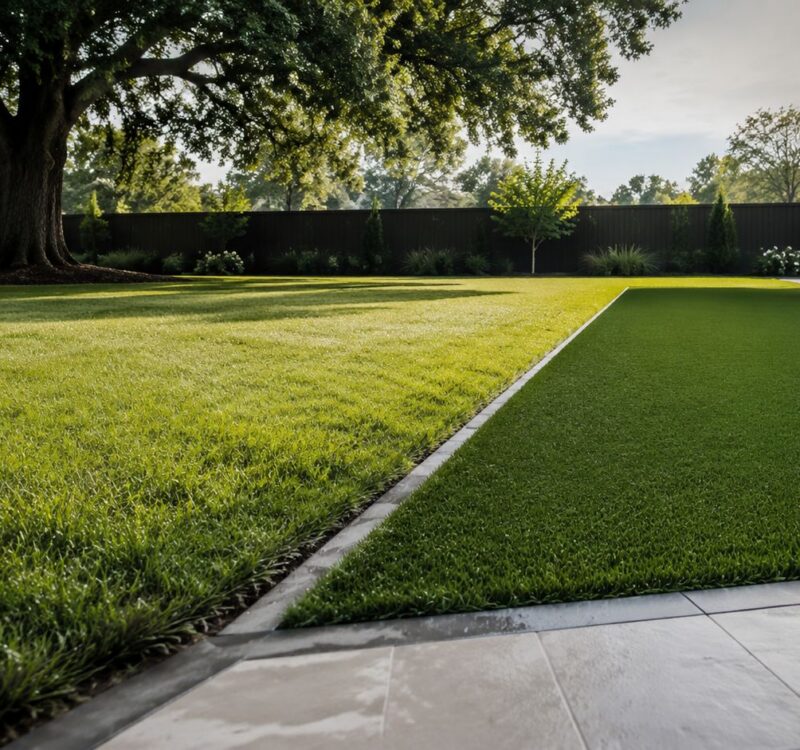
You're looking at a lawn that looked fine last week, then after a warm rain, the zoysia starts showing odd rings, brown smudges, or patchy straw-colored areas that don't match the rest of the yard. Most homeowners try the usual fixes first, more water, less water, another mow, maybe a quick fertilizer pass, but those band-aids often overlook the core issue. In North Texas, zoysia grass fungus is often tangled up with drainage, shade, and irrigation timing, so the visible damage can fool you if you only look at color and ignore the pattern.
This guide breaks the problem into practical decisions, starting with what a real fungal outbreak looks like, then separating it from site stress that just looks similar. You'll also see why timing matters so much in our climate, especially when cool, wet stretches line up with fertilization or prolonged leaf wetness. If you need broader lawn care support in Dallas, the local service overview is here.
Introduction to Zoysia Grass Fungus Problems
A North Texas homeowner usually notices the problem the same way, walking out after a summer storm and spotting a few ugly patches that weren't there before. One ring may look dull and thin, another may have a yellow edge, and a shaded corner might seem to fade faster than the rest of the yard. The panic comes from the fact that zoysia is supposed to look uniform, so any break in that carpet-like surface feels serious.
The first mistake is assuming every brown spot is the same disease. That's how people end up treating a moisture problem like a fungus, or blaming fungus when the turf is really reacting to shade, compaction, or an uneven sprinkler pattern. The second mistake is waiting for the lawn to “bounce back” on its own, because some fungal issues improve, while others keep spreading if the underlying conditions stay wet and cool.
Practical rule: if the pattern is patchy, shaped, or ring-like, treat it differently than uniform dormancy or drought stress.
This matters most in North Texas, where storms, tree shade, and irrigation habits can all stack up in the same yard. If the patches keep returning in the same spots, that's a clue the site is part of the story, not just the fungus.
Understanding Zoysia Fungal Ecology
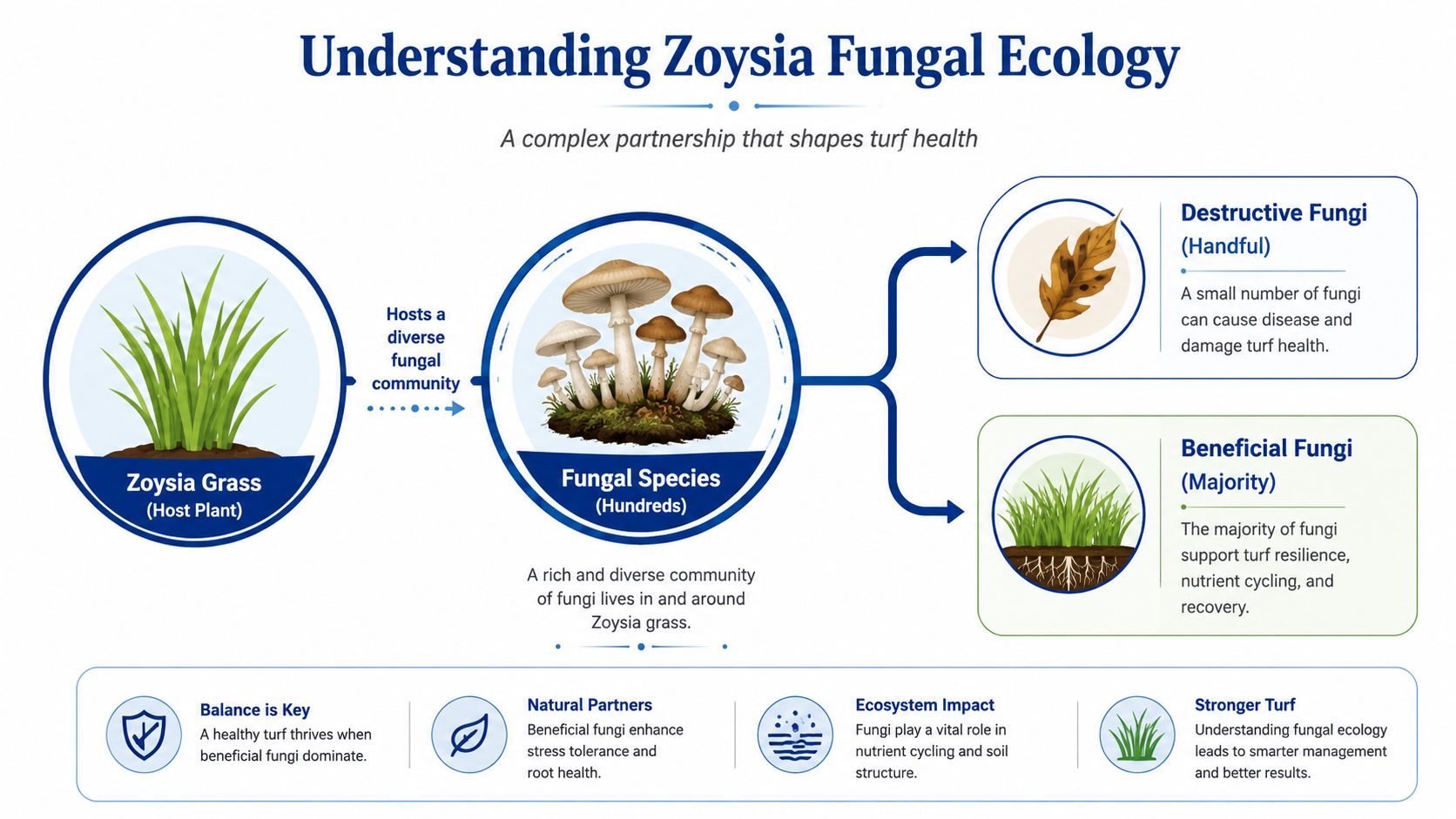
Think of a zoysia lawn like a crowded neighborhood, not a single house with one problem tenant. Research on zoysiagrass root-associated fungi found 317 fungal OTUs, across 49 families and 64 genera, which shows that zoysia lives inside a very diverse fungal world rather than a simple one-pathogen system PMC study. Most of those fungi aren't out to destroy the lawn. They're part of the background biology that shapes how roots function, how the plant recovers, and how fast stress shows up.
Why moisture changes the balance
Fungi don't behave the same way in every part of the lawn. Wet soil, thick thatch, and poor airflow create a surface where the troublemakers can outcompete the quieter residents. In a healthy zoysia stand, roots and crowns can tolerate a lot, but when the canopy stays damp too long, the balance shifts toward disease.
That's why homeowners often see problems in the places that dry last. Under trees, next to downspouts, along compacted walks, or in sprinkler overlap zones, the lawn is basically being asked to sit in a humid microclimate. The fungus isn't “appearing from nowhere,” it's taking advantage of a weakened environment.
Why recovery isn't just about killing fungus
The point of treating zoysia grass fungus isn't to sterilize the yard. That would be bad for the lawn as a whole. The primary task is to shrink the conditions that favor destructive fungi while preserving the turf's ability to recover through the summer.
Zoysia responds best when you fix the environment first, then attack the disease only where it truly belongs.
That's why timing, drainage, and leaf-dryness matter as much as any product. The fungus is only one player in a much larger system.
Recognizing Common Zoysia Grass Fungal Diseases
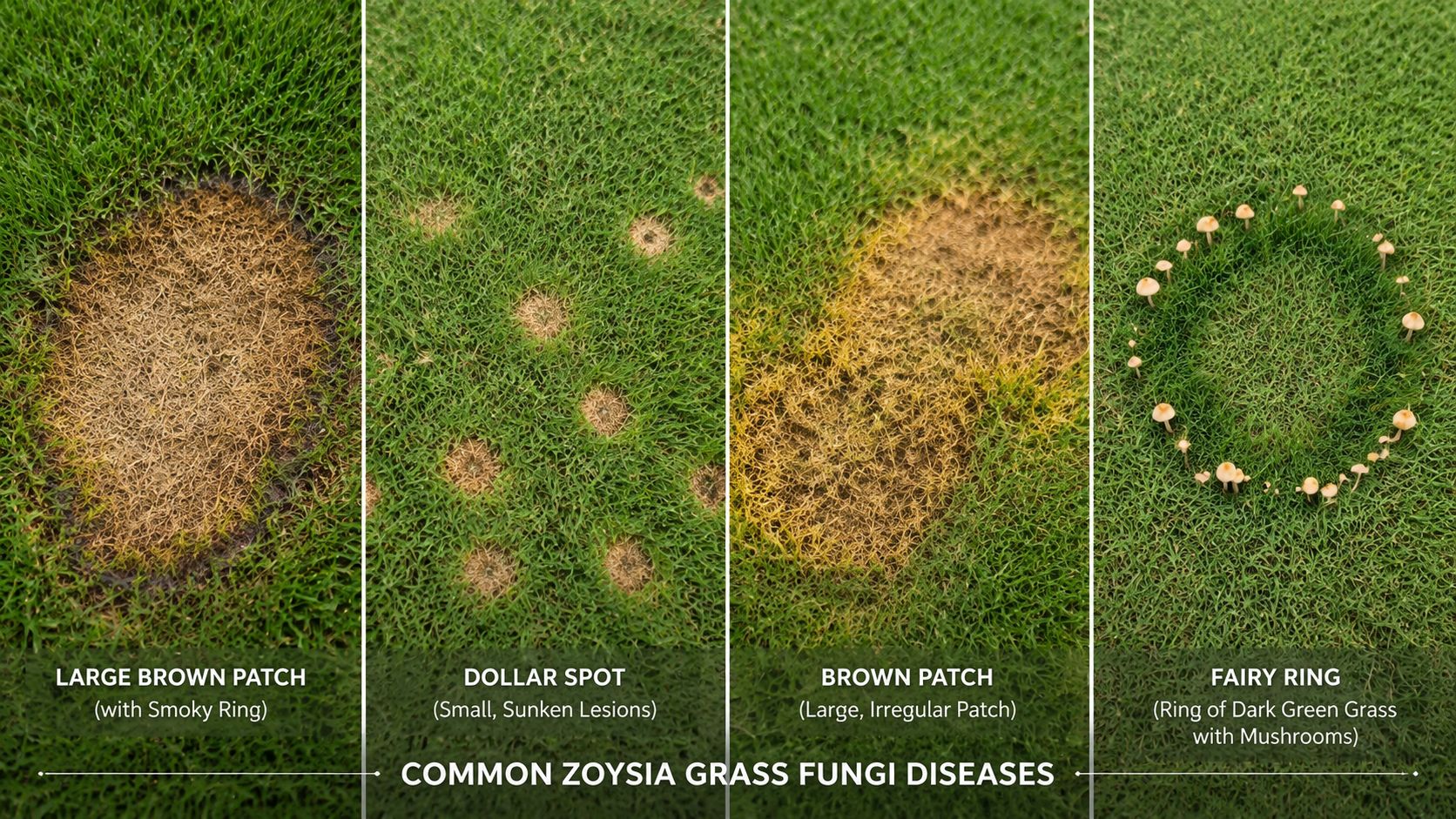
The easiest way to avoid mistakes is to stop asking, “Is this fungus?” and start asking, “Which pattern am I seeing?” In zoysia, the shape, timing, and edge of the damage tell you far more than the color alone. That's because different diseases behave differently, and not every spot deserves the same response.
Brown patch and dollar spot
Brown patch usually shows up as irregular areas that can spread when the lawn stays hot, humid, and wet. It often looks soft-edged rather than sharply outlined, which makes it easy to confuse with stress from too much water or poor mowing habits. Dollar spot looks smaller and more scattered, with bleached spots that can merge if the conditions stay favorable.
A useful clue is scale. If the damage looks like lots of little pale marks, dollar spot is more likely than a broad patching problem. If the area seems to expand in a loose, uneven way during muggy weather, brown patch moves higher on the list.
Large patch and why it gets special attention
Large patch is the key zoysia disease in many warm-season turf systems. It's caused by Rhizoctonia solani and is strongly associated with cool, wet weather and excess nitrogen Oklahoma State Extension. Oklahoma State Extension also advises avoiding nitrogen in early spring and after September 15 because those timing mistakes can raise disease risk Oklahoma State Extension.
That timing detail matters because large patch doesn't always kill the plant outright. It usually doesn't kill stolons or rhizomes, which means the lawn can recover later if the site conditions improve Oklahoma State Extension. In other words, a spring patch doesn't always mean permanent loss, but it does mean the management window was missed earlier.
Fairy ring and the clue many people overlook
Fairy ring often gives itself away with mushrooms, dark green bands, or ring-shaped changes in growth. The important part is that it's not just a “leaf disease” problem. It's a soil and organic matter problem too, which is why the ring pattern is such a helpful clue.
When you compare these diseases side by side, the main job is to notice whether the damage is scattered, circular, or expanding from a wet spot. That's the difference between a targeted response and a guess.
Diagnosing Lawn Conditions in North Texas
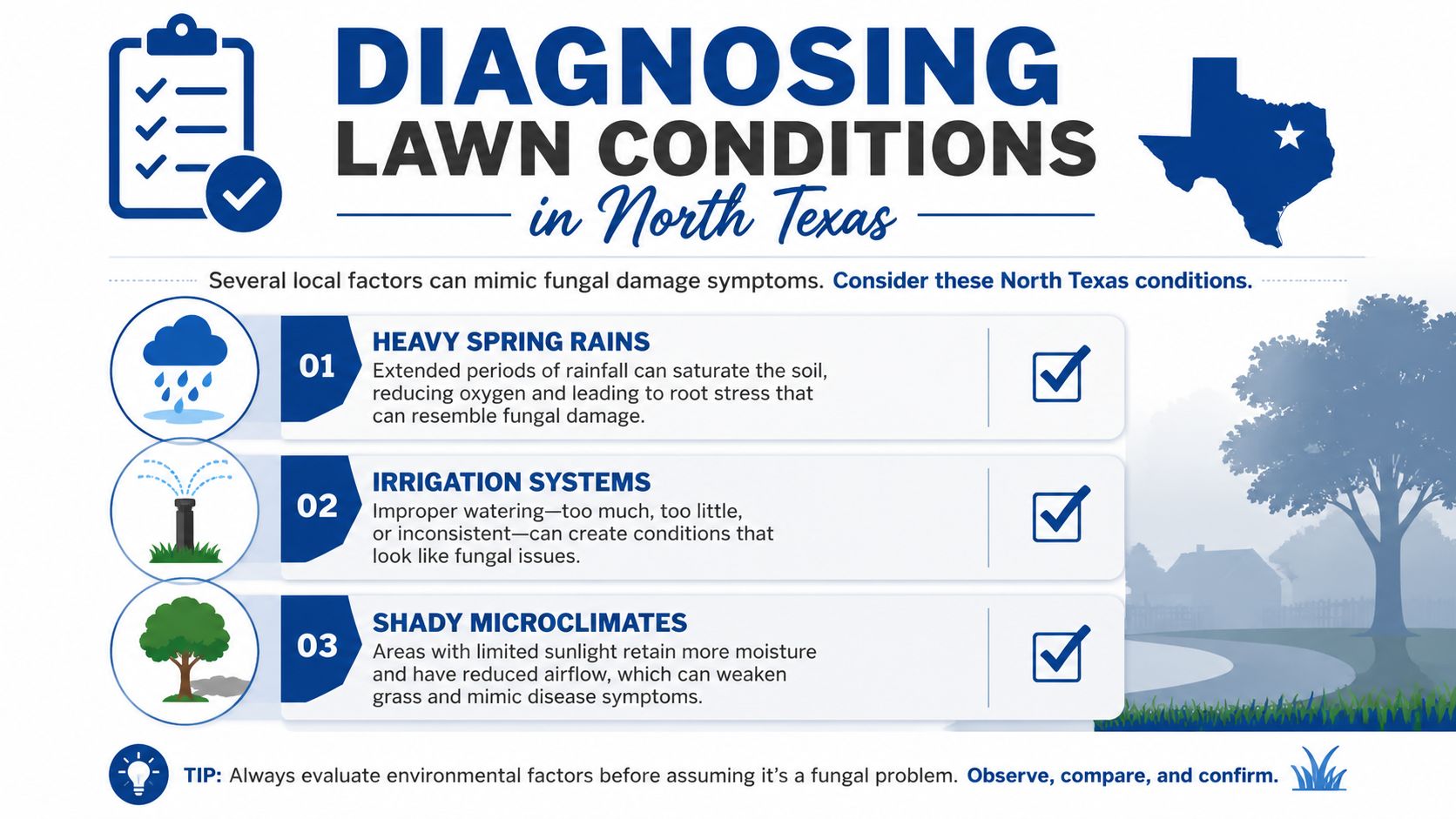
North Texas lawns fool people because the site conditions can look just like disease. Heavy spring rain, late sprinkler cycles, and tree shade all make turf look blotchy, and that's why a spray can be a waste of time if the underlying issue is water management. A major underserved angle is diagnosis vs treatment, since shade stress or overwatering can look identical and send homeowners down an unnecessary spray regimen USASod.
A simple decision tree for homeowners
Start with the pattern. If the brown area is uniform across a wide section of the lawn, think dormancy, drought, or a broad site issue before you think fungus. If the damage is patchy, ringed, or following a sprinkler arc, the site is telling you something more specific.
Then check the wetness history. If the area stays damp after rain or irrigation, look at drainage and airflow first. If the grass dries fast everywhere else but lingers wet under trees or beside a downspout, that microclimate may be driving the symptoms.
What usually mimics fungus
Shady spots often thin out because they're getting less sun and holding moisture longer. Overwatering can make the lawn look weak, soft, and discolored even when no active fungal infection is present. Poor irrigation coverage can also create misleading “spots” that line up exactly with the sprinkler pattern.
When a closer inspection makes sense
If the same area declines every season, the site probably needs more than a quick fix. That's when an on-site review can save money, especially when drainage, irrigation balance, and turf stress all overlap. For drainage-related concerns in particular, the service overview at this page is relevant because recurring wet areas often need a site-level answer, not just a lawn product.
If the pattern repeats in the same place, inspect the place before you inspect the grass.
Step by Step Zoysia Fungus Treatment
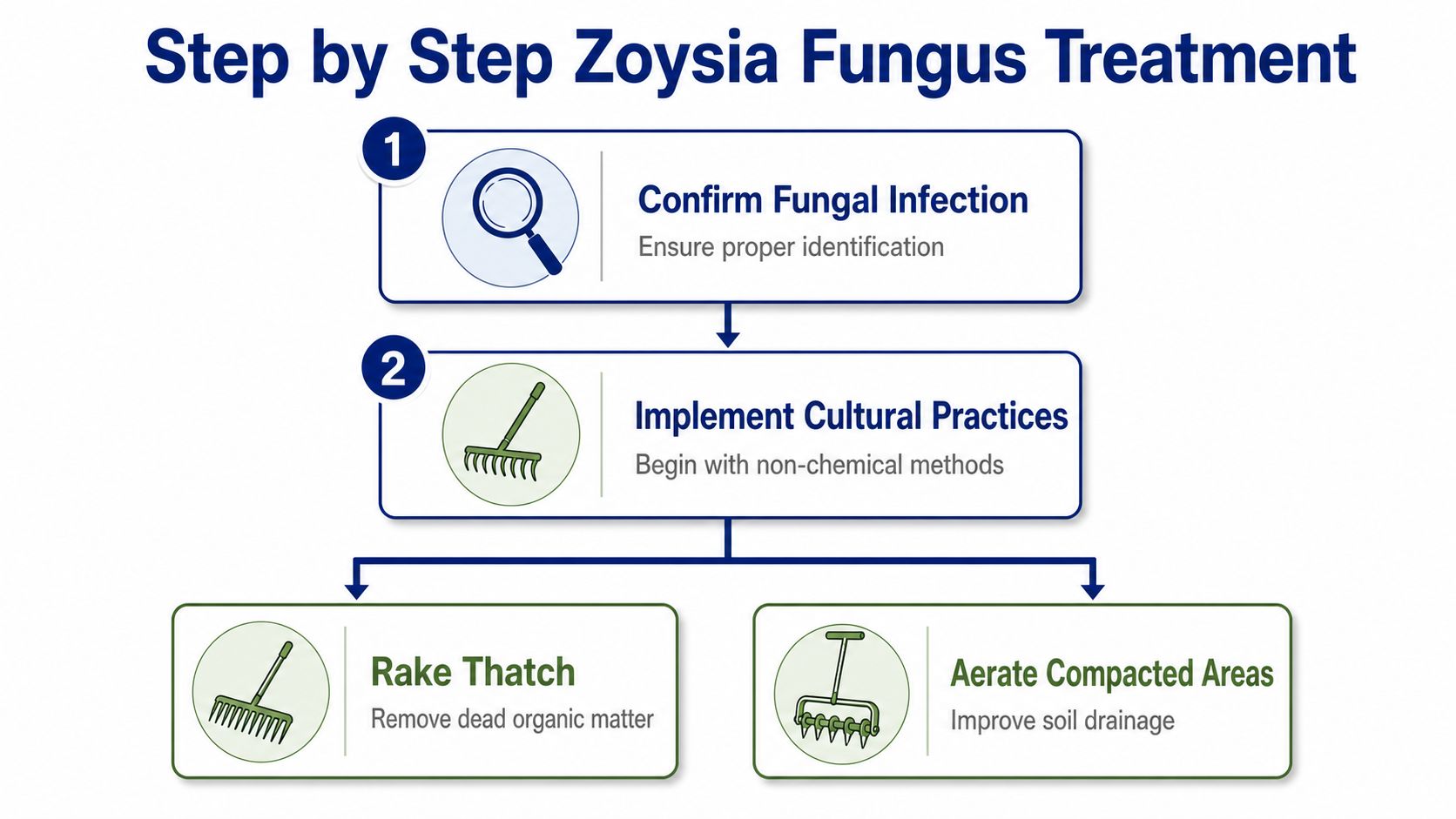
Once you're sure the problem is fungal, the best results come from moving in order. Start with the basics that change the lawn's environment, then use products only where they fit. That sequence matters because a fungicide can't undo poor drainage or a canopy that stays wet too long.
Step 1, clean up the turf environment
Rake out heavy thatch where it's trapping moisture, and aerate compacted spots so air and water can move through the soil profile. Zoysia can build thatch quickly, and that layer behaves like a sponge pressed against the crown of the plant. If the crowns stay wet, the disease pressure stays high.
Mow with a sharp blade and keep the cut consistent. Ragged leaf tips and scalp marks create extra stress, which makes it harder for the turf to recover after infection.
Step 2, fix irrigation timing
Oklahoma State Extension says irrigation should be delayed until the turf shows wilt, then applied in the early morning to shorten leaf-wetness duration because prolonged wetness increases large patch development Oklahoma State University Extension. That advice is especially useful in North Texas, where nighttime watering can leave the canopy wet well into the next day.
Don't chase a schedule just because the controller says so. Watering should match what the grass needs, not what the clock suggests.
Step 3, use fungicide at the right time
For large patch, the preventive window matters more than the rescue window. By the time spring symptoms are visible, the turf has already been under attack, and the spray won't instantly repaint the dead areas green. That's why timing around the cool, wet season is more important than trying to “catch up” later.
Practical rule: if the lawn already has a history of repeat large patch, plan ahead before symptoms show, not after.
Step 4, keep watching the same spots
After treatment, revisit the problem areas during the next wet stretch. If the pattern improves, you've probably matched the cause well. If it returns in the same locations, the site conditions still need work.
Prevention Best Practices for Zoysia
The strongest zoysia lawns aren't the ones that get sprayed the most. They're the ones where the owner stops creating the conditions fungi love. That means mowing with the canopy in mind, watering with dryness in mind, and feeding with the disease calendar in mind.
Nitrogen timing is one of the biggest levers. Oklahoma State Extension specifically advises avoiding nitrogen in early spring and after September 15 because those windows raise disease risk for large patch Oklahoma State Extension. For North Texas homeowners, that means the fertilizer bag should follow the turf's growth cycle, not the first warm weekend of the year or the urge to “green it up” too soon.
Mowing height and airflow matter too. A dense canopy that stays humid is far more likely to hold disease pressure than one that dries quickly after irrigation or rain. That's one reason shade and overcrowded plantings become trouble spots, especially where the lawn already struggles for light.
For irrigation, use the same logic every week. Morning watering is safer than evening watering, and overwatering is more dangerous than slight short-term wilt. If you need a refresher on system adjustments and seasonal water planning, the irrigation overview at this page is a useful companion.
The best prevention strategy is boring on purpose. Keep the grass growing steadily, keep the leaves dry when you can, and don't feed fungi with bad timing.
When to Engage Rosewood Landscape Group
If the same patches return every spring, or if several wet corners, shaded strips, and drainage problems overlap, that's beyond a simple guess-and-spray situation. A pro is worth calling when the lawn keeps showing the same pattern even after you've corrected watering and mowing. That's especially true for complex North Texas yards where irrigation zones, tree shade, and runoff all affect the same space.
The Rosewood Group can help when the issue points to more than disease alone, especially if you need diagnostic support, irrigation adjustments, or drainage work tied to recurring turf decline. If the problem keeps coming back, the smartest move is to fix the site, not just the symptom.
If your zoysia keeps browning in the same places, don't keep guessing. Reach out to Rosewood Landscape Group for help with diagnosis, irrigation balance, and drainage-focused solutions that fit North Texas lawns.
Related posts
8 Best Shrubs for North Texas Landscapes in 2026

Permeable Paver Installation: A DFW Homeowner’s Guide
How to Improve Soil Quality: Easy Ways to Improve Soil
Take All Root Rot: Diagnose & Treat Your Lawn