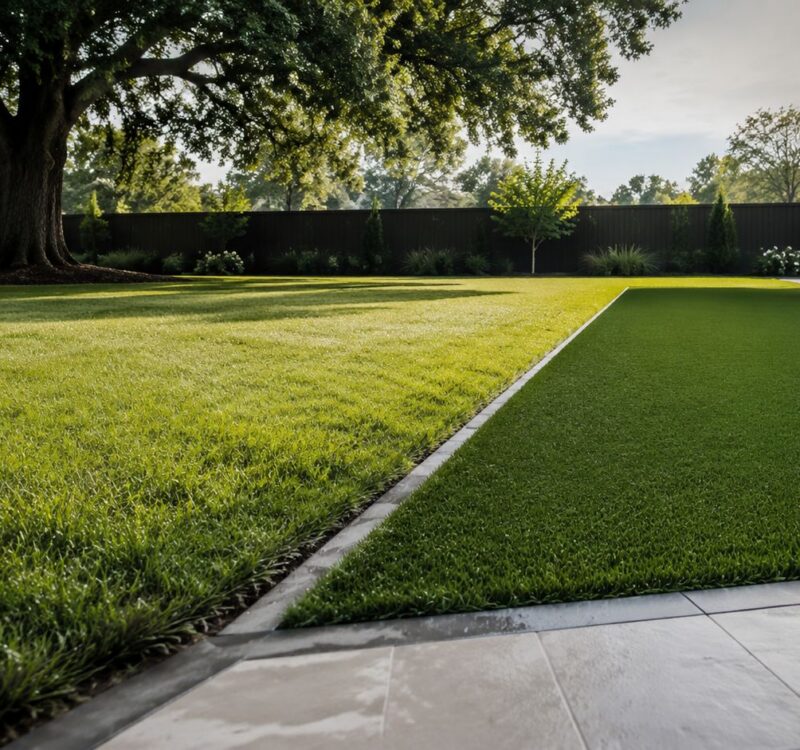
Tired of watching a new shrub crisp up by August, flop after the first hard freeze, or settle into a clay bed and never really thrive? That frustration is exactly why we build North Texas outdoor spaces around site-fit, not just pretty photos. In Dallas-Fort Worth, the best shrubs for North Texas are the ones that can handle alkaline clay, brutal summer heat, and unpredictable winter swings while still giving a yard structure, privacy, and year-round character.
The strongest plantings here don't rely on one “perfect” plant. They use a palette that works together, with screening shrubs, flowering shrubs, native understory plants, and a few accent choices that earn their keep in real site conditions. Texas A&M AgriLife's North Texas guidance is clear that installation matters as much as species choice, with planting holes only 2 to 3 times as wide as the root mass, plants set no deeper than the root mass, and mulch kept 2 to 4 inches deep but 1 to 2 inches clear of the trunk (Texas A&M AgriLife native and adapted plant guidance). Those details are what keep shrubs alive in our clay-heavy soils.
Here's the practical list Rosewood uses when we're designing for long-term performance, not short-lived curb appeal.
1. Texas Privet
Texas Privet, or Forestiera texana, earns its place because it solves one of the most common North Texas design problems, which is screening without constant babysitting. It works as a hedge, a soft property boundary, or a layered backdrop behind smaller flowering shrubs. In Highland Park estates and other Dallas neighborhoods, it fits neatly into native-forward designs where the goal is privacy that doesn't look rigid.
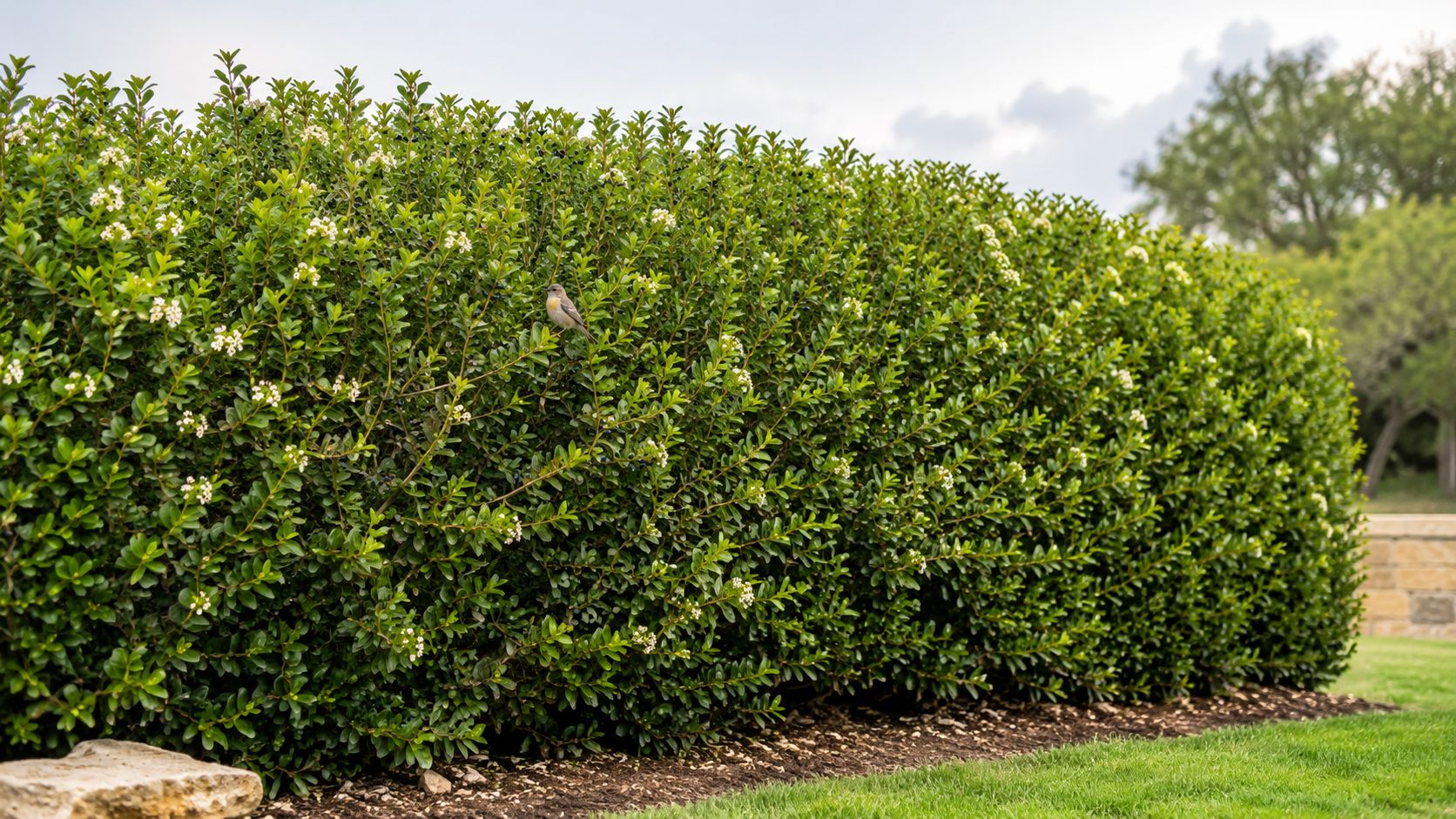
Texas Privet makes sense in clay because it's already adapted to the region's drainage swings and heat. Once established, it needs far less intervention than many ornamental hedges people try first and then end up replacing. It also pairs well with other drought-tolerant shrubs in mixed borders, which keeps a long hedge from feeling flat.
How we use it in DFW
We often specify Texas Privet for:
- Property lines and screening, especially where a formal fence would feel too hard or too expensive to soften.
- Windbreak layers on exposed lots, where a dense evergreen edge can help buffer the rest of the planting bed.
- Native plant compositions, where the goal is a more natural, regionally appropriate look.
Use the installation window that gives roots the best chance to establish, then keep pruning light. If you want a dense hedge, spacing the shrubs closer together works better than forcing shape with heavy cuts later. For homeowners planning a native palette, our North Texas native plant guidance is a good place to start because Texas Privet works best as part of a broader system, not as a lone plant in a stressed bed.
The mistake we see most often is treating a screening shrub like a lawn accessory. If the soil, spacing, and irrigation zone aren't right, the hedge never becomes the screen people thought they bought.
2. Fragrant Sumac
Fragrant Sumac earns trust over time. It stays compact, handles poor soils, and brings real seasonal change instead of serving as plain green filler. In DFW, that matters because so many beds need a shrub that can soften a hard edge without asking for perfect irrigation or babying.
Brush the leaves and you get a citrus-like scent, which makes this shrub a strong fit near paths, side yards, and entry walks. It also gives reliable fall color and berries that carry visual interest into winter. In Las Colinas, we use it on slopes because it can help stabilize difficult ground where more ornamental shrubs look stressed or thin.
The plant also gives us flexibility in the design. Fragrant Sumac can sit low in front of taller screening shrubs, or repeat through a bed as a connecting mass that ties separate planting zones together. That makes it useful in Frisco and McKinney projects where homeowners are replacing high-water plantings with something that fits the site better and is easier to live with over time.
Where it fits best
Fragrant Sumac is especially useful in:
- Erosion-prone slopes, where root coverage matters as much as color.
- Rain gardens and bioswales, where a plant has to tolerate periodic moisture changes.
- Mixed native borders, where texture and seasonal shift create depth.
We also like it where a bed needs to soften hard edges without looking stiff. It reads naturally, and that helps in front yards where concrete, stone, or straight property lines already do most of the visual work. A repeated rhythm of Fragrant Sumac can make the whole planting feel connected instead of scattered.
When we build around it, we keep the surrounding palette honest. Fragrant Sumac performs best when it is allowed to keep its natural shape, and it pairs well with other heat-tough natives that can handle the same soil and exposure. That combination gives the planting a cohesive look without asking the shrub to do a job it was never meant to do.
Use the plant for the site you actually have, not the one in the magazine photo. Slopes, awkward corners, and harsh sun exposures are where Fragrant Sumac pays for itself.
3. Desert Rose, or Agarito
Agarito, also called Mahonia trifoliolata, gives a North Texas bed year-round presence without taking over the composition. The blue-gray foliage holds its own in winter, the yellow flowers bring spring interest, and the berries add another layer later in the season. In North Texas, that kind of multi-season performance matters because planting areas go through long stretches where many shrubs fade into the background.
It also fits jobs where design and function have to work together. Agarito can serve as a low security layer, a native accent, or a specimen in a more refined planting bed. In commercial settings around Downtown Dallas, that mix matters because the shrub has to read well at close range and still hold the composition together from farther back.
Agarito is especially useful when the goal is to build a resilient palette, not just fill space. It stays visually useful through heat, drought, and cold snaps, so it helps connect taller evergreen structure with lower perennials that change faster through the seasons.
For a closer look at how it fits into drought-conscious planting plans, see our North Texas drought-tolerant plant guide and our full sun plants for Texas guide.
Where it fits best
We use Agarito most often in native borders that need texture through all four seasons. It also works well in entry zones where a plant needs to look finished without heavy shaping, and in wildlife-supporting beds where birds benefit from the berries and shelter. That gives the shrub a wider role than a simple accent plant.
The trade-off is form. Agarito has a sharper, more defined presence than softer shrubs, so it fits best where the rest of the bed can support that texture without looking crowded. Used with Texas Privet and Fragrant Sumac, it helps create layered structure without forcing any single plant to carry the design on its own. In Arlington and Grand Prairie, that kind of balance is often what separates a bed that feels planned from one that feels assembled after the fact.
4. Esperanza
Esperanza brings hot-season color to North Texas when we place it in the right part of the bed. The bright yellow flowers draw the eye, but the value shows up in how it performs in a well-drained spot with room to dry between waterings. Set it in heavy, wet soil, and it struggles. Give it a position that sheds water quickly, and it becomes a dependable summer focal point.
We like it most near south- or west-facing walls with some protection, where reflected heat can help the plant perform without trapping moisture around the roots. That makes it a practical choice for entries and patio edges in Dallas, Plano, and Highland Park, where homeowners want bold summer color without a shrub that falls apart after one bad weather cycle. For more options that thrive in strong sun, see our full sun plants in Texas guide.
Best use cases
Esperanza works well for:
- Entry beds, where bright color helps anchor a front elevation.
- Protected microclimates, especially near masonry or sheltered walls.
- Summer focal points, where the rest of the palette is intentionally calmer.
The trade-off is straightforward. Esperanza gives you stronger seasonal impact, but it needs better drainage and more deliberate placement than the toughest natives on this list. We usually pair it with sturdier companions so the bed still reads clearly if Esperanza takes winter damage in a harsher year. That approach helps the planting hold together across North Texas's alkaline clay, summer heat, and the occasional freeze that catches tender growth off guard.
Prune it in late winter to keep it branched and balanced. In rough weather, site selection matters more than hope. If a bed tends to stay wet, we would rather choose another shrub than keep fighting root problems year after year.
5. Flame Acanthus
Flame Acanthus delivers reliable color in North Texas without asking for much back. It stays relatively compact, handles heat well, and brings a long bloom season that keeps the yard from feeling flat in late summer. In commercial properties across Dallas, that kind of consistency is why it often appears in mass plantings.
The plant works best as a grouped planting. One specimen can get lost in the bed, but three to five together create a clear block of color that reads well from the street and the sidewalk. In Frisco and McKinney xeriscape projects, that massing approach helps the bed feel planned instead of thin or scattered.
Why it belongs in a resilient palette
Flame Acanthus helps close the gap between native structure and seasonal color. It handles North Texas conditions without constant attention, and it does not need frequent pruning to stay in bounds. That makes it a practical companion for Texas Privet, Esperanza, and Purple Heart in mixed borders where the goal is long-term balance.
A few practical notes:
- Mass it for effect, because single plants do not show off the same way.
- Cut it back in late winter, so it comes back fuller and cleaner.
- Use it in water-wise beds, where dependable bloom matters more than fussy detail.
We also like Flame Acanthus for HOA common areas because it gives repeatable results. When a board wants something attractive but not demanding, this plant makes the conversation easier. It is not the loudest plant in the bed, but it often holds the composition together through heat.
A resilient planting scheme is not one dramatic plant. It is a series of dependable plants that still look good when the weather turns rough.
6. Purple Heart
A bed that needs color through August often gets a simple answer from us, Purple Heart. It is a foliage-first plant, so the color comes from the leaves instead of the bloom cycle, and that makes it useful when a mixed border needs something steady between peak flower periods. In DFW commercial entries and upscale residential beds, that deep purple can tighten the whole composition without asking for much from the planting scheme.
The trade-off is durability. Purple Heart is not native, and in the northern part of Dallas we use it more carefully because winter performance can be uneven. In southern DFW and in beds with some protection from wind and hard freezes, it can serve as a strong accent that fills space cleanly while still reading as intentional. For long-term planning, we treat it as a color tool, not a backbone plant.
It works best in a few specific situations.
- Container plantings at commercial entrances, where the foliage can carry color without crowding the design.
- Mixed borders with yellow blooms or silver foliage, where the contrast stays sharp.
- Seasonal accents, when a bed needs fast visual impact and the planting window is already defined.
Full sun keeps the color strongest, and simple placement matters. Too much shade softens the purple, and late planting can leave it more exposed to winter damage. In practice, that means we use it with purpose, usually where soil drainage is decent and the bed already has a clear structure.
Pair Purple Heart with Esperanza, Flame Acanthus, or silver-toned companions, and the bed reads as layered instead of busy. In Plano, that kind of restraint helps a front yard feel deliberate without depending on a long plant list. We get a better result when a few strong plants carry the design and the spacing stays honest, especially in North Texas clay soil where overcrowding only makes maintenance harder later.
7. Texas Escarpment Cherry
Texas Escarpment Cherry gives North Texas properties a softer line and a stronger sense of season. It is a woody shrub that can also read as a small understory tree, so we use it where a bed needs height without turning stiff or formal. In Highland Park and Southlake-style plantings, it works well as the plant that bridges the gap between lower shrubs and canopy cover.
The flowers are fragrant, the berries support wildlife, and the fall color adds another layer that many regional shrubs do not provide. For homeowners who want a garden tied to place, that combination matters. It keeps the planting grounded in North Texas instead of borrowing a look that belongs to a milder climate.
Texas Escarpment Cherry should not be treated as a filler shrub. It performs best as a specimen, or in a loose native grouping where it has room to hold its shape. Give it space, keep aggressive neighbors back, and it develops into a cleaner part of the composition.
We use it most often in a few settings. Under open canopies, it adds an understory layer without closing in the bed. In wildlife-focused gardens, the fruit and cover make it useful beyond its bloom cycle. In native feature plantings, one or two well-placed shrubs can set the structure for the whole space. That approach works better than crowding a bed with too many competing forms, especially in alkaline clay soil where root competition becomes a problem fast.
Source it carefully from native plant nurseries or specialty growers. Plant quality matters here, and weak stock shows its limits quickly in North Texas heat and unpredictable freezes. In mixed native beds, it pairs naturally with Texas Privet, Agarito, and Fragrant Sumac, which gives the planting a coherent palette instead of a scattered mix. We like that kind of restraint because it helps a property feel designed, stable, and easier to manage over time.
8. Turk's Cap
Turk's Cap is one of the most useful shrubs we have for hot, difficult North Texas sites. It brings a bold, architectural flower form, handles summer stress well, and gives birds and pollinators something to work with when many other plants are fading. In Dallas and Fort Worth native gardens, it often becomes the late-season plant people remember most.
It's not always the easiest shrub to find in mainstream garden centers, which is why we often recommend sourcing it from native plant nurseries. That extra step pays off when you're building a water-wise garden design that needs character without a heavy maintenance load.
Why it stands out in the landscape
Turk's Cap is strong because it's flexible. It can naturalize in a meadow-style planting, anchor a pollinator bed, or repeat along a border where you want summer color with a looser texture. It also gives the composition a different leaf and flower shape, which helps prevent the design from looking repetitive.
We usually pair it with Fragrant Sumac, Flame Acanthus, or Texas Privet for a layered effect. That mix gives you structure, bloom, and wildlife value without leaning too hard on one plant type. In HOA common areas and residential butterfly gardens, that balance matters because the beds need to survive heat while still looking cared for.
Cut it back after frost or in early spring, and it comes back ready to fill space again. In North Texas, that kind of dependable reset is worth a lot.
Top 8 Shrubs for North Texas, Comparison
| Plant | Implementation complexity | Resource requirements | Expected outcomes | Ideal use cases | Key advantages |
|---|---|---|---|---|---|
| Texas Privet (Forestiera texana) | Low–Medium, easy to establish; occasional pruning | Minimal after year 2; tolerates alkaline clay soils | 8–12 ft dense privacy screen; white flowers, blue berries; wildlife | Screening, hedges, native commercial/residential projects | Drought-tolerant, low-maintenance, native, cost-effective |
| Fragrant Sumac (Rhus aromatica) | Low, simple care; may need containment for spread | Minimal after establishment; thrives in poor/rocky soils | 3–6 ft compact shrub; bright red fall color; persistent berries | Erosion control, slopes, mixed borders, wildlife habitats | Exceptional drought tolerance, seasonal color, erosion control |
| Desert Rose / Agarito (Mahonia trifoliolata) | Low, slow grower; site away from high-traffic due to thorns | Minimal after establishment; tolerates rocky/alkaline soils | 4–8 ft evergreen/semi-evergreen; yellow flowers, blue/black berries | Four-season interest, security screening, native plantings | Year-round interest, fragrant blooms, wildlife-friendly, thorny screening |
| Esperanza (Tecoma stans) | Medium, responds to pruning; may need winter protection | Moderate, prefers well-drained soil; supplemental water in droughts | 6–8 ft vigorous shrub; abundant yellow trumpet blooms summer–fall | Summer color, hummingbird gardens, specimen plantings | Intense summer color, fast establishment, strong pollinator appeal |
| Flame Acanthus (Justicia/Ruellia) | Low, minimal pruning; deadhead to control seed | Minimal after establishment; very drought-tolerant | 2–4 ft long-blooming orange-red flowers June–frost | Mass plantings, xeriscapes, commercial color beds | Exceptional drought tolerance, long bloom season, low maintenance |
| Purple Heart (Tradescantia pallida) | Medium, not reliably winter-hardy; may need replacing | Moderate, needs full sun for best color and supplemental water in droughts | 2–4 ft bold purple foliage; sporadic small flowers; accent color | Containers, mixed borders, accent plantings | Continuous foliage color, fast growth, strong contrast in beds |
| Texas Escarpment Cherry (Prunus serotina var. eximia) | Medium, slower growth; may require specialty sourcing | Minimal after establishment; adapted to limestone/rocky soils | 6–12 ft multi-season interest: fragrant flowers, edible cherries, fall color | Understory/specimen, wildlife gardens, native landscapes | Three-season interest, edible fruit, well-adapted native species |
| Turk's Cap (Phytolacca/Brassia coccinea) | Low–Medium, easy care; can spread via rhizomes | Minimal after establishment; extremely drought-tolerant | 3–6 ft bold late-season red blooms; coarse texture; bird-attracting berries | Pollinator gardens, water-wise plantings, late-season color | Long bloom period, unique flower form, low maintenance |
Design, Install, and Maintain Your Ideal Landscape
Choosing the right shrubs is only the first move. The difference in North Texas comes from how the shrubs are grouped, where they're placed, and how the bed handles water, heat, and soil movement over time. A bed can contain some of the best shrubs for North Texas, but if one plant is sitting too deep, another is in a drainage pocket, and irrigation hits everything the same way, the garden will still struggle.
That's why we think in layers. We start with screening or framework shrubs like Texas Privet, then add mid-layer plants such as Agarito, Texas Escarpment Cherry, or Fragrant Sumac, and finish with flowering or foliage accents like Flame Acanthus, Turk's Cap, Esperanza, and Purple Heart. This approach mirrors what North Texas planting guides already point to, site-fit and installation discipline over generic plant lists (Texas A&M AgriLife guidance). It also helps avoid the common mistake of crowding plants that need different sun and water patterns into the same bed.
Timing matters too. North Texas nursery guidance recommends most shrub planting in early spring, February to April, or fall, September to November, and avoiding peak summer planting because heat makes establishment harder (Gardenia's Texas shrub timing guide). In practice, that means we plan ahead, sequence installation around weather, and protect new plantings from the first harsh stretch of weather they face.
We also pay attention to irrigation zones and drainage. North Texas drought planning works better when plants with similar water needs are grouped together, and when irrigation doesn't force wet conditions onto shrubs that need excellent drainage (Texas A&M AgriLife drought-resistant plant guidance). That's where a professional installation pays off, because the design, the grading, and the irrigation all have to support the same goal.
If you're ready to replace trial-and-error planting with a cohesive North Texas palette, Rosewood Landscape Group can help with design, installation, drainage-aware placement, and ongoing plant care across DFW. Reach out and let's build an outdoor space that looks good in spring, survives August, and still makes sense after the next freeze.
A CTA for Rosewood Landscape Group.
Related posts
Permeable Paver Installation: A DFW Homeowner’s Guide
Zoysia Grass Fungus: Identify, Treat & Prevent in 2026
How to Improve Soil Quality: Easy Ways to Improve Soil
Take All Root Rot: Diagnose & Treat Your Lawn