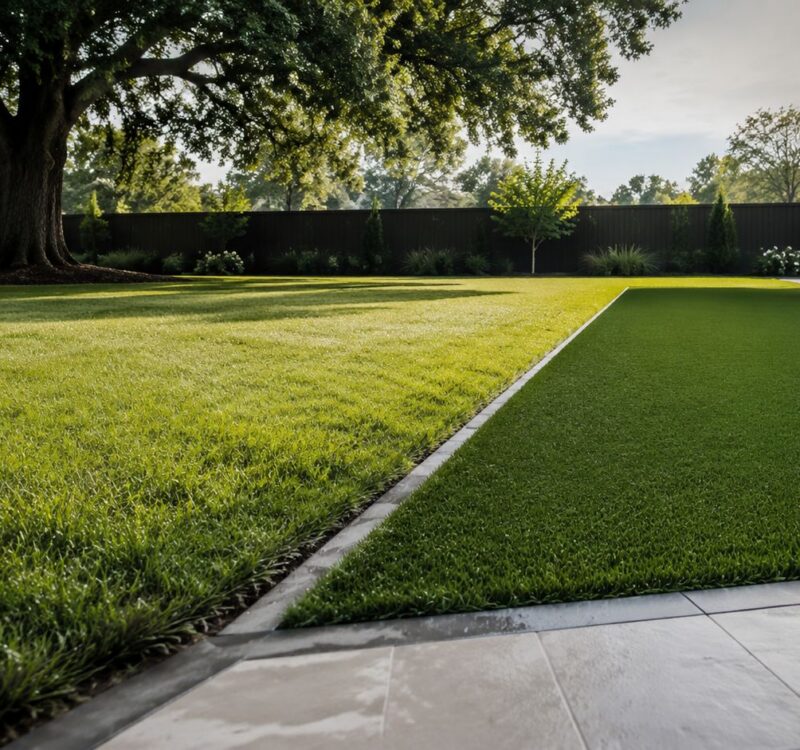
By mid-July in DFW, the weak plants are easy to spot. West-facing beds bleach out, exposed corners dry faster than the controller schedule accounts for, and roots sit in hard clay that swings from sticky to brick-hard in the same season. Full sun is only part of the problem. The bigger issue is whether the planting plan fits North Texas conditions.
A plant that thrives in “full sun” somewhere else can still fail here once reflected heat, alkaline clay, and uneven irrigation coverage start stacking up. In this market, success comes from matching the plant to the microclimate, then backing it up with the right soil prep, drainage, and watering strategy. That is the difference between a bed that survives one summer and a garden that settles in and improves.
The good news is that sun-loving plants are often some of the toughest and lowest-fuss choices for North Texas gardens when they are used correctly. They can solve specific site problems too. Some handle blazing foundation exposure. Some stabilize dry slopes. Some take pressure off irrigation zones that are wasting water on plants that were never a good fit in the first place.
That is also why plant selection should not be separated from the rest of the system. On DFW properties, we regularly see strong plants struggle because spray heads miss the root zone, trees were installed too deep, or clay soil was never opened up enough to drain. Good design and plant health work together. If shade is part of the long-term fix, choosing the right trees for North Texas landscapes matters just as much as picking the right perennials and shrubs.
Below are eight proven choices, each framed around a real outdoor challenge common in Dallas-Fort Worth, from sun-baked backyards to west-facing foundation beds and slopes that dry out fast.
1. Texas Red Oak (Quercus buckleyi)
If the problem is heat, the long-term fix is often shade. Texas Red Oak is one of the smartest full-sun investments you can make in a North Texas outdoor space because it changes the site itself over time. A good canopy tree cools beds, softens hardscape heat, and gives the rest of the planting plan a stronger backbone.
This is the kind of tree that fits naturally into Highland Park estates, larger residential lots, and commercial campuses that need structure without looking forced. In mixed-use districts and office properties, oaks also do the quiet work of making outdoor spaces feel established instead of newly installed.
Why it works in DFW
Texas Red Oak handles North Texas conditions better than many imported shade trees that struggle with summer stress, inconsistent watering, or poor pruning. Once established, it's a practical answer for clients who want seasonal color, wildlife value, and a durable framework tree instead of a short-lived fast grower.
Planting timing matters more than people think. Spring and early fall give roots a chance to start before the hardest weather arrives, and that early root development is usually what separates a tree that settles in from one that stalls.
Practical rule: Don't plant a canopy tree like a shrub. Give it room now, not after it starts competing with the driveway, roofline, and irrigation coverage.
A few field-tested guidelines help:
- Give it real space: Plan on at least 30 feet between trees if you want healthy mature spread and balanced canopy development.
- Water thoroughly, not constantly: The first few growing seasons matter most. Thorough watering builds stronger rooting than frequent shallow cycles.
- Mulch correctly: Keep mulch around the root zone, but don't pile it against the trunk.
- Prune with restraint: Remove dead or crossing limbs. Don't top it.
For homeowners deciding where a specimen tree belongs in a North Texas layout, Rosewood's guide to choosing and planting trees for North Texas landscapes is a good starting point. Pair that with ongoing plant health care, and you avoid the common pattern of planting a valuable tree well, then losing momentum on monitoring, nutrition, and corrective pruning.
2. Desert Rose (Adenium obesum 'Texas Star')
Not every full-sun plant in Texas has to look rugged or native. Desert Rose is a high-impact ornamental for clients who want sculptural form and bright bloom without building the whole bed around thirsty annual color.
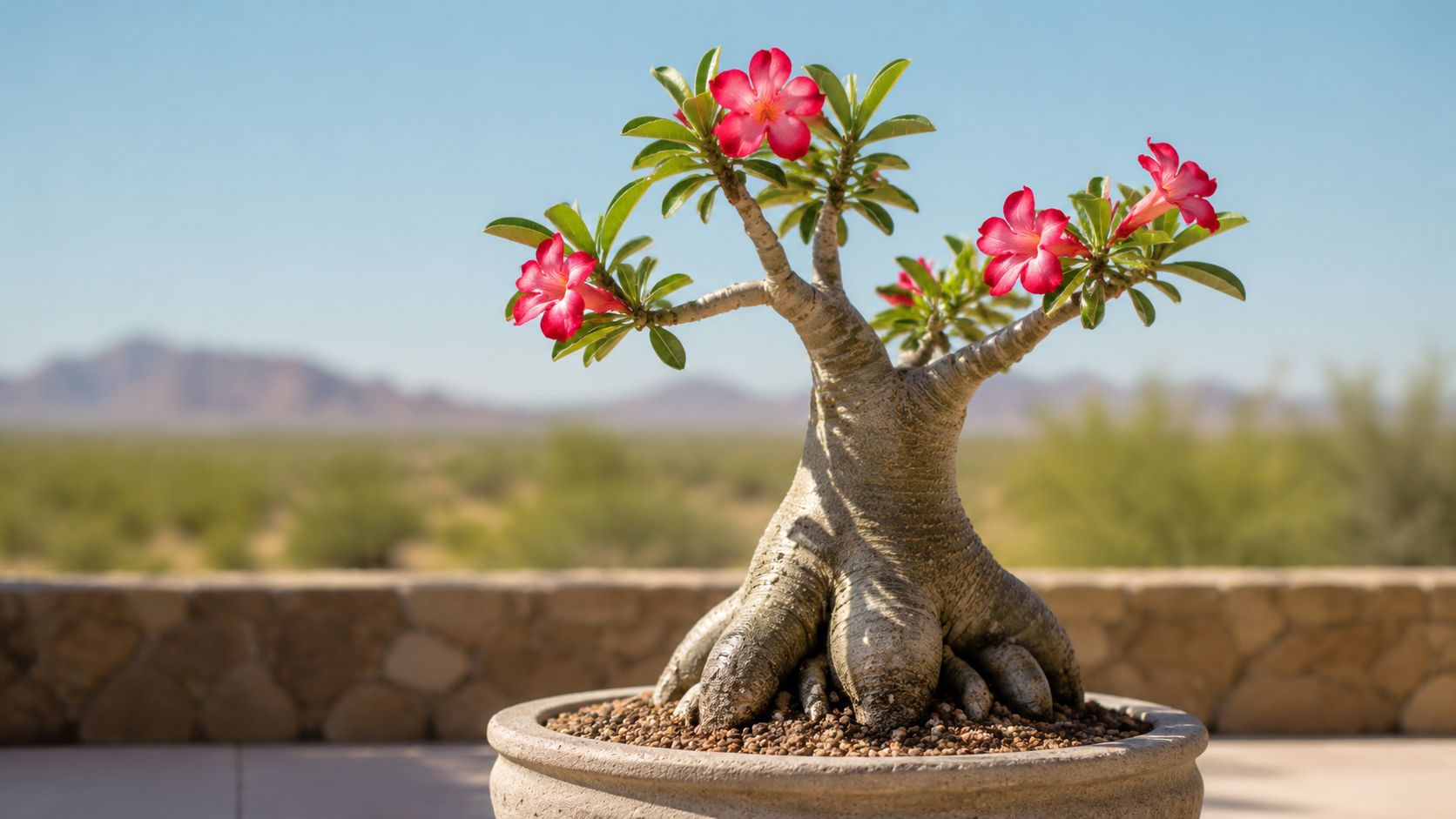
I like this plant in controlled spaces. Entry courtyards, pool-adjacent containers, sunny patios, and modern succulent borders are where it earns its keep. It also works as a focal point in retail and hospitality settings where the look needs to be sharp and low clutter.
Where Desert Rose fails
It usually doesn't fail because of sun. It fails because someone treats it like a standard flowering shrub.
Heavy clay, poor drainage, and overwatering are the main problems. In DFW, that means you either improve the soil aggressively or keep Desert Rose in containers where drainage is easier to manage and frost moves are possible during winter cold snaps.
A lot of “heat-tolerant” plants die in Dallas because the soil holds too much moisture around the root zone. Regional growers and horticulture-focused content have stressed that clay-to-alkaline soils are a major reason xeric plants rot out unless the bed is amended for drainage, as discussed in this North Texas clay soil planting video. That applies here.
Best use in the landscape
For Desert Rose, keep the strategy simple:
- Use it as a focal plant: One strong specimen usually looks better than a crowded mass.
- Improve drainage first: Compost helps, but drainage structure matters more than rich soil.
- Go lighter on water: Once established, this plant wants restraint.
- Protect it from winter extremes: Containers make that much easier.
If you're designing a lower-water bed around succulents, gravel mulch, and strong sun exposure, Rosewood's page on xeriscaping in Texas aligns well with how Desert Rose should be used. It isn't a set-it-anywhere shrub. It's a specialty plant for the right hot, bright, fast-draining spot.
3. Texas Privet (Forestiera pubescens)
Texas Privet solves a different problem. Not every sunny area needs a flower show. Sometimes the need is privacy, enclosure, bird habitat, or a shrub mass that looks composed without constant irrigation and clipping.
That's where this plant earns attention. In residential projects, it works as a screen along a fence line or property edge. In HOA and commercial settings, it fits perimeter beds where a native hedge needs to read clean without looking sterile.
A better hedge for hard sun
Texas Privet has dense branching and a naturally useful shape. It also brings more life to the outdoor environment than a generic evergreen screen because spring flowers and berry production support birds and make the planting feel regional instead of interchangeable.
This is especially valuable in North Texas properties where the front or side yard gets hammered by reflected light all afternoon. A lot of hedge plants will survive that exposure, but they won't look good doing it. Texas Privet usually holds its structure better.
Use it like a shrub mass, not a sheared wall. That's the difference between a planting that ages gracefully and one that turns into a maintenance burden.
Let the plant keep some of its natural form. Tight, constant shearing often creates a thin outer shell and weak interior growth.
For practical installation, these points matter:
- Space for the mature plant: Around 5 to 6 feet apart gives screening room without immediate overcrowding.
- Plant before peak summer: Spring establishment is easier than trying to force root growth in high heat.
- Prune on schedule: Light shaping after flowering or in early spring works better than random cuts through the year.
- Layer it well: Pair it with flowering heat performers like flame acanthus or esperanza for depth.
Texas Privet also responds well to long-term monitoring. In managed properties, tying it into a plant health care program helps catch stress early, especially where irrigation coverage is uneven or surrounding hardscape raises heat loads.
4. Esperanza (Tecoma stans)
When a client wants color in hard sun and doesn't want to baby the plant all summer, Esperanza is always in the conversation. This is one of the clearest answers for bright yellow bloom in exposed DFW beds, especially near entries, mailbox zones, parking lot islands, and sunny foundation corners.
It brings a semi-tropical look, but the bigger reason it works is simple. It doesn't quit when the heat gets serious.
The flowering shrub that likes the heat
For Texas full-sun conditions, plant selection has to account for intensity, not just hours of light. In Central Texas Zone 8b conditions, growers and gardeners consistently point to plants suited for “full sun and high heat,” with Red Yucca and Mexican Bird of Paradise frequently named for “full hot west sun” exposure in discussions of what performs well, as seen in this Zone 8b Texas full-sun plant discussion. Esperanza belongs in that same practical category of plants you use where weaker bloomers fade out.
In DFW, I'd use it where the garden needs a visual punch from summer into fall. It carries a lot of weight in a bed because the flower color reads from a distance.
How to keep it looking intentional
Esperanza grows fast in the right conditions, which is good and bad. Good because it fills space. Bad because it can get loose if no one cuts it back correctly.
A better approach is to give it:
- At least 6 hours of direct sun: More sun usually means better flowering.
- Well-drained soil: Clay needs improvement before planting.
- Regular water during establishment: Back off after the plant is rooted in.
- Late-winter pruning: Hard cutback resets the plant and encourages denser flowering growth.
Container use also makes sense in some upscale residential projects where seasonal frost response is part of the maintenance plan. If the plant is sitting in a low, wet bed with compacted clay, though, expect trouble. Esperanza likes heat. It does not like staying wet around the roots.
5. Winecup (Callirhoe involucrata)
Winecup is one of the most useful native groundcovers for sunny North Texas sites that need color without bulk. It sprawls, softens edges, and fills open ground in a way that looks relaxed instead of overdesigned.
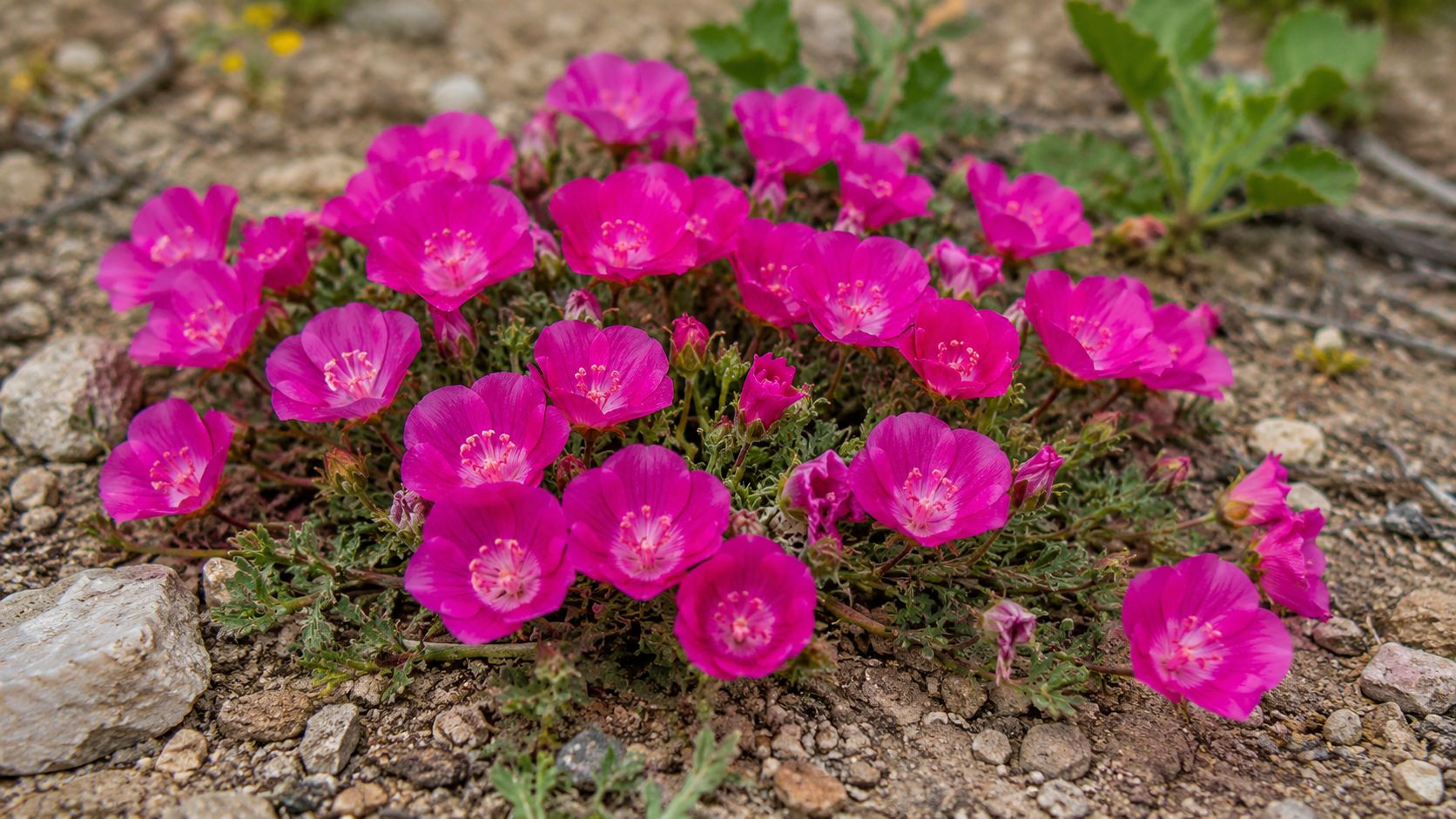
This is a strong answer for slopes, curb edges, pollinator beds, and sunny areas where mulch keeps washing away. In HOA entries and residential drainage corridors, it gives you a lower layer that doesn't fight the rest of the planting.
Best role for Winecup in DFW
Winecup is not a formal groundcover. That's part of its value. It works best where a naturalized look is welcome and where the bed needs a plant that can stretch, weave, and cover exposed soil.
On slopes, that habit matters. Bare soil in full sun dries fast, crusts over, and erodes during storms. A spreading native helps buffer all three.
If you're building a regionally appropriate planting plan, Rosewood's page on native plants for North Texas landscapes gives useful context for where Winecup fits. It's not the headline shrub. It's the plant that makes the whole bed function better.
How to use it well
Winecup responds best when you don't overmanage it.
- Use it in masses: A single plant gets lost. Repetition gives you the carpet effect.
- Keep the soil lean and draining: Rich, soggy beds aren't the goal.
- Skip the fertilizer: It doesn't need pampering.
- Let it naturalize: Self-seeding is a feature, not a flaw, in the right setting.
On slopes, a spreading native groundcover often does more practical work than another layer of shredded mulch.
It also pairs well with other low-water sun plants. Think desert marigold, blanket flower, or a taller shrub layer behind it. In those combinations, Winecup handles the foreground and keeps the planting from feeling bare between larger specimens.
6. Pride of Barbados (Caesalpinia pulcherrima)
If the site needs drama, Pride of Barbados delivers it. The orange-red flowers, open habit, and tropical character make it one of those plants people notice from the street.
That visual energy works well in higher-end residential gardens, poolscapes, and commercial beds that need a summer focal point. In the right place, it feels bold without needing much supporting cast.
Strong color for high-heat beds
Pride of Barbados belongs in the hottest parts of the garden. South-facing beds, reflective masonry edges, and wide-open exposure are where it performs best. It's a good answer when the design calls for a tropical look but the site still has to survive a Texas summer.
Still, this isn't a plug-and-forget shrub in DFW. The same issue that affects many supposed heat lovers applies here. Drainage has to be right, and winter behavior has to be expected rather than treated as a surprise.
Homeowners often get frustrated. They install a heat-loving plant, then place it in a low pocket of clay, keep the spray heads hitting it, and assume the sun was the problem when it declines.
What makes it worth planting
Pride of Barbados earns its place when the bed needs strong seasonal color and hummingbird appeal without relying on high-input annual rotations.
A few practical rules keep it performing:
- Plant after frost risk eases: Warm soil helps it move faster.
- Choose the hottest exposure you have: It wants full direct light.
- Amend the bed for drainage: Compost helps, but structure matters more than softness.
- Prune in late winter: Cutback encourages cleaner regrowth.
- Watch seed spread: Remove pods if you want tighter control.
In formal properties, I usually treat it as an accent rather than a foundation workhorse. One or several grouped in a bright, dry bed can look excellent. A whole row of them in the wrong soil can turn into a maintenance story no one wanted.
7. Lantana (Lantana horrida 'Esperanza' selections and native Texas varieties)
A west-facing bed in Dallas can punish the wrong plant by July. Soil bakes hard, reflected heat comes off the walk, and irrigation coverage is rarely as even as the plan says. Lantana holds up in those conditions better than many flowering perennials, which is why it stays in rotation on DFW projects.
It earns that spot because it solves a real problem. You get long-season color in full sun without chasing high water use or constant feeding. In North Texas clay, that matters. A plant that can bloom through heat and still tolerate lean soil gives you more margin for error, especially in beds where drainage is less than ideal.
Why it performs in DFW
Lantana wants direct sun and good runoff. Those two traits line up well with the tougher parts of this region, including parkway beds, mailbox zones, street-facing foundation beds, and other exposed areas where summer stress builds fast.
Native Texas types and tougher selections usually make the most sense here. They look more at home in regional plantings, support pollinators, and tend to recover better from heat, missed watering, and the uneven soil conditions we see across North Texas lots.
I use lantana where clients want reliable color but do not want a bed that turns into a weekly maintenance job. It is especially useful when we are also tightening irrigation schedules, because overwatering causes more trouble than slightly dry conditions once the plant is established.
How to keep it clean and productive
Lantana is durable, but placement still matters.
- Plant it high if you have heavy clay: A slightly raised bed or berm helps roots stay out of standing water.
- Keep spray heads off the crown: Wet feet and frequent overhead irrigation shorten its useful life.
- Skip heavy fertilizer: Too much nutrition pushes loose growth and fewer flowers.
- Cut it back in late winter: Hard pruning improves shape and encourages dense spring growth.
- Give it room: Crowding leads to a rougher outline and harder cleanup later in the season.
It also fits well in pollinator plantings with Winecup, salvia, and other long bloomers. In the right spot, lantana gives DFW properties exactly what full-sun beds often lack by midsummer: dependable color that can handle clay soil, heat, and a realistic water budget.
8. Flame Acanthus (Anisacanthus quadrifidus var. wrightii)
Flame Acanthus is one of the toughest flowering shrubs you can use in a North Texas full-sun bed. When a site is dry, exposed, and awkward, this plant often solves more problems than a flashier choice would.
It works on slopes, in native borders, around mailbox clusters, and in HOA common areas where irrigation may not be perfect. It also brings strong hummingbird activity, which gives the planting more life without adding maintenance.
A workhorse for hard sites
This is the kind of shrub I use when the location presents difficult outdoor conditions. Thin soil, reflected heat, long afternoon sun, and inconsistent water don't scare it once it has settled in.
A useful detail from practitioner recommendations is that Hummingbird Bush, grouped with other resilient full-sun Texas plants, grows 4 to 5 feet tall and wide and thrives in severe South Texas heat and dryness, with Zexmenia and Blue Sage also noted for low-water performance in the same discussion of top-performing sun plants, as shown in this Texas heat-tolerant plant video. Flame Acanthus fits that same practical class of plants designers lean on when heat resilience matters more than delicate foliage.
Best uses and trade-offs
The biggest advantage is reliability. The trade-off is appearance early in the season. Some homeowners worry it looks slow to wake up, then by summer it's doing exactly what it should.
That makes placement important:
- Use it where summer performance matters most: Sunny problem spots are ideal.
- Give it room to spread: Crowding cuts down its natural form.
- Cut it back in late winter: That keeps it denser and tidier.
- Pair it with stronger structure plants: Texas Privet behind it or lantana nearby makes the composition feel complete.
If a bed bakes all afternoon and the irrigation is less than perfect, start with plants that can forgive the site. Flame Acanthus usually can.
For slope work, it's even more useful when combined with drainage planning. A shrub that tolerates heat is good. A shrub placed correctly in a bed that sheds water is better.
Full-Sun Texas Plants, 8-Species Comparison
In DFW, a plant that handles "full sun" on paper can still fail fast in a west-facing bed with reflected heat, tight clay, and uneven irrigation coverage. This comparison is more useful when you read it as a problem-solving chart. Which plant fits a large yard that needs shade later, a hot slope that dries out by noon, or a front bed where roots stay wet too long after a storm?
| Plant | Implementation complexity | Resource requirements | Expected outcomes | Ideal use cases | Key advantages |
|---|---|---|---|---|---|
| Texas Red Oak (Quercus buckleyi) | Moderate. Large-tree planting, slower establishment, early structural pruning | Low to moderate water after establishment, decent drainage, wide spacing | Durable shade canopy, strong fall color, wildlife value | Large residential yards, commercial properties, street tree placements | Native, heat-tolerant, long-lived, strong anchor tree for North Texas |
| Desert Rose (Adenium obesum 'Texas Star') | Moderate. Demands sharp drainage and cold-season protection | Very low water, fast-draining potting mix or raised planting, frost protection in DFW | Sculptural form with heavy pink to red bloom through warm weather | Containers, courtyards, highly visible accent beds | High color impact, thrives in heat, low irrigation demand |
| Texas Privet (Forestiera pubescens) | Low. Easy shrub installation, light shaping as needed | Low water after establishment, tolerates heavier soils and some compaction | Dense screening, small flowers, berries for birds | Property edges, privacy screening, habitat-focused borders | Native, durable, forgiving in tough soils, useful structure |
| Esperanza (Tecoma stans) | Low to moderate. Fast growth means periodic pruning and freeze recovery | Low to moderate water in year one, full sun, drainage that does not stay soggy | Long bloom season, bright yellow flowers, strong hummingbird activity | Sunny entries, color beds, focal shrub groupings | Reliable summer bloom, quick establishment, handles heat well |
| Winecup (Callirhoe involucrata) | Low. Easy from transplants, spreads steadily as groundcover | Very low water, lean soil, room to run | Low magenta bloom cover, soil hold on slopes, pollinator support | Slopes, bed edges, native flower groupings, erosion-prone areas | Excellent drought tolerance, low upkeep, useful ground-level coverage |
| Pride of Barbados (Caesalpinia pulcherrima) | Moderate. Fast seasonal growth, freeze tender, needs spring cleanup | Low to moderate water, full sun, sharp drainage | Bold orange and red bloom, airy form, hummingbird interest | Accent beds, pool areas, seasonal focal points, mass color plantings | Strong heat performance, long flowering window, dramatic color |
| Lantana (Lantana horrida 'Esperanza' selections and native Texas varieties) | Low. Simple to install, occasional cutback keeps it full | Very low water after establishment, full sun, drainage that dries between cycles | Long-lasting bloom, strong butterfly and bee traffic, dependable summer color | Mass plantings, pollinator gardens, curbside beds, dry sunny zones | Tough in heat, forgiving with irrigation gaps, long bloom period |
| Flame Acanthus (Anisacanthus quadrifidus var. wrightii) | Low to moderate. Benefits from space and late-winter cutback | Very low water, full sun, room for natural spread | Coral-orange blooms through heat, hummingbird draw, loose natural form | Hot slopes, naturalized borders, low-water beds, difficult afternoon sun exposures | Native, handles heat well, long bloom season, dependable in harsh sites |
A few trade-offs matter in real installs. Texas Red Oak pays off over time, but it needs room and patience. Desert Rose gives fast visual impact, yet it is better treated as a container specimen in North Texas because winter can set it back hard. Pride of Barbados and Esperanza both sell color well in summer, but freeze damage and spring timing need to be part of the plan.
Soil and irrigation usually decide whether these plants perform the way the tag promises. In DFW clay, Winecup, lantana, Texas Privet, and Flame Acanthus are often the safer picks for difficult beds because they tolerate heat stress and imperfect watering better than fussier choices. For plants that need faster drainage, we usually get better results by changing the bed build, adjusting run times, or keeping them in raised areas and containers instead of forcing them into a flat clay pocket.
That is the value of a side-by-side comparison. It helps match each plant to the actual problem on site, whether that is screening, slope stabilization, pollinator activity, or surviving a brutal west exposure with less water and fewer callbacks.
Build Your Sun-Proof Landscape with Expert Help
A bed can look great in May and struggle by August. In DFW, that usually starts with a simple mismatch. A plant that wants sharp drainage gets dropped into tight clay. A west-facing foundation bed gets the same watering schedule as a shaded side yard. Spray heads soak trunks and crowns, and the extra water invites stress instead of solving it.
Getting good results in full sun takes more than picking tough species from a list. Plant selection, grade, drainage, and irrigation settings have to work together on the actual site. Even plants that handle drought once established still need correct watering during the first season, as noted by the Native Plant Society of Texas on low-maintenance drought-tolerant perennials. In North Texas, “low water” only works after the root system is established in the right conditions.
Plant sourcing matters too. A solid planting plan can still fall apart if the best material is unavailable, oversized for the space, under-rooted in the container, or installed at the wrong time of year. I see that problem often with specialty sun plants and heat-tolerant selections that look good on paper but are inconsistent at retail. Professional sourcing helps control quality, timing, and substitution choices before those problems show up in the bed.
The properties that hold up best are managed as connected systems. Trees change sun exposure and water demand. Drainage affects oxygen in the root zone. Irrigation affects survival, growth rate, and disease pressure. Plant health care catches mites, chlorosis, and stress decline before an entire planting area starts to thin out.
Rosewood Group handles those pieces together. Their team works on design, installation, irrigation optimization, drainage correction, seasonal service, and plant health care with North Texas conditions in mind. That matters whether the job is a Highland Park estate, an Uptown commercial frontage, an HOA entry, or a backyard with brutal afternoon exposure. The goal is simple. Put the right plant in the right place, build the bed correctly, water it properly, and keep small problems from turning into replacement cycles.
If your current beds keep failing, stop swapping plants one at a time and hoping the next one survives. Start with a site review, fix the soil and water issues, and build a garden that fits DFW heat, clay, and long dry stretches.
If you want a DFW outdoor space that can handle hard sun, clay soil, and long summers without turning into a constant repair job, contact Rosewood Landscape Group. Their team can inspect your site, diagnose what is causing plant stress, and build a planting, irrigation, and maintenance plan that fits how North Texas properties really perform.
Related posts
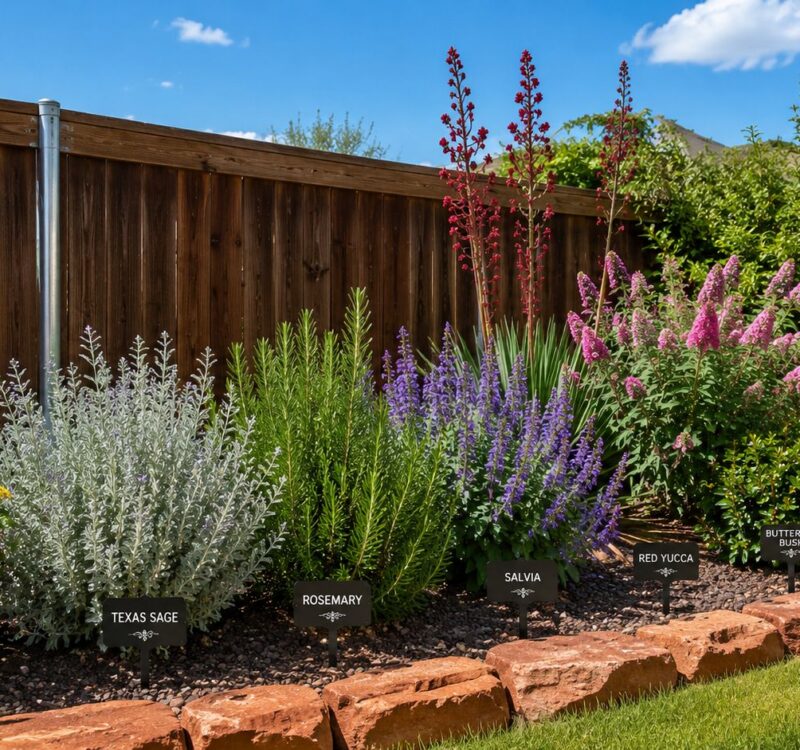
8 Best Shrubs for North Texas Landscapes in 2026
Permeable Paver Installation: A DFW Homeowner’s Guide
Zoysia Grass Fungus: Identify, Treat & Prevent in 2026
How to Improve Soil Quality: Easy Ways to Improve Soil
Take All Root Rot: Diagnose & Treat Your Lawn