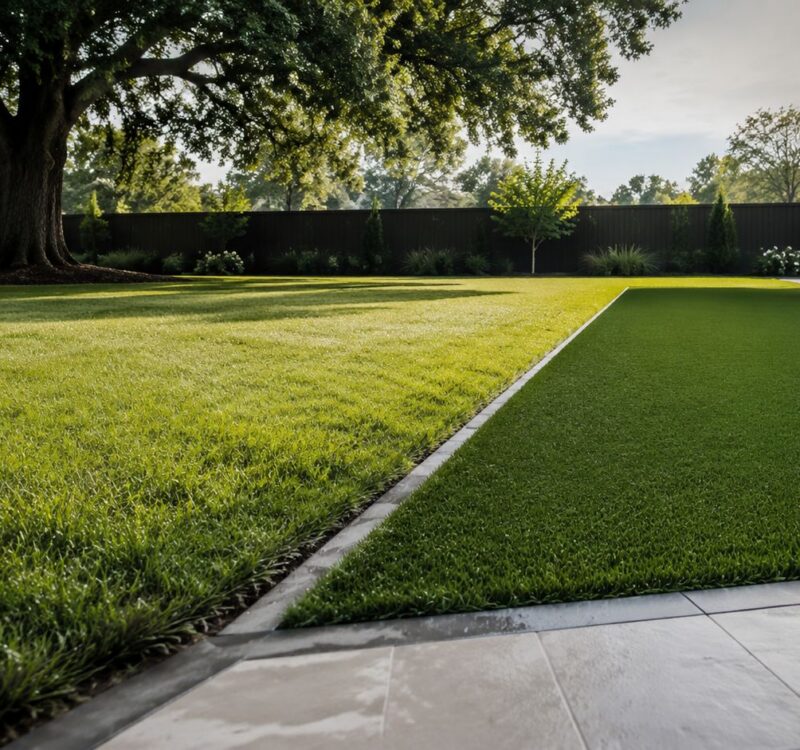
August in DFW exposes every weakness in a yard. The lawn turns patchy, the beds look tired by late afternoon, and the water bill shows up right when you're wondering whether keeping anything green is worth it.
Most homeowners don't have a plant problem first. They have a system problem. North Texas yards deal with punishing heat, dense clay soil that seals up when wet and cracks when dry, and storm patterns that swing from nothing for weeks to a hard, fast downpour. A pretty outdoor space that ignores those conditions won't stay pretty for long.
Rethink Your DFW Yard to Save Water and Beat the Heat
A lot of people hear water conservation landscaping and picture gravel, a few cactus, and a yard that looks unfinished. That's not what works in Dallas-Fort Worth. A well-designed water-wise yard here can still feel full, shaded, colorful, and comfortable. The difference is that every part of it is chosen and built for North Texas conditions instead of copied from a cooler, wetter region.

The true scale of water use is often underestimated. Approximately one-third of all urban water use and one-half of residential water consumption in the United States is directed specifically to outdoor watering, making it the largest outdoor water use category in most cities, according to the California Landscape Contractors Association water conservation statement.
That matters in DFW because many yards were built around large lawn areas, spray-head irrigation, and foundation shrubs that all get watered on the same schedule. That setup wastes water in summer and still leaves parts of the grounds stressed.
What a better DFW yard actually looks like
A resilient North Texas yard usually rests on three things:
- Smarter plant placement so full-sun plants handle the hottest exposures and tougher plants anchor reflected-heat areas near pavement and walls
- Efficient watering so turf, shrubs, and perennial beds aren't all treated like they need the same amount of irrigation
- Healthy soil management so clay holds moisture where you want it instead of shedding runoff or suffocating roots
Those three pieces work together. If you install native and adapted plants but keep watering them like bluegrass, they decline. If you swap spray heads for drip but leave compacted clay untouched, roots still struggle. If you improve the soil but ignore drainage, a gully-washer can still flood the root zone.
Practical rule: In DFW, the goal isn't to make the yard survive on neglect. The goal is to make it handle heat and erratic rain without constant rescue.
Beauty and water savings can live together
The best water-wise plantings in North Texas don't look stripped down. They use structure. Evergreen shrubs, durable ornamental grasses, flowering perennials, and shade from the right tree in the right place can make a yard feel richer than a plain rectangle of lawn.
You're not giving up curb appeal. You're trading weak, thirsty square footage for a yard that holds up better in August and rebounds faster after weather swings.
Your Landscape Blueprint Starts with a Site Audit
Most bad garden projects start at the nursery, not the property. A homeowner buys plants that look good on a bench, brings them home, and tries to force them into spots that stay too wet, bake all afternoon, or catch roof runoff.
Start with the yard you have.
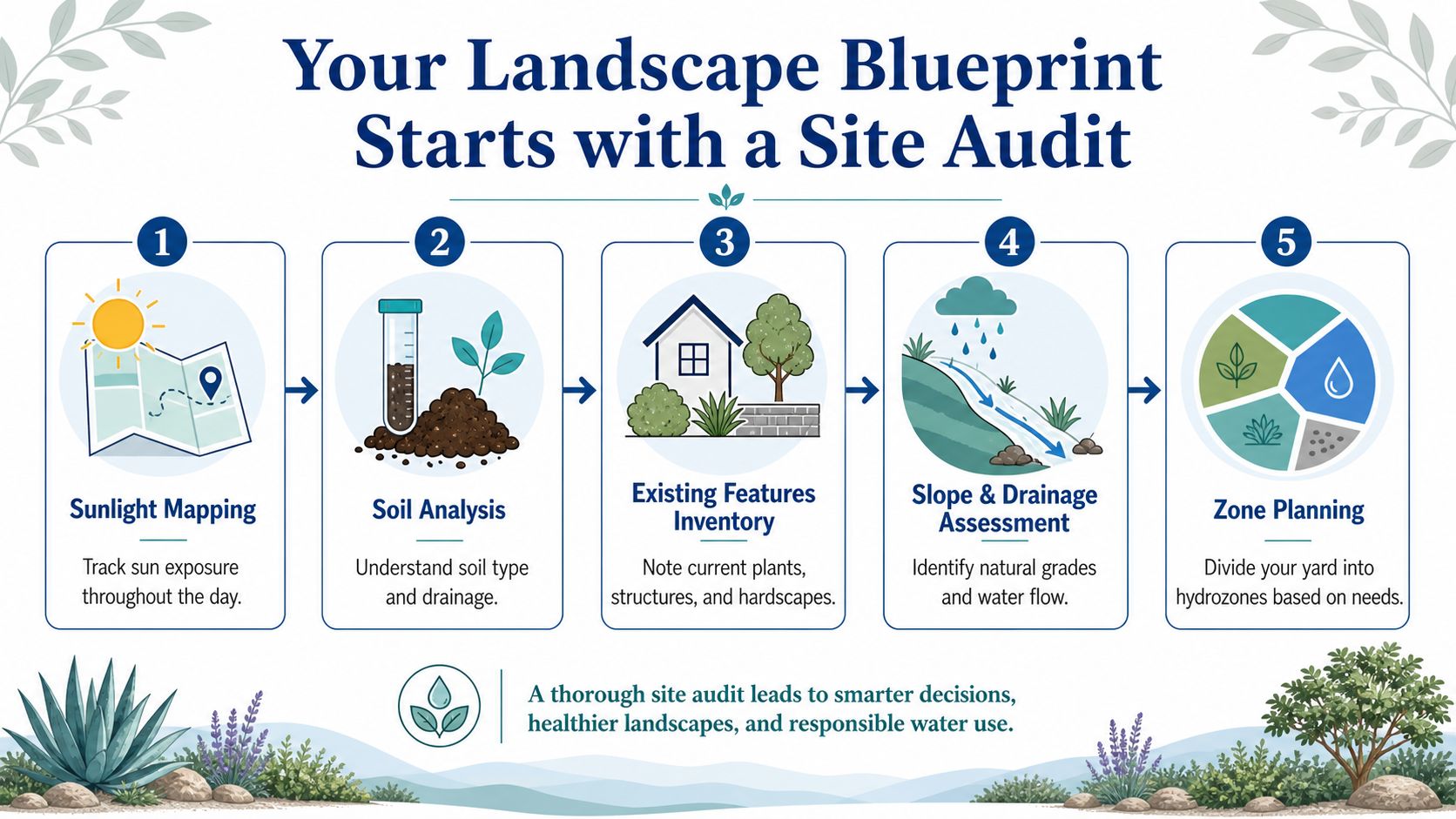
Map sun and heat exposure
Walk the property in the morning, early afternoon, and late afternoon. Notice more than shade. Notice heat load. In DFW, a west-facing bed near a brick wall can be much harsher than an open area with morning sun.
Use a simple sketch and mark:
- Full sun areas that stay exposed through the hottest part of the day
- Part-shade zones where plants get relief by mid or late afternoon
- Reflected heat spots near driveways, pool decking, stone walls, and south or west-facing masonry
- Protected pockets near fences, courtyards, or under tree canopy
Do this before you think about plant names. If you skip this step, you'll keep replacing plants that were never suited to the location.
Test how your soil behaves
DFW clay isn't all the same, but most homeowners are dealing with heavy soil that compacts easily and drains unevenly. One bed may stay sticky after rain while another bakes hard and cracks.
Do a basic field test.
- Dig a small hole in a few parts of the yard, especially low areas and sunny beds
- Fill it with water and watch how it moves
- Check the texture in your hand. If it smears, clumps tightly, and sticks, you've got the classic clay behavior that needs management
- Look for roots from nearby trees, because root competition changes how quickly a bed dries out
Follow the water after rain
Many North Texas yards reveal the core problem. Water conservation isn't only about using less irrigation. It's also about keeping rainfall on site long enough to benefit the plantings.
After a storm, note:
- Where water sheets off toward the sidewalk or street
- Where puddles sit in turf or beds
- Which downspouts dump fast into planting areas
- Where erosion starts on even a mild slope
If a yard can't direct rain properly, the irrigation system ends up compensating for design mistakes.
Find the fixed constraints
Before you draw anything final, mark the elements you can't ignore.
| Site element | Why it matters |
|---|---|
| Existing sprinkler heads | They shape what can be watered efficiently and what needs retrofitting |
| Downspouts | They can become an asset or a source of flooding |
| Utility lines and meters | They limit digging, tree placement, and drainage work |
| Driveways, patios, and walks | They create runoff and reflected heat |
| Foundation edges | They affect grading and bed depth |
A good site audit gives you the basis for hydrozones, drainage improvements, and smarter plant placement. Without it, even a nice design often turns into expensive maintenance.
Choosing Plants That Thrive in DFW Clay and Sun
Plant selection is where homeowners usually get excited, and where they often make expensive mistakes. In North Texas, the right plant isn't just one that can “handle drought.” It also needs to tolerate clay, heat bounce from hardscapes, sudden heavy rain, and winters that can still turn sharp.
Good water-efficient garden design doesn't mean filling the yard with only one category of plant. It means building layers that match the site. The payoff can be substantial. The U.S. Department of Energy notes that implementing xeriscaping principles such as native or low-water plants, limiting turf to practical areas, improving soil with compost, and using drip irrigation yields verified water savings of 25 to 50% in residential outdoor areas on its landscaping water conservation guidance.
Start with hydrozoning, not a shopping list
Hydrozoning means grouping plants with similar water needs together. This is one of the most practical planning moves a homeowner can make.
Don't mix a low-water Texas native with a shrub that wants regular moisture and then expect one irrigation schedule to keep both happy. It won't. One will stay too wet, or the other will stay too dry.
A simple DFW layout often looks like this:
- Low-water zones in hot strips, parkway beds, and foundation areas away from turf
- Moderate-water zones near outdoor living spaces where you want a fuller look
- Shade zones under established trees where irrigation needs are different and root competition is real
- Functional turf zones only where grass earns its place
For a deeper look at regionally appropriate plant options, this guide to native plants for North Texas is a useful companion when you start narrowing selections.
DFW-proven plants worth using
This isn't a master list. It's a practical starting point for plants that regularly fit North Texas conditions when they're placed correctly.
| Plant type | Good options | Best use |
|---|---|---|
| Perennials | Blackfoot Daisy, Turk's Cap, Salvia | Seasonal color, pollinator support, tough bed edges |
| Shrubs | Texas Sage, Yaupon Holly, Dwarf Yaupon | Foundation structure, screening, evergreen mass |
| Small trees | Texas Redbud, Desert Willow, Yaupon tree form | Light shade, focal points, entry framing |
| Groundcovers | Frogfruit, trailing lantana, hardy sedges in the right exposure | Slope coverage, bed knitting, lawn reduction |
| Accent grasses | Gulf Muhly and other regionally adapted grasses | Soft texture, movement, heat tolerance |
What works and what usually disappoints
Plants fail in DFW for predictable reasons. The label says “full sun,” but the plant goes into blazing western exposure next to reflected masonry. A native goes into a bed that stays soggy because the grading is wrong. A shrub that can handle clay gets installed in compacted subsoil with no improvement around the root zone.
Field observation: The right plant in the wrong irrigation zone dies just as reliably as the wrong plant in the right soil.
Use tougher, lower-water plants where the site is harsh. Save the thirstier or more delicate choices for areas where shade, soil prep, and irrigation can support them.
The best-looking North Texas yards rarely rely on constant bloom. They use a backbone of evergreen shrubs, strong forms, seasonal waves of color, and repetition so the yard still reads as intentional in the hottest stretch of summer.
Optimize Irrigation and Master Rainwater
You convert part of the yard, cut back the turf, install tougher plants, then July hits. The controller keeps running on the old lawn schedule, the beds stay wet, and the new plants start yellowing from the roots up. I see that mistake all over DFW.
Most water-saving projects fail at the controller, not the plant list. Beds and turf do not need the same delivery method, run time, or frequency. If the irrigation setup never changed after the planting changed, the yard is still using water like nothing happened.
A University of Idaho review on water conservation through native landscaping describes a common problem in converted yards. Irrigation controllers often remain set for turf, which leads to overwatering and poor plant performance.

Stop watering beds like they are lawn
Spray heads have their place. Mixed beds are usually not it.
In North Texas heat, overhead spray in beds loses water to wind, wets mulch instead of root zones, and throws water onto walks, edging, and fences. It also creates shallow moisture patterns in our clay, which encourages weak rooting and inconsistent plant health.
A proper retrofit usually includes:
- Replacing spray heads in beds with drip tubing or point-source emitters
- Using micro-sprays only where spacing and coverage justify them
- Splitting turf from shrub and perennial zones so each area can run on its own schedule
- Resetting the controller by exposure and season instead of leaving every zone on the same program
Older systems can often be improved without tearing everything out. Homeowners comparing upgrades, inspections, and retrofits can review DFW water irrigation system services before deciding what to change.
Build zones around real conditions
Hydrozoning sounds simple until you map a DFW property. One yard can have a west-facing bed cooking against brick, a shaded side yard under live oaks, a narrow hellstrip by the street, and a back patio area where the owner wants a greener look. Running those spaces on one schedule wastes water and shortens plant life.
Set zones by how the site behaves:
- Full-sun, reflected-heat areas need different timing than shaded beds
- Turf zones need separate valves from planting beds
- Foundation areas often need tighter control because of runoff, heat, and structural concerns
- Decorative annual pockets should not share a valve with low-water shrubs if you want either one to perform well
If one zone contains plants with very different moisture needs, the compromise shows up fast. One group stays thirsty. The other stays too wet.
Use rain like part of the irrigation plan
DFW does not just deal with drought. It deals with hard, fast rain that arrives in a rush and leaves before the soil can benefit. On heavy clay, that means runoff, erosion, and water moving to the wrong place.
The fix is not deeper watering in one spot. The fix is slowing water down and spreading it across the yard where roots can use it.
The most reliable moves are simple:
- Create shallow collection basins around bed areas so runoff pauses and infiltrates
- Direct downspouts into planted zones with gentle grading instead of dumping onto pavement
- Use dry creek channels or rock swales where overflow has to move across the property
- Install splash blocks or rock pads at discharge points to keep water from cutting through mulch and exposed soil
That approach matters in clay. Concentrated water tends to run off or sit too long. Broader capture gives the soil more time to absorb it.
Common DFW mistakes that waste water
These show up again and again, even in expensive yard renovations:
- Short, frequent watering that keeps the surface damp and roots shallow
- Sprinkler arcs still hitting concrete after turf was reduced and beds were expanded
- Low spots holding stormwater around plants that need faster drainage
- Downspouts dumping beside the house while the irrigation system tries to compensate somewhere else
- One controller program for the whole property despite major differences in sun, slope, and soil moisture
Irrigation and drainage need to be designed together. In North Texas, that is the difference between a yard that coasts through summer and one that struggles every time weather swings from 105 degrees to a gully-washer.
The Unseen Heroes Soil Health and Mulch
A lot of DFW watering problems start below the surface. Homeowners see dry plants, run the system longer, and still get poor results because the soil is compacted, crusted, or sealed over after hard rain. In North Texas clay, root health usually limits water efficiency before sprinkler runtime does.
Soil structure decides whether water soaks in, ponds, or runs off.
Compost helps, but only when it is used across the garden bed instead of packed into one planting hole. Expanded shale can also earn its place in heavy clay because it creates pore space that compost alone does not always maintain through our wet-dry cycles. That matters in DFW, where the same soil can be sticky after a storm and concrete-hard two weeks later.
Build a root zone that can actually function
The common mistake is creating a soft pocket inside dense clay. Water collects in that amended hole, roots circle in the easy soil, and the plant struggles once summer stress hits.
Prepare the whole bed when possible so roots can move outward and water can spread more evenly through the soil profile.
A practical approach looks like this:
- Loosen soil across the full planting area, not just the hole
- Blend compost into the bed soil so organic matter is distributed instead of layered
- Add expanded shale where dense clay needs more air space
- Stay off wet soil during installation because working clay wet often makes compaction worse
- Mulch after planting so the improved surface does not bake and crust over
This broader prep is especially important for shrubs, perennials, and young trees. They establish faster when the surrounding bed supports root growth instead of acting like a wall.
Mulch does more work than most homeowners realize
In North Texas, mulch is part of the water-management system. It shades the soil, cuts evaporation, softens surface temperatures, and reduces the crusting that makes clay shed water during a summer storm. It also protects the soil surface from being hammered apart by irrigation and gully-washer rain.
Depth matters. In most beds, 3 to 4 inches of organic mulch is a good working range. Less than that burns off fast in summer and leaves bare spots. More than that can hold too much moisture against crowns, bury flare at the base of trees, and create pest and rot problems.
A few habits separate mulch that helps from mulch that causes problems:
- Keep mulch pulled back from trunks, stems, and plant crowns
- Refresh thin areas before the hottest stretch of summer
- Use shredded hardwood or other organic mulch that breaks down gradually
- Watch low spots where mulch can drift and pile up after heavy rain
Timing matters too. If you are planning a refresh, this guide on why now is the perfect time to lay mulch in Dallas and North Texas gives a practical local schedule.
Healthy soil and proper mulch will not replace irrigation. They make each gallon more useful, which is exactly what a DFW yard needs when heat, clay, and sudden storms all work against you.
Smart Hardscapes and Functional Turf Areas
The lawn usually dominates water use because it dominates square footage. That doesn't mean every DFW yard should remove all grass. It means grass should justify itself.
A useful question is simple. What is the turf doing for you?
Keep turf where it earns the water
Functional turf still makes sense in a lot of North Texas yards. Kids need a play area. Dogs need a durable run. Some homeowners want a clean panel of grass off the patio because it makes the backyard feel open and usable.
The mistake is keeping broad lawn areas that serve no purpose except tradition.
Use this filter when deciding what stays:
- Keep turf where people walk, play, or gather
- Reduce turf in narrow side yards, steep strips, hell strips by the street, and awkward corners that are hard to irrigate evenly
- Replace turf where mature trees, drainage issues, or reflected heat already make grass a constant struggle
Hardscape can lower water demand and improve the yard
A better patio, gravel path, or permeable paving area often adds more daily value than another patch of thirsty lawn. It also reduces the irrigated footprint of the property.
Permeable and semi-permeable surfaces can help in DFW because they interrupt runoff and make stormwater easier to manage. Gravel paths, decomposed-granite style walkways where appropriate, stepping stone routes, and permeable pavers can all work if the base prep is right for clay.
Good hardscape planning also solves practical problems:
| Hardscape move | What it helps solve |
|---|---|
| Expanded patio | Reduces unnecessary turf and creates usable living space |
| Gravel or permeable path | Handles foot traffic without needing irrigation |
| Dry creek detail | Moves overflow and doubles as a landscape feature |
| Composite deck | Creates shade-side function where grass may never perform well |
Lawn alternatives need honesty
Groundcovers can reduce water use and soften an outdoor space, but they aren't a direct substitute for a play lawn. They work best where you want visual coverage, erosion control, or lower maintenance foot traffic.
Synthetic turf is another option for selected spaces, especially where homeowners want a clean look without irrigation demand. It isn't the answer everywhere, especially in the hottest reflected-heat zones, but in the right location it can remove a chronic water user and keep the yard functional.
The strongest designs in DFW usually combine all three. They keep some real turf, add useful hardscape, and convert dead zones into planting beds or groundcover instead of trying to make every square foot do the same job.
Long-Term Care Rebates and ROI
A well-planned water-saving yard should settle down after the first establishment period. In DFW, that usually means fewer emergency sprinkler tweaks in August, fewer washed-out beds after a hard rain, and fewer plant replacements because the wrong material baked in reflected heat or sat too long in wet clay.
That is the payoff homeowners notice first.
Once the irrigation schedule, drainage flow, and plant choices match the site, upkeep gets more predictable. You still prune, check emitters, refresh mulch, and watch the weather. The difference is that you are maintaining a system that fits North Texas instead of constantly rescuing one that never did.

What maintenance looks like after conversion
In most DFW yards, long-term care comes down to a few steady habits:
- Seasonal irrigation checks so controllers, drip zones, and spray heads match current weather and root depth
- Mulch top-offs after summer heat and heavy storms thin coverage or expose clay
- Selective pruning to control size and keep airflow without triggering weak, thirsty regrowth
- Early weed control before open beds fill in with crabgrass, spurge, or sticker-producing weeds
- Drainage checks after major rain to catch ponding, channeling, and soil sealing before they become repair jobs
This kind of upkeep is lighter in the right places and more deliberate in the places that matter. That is a better target than chasing the idea of a no-maintenance garden, which does not exist in Texas.
The financial return usually comes from several small wins
The strongest return rarely hinges on one big change. It comes from lower water use, less turf to mow and feed, fewer failed plants, and fewer cleanup costs tied to erosion or runoff. In clay soil, drainage corrections matter here more than many homeowners expect. A bed that stops washing out every time we get a gully-washer saves money year after year.
There is outside evidence that rebate-supported water-saving conversions can cut household water use in a meaningful way. In drought-prone Sacramento, participants in rebate-backed yard conversions saw an average decrease in water use, according to the Journal of Urban Ecology study on water-wise residential landscaping.
Sacramento is not DFW, so treat that as proof of concept, not a local guarantee. North Texas has different soils, different storm patterns, and different summer stress. Even so, the same principle holds. The best returns usually come from combining turf reduction, irrigation fixes, and drainage or soil improvements instead of treating each one as a separate project.
DFW rebates and program checks worth making
Rebate programs change often, and the details vary by city, water district, and utility provider. Before you start work, confirm current rules, deadlines, and required documents with the agency that serves your address.
The best places to check are:
- Dallas Water Utilities for current conservation programs, approved equipment, and application requirements
- City of Fort Worth water conservation resources for active residential incentives and water-saving guidance
- Your local utility or municipality if you live in a suburb, since program rules often change from one service area to the next
- HOA documents and approval steps before front-yard turf changes or visible design updates
Keep records from day one. Save the irrigation proposal, controller model, plant list, receipts, and before photos. Many programs want clear proof that the yard or watering system changed in a qualifying way.
A smart conversion pays back in more than one column of a budget. It can lower water waste, reduce routine labor, improve stormwater control, and keep the property looking settled through a hard Texas summer. That combination is what makes these projects pencil out.
If your yard is fighting clay soil, summer heat, runoff, and uneven irrigation all at once, Rosewood Landscape Group can help you evaluate the whole system. That includes planting design, drainage corrections, irrigation upgrades, hardscape planning, and practical improvements that fit North Texas conditions rather than working against them.
Related posts
8 Best Shrubs for North Texas Landscapes in 2026
Permeable Paver Installation: A DFW Homeowner’s Guide
Zoysia Grass Fungus: Identify, Treat & Prevent in 2026
How to Improve Soil Quality: Easy Ways to Improve Soil
Take All Root Rot: Diagnose & Treat Your Lawn