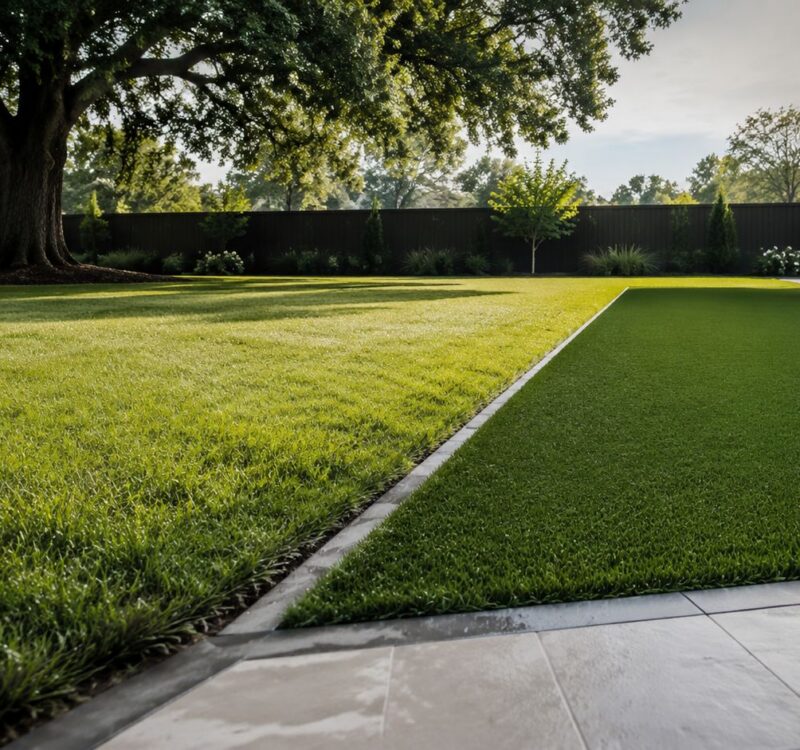
By late May in Dallas-Fort Worth, the lawn usually starts talking back. The color loses a little punch. Footprints linger longer. The strip by the driveway looks rough before the rest of the yard does. You know what's coming, because June in North Texas isn't a warm-up. It's the handoff into real summer.
That's where a lot of homeowners get tripped up. They follow generic summer lawn maintenance advice written for milder climates, keep chasing dark green color through the hottest stretch of the year, and end up wasting water while stressing Bermuda or St. Augustine even more. DFW lawns need a different playbook. The right move here is usually not “push growth harder.” It's manage stress, protect roots, and use water with intention.
Thriving Through the Texas Heat Your DFW Lawn Plan
A DFW lawn in summer lives or dies by how early you adjust. If you wait until July to raise the mower, fix sprinkler coverage, or rethink your watering schedule, you're already behind. The yards that hold up best through August usually aren't the ones getting the most attention. They're the ones getting the right attention in June.
North Texas gives you two big realities to work around. First, our common turf types, especially Bermuda and St. Augustine, respond differently to heat, foot traffic, and irrigation. Second, water use climbs hard in summer. In North Texas, approximately 31% of potable water supply is dedicated to green spaces and gardens annually, but that jumps to between 60% and 70% during the summer months according to this North Texas irrigation discussion. That's exactly why efficient watering matters more here than almost anywhere else.
What DFW homeowners usually see first
The first signs of trouble are rarely dramatic. More often, it looks like this:
- Driveway edge stress because pavement throws extra heat onto nearby turf
- Uneven color where sprinkler coverage is weak or blocked
- Faster wilting in the afternoon even though the lawn looked fine in spring
- Scalped high spots from mowing too low on uneven ground
- Nighttime humidity issues that turn minor stress into fungus pressure
Those aren't separate problems. They feed each other.
Practical rule: In DFW, summer lawn maintenance is less about making grass grow fast and more about helping it avoid unnecessary stress.
The survival mindset works better than the perfection mindset
A lot of national lawn content assumes your goal is a summer lawn that looks like a golf fairway every week. That's not realistic for most DFW properties, especially under watering restrictions and extended heat. A healthier standard is simpler. Keep the lawn dense enough to protect the soil, hydrated enough to protect the crown and roots, and stable enough to recover when nights cool off.
That means every decision has a trade-off:
| Choice | What it helps | What it can hurt |
|---|---|---|
| Mowing taller | Shades soil, slows moisture loss | Can look less “manicured” to some homeowners |
| Watering deeply | Builds stronger rooting | Requires timing and coverage checks |
| Skipping summer feeding in peak heat | Reduces burn risk | Lawn may not look aggressively green |
| Allowing controlled dormancy | Saves water, reduces stress | Lawn turns gold instead of staying green |
Once you accept those trade-offs, the work gets clearer. June is for setup. July is for restraint. August is for consistency and planning the recovery window. That's the rhythm that works in North Texas.
June Lawn Care Acclimation and Preparation
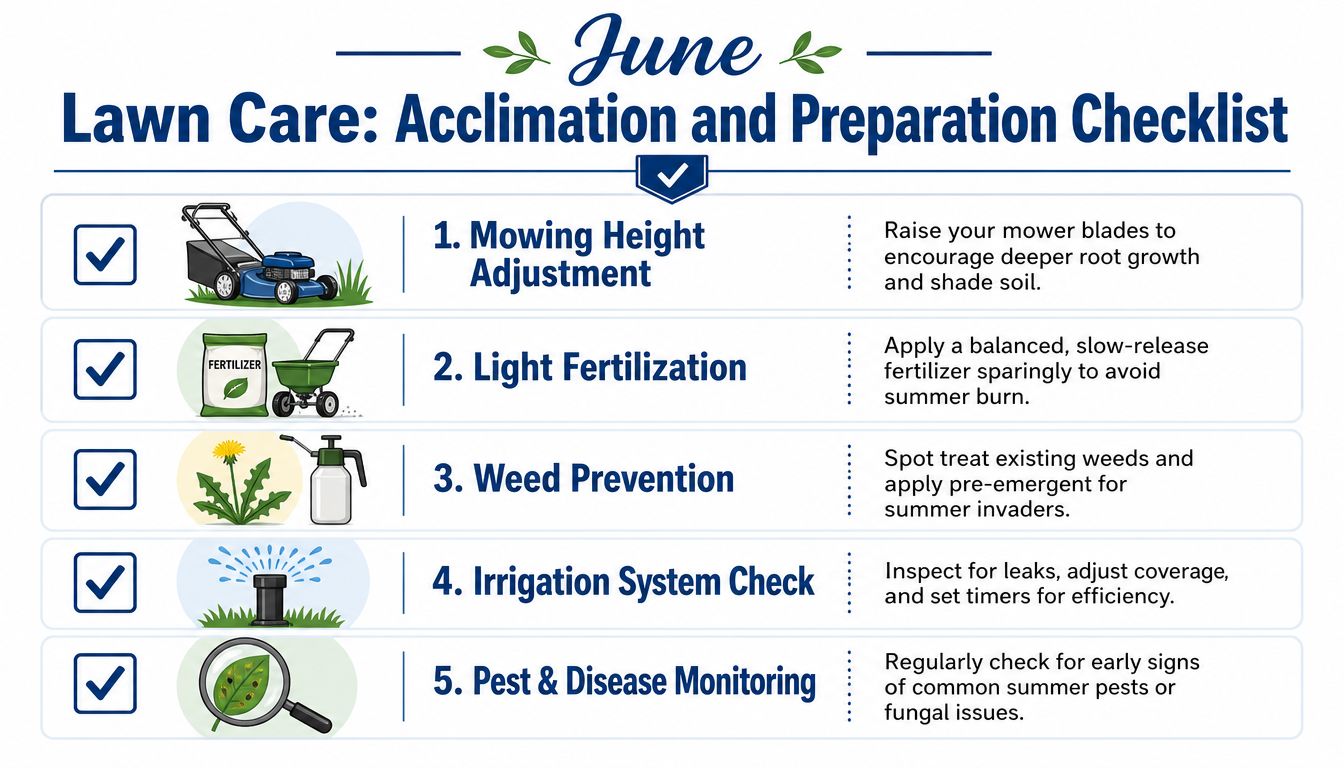
June is when you harden the lawn for the stretch ahead. If May still lets you get away with sloppy habits, June won't. This is the month to stop mowing like it's spring, stop watering by guesswork, and stop assuming every zone on your irrigation system is doing the same job.
Start with mowing height and blade condition
Your mower setting is one of the biggest levers you control. Mowing height should stay in the 2.5 to 3.5 inch range, and you should follow the 1/3 rule, meaning you never remove more than one-third of the leaf blade at a time. Clean cuts matter too. Cutting too low or mowing with dull blades increases turf mortality by 25% according to this lawn maintenance guide.
For DFW lawns, that usually means letting St. Augustine ride on the taller side through summer. Bermuda gives you more flexibility, but most homeowners still do better when they avoid trying to keep it too short once the heat settles in.
Use this June checklist:
- Raise the deck: Give the turf more leaf surface so it can shade soil and protect the crown.
- Sharpen the blade: Torn grass tips lose moisture faster and look stressed quicker.
- Slow the schedule if needed: If growth slows, don't mow just because the calendar says it's time.
- Watch the high spots: Scalping starts on humps and edges first.
Lock in your irrigation before the real heat arrives
DFW summer lawn maintenance works best with deep, infrequent watering. In practice, that means aiming for solid soaking sessions instead of quick daily sprinkles. The point is to move water down into the root zone, not just darken the surface for a few hours.
A simple way to audit your system is the can test. Set out a few straight-sided cans across one zone, run the system, and compare what each spot collects. If one area is getting soaked while another is barely wet, your runtime isn't the only issue. Coverage is.
A few June irrigation tasks matter more than people think:
- Run every zone in daylight once so you can catch broken heads, tilted sprays, and blocked nozzles.
- Check overlap near sidewalks, fence lines, and corners.
- Measure output with cans instead of guessing.
- Adjust timers for early morning, not evening.
If you're dealing with uneven coverage, pressure issues, or a system that never seems to water consistently, it helps to look at a professional water irrigation system service for DFW properties.
Wet grass at sunrise is normal. Wet grass late at night is where trouble starts.
Make June decisions that reduce July problems
June is also your last comfortable window to avoid common summer mistakes. Don't force heavy top growth going into brutal weather. Don't combine mowing stress with aggressive chemical applications unless there's a clear reason. Don't ignore drainage patterns just because the lawn still looks decent after a watering cycle.
A good June lawn usually has three things going for it: the grass is being cut cleanly, the irrigation is being measured instead of guessed, and the homeowner has stopped trying to make every area look identical. In DFW, the sunny strip by the street, the side yard with reflected heat, and the shaded backyard won't behave the same. Managing them like they will is where waste starts.
July Lawn Care Peak Summer Survival Mode
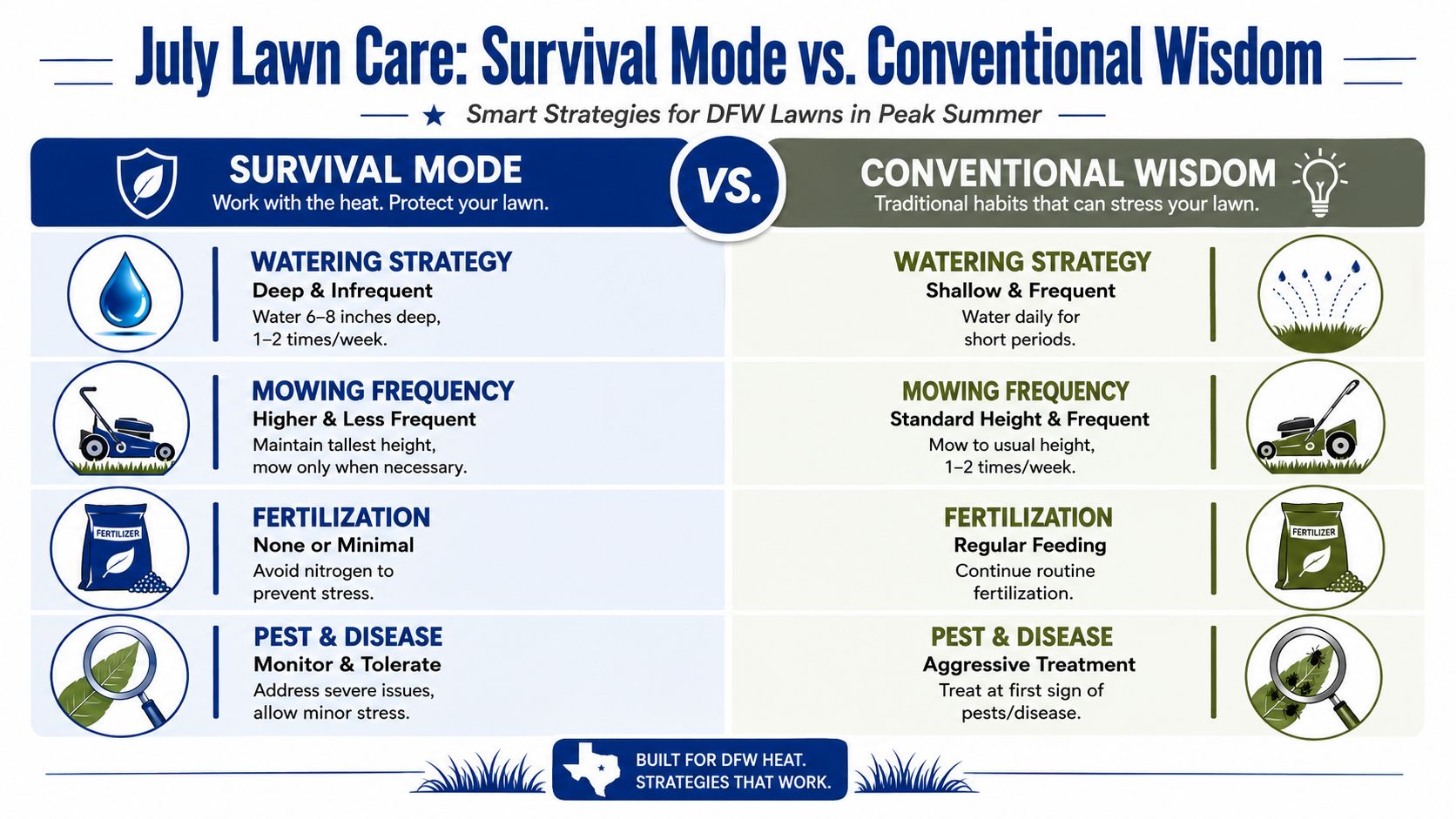
July is where the mindset has to change. This isn't the month to chase lush growth. It's the month to decide what kind of stress you're willing to tolerate and what kind of damage you want to prevent. A lawn can survive summer looking less impressive. It won't survive being pushed too hard for appearance.
Stop assuming green is the only healthy outcome
That's the biggest July mistake in North Texas. Homeowners see gold or straw color starting in a warm-season lawn and assume the grass is dying. Sometimes it is. Sometimes it's doing exactly what it's built to do.
Warm-season grasses like Bermuda and Zoysia can survive summer dormancy with only 0.5 inches of water every 3 to 4 weeks, while active growth requires 1 inch weekly according to this summer lawn care guidance on dormancy. That matters because controlled dormancy can be a smart water-saving choice in DFW, especially when restrictions tighten or you've got a large sunny lawn.
Here's the practical distinction:
| Lawn condition | What it often means | What to do |
|---|---|---|
| Uniform golden-brown across a broad area | Likely dormancy | Keep crowns alive, don't panic |
| Patchy collapse with irregular spread | Usually not simple dormancy | Investigate irrigation, pests, or disease |
| Footprints linger and blades fold | Active drought stress | Check soil moisture depth |
| Isolated hot strips by concrete | Heat reflection and coverage issue | Adjust watering pattern or runtime |
If you want active growth, water with purpose
If you're keeping Bermuda or St. Augustine active through July, your watering needs to reach the root zone. Surface cooling doesn't count. Runoff doesn't count. A green top with dry soil underneath won't last.
The easiest field test is still a screwdriver or soil probe. Water, wait a bit, then push into the lawn. If you're not getting penetration down where the roots should be holding moisture, you're not really irrigating. You're just wetting the top.
What works best in July:
- Early morning cycles: That gives the plant time to take up water before the worst heat arrives.
- Fewer, longer sessions: That trains the lawn away from shallow rooting.
- Mowing only when needed: Growth slows in stress, so don't mow on autopilot.
- No weed-and-feed in peak heat: You don't want to stack chemical stress onto heat stress.
For homeowners who want local support through the hardest part of the season, a dedicated Dallas lawn care service can be useful when the lawn starts showing mixed symptoms and the cause isn't obvious.
A dormant Bermuda lawn can recover. A repeatedly scalped, overfed, shallow-watered lawn usually recovers slower and thinner.
What not to do in July
The bad July decisions are predictable. People fertilize because color fades. They water lightly every day because the surface looks dry by afternoon. They mow short because the lawn “looks cleaner.” Every one of those moves can make summer stress worse.
July rewards restraint. If the lawn is stable, leave it alone. If it's under pressure, reduce stress before you add inputs. That's the difference between survival mode and panic maintenance.
August Lawn Care Holding Strong and Planning Ahead
August in DFW is where discipline matters most. By this point, homeowners are tired of the heat, tired of looking at stressed turf, and tempted to change everything at once. That usually backfires. August rewards consistency, observation, and patience more than any dramatic fix.
Read the lawn before you react
In August, the lawn tells you a lot if you know what to watch. Folded blades, a dull cast, and footprints that don't spring back are all signs the turf is under water stress. That doesn't automatically mean you need to flood it. It means you need to check whether your current schedule is reaching the root zone and whether the stressed area matches a known weak spot like a slope, a valve issue, or reflected heat off masonry.
The key distinction is pattern. A lawn going dormant typically changes in a broad, more even way. A lawn that's failing from another cause usually gives you scattered warning signs. One side turns first. Patches widen from an edge. Damage tracks along concrete, under a tree drip line, or around a sprinkler blind spot.
Keep inputs narrow and targeted
August is not the time for blanket treatments unless you know exactly what problem you're treating. Broad applications often create a second problem on top of the first. If you suspect insects, inspect before you spray. Pull grass at the edge of a damaged patch, look at the soil line, and check whether the problem is isolated or spreading.
A few August habits keep lawns steadier:
- Stay on the established watering approach: Changing rhythm every week confuses the root zone and the homeowner.
- Spot-treat only confirmed issues: Random applications waste product and add stress.
- Keep mower blades clean and sharp: Ragged cuts in August linger longer.
- Limit traffic on stressed turf: Repeated foot traffic can finish off weak areas near patios, play zones, and gates.
The worst August move is treating uncertainty with more product.
Start preparing for fall recovery
August is also when smart homeowners start lining up the work that helps the lawn recover. If the soil is compacted, fall is a better time to address that. If nutrition has been a guessing game, line up a soil test. If a zone has struggled all summer, make a note now while the pattern is obvious. September has a way of making people forget where trouble spots were.
This is also the month to walk the property as a whole, not just the turf. Trees may be casting denser shade than they did a few years ago. Beds may be intercepting spray patterns. Drainage may be affecting one section after storms and another during irrigation. Summer lawn maintenance in DFW isn't just about surviving heat. It's about using the stress season to diagnose the property, so fall work fixes the cause.
Troubleshooting Common DFW Summer Lawn Problems
At 6 p.m. in a DFW summer, a lawn can look cooked in a dozen different ways. Brown patches show up fast. The mistake is assuming every brown patch needs the same fix.

Bermuda and St. Augustine fail differently, and that matters. Bermuda usually gives you more recovery speed if the roots are still healthy. St. Augustine tends to show stress sooner and can slide from heat stress into chinch bug damage or fungal trouble in a hurry, especially near concrete and west-facing exposures. In a region with watering restrictions, the goal is not perfect color every day. The goal is keeping enough healthy turf alive to recover when the weather breaks.
Drought stress versus insect damage
Dryness usually follows irrigation patterns. If a head is clogged, pressure is off, or coverage is weak, the turf declines in a way that matches the system. Blades fold, color dulls, and footprints linger because the leaf tissue has lost turgor.
Chinch bug damage is more common in St. Augustine, and the pattern is usually tighter at first. It often starts along driveways, sidewalks, curbs, and foundations where reflected heat pushes already-stressed turf harder. Watering more does not usually correct it, which is why homeowners waste a lot of water chasing the wrong diagnosis.
Use this quick comparison:
| Symptom | More likely drought stress | More likely chinch bugs |
|---|---|---|
| Broad uniform wilt | Yes | Less likely |
| Damage near hardscape edges | Sometimes | Often |
| Lawn improves after deep watering | Often | Usually no |
| Expanding irregular patch | Sometimes | Common |
| Activity concentrated in St. Augustine | Possible | Very common pattern |
One field rule helps. If the lawn greens up after a proper morning cycle, you were likely dealing with moisture stress. If the patch keeps spreading in hot edge zones, inspect for insects before changing the watering schedule again.
Fungus often follows bad watering habits
Old advice still hurts DFW turf. One of the worst examples is “syringing,” the practice of throwing light water on hot grass in the afternoon to cool it off. In North Texas, that usually creates longer leaf wetness periods, higher disease pressure, and shallow rooting.
Texas A&M AgriLife notes that watering should be done during the early morning hours to reduce disease risk and limit water loss, not late in the day when turf stays wet into the night. That is especially important for St. Augustine, which is already more disease-prone in humid summer conditions. See Texas A&M AgriLife's lawn watering guidance for the full recommendations.
If the lawn needs water, apply enough in the morning to reach the root zone. Light afternoon misting is not relief in DFW. It is a setup for disease.
Watch for fungus when you see rings, smoke-colored edges, matted leaf blades, or damage that ignores sprinkler boundaries. Dry spots rarely form clean circular patterns. Disease often does.
Fertilizer burn and herbicide stress show up fast in high heat
A fading lawn makes people want to feed it. In July and August, that instinct gets expensive.
Heavy fertilizer applications in peak heat can burn leaf tissue, especially if the lawn is already drought-stressed or salts have built up in the soil. Weed-and-feed products can be even rougher because the herbicide side adds stress when Bermuda or St. Augustine is already trying to survive triple-digit afternoons. The result is familiar across DFW. Turf thins, brown tips spread, and weeds move into the openings.
If you want a stronger long-term lawn, professional lawn maintenance in Dallas climate conditions earns its keep. Good summer decisions protect root health first. They do not chase quick color with products the grass cannot handle.
A simple diagnosis sequence works better than guessing
Start with the system, not the symptoms.
- Check irrigation coverage first. Misaligned heads, blocked spray, and short run times cause more summer decline than rare problems do.
- Read the pattern. Uniform stress, circular lesions, edge damage, and isolated dry spots point to different causes.
- Inspect the base of the plant. Look low in the canopy and at the soil line for insects, rot, thinning stolons, or greasy-looking leaf tissue.
- Review recent changes. A lower mowing height, a new product application, or heavy foot traffic can explain a lot.
- Match the response to the cause. Water issues need irrigation correction. Insect issues need confirmation first. Disease issues need drier leaf conditions and the right treatment, not more water.
That approach protects water, avoids unnecessary product, and gives DFW turf a better shot at making it through summer with enough strength left for fall recovery.
When Your DFW Lawn Needs a Professional Rescue
By late summer in DFW, the trouble spots usually stop being subtle. One side of the yard stays thin no matter how you water. St. Augustine declines along the fence line while the Bermuda in full sun hangs on. You fix a sprinkler head, raise the mower, back off the fertilizer, and the turf still slides backward.
That is usually the point where a deeper diagnosis saves time, water, and money.

Signs the problem is bigger than routine maintenance
A lawn that keeps failing in the same area rarely has a simple cause. Heat off concrete, shallow soil near new construction, poor sprinkler spacing, runoff, shade drift from maturing trees, and chronic humidity can all stack together. In North Texas, those layered problems show up fast once we hit long stretches of high night temperatures.
Professional help makes sense when:
- The same zones decline every summer: Repeating patterns usually point to coverage gaps, soil limitations, or heat load from pavement and walls.
- St. Augustine keeps melting out in humid areas: That often needs a site correction, not another round of guessing.
- Water runs off before it soaks in: Clay soil, slope, and compacted ground waste irrigation fast under watering restrictions.
- You inherited a rough lawn: Old scalping, missed irrigation repairs, weed pressure, and weak roots are harder to sort out one issue at a time.
- The yard has mixed conditions: Bermuda in full sun and St. Augustine in partial shade should not be managed on the same automatic schedule.
The right rescue starts with the site, not the color
In the field, the fastest way to waste money is to chase green-up before fixing the cause. A rescue plan should start with irrigation performance, drainage, mowing height, soil condition, and grass type. Bermuda can recover from summer stress if it still has light, water penetration, and active runners. St. Augustine is less forgiving, especially in shade and sticky overnight humidity.
This is also where a lot of bad summer advice does real damage in DFW. Syringing sounds harmless, but frequent light watering raises humidity around the leaf blade and does little for root depth. In our climate, that can make disease pressure worse instead of cooling the lawn in any useful way.
Crews with local experience read the whole yard. Trees redirect competition for moisture. Beds and edging block spray. Compacted subsoil from construction changes how water moves. The answer may be nozzle changes, cycle-and-soak scheduling, a mowing reset, selective turf replacement, or accepting that a stressed section will never look like a golf fairway in August.
For a closer look at why local experience matters here, read this guide to professional lawn maintenance in Dallas climate conditions.
Good rescue work starts with diagnosis, then a plan the yard can actually sustain through a North Texas summer.
The right team can review irrigation, check infiltration, identify whether decline is environmental, insect-related, or disease-driven, and set priorities based on plant health first. That approach protects water and gives the lawn a better chance to recover when fall conditions finally ease up.
If your lawn is slipping from summer stress into decline, Rosewood Landscape Group can help with irrigation review, plant health care, drainage solutions, and property-specific grounds support across DFW. Their team works with the realities of North Texas heat, water limits, and mixed site conditions, so you're not guessing at the cause or throwing more product at the symptom.
Related posts
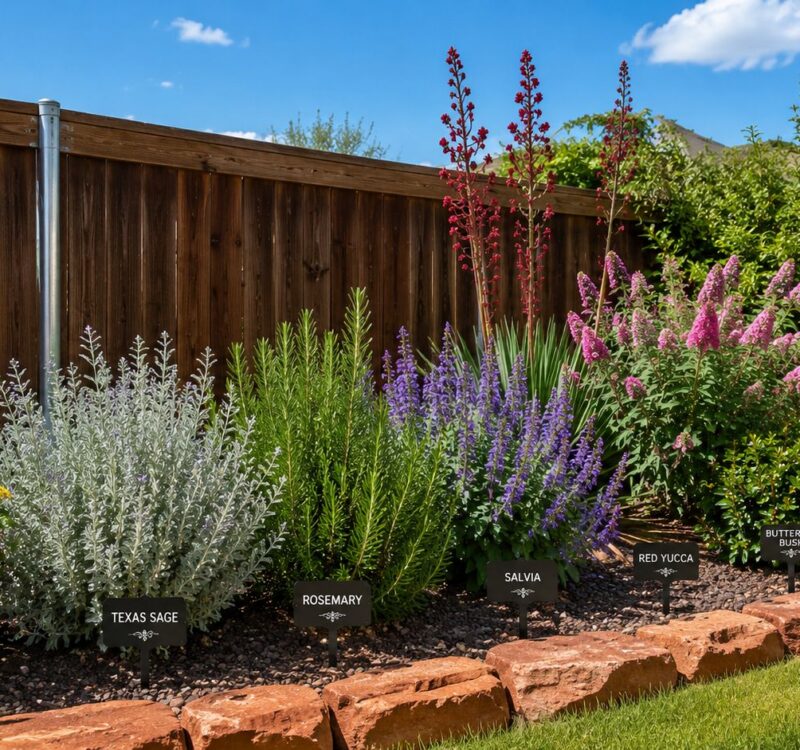
8 Best Shrubs for North Texas Landscapes in 2026
Permeable Paver Installation: A DFW Homeowner’s Guide
Zoysia Grass Fungus: Identify, Treat & Prevent in 2026
How to Improve Soil Quality: Easy Ways to Improve Soil
Take All Root Rot: Diagnose & Treat Your Lawn