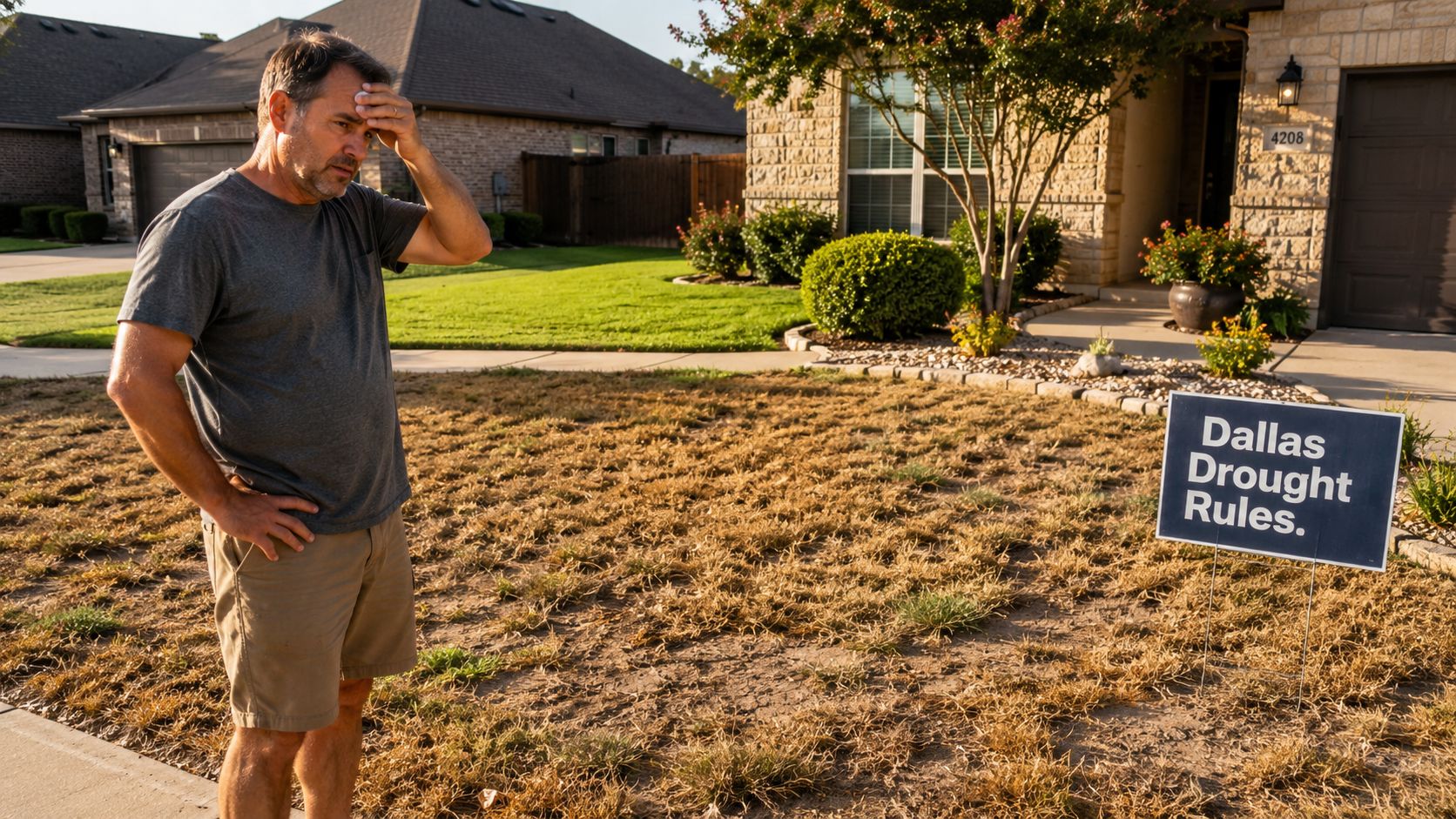
You walk into the backyard on a hot Dallas evening, hose in hand, and the lawn still looks tired. The sunny side is thinning out. The low spot near the fence stays soggy after storms. A few patches are straw-brown, even though you've been watering. That's a normal North Texas lawn story.
What throws new homeowners is that Dallas turf doesn't respond well to generic lawn advice. Clay soil holds water, then bakes hard. Summer heat punishes shallow roots. Watering restrictions change how you manage stress. A yard can look neglected fast, even when the underlying issue is poor timing, bad irrigation coverage, or the wrong maintenance pattern.
Good lawn care in Dallas, Texas comes from working within those limits, not fighting them. The broader industry reflects that reality. The U.S. lawn care market is projected to reach USD 62.91 billion in 2026, and maintenance services captured over 91% of revenue in 2025, which tells you recurring care drives results in climates where lawns need constant adjustment, not occasional rescue work, according to Mordor Intelligence's United States lawn care market outlook.
Thriving Lawns in the Heart of Texas
A healthy Dallas lawn usually isn't the one that gets the most water or the most products. It's the one managed with local discipline. Homeowners often start with the visible symptom, brown grass, and miss the underlying issue. In this region, the cause is often a mix of heat load, compacted soil, runoff, and watering habits that don't match city rules.
Dallas yards ask for a different mindset. Instead of trying to force a perfect cool-climate lawn, the smarter move is to build a system that fits North Texas. That means choosing the right mowing rhythm, watching irrigation performance closely, and treating drainage and soil compaction as lawn-health issues, not separate yard problems.
Many homeowners also discover that turf performance is tied to the whole property. Shade patterns, bed lines, runoff from hard surfaces, and tree competition all affect grass. If you're thinking beyond weekly mowing, this guide to designing a yard that thrives in North Texas is useful because lawn success often starts with the larger site plan.
Healthy turf in Dallas is less about doing more and more about doing the right thing at the right time.
That's why the rest of the job comes down to timing, diagnosis, and water discipline.
Your DFW Seasonal Lawn Maintenance Calendar
In North Texas, warm-season grasses begin active growth when soil temperatures reach about 65°F, which is why the first mow, spring fertilization, and core aeration need to line up with turf activity instead of arbitrary dates, as noted in this Dallas lawn care schedule guide.
Let soil temperature lead
A common mistake is treating Dallas like a calendar-based lawn market. It isn't. One warm week in late winter doesn't mean the lawn is ready for full spring service. If you fertilize too early, mow too aggressively, or aerate before the grass is actively growing, the yard won't respond the way you expect.
The better approach is to watch for green-up, steady growth, and real recovery between cuts. That's when mowing, feeding, and aeration do support the plant instead of stressing it.
Dallas Fort Worth lawn care schedule
| Season | Mowing | Fertilization | Weed Control | Watering & Irrigation |
|---|---|---|---|---|
| Spring | Start mowing as warm-season turf resumes active growth. Keep blades sharp and avoid scalping the first cuts. | Apply spring fertilization once the lawn is actively growing, not while it's still half dormant. | Focus on stopping spring weed pressure early and spot-treat existing escapes as needed. | Inspect sprinkler coverage, broken heads, and runoff areas before heat arrives. |
| Summer | Mow consistently, but don't cut too low during extreme heat. Taller turf usually handles stress better. | Avoid pushing excessive top growth during peak heat. Keep nutrition balanced and measured. | Watch thin or stressed areas, because weeds move into weak turf quickly. | Prioritize deep, infrequent watering and adjust run times to avoid waste and shallow rooting. |
| Fall | Keep mowing as long as the lawn is still growing, then taper naturally. | Use fall feeding only if it fits the grass condition and the broader program. | Target cool-season weed pressure before it gets established. | Recheck system performance after summer use and correct uneven zones. |
| Winter | Mow only as needed. Growth slows sharply or pauses depending on conditions. | Don't treat winter like a heavy feeding season for warm-season turf. | Stay ahead of winter weeds before they become spring headaches. | Water only as conditions require and avoid routine overwatering during dormancy. |
What matters most each season
Spring
Spring is when Dallas lawns either set up for strength or fall behind early. The first mow matters because it resets the canopy. Spring fertilization matters because it supports root activity as the lawn wakes up. Core aeration matters because clay soil compacts hard over time, and roots need air movement.
If you only do one technical task in spring, make it an irrigation check. Many summer failures start with poor coverage that nobody notices until heat arrives.
Summer
Summer is where bad advice gets expensive. People see browning and assume they should water every day. That usually creates weaker roots and more inconsistency. Keep mowing steady, don't scalp the lawn, and don't force lush growth during the hardest part of the season.
If your yard has slopes or heavy clay, split irrigation into shorter cycles when needed so water can soak in instead of running off.
Practical rule: In Dallas heat, a lawn that dries slightly between deep waterings usually performs better than one kept constantly damp near the surface.
Fall and winter
Fall is your cleanup season, but it's also a planning season. Thin areas, uneven grades, sprinkler misses, and drainage issues are easier to spot once summer stress has revealed them. Winter is when smart homeowners schedule repairs instead of waiting for the next crisis.
For homeowners thinking beyond turf alone, these drought-tolerant landscaping tips for Dallas Fort Worth homeowners can help reduce the amount of lawn that needs intensive water and maintenance in the first place.
A Dallas lawn gets easier when the schedule fits the grass, not the other way around.
Fixing Common Dallas Lawn Problems
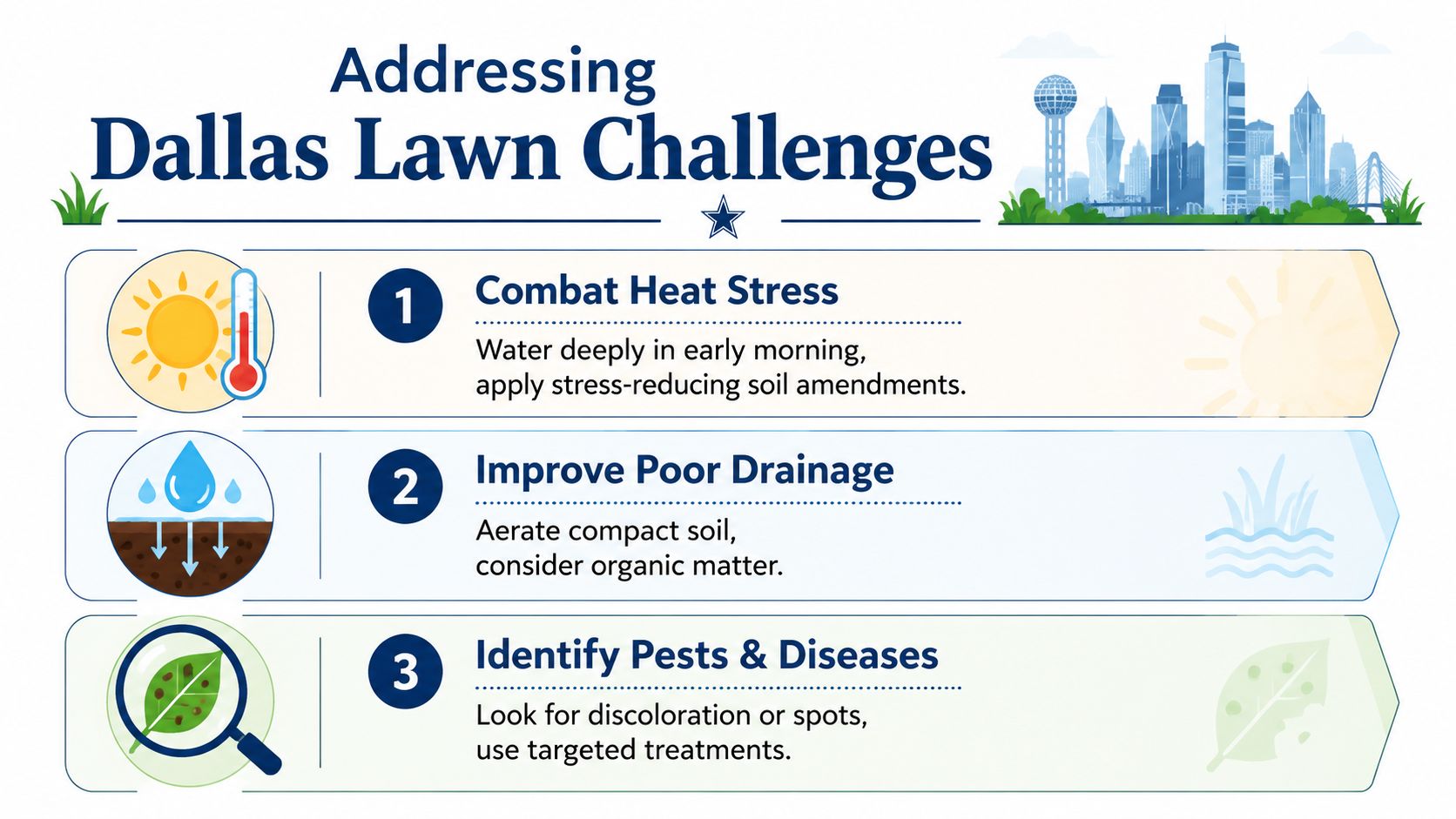
Most failed lawns in Dallas come back to three recurring problems. Heat stress. Water mismanagement. Pest or disease pressure. They can show up together, which is why a lawn that looks “dead” often isn't dead at all. It's reacting to a chain of problems.
Heat stress and shallow rooting
Heat stress usually shows up first in full-sun zones, along driveways, and near reflective surfaces. The turf loses color, footprints stay visible longer, and recovery after mowing slows down. Homeowners often respond with frequent light watering, which gives quick surface relief but makes the root system even weaker.
What works better is changing the whole stress picture:
- Raise mowing height moderately: Slightly taller grass shades soil and reduces moisture loss.
- Water early and thoroughly: Short daily sprinkles don't build resilience.
- Reduce extra stress: Skip unnecessary heavy traffic and avoid aggressive cutting during extreme heat.
The important distinction is this. Heat alone doesn't usually ruin a Dallas lawn. Heat plus shallow roots does.
Poor drainage and compacted clay
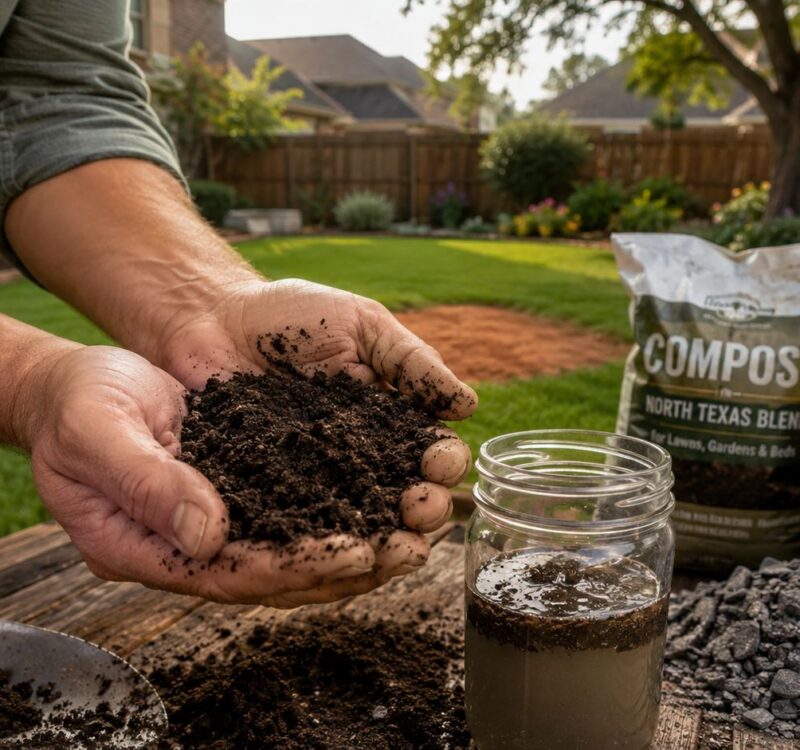
This is the quieter lawn killer. If water stands after rain, if certain spots stay soft while others crack dry, or if grass repeatedly thins in the same low areas, drainage is part of the problem. Dallas clay can hold moisture near the surface while still limiting oxygen around roots.
Start with what you can observe:
- Look for puddling patterns: The same wet spots after every storm usually point to grade or compaction issues.
- Check the soil surface: If it seals over and sheds water, infiltration is poor.
- Notice turf inconsistency: Thin grass in low areas often isn't from drought. It's from roots sitting in bad conditions.
Homeowners can improve some of this with aeration and soil-building practices, but chronic pooling often needs a site-level fix. That might mean adjusting grade, redirecting runoff, or adding drainage infrastructure.
Pests and disease confusion
Not every brown patch is a watering issue. If damage is irregular, expanding, or paired with visible spotting or blade lesions, you may be dealing with disease. If turf lifts easily, if birds are pecking heavily, or if areas collapse suddenly, pests may be involved.
The mistake is broad treatment without diagnosis. Throwing more fertilizer on diseased turf can make things worse. Overwatering a lawn with fungal pressure can make it worse too.
Look closely before you act. In Dallas, the wrong fix can do more damage than the original problem.
There's also a legal reason not to let problems sit. Dallas city code requires property owners to keep plantings in a healthy, growing condition, and dead required plant material must be replaced within 90 days of city notification. Chronic neglect isn't just a curb appeal issue.
Smart Irrigation and Dallas Water Rules
The most common bad advice in Dallas lawn care is simple. Water more.
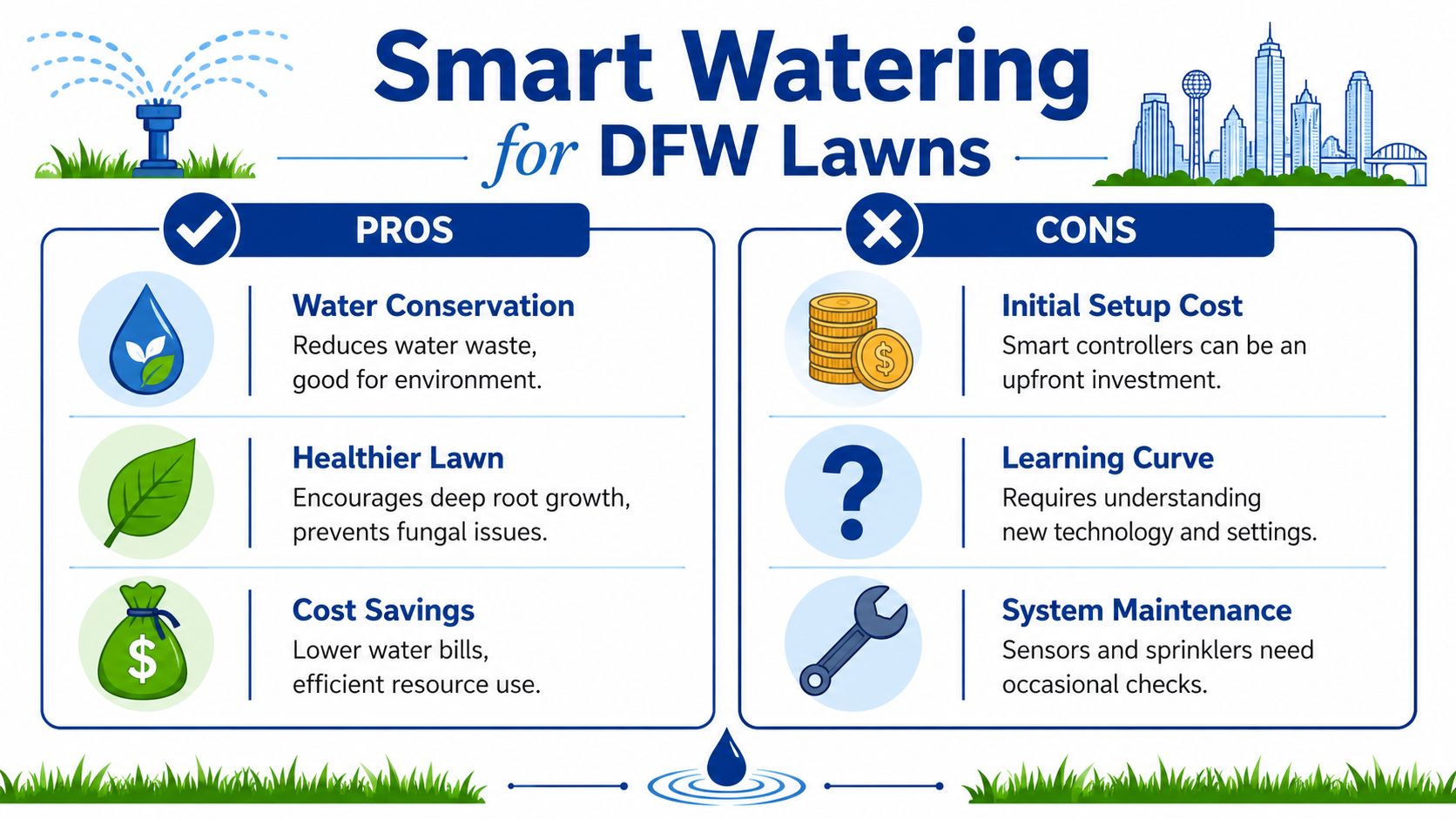
That sounds logical when grass looks stressed, but it often produces the opposite of what homeowners want. More frequent watering can keep the surface green for a moment while training roots to stay shallow. Then the next hot stretch hits, and the lawn declines even faster.
Why deeper and less frequent works better
Dallas and the North Texas Municipal Water District have implemented water conservation stages, which makes irrigation efficiency central to lawn care. Guidance summarized in this Texas lawn care resource notes that warm-season turf often performs better with deeper, less frequent watering, which supports stronger roots and fits conservation goals more closely than shallow daily watering.
That approach matters even more in clay soil. Water doesn't always soak in evenly. Some zones pond. Some run off. Some heads overlap too much while others miss corners entirely. A homeowner sees “the sprinkler ran” and assumes the lawn got what it needed. Often it didn't.
What smart irrigation actually means
Smart irrigation doesn't require complicated tech, although controllers and sensors can help. The core idea is simple. Apply water intentionally, match run times to real coverage, and avoid waste.
Use this checklist:
- Audit each zone: Watch every sprinkler head run. Look for clogged nozzles, tilted heads, misting, and dry gaps.
- Water in cycles if needed: On clay, shorter repeated cycles can reduce runoff better than one long application.
- Adjust by exposure: Full-sun turf and shaded turf rarely need identical scheduling.
- Watch the signs from the grass: A lawn that stays wet at the surface but still struggles may have a root-depth problem, not a quantity problem.
If you need technical help with coverage, pressure, repairs, or system optimization, irrigation services in Dallas Fort Worth are one practical option among the broader local service market.
Compliance matters as much as lawn color
Homeowners usually focus on what keeps the lawn green. They should also focus on what keeps the watering plan compliant. Dallas watering rules can restrict days and times, and drought stages can tighten expectations further. The lawn program has to fit those limits.
That changes the strategy. Instead of asking, “How can I water more?” ask, “How can I make each allowed watering window count?”
The healthiest Dallas lawns are often the ones with the most disciplined irrigation, not the most frequent irrigation.
DIY Lawn Care vs Hiring a Dallas Professional
Some homeowners absolutely can handle their own lawn. Others can too, but they don't realize how much consistency Dallas turf demands until midsummer exposes every skipped step.
The local maintenance rhythm is part of that challenge. One Dallas lawn-maintenance source reports that over 50% of homeowners mow at least once a week, and another Dallas-oriented source notes the use of over 1,200 local soil samples to build lawn plans, which shows how much ongoing upkeep and local specialization shape this market, according to Sunday's Dallas lawn care guide.
When DIY works well
DIY usually makes sense if your yard is straightforward and you're willing to stay on schedule. Flat lot. Decent sprinkler coverage. No major drainage failures. Grass that's mostly healthy already.
DIY homeowners tend to succeed when they do three things well:
- Stay consistent with mowing: Missing cuts in peak growth leads to scalping on the next pass.
- Pay attention to irrigation performance: The system needs watching, not blind trust.
- Respond early to problems: Thin turf, runoff, weeds, and disease are easier to correct before they spread.
If you enjoy the work and you're observant, a lot of routine care is manageable.
Where DIY usually starts to break down
Trouble starts when the lawn problem isn't really a lawn problem. A yard may look drought-stressed when the issue is poor distribution from the irrigation system. It may look patchy because compaction and runoff are starving roots. It may stay weak because the grade sends water away from the turf and toward hardscape edges.
These are the situations where homeowners burn time and money without solving the root cause:
| DIY challenge | What often happens |
|---|---|
| Uneven irrigation | One area stays wet while another declines |
| Heavy clay compaction | Water sits on top instead of moving into the root zone |
| Persistent low spots | Turf thins repeatedly after storms |
| Misread pest or disease issues | The wrong treatment adds more stress |
What a pro is really for
Hiring a professional isn't just about outsourcing mowing. It's about diagnosis, timing, and systems thinking. A good provider sees the connections between turf stress, soil behavior, irrigation coverage, and the broader outdoor environment.
That matters more on larger lots, high-visibility front yards, properties with drainage history, or homes where you don't want weekend lawn work dictating your schedule.
A practical rule is this. If the lawn mainly needs routine repetition, DIY can work. If the lawn needs interpretation, correction, and coordination across drainage, irrigation, and plant health, a professional usually gets you to stable results faster.
Choosing Your DFW Landscaping Partner
By the time a Dallas lawn is repeatedly struggling, the question usually isn't whether help is needed. It's whether the company you hire understands North Texas conditions or just sells a generic service list.

What to look for in a real local partner
A strong DFW landscaping partner should be able to speak clearly about more than grass color. They should understand irrigation performance, drainage behavior, seasonal timing, and how beds, trees, slope, and hardscape affect the lawn.
Use this checklist when you evaluate companies:
- Local project experience: Ask where they work in Dallas Fort Worth and what kinds of properties they manage.
- Full-property thinking: Look for companies that can address irrigation, drainage, plant health, and site improvements, not just mowing.
- Clear operating standards: Professional communication, dependable scheduling, and a defined process matter.
- Maintenance realism: Be cautious if someone promises a perfect lawn without discussing water limits, heat stress, or soil conditions.
The best conversations are specific
A trustworthy provider usually asks better questions. They'll want to know where the lawn declines first, how water moves after storms, whether certain zones dry out faster, and how the irrigation system has been adjusted over time.
They also won't oversimplify the answer. Dallas turf often needs a combination of better timing, smarter watering, and site corrections. If a company jumps straight to “just fertilize more” or “just water more,” keep looking.
Good lawn care in Dallas, Texas is practical. It respects the climate, the code environment, and acknowledges that not every yard wants the same plan. The right partner understands that and builds around it.
If your lawn is struggling with heat stress, uneven irrigation, drainage issues, or recurring patchiness, Rosewood Landscape Group can help evaluate the full property and recommend a plan that fits North Texas conditions, local water realities, and the way your yard performs.
Related posts
8 Best Shrubs for North Texas Landscapes in 2026
Permeable Paver Installation: A DFW Homeowner’s Guide
Zoysia Grass Fungus: Identify, Treat & Prevent in 2026
How to Improve Soil Quality: Easy Ways to Improve Soil
Take All Root Rot: Diagnose & Treat Your Lawn