You're usually not calling about commercial exterior design because the beds look a little tired. You're calling because the property is costing too much to maintain, the irrigation keeps fighting the weather, tenants notice when entries look stressed, and one hard storm can leave water where it shouldn't be.
That's the essential job of site design in DFW. It isn't decorating the outside of a building. It's deciding how the site will perform through heat, wind, drought, clay soils, foot traffic, and sudden runoff. Good design lowers the amount of rework you pay for later. Bad design turns maintenance into a permanent repair cycle.
For North Texas properties, the difference shows up in operating costs fast. Plant material that can't handle reflected heat gets replaced. Drainage that was treated as an afterthought erodes mulch, floods walks, and stains pavement. Oversized turf areas drive water use and labor without adding much value. A smarter plan fixes those issues at the design stage.
Beyond Curb Appeal The Value of Strategic Design
A Frisco retail center can open with clean beds, fresh sod, and a sharp entry sequence, then look strained by August. Heat bouncing off the storefront cooks the turf. Parking lot islands dry out unevenly. One hard storm pushes runoff into the low end of the property, and the management team starts paying for the same fixes over and over.
That is a design and operations issue with a direct cost.
On commercial properties, the exterior affects more than appearance. It influences water use, crew hours, replacement cycles, drainage performance, tenant perception, and how confidently people move through the site after a storm. Owners who plan for those factors early usually spend less correcting them later.
In DFW, that long-view approach pays off fast. A site that is laid out for North Texas conditions can reduce irrigation waste, hold up better under reflected heat, and avoid the constant patchwork that drives up maintenance budgets. A site that is planned around opening-day appearance alone often turns into a series of work orders.
What clients usually feel first
- Maintenance costs start creeping up when weak plant material, poor soil preparation, or oversized seasonal beds need repeated attention.
- Entries lose visual consistency when high-stress areas decline faster than the rest of the property.
- Drainage complaints keep returning when runoff paths, grades, and collection points were never coordinated properly.
- Water bills stay unpredictable when the layout asks irrigation to solve problems that design should have prevented.
A commercial property should still read as well-managed after a North Texas summer as it did on opening day.
The best projects balance first impression with lifecycle performance. That means putting money into grading, drainage, irrigation zoning, shade strategy, durable paving edges, and plant selections that can survive a Dallas or Fort Worth summer without constant replacement. Seasonal color still has a place, but it should support the budget, not control it.
That same owner mindset shows up in many of the commercial landscaping trends improving business curb appeal. The strongest properties use the exterior to protect asset value, keep tenants satisfied, and reduce avoidable operating costs year after year.
What Commercial Landscape Design Truly Encompasses
A DFW property can look polished at ribbon-cutting and still become expensive to operate within a year. I see that happen when outdoor planning focuses on appearance first and leaves shade, drainage, irrigation zoning, pedestrian movement, and service access to be solved later. The result is familiar. Empty seating areas in August, recurring puddles by entries, stressed plant beds along reflected-heat walls, and maintenance hours spent protecting a layout that never fit the site.
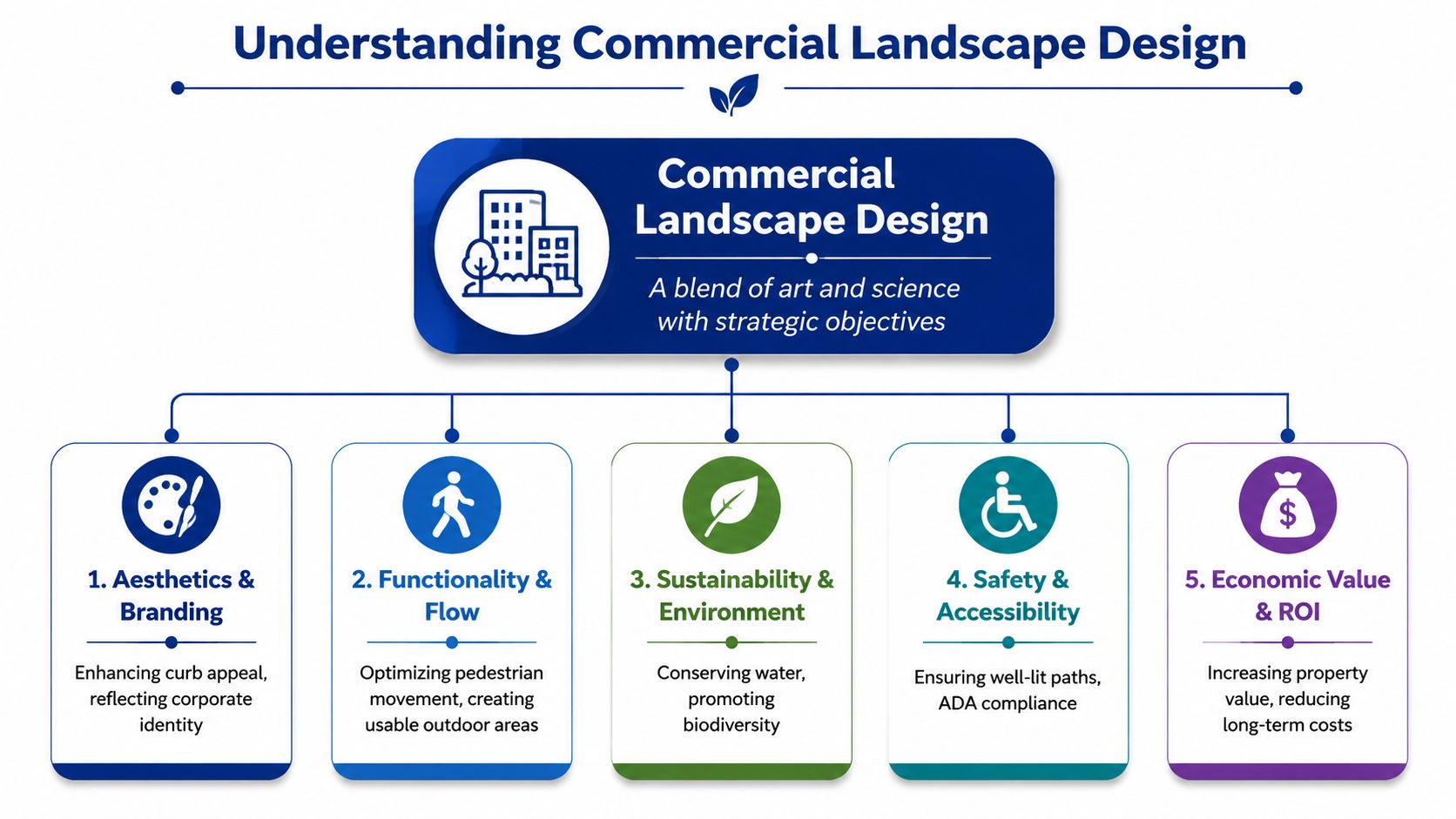
It starts with five objectives
Commercial site design has to perform on five fronts at the same time. If one is ignored, ownership usually pays for it later through tenant complaints, higher water use, avoidable repairs, or faster visual decline.
| Priority | What it means on a real property |
|---|---|
| Aesthetics and branding | Entries, monument signs, and common areas should reflect the quality and identity of the business or development |
| Functionality and flow | People need clear movement between parking, sidewalks, doors, gathering areas, and service zones |
| Sustainability | Planting and irrigation decisions should reduce waste and hold up under local climate pressure |
| Safety and accessibility | Walkways, lighting, grades, visibility, and ADA considerations need to work together |
| Economic return | Materials and layouts should reduce replanting, lower maintenance strain, and protect asset value |
The right plan integrates design and operations into one decision-making process. That matters on commercial properties because every exterior choice carries a recurring cost. A wider bed edge changes trimming time. A poorly placed tree can conflict with lighting, signage, or pavement repairs. A decorative feature with no service access often turns into an avoidable line item.
Outdoor areas have a job to do
On a commercial property, exterior space should support how the site works every day. It can direct visitors, create a more comfortable arrival sequence, buffer traffic noise, provide usable break areas, and help the property read as well managed throughout the year.
Usability is where many DFW projects either earn their keep or fall short. A plaza without afternoon shade may photograph well and sit empty from June through September. A seating area next to west-facing masonry can pick up enough radiant heat to make lunch breaks uncomfortable. After a heavy storm, a walkway with poor cross-slope or weak drainage detailing becomes a slip risk and a service call.
A space that cannot stay comfortable and functional becomes a maintenance liability instead of a useful amenity.
Wellness features have to work in North Texas
Owners are asking for more outdoor space that supports employee comfort, tenant retention, and time on site. Analysts at SYNLawn's commercial landscape ideas article noted a 32% increase in corporate requests for wellness landscaping, and that tracks with what many commercial teams are prioritizing. The mistake is treating wellness as a style package instead of an operations decision.
For office campuses and mixed-use properties, that usually means practical features such as:
- Shaded walking loops that stay usable during warm months
- Sensory planting zones with texture, fragrance, and quieter edges
- Outdoor collaboration areas with sun protection and durable seating surfaces
- Cooling elements and canopy coverage that improve comfort without driving up maintenance demands
In North Texas, climate fit decides whether those amenities deliver ROI. A deck with no meaningful shade, high-water plantings around hard-to-reach corners, or seating placed in direct reflected heat may satisfy the rendering and disappoint the people using the property. The better approach is simple. Build outdoor areas people will use, and build them in a way the maintenance team can support without constant correction.
The Pillars of a High-Performing Commercial Landscape
On a DFW commercial site, performance shows up in the operating budget. A property can look sharp on opening day and still become expensive within a year if planting zones, paving, irrigation, and drainage were never coordinated around the way the site handles heat, water, and foot traffic.
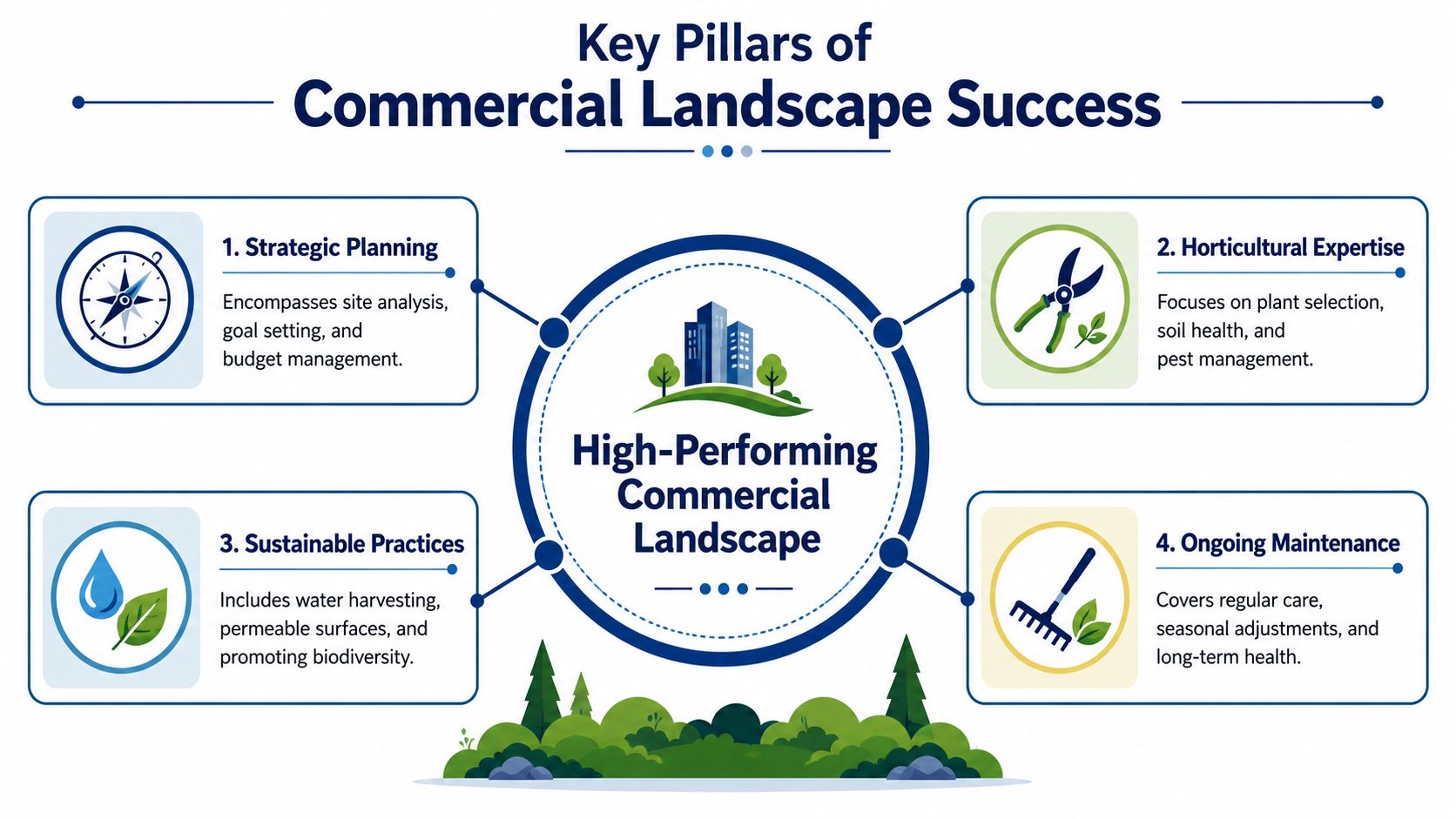
Site analysis comes first
Every durable outdoor environment starts with a clear reading of the site. Commercial site design depends on soil conditions, microclimate, and topography, and skipping that step leads to plant decline, costly remediation, and potential structural erosion, as explained in Minick Materials' guide to commercial landscape design.
In North Texas, those variables change fast across a single property. West-facing beds near reflective glass run hotter than protected entries. A low corner near a loading area may hold water long after a storm. Utility corridors, detention edges, and frontage islands each need different decisions if the goal is lower replacement cost and fewer maintenance callbacks.
Good analysis protects capital before installation begins.
Planting and softscape
Planting drives a large share of long-term maintenance cost. If the palette ignores exposure, root space, mature size, or how the crew will maintain it, the site starts losing money through replacement cycles, pruning labor, and irrigation waste.
A strong planting plan should:
- Match exposure so full-sun areas use material that holds up through North Texas summer stress
- Group water needs logically so irrigation zones support the plants instead of forcing compromises
- Build structure with canopy, screening, seasonal interest, and ground-level coverage
- Limit open bed space that turns into weed pressure, erosion, and mulch washout
On many DFW properties, the better return comes from adapted shrubs, durable ornamental grasses, native selections, and shade placement, not from high-touch material that looks good for one season. For owners focused on water savings, a Texas xeriscaping strategy for commercial properties can reduce irrigation demand without leaving the site sparse or underwhelming.
Hardscape and built elements
Paving, walls, seat edges, raised planters, screens, and gathering areas shape daily use. They also shape liability exposure and maintenance cost.
Material choices matter. Some surfaces show every stain. Some edges chip under service traffic. Some plaza layouts force pedestrians across planting beds because the shortest route was ignored in design. In office parks around Las Colinas or mixed-use projects in Frisco, those mistakes show up quickly as repair work, worn corners, and user frustration.
Strong built-site design accounts for heat gain, drainage flow, cleaning access, edge restraint, and the routes people will take between parking, entries, and common areas.
Irrigation systems
Irrigation should support a realistic planting plan, not compensate for a poor one.
On commercial sites, efficiency comes from zoning, matched precipitation, controller settings, and seasonal adjustment. Turf, annual color, shrub beds, and narrow medians rarely belong on the same schedule. If they share one program, one area stays too wet while another struggles, and the owner pays for both the water bill and the decline.
The lowest irrigation bid often creates the highest long-term service cost.
Site drainage
Drainage protects pavement, planting, structures, and pedestrian safety. It also has a direct effect on maintenance labor after every storm.
Warning signs usually appear early:
- Mulch movement after routine rain events
- Soil erosion near downspouts, swales, or curb cuts
- Standing water at crossings that creates slip risk and complaints
- Saturated soil near foundations that damages roots and adjacent construction
The best-performing commercial outdoor environments fix water movement at the source through grading, inlets, swales, paving relationships, and bed detailing. Fresh mulch can hide the symptom for a week. Correct drainage work protects the asset for years.
Designing for the Demands of North Texas
A DFW property can look sharp in April and start costing real money by August. I see it on office parks in Las Colinas, retail centers in Plano, and mixed-use sites north of downtown Dallas. Heat stress, flash runoff, water restrictions, and high-visibility tenant expectations all hit the same property at once, so site design has to perform operationally, not just photograph well.
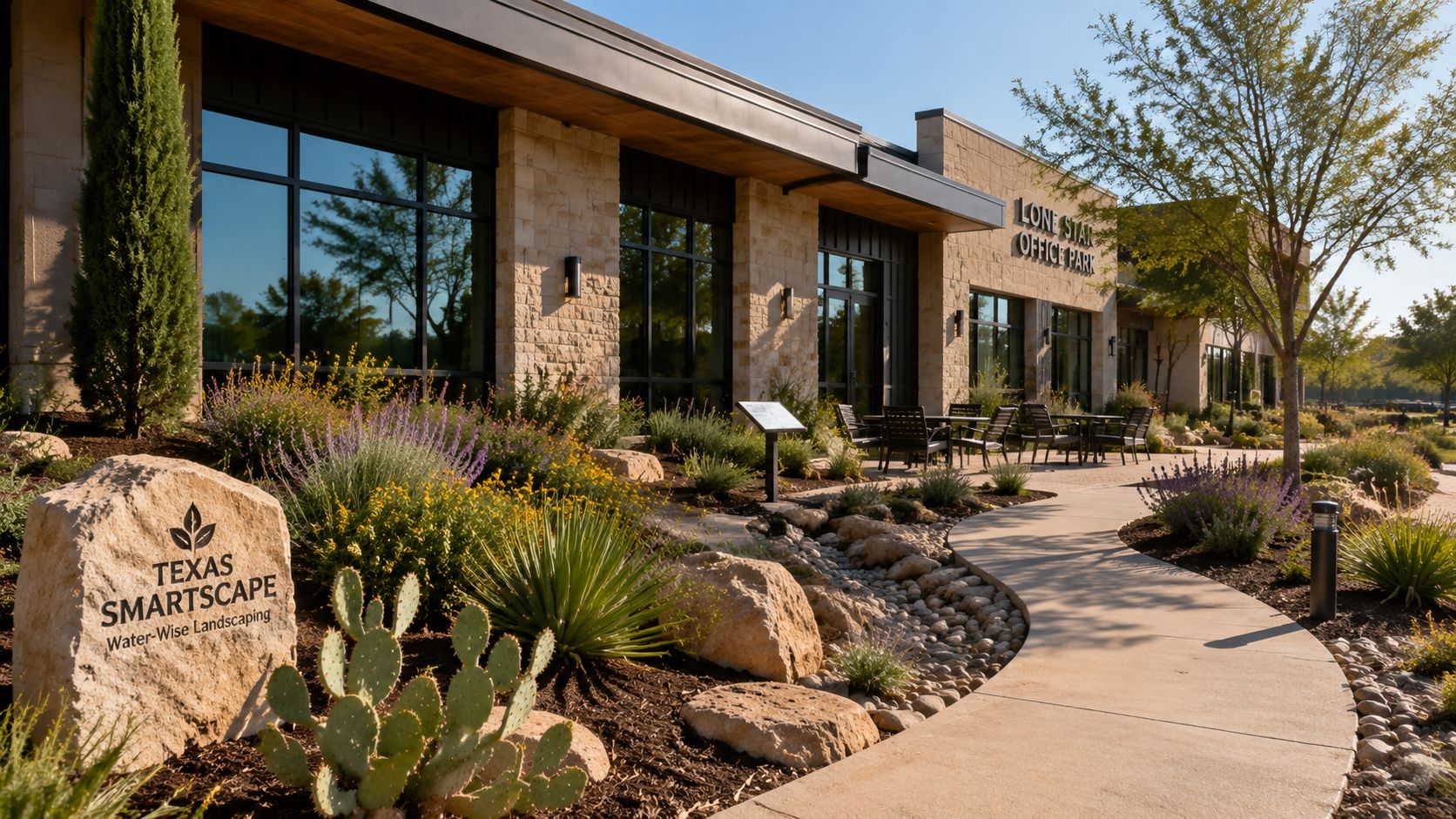
One of the hardest North Texas design problems is balancing lower water use with stormwater control. Local code requirements, intense summer heat, and heavy rain events often pull a site in different directions. KD Landscape's discussion of commercial curb appeal design ideas points to that tension in DFW, and it shows up across office, retail, multifamily, and mixed-use properties.
Heat changes the cost equation
In North Texas, plant selection and material selection are budget decisions. A species that struggles through July and August creates replacement cost, irrigation stress, and a worn appearance tenants notice right away. Dark paving near entries and unshaded walkways also reduce comfort, which affects how long people stay and how they rate the property.
The strongest sites usually share a few traits:
- Tree canopy placed for shade where people walk
- Adequate soil volume so roots can establish and survive summer
- Smaller turf areas in places that do not justify high water use
- Surface materials that reduce reflected heat around entries and seating
Owners often ask whether lower water use means a sparse, dry-looking property. It does not. It means assigning water and maintenance dollars where they produce value, then reducing waste everywhere else. A well-planned xeriscaping strategy for Texas commercial properties can cut irrigation demand while keeping key frontage, entries, and gathering areas polished.
Water efficiency starts on the plan, not in the service budget
High water bills usually trace back to layout decisions made early. Narrow planting strips dry out fast. Turf in parking islands gets overspray and heat stress. Beds with mixed water needs force crews into constant adjustment, and the property pays for that inefficiency every month.
A better plan looks like this:
| Site condition | Better design response |
|---|---|
| Large ornamental turf zones | Replace with adapted plantings, groundcovers, or useful paved space |
| Paved areas that shed water too fast | Use permeable surfaces where appropriate and direct runoff into planted collection zones |
| Beds exposed to full afternoon sun | Add canopy, improve soil, and group plants by similar water demand |
| High-visibility arrival areas | Concentrate higher-touch seasonal interest only where it supports leasing and image |
That approach improves more than utility bills. It reduces rework, cuts replacement cycles, and makes maintenance standards easier to hold over time.
Stormwater planning and planting strategy have to work together
On many commercial projects, civil plans and planting plans are treated as separate tasks. On the ground, they are tied together. Bioswales, detention areas, grading transitions, paving edges, and root zone conditions all affect whether a site drains cleanly or becomes a recurring maintenance problem.
A drought-tolerant plant palette can still fail if runoff scours the bed after every storm. A detention feature can still become expensive if crews cannot access it for sediment cleanup or if the selected material stays too wet after rain and burns up in August. In DFW, good design has to handle both extremes.
A practical review for any commercial site should answer three questions:
- Where does water move during a routine rain event?
- Where does it back up during a North Texas downpour?
- Which site areas can tolerate both extended heat and short-term saturation?
Owners who answer those questions during design usually avoid the expensive pattern of patching erosion, replacing failed material, and revising irrigation after the property is already occupied.
Commercial Landscape Design in Action
A well-designed commercial property should still perform after a July heat wave, a week of heavy tenant traffic, and a North Texas storm. That is where design decisions show their value. The right site plan lowers upkeep, protects circulation, and helps the property team avoid the cycle of constant replacements.
Retail centers
At a retail center, every exterior element has to support access, visibility, and speed of maintenance. Properties in areas like West Village or Legacy can look polished on opening day, then become expensive to manage if bed lines are too intricate, seasonal rotations are spread across the whole site, or irrigation throws water onto paving during business hours.
The better approach is disciplined. Keep entries clear, frame storefronts without blocking signage, and use durable plant massing that can hold its shape through heat and reflected pavement exposure. Reserve higher-touch color for arrival points and restaurant patios where it supports leasing and customer experience.
Water features can work in select retail settings, especially where a plaza needs identity or sound buffering near traffic. The key is choosing commercial water features that add atmosphere without creating excessive service demands. If a feature needs constant adjustment, creates slip concerns, or interrupts foot traffic, it is hurting operations more than helping the property.
Corporate office parks
Office properties have a different job. They need to look credible to tenants and visitors, but they also have to support daily staff use in a climate that can make outdoor space feel unusable for long stretches of the year.
That usually means investing less in dramatic focal points and more in the spaces people occupy. Shaded seating near entrances, durable walk connections between buildings, and planting plans that stay clean without weekly touch-up work often deliver better long-term value than oversized signature elements. On DFW office sites, I have seen modest break areas under canopy trees get more use than expensive plazas with no shade and too much glare.
Daily experience shapes tenant perception over time. Staff notice whether paths are exposed, whether seating stays comfortable, and whether the grounds look orderly without recurring disruptions from repairs or replacements.
HOAs and mixed-use developments
Shared-use properties need design discipline because the wear is constant and the budget pressure never really goes away. Residents want attractive entries and common areas, but boards and property managers are the ones dealing with drainage complaints, dead material, trip hazards, and rising maintenance costs.
The strongest plans simplify wherever possible. Use plant palettes that can handle heat, periodic drought, and occasional saturation. Keep bed geometry clean so crews can maintain edges efficiently. Place gathering areas where runoff will not pool after storms, and avoid decorative elements that become repair items six months after installation.
On mixed-use sites across Dallas and Fort Worth, the projects that age best usually feel organized rather than flashy. They support movement, hold up under daily use, and keep operating costs predictable. That is what turns exterior design into a real property asset instead of another line item that keeps growing.
How to Choose Your Commercial Landscape Partner
A DFW property can look fine at turnover and still become expensive within a year. Irrigation overspray stains paving, beds fail in full-west exposure, runoff sits near entries after a storm, and crews spend too many hours keeping a weak plan presentable. A good commercial grounds partner helps prevent those costs before installation starts.
The right team ties design choices to operations. They should be able to explain how a grading adjustment reduces storm cleanup, why a simpler plant palette lowers replacement costs, and where phasing protects cash flow without hurting tenant experience.
Questions worth asking in the first meeting
Early conversations should focus on ownership costs, service coordination, and how the site will perform in North Texas weather.
- Ask how they study the site before recommending any solution. Look for a clear process around grading, drainage patterns, solar exposure, soil conditions, pedestrian movement, and service access.
- Ask where they see future maintenance pressure. Strong teams can point to areas that should be simplified, upgraded, or phased because they know what will become labor-heavy later.
- Ask who is responsible for each scope. Design, installation, irrigation, drainage, hardscape work, and ongoing care often affect each other on commercial properties.
- Ask for DFW examples that match your property type. An office campus, medical site, retail center, and HOA common area all wear differently.
- Ask how they protect the finished work after install. Even a well-planned site declines quickly if maintenance standards and irrigation management are disconnected from the original intent.
Rosewood Group is one North Texas firm with scope across commercial design, installation, irrigation, drainage, hardscaping, and property services. That matters in practice. A drainage correction can affect plant performance. Irrigation programming affects water bills and disease pressure. A redesign may need to be built in phases so tenants and customers are not dealing with one large disruption.
Look for technical judgment, not just planting ideas
Good partners talk about root space, grading transitions, controller scheduling, material durability, and crew access. They understand that exterior areas are part of the property's operating system, not just decoration.
A useful test is to ask how they handle shade and energy performance near the building. Strategic tree placement that blocks winter winds and shades summer sun can lower commercial heating and cooling costs, according to Complete Landscaping Service's commercial landscape design guidance. If a firm never connects site planning to utility costs, storm resilience, or maintenance hours, they are missing part of the business case.
Signs you're hearing the right answers
| What you hear | What it usually means |
|---|---|
| “We need to study how water moves first.” | They understand that post-install corrections cost more than getting drainage right on paper |
| “This area should be phased.” | They are prioritizing ROI and operational timing instead of pushing unnecessary scope |
| “That plant will struggle in this exposure.” | They are designing for Dallas-Fort Worth heat, reflected glare, and water limits |
| “Maintenance has to be part of the layout.” | They know long-term appearance depends on labor efficiency, irrigation control, and durable detailing |
Choose a partner who makes the site easier to run, less expensive to maintain, and more dependable through heat, drought, and heavy rain.
Bringing Your Vision to Life with Rosewood
In DFW, commercial grounds design works best when it's treated as an operating decision. The grounds influence water use, maintenance hours, storm recovery, tenant perception, and how much of the property feels comfortable and usable through the year.
The strongest projects don't start with ornamental choices. They start with site conditions, movement patterns, drainage behavior, and the cost of keeping the property looking right over time. From there, the design can support branding, create better outdoor spaces, and reduce the need for reactive fixes.
For owners and property managers in North Texas, a practical planning process usually looks like this:
- Critically inspect the site for heat stress, runoff, weak circulation, and high-maintenance zones.
- Prioritize lifecycle value over features that look good briefly but add long-term labor and water demand.
- Coordinate design with maintenance so the finished property can be sustained.
- Use local expertise because DFW climate and storm patterns punish generic solutions.
That approach leads to outdoor areas that perform better, cost less to fight, and support the business case behind the property itself.
If you're evaluating a commercial site in Dallas Fort Worth and need a plan that addresses heat, drainage, irrigation, maintenance, and long-term presentation together, contact Rosewood Landscape Group for a site inspection and planning consultation.
Related posts
8 Best Shrubs for North Texas Landscapes in 2026
Permeable Paver Installation: A DFW Homeowner’s Guide

Zoysia Grass Fungus: Identify, Treat & Prevent in 2026
How to Improve Soil Quality: Easy Ways to Improve Soil
Take All Root Rot: Diagnose & Treat Your Lawn