You walk outside, coffee in hand, and the St. Augustine that looked solid last week now has yellow patches staring back at you. Some of it is pale all over. Some of it looks blotchy. Some spots are right where the sun bakes the yard all afternoon, and other areas stay damp longer than they should. That's usually when homeowners start guessing, then overcorrecting.
In North Texas, guessing is what gets lawns in trouble.
St. Augustine grass yellowing isn't one problem. It's a symptom. Around Dallas-Fort Worth, I see the same pattern over and over: a homeowner assumes the lawn needs more fertilizer, but the underlying issue is watering depth, compacted soil, alkaline conditions, insect feeding, or a seasonal stress response that doesn't need chemicals at all. Our heavy soils, alkaline water, and weather swings make the diagnosis less obvious than generic lawn advice suggests.
The good news is that yellowing usually leaves clues. If you read the pattern correctly, you can stop wasting product, avoid making the problem worse, and choose the fix that fits your lawn.
Why Is My St. Augustine Grass Turning Yellow
A common North Texas scenario goes like this. The lawn greens up nicely, then a stretch of heat, a few stormy days, or a cold snap rolls through and the color starts to wash out. The first instinct is often to throw fertilizer at it or run the sprinklers longer.
Sometimes that helps. A lot of times it doesn't.
St. Augustine grass yellowing usually comes down to a short list of causes: nutrient deficiency, watering mistakes, soil issues, pests, disease, or weather stress. What makes DFW tricky is that several of those can show up at the same time. A lawn can be shallow-rooted from frequent light watering, then struggle even more when heat arrives. It can also have enough nitrogen in the soil and still stay yellow because the plant can't access iron properly.
The pattern matters more than the color alone
Yellowing across the whole lawn points you in a different direction than yellowing in isolated patches. Uniform yellow blades often suggest a broad cultural issue like nutrition or irrigation. Mottled yellowing on individual blades raises a different flag. Yellow areas that spread along hot edges near pavement can point toward stress or pest pressure.
Practical rule: Don't treat yellow grass by color alone. Treat it by pattern, timing, and location in the yard.
That's the difference between a lawn that rebounds and one that gets hit with the wrong product three weekends in a row.
What homeowners usually get wrong
The biggest mistake is assuming every yellow lawn needs more nitrogen. The second is assuming every patchy yellow area is a fungus. Both happen constantly in North Texas. If you miss the underlying cause, you can feed a disease, burn the turf, or keep pushing water into soil that already drains poorly.
The lawn usually isn't being mysterious. It's telling you where to look first.
How to Diagnose the Cause of Yellowing
A good diagnosis starts at ground level. Walk the yard, stop where green turf turns yellow, and inspect that transition line first. In North Texas, that edge often tells you whether you are dealing with irrigation problems, iron lockout from high pH, insect feeding, or stress from a fast weather swing.
Do not judge the lawn by color alone. Check where the problem sits in the yard, how quickly it showed up, and whether the blades are fading evenly or showing streaks and mottling.
Read the lawn in this order
Check the pattern
Whole-lawn yellowing usually points to a broad issue such as irrigation, fertility, or pH. Isolated sections push the diagnosis toward drainage, compaction, insects, disease, or heat stress.Inspect the newest growth
If newer blades look pale or yellow while older tissue is less affected, I start thinking about iron chlorosis. That is common here because our clay soils and irrigation water tend to run alkaline, which can keep St. Augustine from accessing iron even when the soil has nutrients in it.Test the soil by feel
Push a screwdriver or soil probe into the root zone. If it slides in easily and the soil feels muddy, excess water or poor drainage may be part of the problem. If the ground is hard a few inches down, the lawn may be dry, compacted, or both.Look at the location
Grass next to concrete, south-facing fences, or reflective surfaces often yellows first during heat stress. Low spots that stay wet after irrigation point in a different direction.Check for feeding or blade damage
Part the grass at the edge of the yellow area and inspect the thatch and lower blades. If you see irregular decline near sunny, dry sections, review these signs of lawn pest activity before you treat.
St. Augustine Yellowing Diagnostic Chart
| Symptom | Likely Cause | What to Check First |
|---|---|---|
| Uniform yellowing across large areas | Fertility issue or pH-related nutrient lockout | Review recent feeding, then check whether new growth is pale despite fertilizer |
| Yellowing with a dry, stressed feel in hot zones | Underwatering or shallow roots | Probe moisture several inches down, not just at the surface |
| Yellowing in damp or slow-draining areas | Overwatering or poor drainage | Look for soggy soil, runoff, or water sitting after a cycle |
| Pale new blades with green veins or weak response to fertilizer | Iron chlorosis | Test soil pH and consider the effect of alkaline irrigation water |
| Mottled yellowing on individual blades | Disease, decline, or other non-fertility issue | Inspect blade pattern closely before applying any product |
| Yellowing with visible feeding injury or thinning at the edges | Chinch bugs or grubs | Check the border of damaged turf and the thatch layer |
| Yellowing in hard, high-traffic clay areas | Soil compaction | See whether water soaks in or ponds on the surface |
What visual clues usually mean
A lawn that fades evenly across a wide area usually has a system problem. Watering schedule, nutrient balance, or high pH is more likely than a random outbreak.
Pale color in the newest growth deserves extra attention here in DFW. I see homeowners add more nitrogen when the underlying issue is iron lockout. The turf may green up a little, then slide right back because the plant still cannot access what it needs.
Patchy yellowing takes a closer look. If the area follows a sprinkler arc, sits along a driveway, or shows up after a sharp temperature drop, location and timing matter as much as the blade color. St. Augustine can show thermal shock after rapid swings, especially in spring when a warm stretch is followed by a hard cool-down.
Check the edge where healthy grass meets stressed grass. That boundary usually gives a cleaner read than the center of the damaged area.
A simple decision test
Ask these three questions before you buy a product or change your whole program:
- Did the color change happen after a weather swing or over a few weeks? Fast yellowing often tracks irrigation failure, cold shock, or chemical stress.
- Is the newest growth the palest part of the plant? That points toward iron chlorosis more than a basic nitrogen shortage.
- Does the problem match a site condition? If the yellowing lines up with pavement, shade, a low spot, or a sprinkler issue, start there.
That order saves time and usually saves a lawn from the wrong treatment. In North Texas, the lawn is often dealing with more than one stress at once, but there is still a main cause driving the color change.
Immediate Corrective Actions You Can Take
You do not need a shopping list of products on day one. Yellow St. Augustine usually gets worse when homeowners water more, fertilize faster, and spray before they know which stress started the problem.
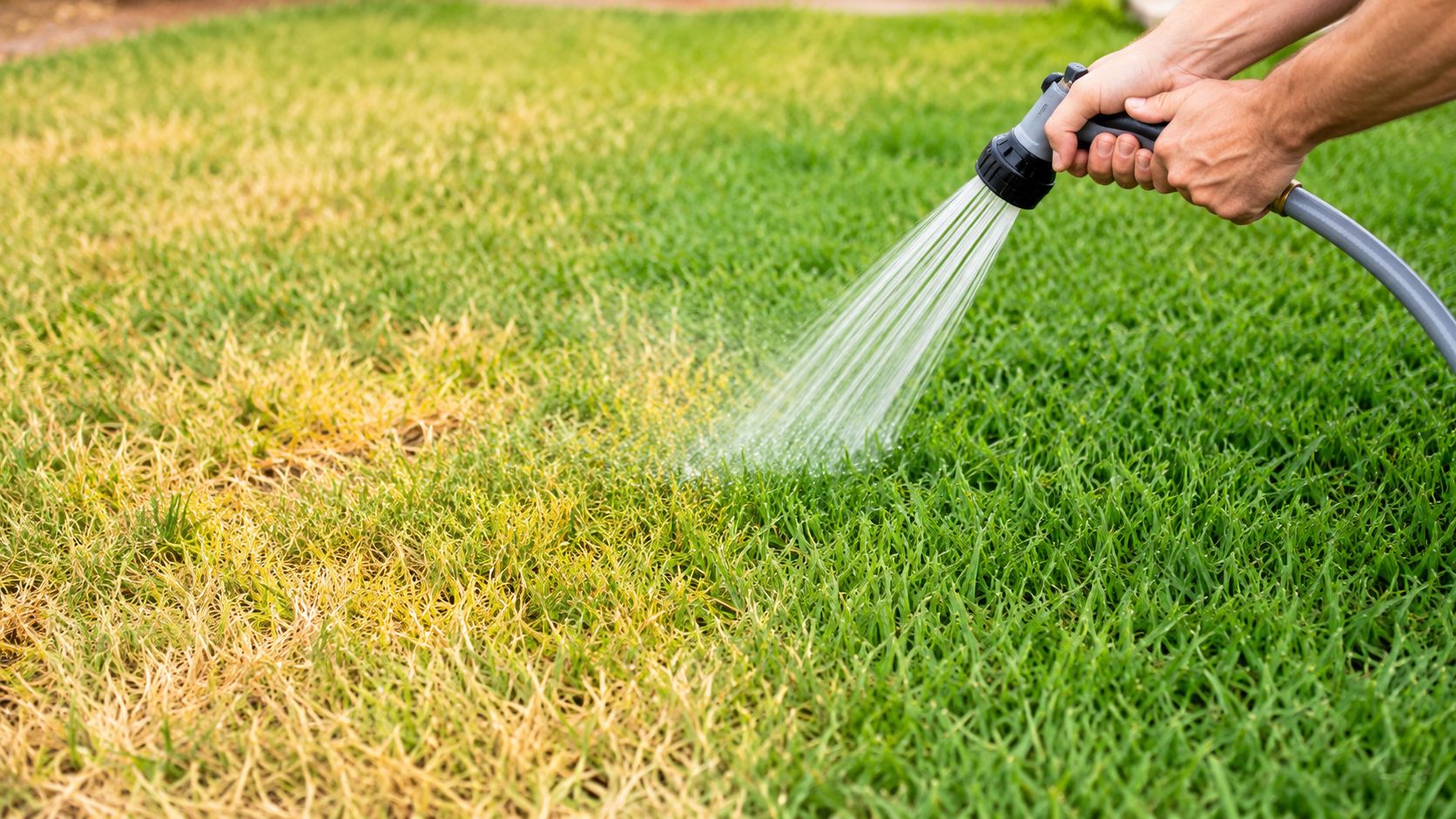
Start by correcting the one factor that is most likely driving the color loss. Then give the grass several days to respond. In North Texas, that patience matters because St. Augustine often reacts to water stress, alkaline conditions, and temperature swings at the same time.
If watering is the issue
Reset the schedule before you buy anything. St. Augustine does better with a thorough soak that pushes moisture into the root zone, followed by enough dry-down time for the soil surface to breathe.
Use this approach:
For dry, dull turf with folded blades
Water thoroughly, then wait until the lawn shows it needs water again. Daily light cycles keep roots shallow and make the lawn more vulnerable in summer heat.For wet, yellow turf that feels soft underfoot
Skip the next cycle and let the upper soil dry some. In our clay soils, roots can decline fast when they stay saturated.For uneven color patterns
Check for clogged heads, tilted spray bodies, broken nozzles, and overspray onto concrete. A quick review of your irrigation system performance and coverage often explains why one strip stays green while the next one fades.
A screwdriver or soil probe tells the truth faster than the controller does. If the soil is already wet a few inches down, more water is not the fix.
If iron chlorosis is likely
This is one of the most common misses I see in DFW lawns. Homeowners treat pale St. Augustine like a nitrogen problem, but frequently, the issue is iron lockout tied to high pH from our soil and irrigation water.
For a quick cosmetic correction, apply a foliar chelated iron product labeled for turf and follow the label rate closely. That usually improves color faster than a soil treatment because the leaf takes up the iron directly. It helps the lawn look better, but it does not correct the underlying pH conditions that caused the yellowing.
Avoid stacking iron with a heavy fertilizer application the same weekend unless the lawn clearly needs both. Too many inputs at once muddy the diagnosis and can add stress during hot weather.
If disease is suspected
Slow down and clean up the conditions first. St. Augustine disease problems often worsen with late watering, extra nitrogen, and dull mowing blades.
Focus on these immediate corrections:
- Water early in the morning
- Stop evening irrigation
- Hold fertilizer until you are confident fungus is not involved
- Mow at the proper height with a sharp blade
- Bag clippings only if the lawn is actively diseased and covered in infected tissue
Color can return before the turf is recovering. Watch for new healthy growth, not just a temporary green tint.
If pests or compaction are in play
Inspect before treating. Chinch bugs, grub activity, and tight clay soil can all produce yellow patches, but each one calls for a different response.
If insects are active, treat the confirmed area with the right product for that pest. If the soil is hard and sealed over, reduce traffic, avoid overwatering, and plan for core aeration when the grass is actively growing. Compacted St. Augustine rarely improves from fertilizer alone.
The short-term goal is simple. Remove the active stress so the lawn has a fair chance to recover.
The North Texas Factor Soil Water and Weather
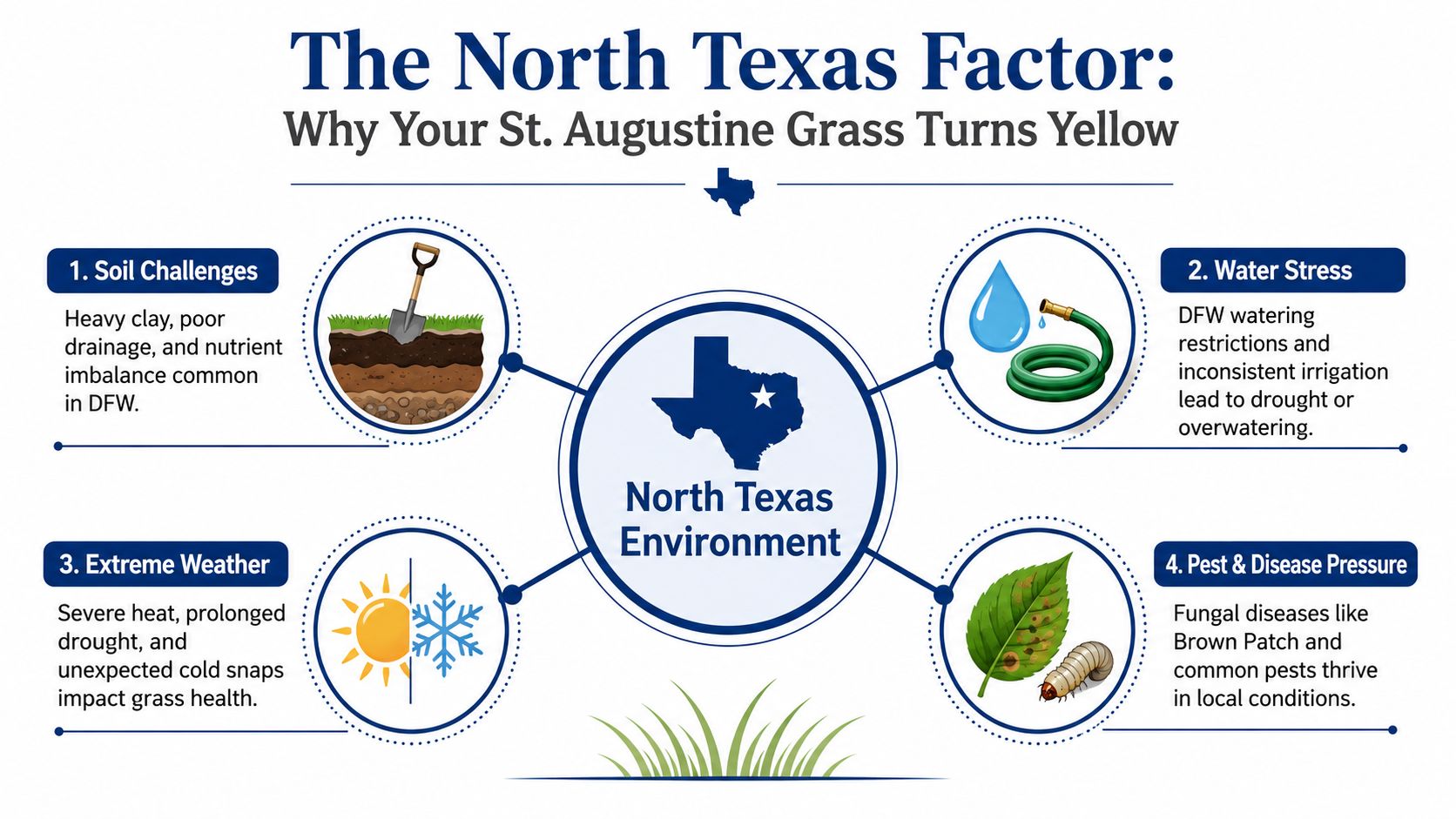
A lot of generic lawn articles stop at “add fertilizer” or “water less.” That's not enough for Dallas-Fort Worth. North Texas lawns deal with a specific combination of alkaline conditions, heavy soils, and abrupt temperature shifts that can make yellowing stubborn and confusing.
Why standard fertilizer often fails here
A major local issue is pH-induced iron lockout. In Dallas-Fort Worth, irrigation water often raises soil pH above 7.0 over time, which ties up iron and keeps the grass from using it even when nitrogen is adequate, as explained in this IFAS publication on alkaline-soil nutrient lockout.
That's why a homeowner can apply a normal fertilizer and see almost no color improvement. The lawn isn't always underfed. Sometimes it's locked out.
This is especially common in yards where the grass looks washed out, the owner has already fertilized, and the problem keeps returning. In those cases, pH testing is more useful than another round of generic feeding. If your system needs adjustment, a properly inspected irrigation system in North Texas can help limit uneven coverage and avoid adding to the problem.
Cool soil shock is real
Another issue that gets missed around here is cool soil shock during early spring or late fall. North Texas can swing from warm afternoons to sharply cooler nights fast enough to slow nutrient uptake even in a lawn that was doing fine.
The grass may yellow temporarily during those transitions without having a disease outbreak. Homeowners often mistake that for fungus and start spraying. In many of those cases, patience is the better move. If the timing lines up with a temperature drop and the lawn doesn't show clear disease symptoms, it may be a metabolic slowdown rather than infection.
Yellowing during a cool spell isn't automatically a fungus problem. Sometimes the grass is simply sluggish, not sick.
The local combination that causes headaches
Three North Texas conditions tend to overlap:
- Alkaline water that raises pH over time
- Clay-heavy soils that compact and drain unevenly
- Rapid weather swings that change how the grass takes up nutrients
That combination explains why one-size-fits-all lawn advice often falls flat here. The right fix in DFW is often more about diagnosis and restraint than adding another bag of product.
Your Seasonal Plan for a Resilient Green Lawn
A North Texas St. Augustine lawn can look fine in April, fade to pale yellow by June, then struggle again after the first sharp fall cool-down. That pattern usually comes from stress building over the season, not one isolated mistake. A good yearly plan keeps the grass growing steadily through our alkaline water, heavy soils, and abrupt temperature swings.

Spring habits that set the tone
Spring is the time to correct problems before heat exposes them. In our area, I would rather see a homeowner test, inspect, and adjust early than keep throwing fertilizer at pale turf.
Start with the basics. Check sprinkler coverage, look for runoff, and pay attention to any section that stays thin or slow to green up. If the lawn is yellow between the veins but still growing, that often points to iron tied up by high pH instead of a simple nitrogen shortage.
A smart spring checklist includes:
- Check irrigation uniformity so dry spots and soggy spots do not develop side by side.
- Feed only if the lawn is actively growing and use a slow-release product that will not push weak, tender growth.
- Watch color patterns closely because uniform pale color and striped chlorosis usually call for different fixes.
- Consider core aeration if the soil stayed hard through winter or water is struggling to soak in.
Summer is mostly stress management
Summer care is less about pushing growth and more about protecting the plant. St. Augustine handles North Texas heat better when it has leaf surface to shade the soil, so mow on the higher side of its range instead of scalping it down.
That one change helps more than many homeowners expect.
A solid summer routine looks like this:
Mow high
Taller blades protect the crown and reduce heat load on the root zone.Water thoroughly, not lightly every day
Thorough watering encourages better rooting and lowers the odds of shallow, stressed turf.Watch for iron chlorosis after repeated irrigation
Our alkaline water can slowly raise pH at the surface, and that can show up as yellowing even when the lawn is being watered regularly.Inspect every week
Heat exposes irrigation misses, chinch bug activity, worn edges near concrete, and compacted areas fast.
For scheduling and upkeep during peak heat, this summer lawn maintenance plan for North Texas lays out the main jobs in season.
Fall and winter are for correction and restraint
Fall is a good time to fix the conditions that caused trouble in summer. Reduce irrigation as demand drops. Address drainage problems. Mark the areas that repeatedly yellowed so you can test soil or adjust coverage before next year.
It is also the right season to stay patient with weather-related color change. In North Texas, a quick drop from warm days to cold nights can slow St. Augustine enough to cause temporary yellowing without a disease outbreak.
Winter care is simple. Avoid unnecessary treatments on dormant or semi-dormant turf, keep traffic off weak areas when the soil is wet, and service your mower and irrigation system before spring returns.
The lawns that stay greener here usually follow a steady seasonal routine. They are not being rescued every few weeks with another bag or bottle.
When to Call a Professional Landscaper
If the lawn is still getting more yellow after you have corrected watering, paused random treatments, and checked the obvious trouble spots, it is time to bring in outside help. At that point, the risk is not just a yellow lawn. It is wasting another few weeks while roots decline, runoff worsens, or the wrong product gets applied for the wrong reason.
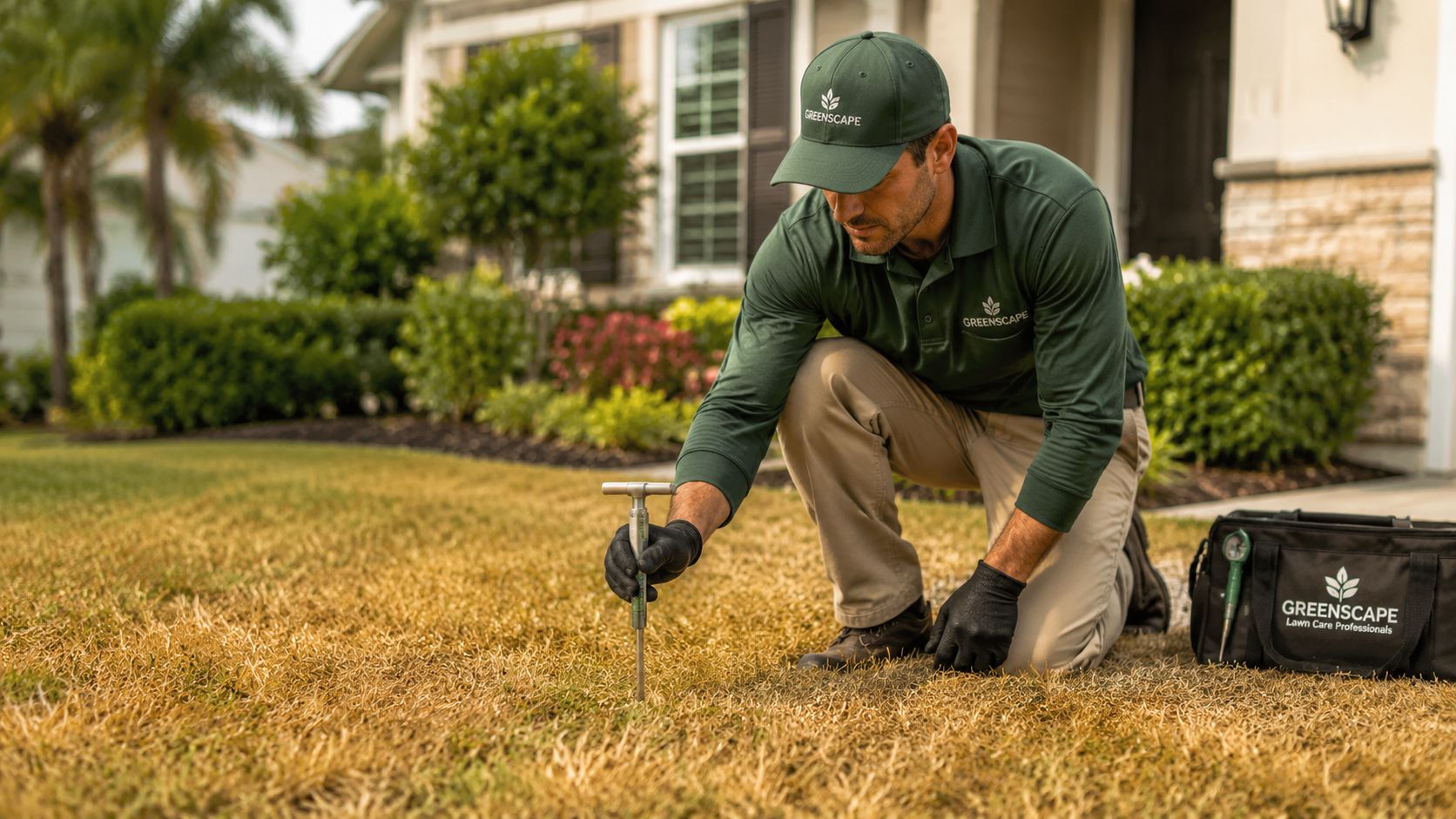
In North Texas, I see homeowners get stuck in the same cycle. They add fertilizer because the grass looks pale, then add iron because the color does not improve, then add more water because the yard still looks stressed. That approach gets expensive fast when the underlying issue is alkaline irrigation water pushing iron out of reach, poor distribution from the sprinkler system, or root damage after a sharp weather swing.
Signs you're past the DIY stage
Bring in a lawn specialist when the problem needs testing, diagnosis, or repair work instead of another guess from the garden center.
That usually includes:
- Yellowing that keeps spreading after basic corrections
- Areas that stay soggy, thin, or weak after each watering cycle
- Sprinkler coverage problems, including dry arcs, runoff, misting heads, or low pressure
- Large sections with little chance of filling back in on their own
- Patchy yellow patterns that do not match simple drought stress or feeding issues
- Suspected St. Augustine Decline, especially when the lawn shows mottled discoloration that does not respond to normal care
St. Augustine Decline deserves special attention because there is no chemical fix for it. Once it is confirmed, the practical solution is usually replacement with a resistant variety, as described in Neil Sperry's guidance on St. Augustine lawn issues.
Why paying for diagnosis can save money
The biggest money drain is trial-and-error treatment.
A good inspection can sort out whether you are dealing with iron chlorosis from high pH, irrigation design problems, compaction, drainage failure, pest injury, or a disease issue that will not improve with fertilizer. Those problems can look similar from the street, but the fix is completely different. Around Dallas-Fort Worth, that distinction matters because our alkaline soil and water often make a lawn look nutrient-deficient when the grass is really struggling to access iron.
Professional help also makes sense when repair work is larger than a product choice. Grade correction, drainage improvements, irrigation adjustments, and partial resodding need to be done in the right order or the yellowing comes back.
Frequently Asked Questions About Yellowing Lawns
Can yellow St. Augustine turn green again
Usually, yes. If the grass is still rooted, not fully dead, and the cause is corrected early, recovery is very possible. Lawns bounce back from watering mistakes, mild nutrient issues, and temporary seasonal stress more often than homeowners think.
How do I know if it's dead or just stressed
Look for live runners, some green tissue near the base, and areas that still feel anchored in the soil. Dead turf tends to pull up easily and won't show any sign of new growth after conditions improve. Stressed turf often looks rough before it recovers.
Should I apply fertilizer or iron first
That depends on the cause. If the lawn is broadly underfed, a nitrogen program may help. If the lawn has that pale, washed-out look common in alkaline conditions and it hasn't improved with standard feeding, iron is often the better next diagnostic move.
How fast should I expect improvement
Water-related stress can improve fairly quickly once the root zone is corrected. Foliar iron response is often quick when iron chlorosis is the issue. Soil problems, compaction, and root recovery take longer and usually improve gradually rather than all at once.
Should I spray fungicide during a cool-weather yellowing spell
Not automatically. If the timing lines up with a temperature swing and you don't see convincing disease symptoms, it may be cool soil shock instead of fungus. That's one of the more common misreads in North Texas lawns.
If your lawn still looks off after you've checked watering, mowing height, and likely nutrient issues, Rosewood Landscape Group can help diagnose what's happening in your St. Augustine. From irrigation and drainage corrections to lawn renovation and ongoing lawn care across DFW, their team handles the site conditions that usually sit underneath recurring yellowing.
Related posts
8 Best Shrubs for North Texas Landscapes in 2026
Permeable Paver Installation: A DFW Homeowner’s Guide
Zoysia Grass Fungus: Identify, Treat & Prevent in 2026
How to Improve Soil Quality: Easy Ways to Improve Soil
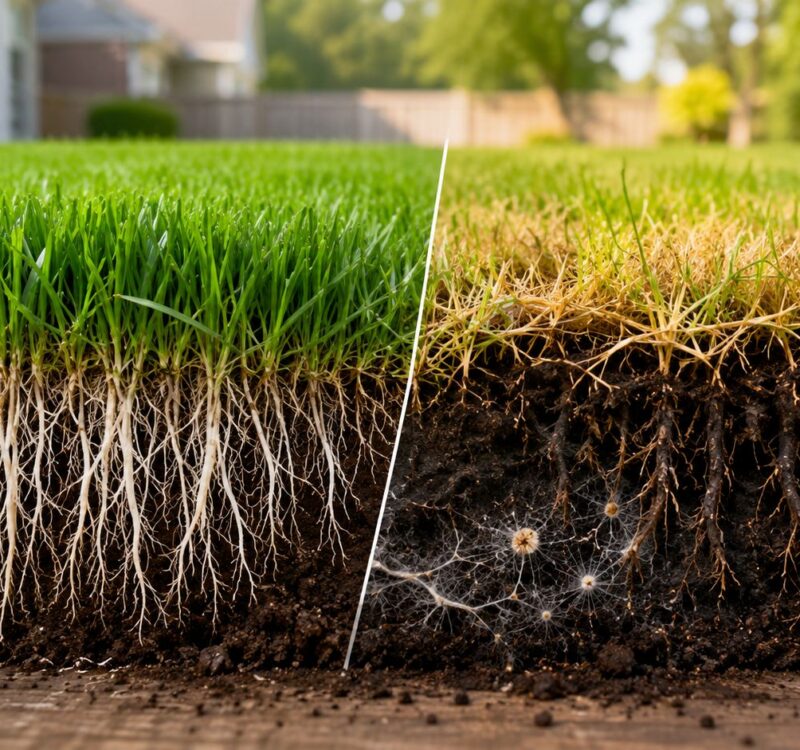
Take All Root Rot: Diagnose & Treat Your Lawn