By late June, a lot of Dallas-Fort Worth homeowners are staring at the same problem. Their hydrangea looked lush in spring, pushed out beautiful blooms, then the heat showed up and the whole plant started folding by lunch. Leaves droop. Flowers crisp at the edges. The soil feels dry one day and heavy the next. Generic care tips stop being helpful fast.
That frustration is real, and it usually isn't because you're a bad gardener. It's because North Texas is hard on hydrangeas. The combination of strong sun, hot wind, fast moisture loss, and inconsistent soil means the usual advice from cooler regions often falls short.
If you've been asking how do you take care of hydrangeas in DFW without babying them every day, the answer is part plant choice, part placement, part water discipline, and part restraint. Most hydrangea problems here come from one of four mistakes: the wrong variety, too much afternoon sun, shallow watering, or pruning at the wrong time.
The good news is that hydrangeas can do well here. They just need a North Texas strategy instead of a generic one. When you match the plant to the site, fix the soil before planting, water thoroughly instead of casually, and prune based on bloom habit, hydrangeas become far more reliable.
Thriving Hydrangeas in the Texas Heat
A hydrangea in Dallas doesn't fail all at once. It usually starts with a few subtle signals. The leaves lose that firm, hydrated look. Blooms fade early. The plant recovers overnight, then wilts again by afternoon. After enough hot days, it stops bouncing back.
That pattern matters because it tells you the plant is under heat and moisture stress, not necessarily dead or diseased. In DFW, that's the difference many homeowners miss. They assume more fertilizer will fix it, or they start cutting the plant back, when the actual issue is usually exposure and watering method.
North Texas also creates a strange contradiction for hydrangeas. They need strong light to bloom well, but they don't love relentless afternoon punishment. A reliable benchmark from the University of Connecticut notes that hydrangeas need 6 to 8 hours of full sun daily for abundant blooms, while also needing protection from scorching afternoon heat if water is insufficient. The same fact sheet also sets the core watering target at 1 inch per week in normal conditions and 2 inches per week during hot, dry weather, applied with soaker or drip hoses in one or two long soaks weekly rather than shallow daily watering (University of Connecticut hydrangea care guidance).
Practical rule: In DFW, a hydrangea that gets morning sun and filtered or protected afternoon light usually has a much better chance than one planted in open western exposure.
If you've lost hydrangeas before, don't assume the plant itself was impossible. In many yards, the site was wrong from day one. Hydrangeas can be one of the most rewarding shrubs in a Texas garden, but they won't forgive the same mistakes that tougher shrubs will.
Start Strong with the Right Hydrangea Variety
Plant selection is where most hydrangea success in DFW is won or lost. If you start with a variety that already struggles in heat, every other care task gets harder. If you choose a tougher type and plant it in the right spot, maintenance gets a lot easier.
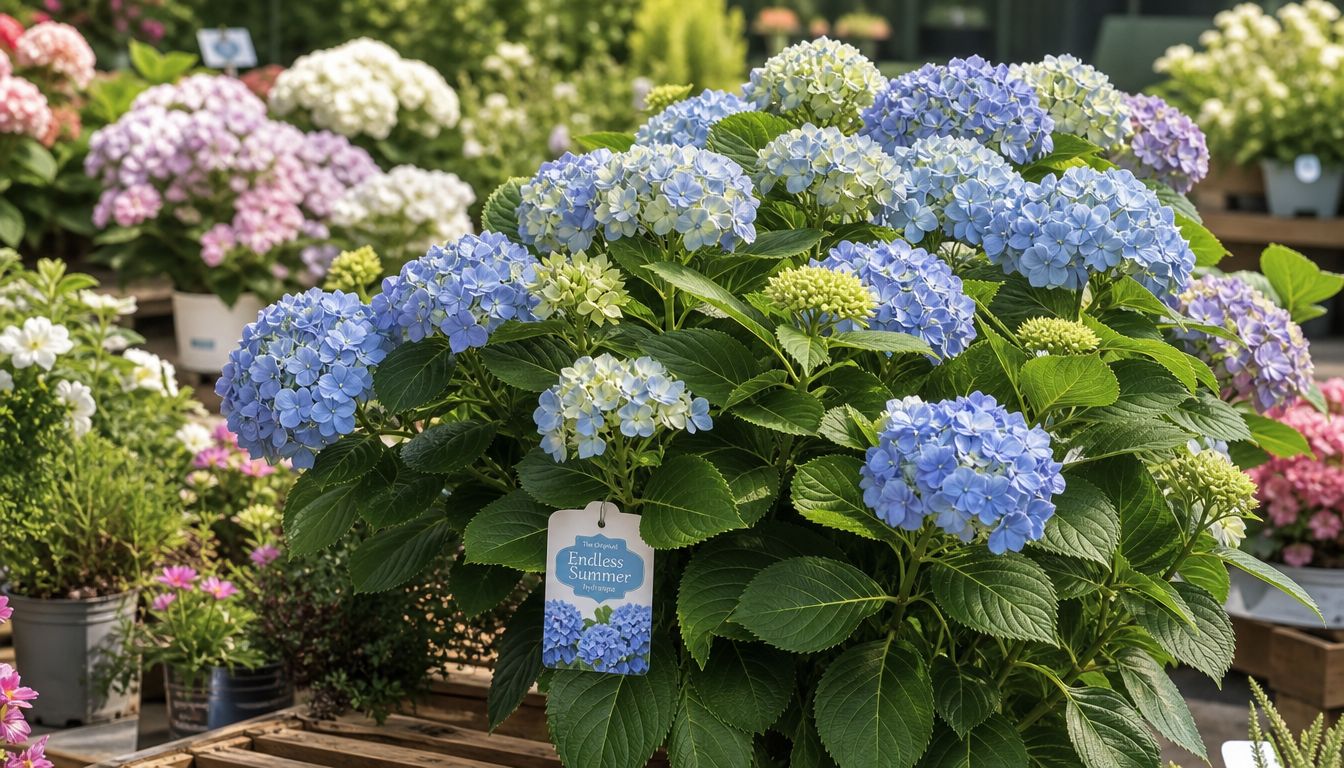
Choose by tolerance, not by tag photo
A lot of people buy hydrangeas in bloom because the flowers are irresistible. That's understandable, but in North Texas, you need to buy for survivability first.
Here's the practical breakdown:
- Panicle hydrangeas tend to be one of the safer bets for DFW gardens. They generally handle more sun and are less fussy once established.
- Oakleaf hydrangeas are another strong option when you can give them protection from harsh afternoon exposure.
- Bigleaf hydrangeas are usually the most demanding. They can be stunning, but they need more careful siting, more consistent moisture, and more caution when pruning.
If you love the classic mophead look, you can still grow Bigleaf types. Just don't treat them like carefree foundation shrubs. They're closer to a specialty plant in this climate.
The best hydrangea for DFW isn't always the prettiest one in the nursery. It's the one that can still look decent after a week of high heat.
Site selection is not negotiable
The ideal spot in North Texas is morning sun with afternoon shade. East-facing beds are often better than west-facing beds. Areas that get bright light early and relief later in the day give hydrangeas enough energy to bloom without pushing them into constant stress.
Avoid these common placement mistakes:
- Southwest corners near masonry because reflected heat builds fast.
- Beds under roof runoff where moisture swings from too dry to too wet.
- Open lawn islands where wind and sun strip water from the plant.
- Tight spaces against the house with poor airflow and trapped heat.
If you're designing from scratch, it helps to think about the bed before you buy the plant. A good layout saves work later. For broader site-planning ideas, this guide on how to plan a garden is useful when you're mapping sun, drainage, and plant placement together.
Fix the soil before you plant
DFW soils can swing from dense clay to fast-draining, sandy mixes, and both can create problems. Clay can hold water too long around roots. Sandy soil can dry out so fast that a hydrangea never fully settles in.
What works better is improving the planting area so roots can spread into a more consistent environment.
Use this approach:
- Loosen the surrounding soil, not just the planting hole.
- Blend in organic matter so heavy soil drains better and lighter soil holds moisture longer.
- Plant at the correct height, keeping the crown from sinking too low.
- Mulch the root zone to buffer temperature and slow surface evaporation.
Don't overcomplicate the first season
The first season is about root establishment, not maximum bloom production. A newly planted hydrangea may flower, but your real goal is getting it anchored before the worst of summer.
Focus on these priorities:
- Consistent moisture
- Protection from afternoon stress
- No unnecessary pruning
- No random amendments without a reason
That's how you set up a hydrangea to handle Texas instead of constantly recovering from it.
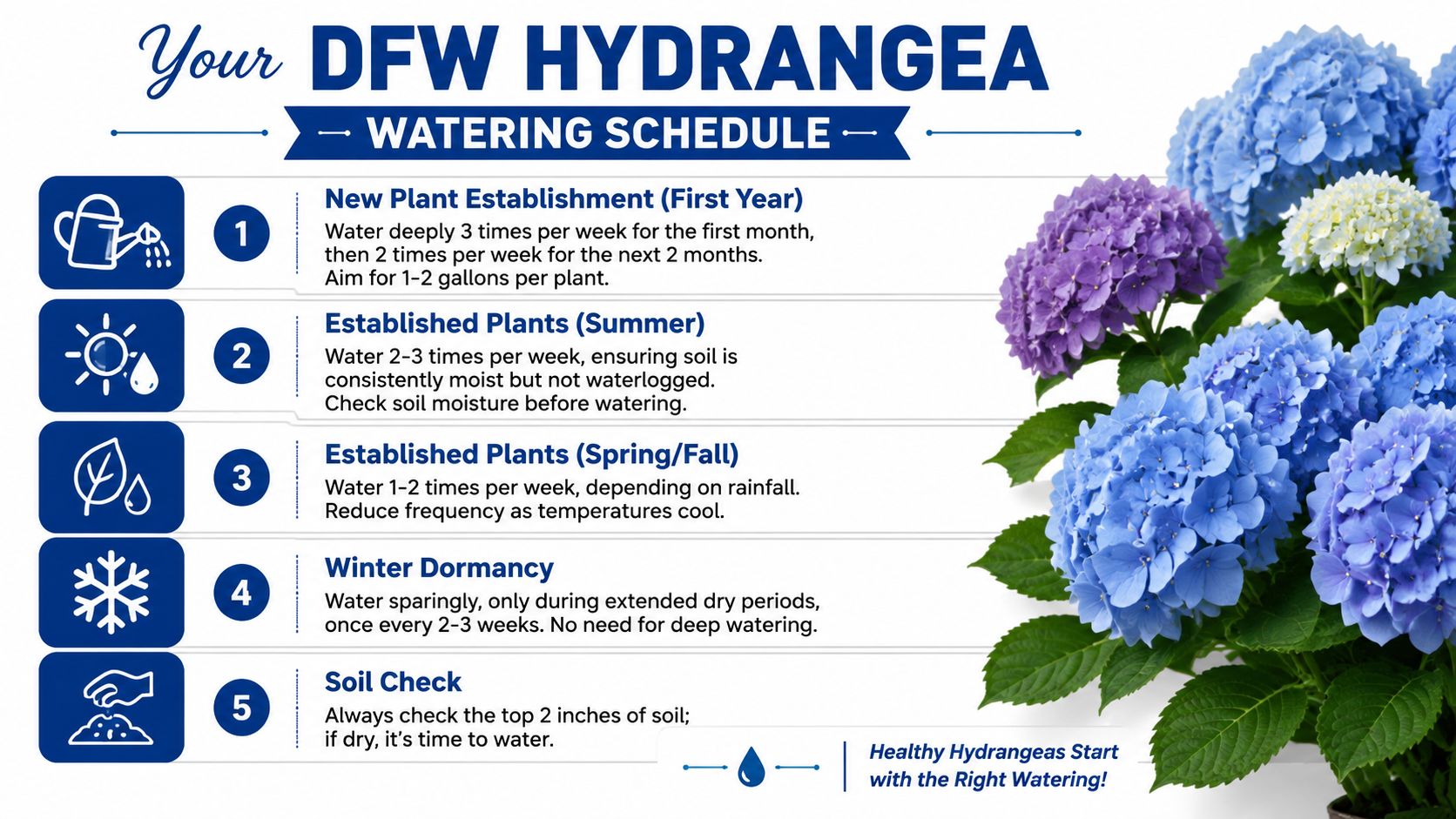
Your DFW Hydrangea Watering Schedule
You water on Saturday, the plant looks fine on Sunday, and by Tuesday afternoon the leaves are hanging again. That pattern is common in Dallas-Fort Worth, especially once summer settles in. The problem is usually not effort. It is how the water is being applied, how fast the bed dries out, and how North Texas soil behaves from one yard to the next.
Why generic advice breaks down in DFW
The usual national advice says hydrangeas need 1 inch of water per week. That baseline helps, but it misses the conditions that make DFW tricky. Clemson's hydrangea guidance for hot-climate care notes that summer demand rises fast in high heat, and sandy soils may need watering twice a week during peak stress (Clemson hydrangea care in hot-climate conditions).
That lines up with what shows up in local gardens. A hydrangea planted in heavy clay near Arlington may stay moist much longer than one planted in a sandy bed in Collin County. Sun exposure changes the schedule too. Morning sun with afternoon shade is manageable. Reflected heat off a fence, wall, or patio can dry a plant far faster than the weather report suggests.
What to do instead
Hydrangeas do better with a full root-zone soak and a pause between waterings than with a quick daily splash. Surface watering keeps the top inch wet and encourages shallow roots. In Texas heat, shallow roots are the first to suffer.
Use this as a working schedule, then adjust based on your soil and exposure:
Normal conditions
Start with about 1 inch of water per week, split into one or two slower watering sessions.Hot, dry weather
Bump that up to around 2 inches per week, usually divided across two longer cycles.Sandy soil during peak heat
Plan on watering twice weekly in many cases, because that soil profile loses moisture fast.Clay-heavy beds
Slow the pace down and check moisture before watering again. Clay holds water longer, and too much irrigation can stress roots just as badly as drought.
A simple screwdriver test works well here. Push it into the soil a few inches from the crown. If it slides in with little resistance and comes out cool and slightly damp, wait. If the soil is firm, hot, and dry below the surface, it is time to water.
Best delivery method
Use soaker hoses or drip irrigation instead of overhead spray. That puts water at the root zone, wastes less to evaporation, and helps keep leaves dry enough to reduce disease pressure. In DFW, that matters during warm nights and humid stretches.
Morning is still the best watering window. It gives the plant time to take up moisture before the day heats up and lowers the chance of foliage staying wet overnight. If you want steadier results through summer, a properly designed water irrigation system for DFW landscapes helps keep timing and coverage consistent.
One caution from the field. Wilting in late afternoon does not always mean the plant needs more water that minute. Hydrangeas often flag during extreme heat, then recover after sunset. Check the soil before adding more. If the root zone is still moist, more water will not solve a heat-load problem.
A simple DFW rhythm
For day-to-day care, follow the plant and the soil, not a rigid calendar.
| Situation | What to check | Best response |
|---|---|---|
| Mild weather | Soil drying a few inches down | Water when the root zone starts drying, not by habit |
| Heat wave | Afternoon wilt and faster moisture loss | Increase watering amount or frequency, then recheck in two days |
| Sandy bed | Water drains fast and soil dries quickly | Use longer cycles more often |
| Clay bed | Lower soil stays damp after the surface dries | Wait longer between soakings and avoid back-to-back watering |
Good hydrangea watering in North Texas comes down to consistency, depth, and timing. Get those three right, and the plant has a fighting chance even in a hard DFW summer.
Amending Soil and Influencing Bloom Color
A lot of North Texas gardeners buy a blue hydrangea, plant it in native soil, and by the next season the blooms are drifting pink or purple. That is not bad luck. It is usually DFW soil chemistry doing what DFW soil chemistry does.

Bigleaf hydrangeas and some mountain hydrangeas can shift color based on soil conditions. In our area, alkaline soil often limits the plant's ability to hold a clear blue. Pink is usually easier to maintain. Blue takes work, and in many Dallas Fort Worth beds it takes ongoing work.
Start with the soil, not the flower color
Chasing bloom color before fixing the bed is one of the fastest ways to stress a hydrangea. I see it all the time. A homeowner adds sulfur, then aluminum sulfate, then more water, and the plant still struggles because the problem is compacted clay, poor organic content, or a root zone that swings from soggy to bone dry.
Test the soil first. That gives you a baseline for pH and helps you avoid piling on products your bed may not need. It also tells you whether your time is better spent improving soil structure instead of trying to force a color change.
What usually works in DFW
North Texas hydrangeas respond better to steady soil improvement than quick-fix color products. A healthier root zone gives you better leaves, stronger stems, and better bloom hold through heat.
Use this approach:
- Add organic matter to the planting area to improve clay soil, loosen compaction, and help the bed hold moisture more evenly
- Top with mulch to buffer soil temperature and reduce hard swings in moisture
- Make pH changes gradually if your variety can change color
- Recheck the soil after amendments instead of assuming one application solved it
- Accept a purple or mauve result if your site fights blue. In DFW, that is often a realistic middle ground
That last point saves a lot of frustration.
What causes problems
Some practices create more stress than benefit, especially in Texas heat.
- Trying to force blue blooms in highly alkaline native soil
- Applying lime, sulfur, or aluminum products without a soil test
- Dumping amendments into dry soil
- Expecting fast color changes from one treatment
- Focusing on bloom color while the plant is still struggling with poor bed conditions
Healthy roots matter more than perfect color.
A practical way to amend the bed
For most home gardeners, the safest process is simple. Improve the soil first. Watch how the plant responds. Then decide whether color adjustment is worth the extra effort.
Test the bed
Check pH before adding anything meant to shift bloom color.Improve the planting area
Work in compost or other organic matter around the root zone if the soil is heavy clay or low in organic content.Mulch after amending
A consistent mulch layer helps keep the root area cooler and slows moisture loss during DFW heat.Adjust pH in small steps
Only do this if you are growing a hydrangea capable of changing color and you are willing to monitor the result over time.Watch the leaves and new growth
If foliage starts showing stress after amendments, stop and reassess before adding more products.
The real trade-off with blue hydrangeas in North Texas
Blue blooms are possible in some DFW gardens, especially in protected beds with amended soil and close attention to pH. They are rarely effortless here. Pink blooms usually ask less from the gardener and hold more consistently in our native conditions.
That trade-off matters. A strong, well-rooted hydrangea with good foliage and decent flower color will outperform a stressed plant that is being pushed too hard for a perfect shade of blue.
If you want hydrangeas to look good through a North Texas summer, build the root zone first and treat color as a secondary goal. That is the approach that keeps plants alive, blooming, and worth the trouble.
A Guide to Pruning Hydrangeas in North Texas
Pruning is where more hydrangea blooms get lost than almost anywhere else. The reason is simple. People prune by season instead of by bloom habit. If you cut the wrong hydrangea at the wrong time, the plant may still live and leaf out, but you can remove nearly all the flowers before the season even starts.
The two groups that matter
For pruning, hydrangeas fall into two practical camps.
Old wood bloomers set flowers on stems from the previous season.
New wood bloomers flower on growth produced in the current season.
That distinction controls everything.
The highest-stakes example is Bigleaf and Mountain hydrangeas. The Royal Horticultural Society guidance states that for Bigleaf (H. macrophylla) and Mountain hydrangeas, pruning must wait until immediately after summer flowering in June to July, and pruning them in late winter or early spring removes 80 to 100% of potential blooms (RHS hydrangea pruning guide).
DFW Hydrangea Pruning Calendar
| Hydrangea Type | Blooms On… | When to Prune in DFW | Pruning Action |
|---|---|---|---|
| Bigleaf hydrangea | Old wood | Right after flowering in early to midsummer | Remove spent bloom heads lightly and make only selective cuts |
| Mountain hydrangea | Old wood | Right after flowering in early to midsummer | Light shaping only, plus removal of weak or dead wood |
| Oakleaf hydrangea | Old wood | After flowering, if needed | Minimal pruning. Keep structure intact |
| Panicle hydrangea | New wood | Late winter | Shape the plant and reduce size as needed |
| Smooth hydrangea | New wood | Late winter or early spring | Cut back for structure and vigorous fresh growth |
What to remove and what to leave
For old-wood hydrangeas, restraint is the whole game. Don't shear them. Don't cut them down because they look messy in winter. Don't “clean them up” in spring just because the stems seem bare.
A safer approach is:
- Remove dead flower heads carefully
- Cut back to healthy buds only when needed
- Take out dead or clearly damaged stems
- Remove only one or two of the oldest stems at the base when rejuvenation is needed
Monrovia's hydrangea guidance reinforces the same timing principle from another angle. Summer bloomers should be pruned in late winter, while spring bloomers should be pruned immediately after flowering to avoid removing next year's buds. It also notes that established hydrangeas can produce smaller flowers after four to six years on older stems, and that those older stems can be cut back to 1 to 2 inches above the ground in late winter or early spring as a rejuvenation step for the right plants (Monrovia hydrangea pruning timing).
That guidance is useful, but only if you correctly identify what kind of hydrangea you have first.
If you don't know your hydrangea type, don't make major cuts. Waiting is safer than removing next season's flowers.
The late-summer deadheading question
This comes up constantly in DFW. A plant pushes out tired, heat-stressed blooms late in the season, and the homeowner wants to tidy it up. The problem is that old-wood bloomers are already setting up future flowers, so careless cutting can cost next year's show.
One verified source notes that a frequently overlooked question is whether you can prune hydrangeas after August in hot climates to remove dead blooms without sacrificing next year's flowers, and that many general guides give a blanket “don't prune after August” answer without addressing heat-stressed, non-viable late blooms in hot regions (Whitney's Farm hydrangea care questions).
In practical terms, here's the safest DFW answer:
- If it's an old-wood bloomer, be conservative after August.
- If you must tidy the plant, remove only obviously spent flower heads with minimal stem taken.
- Don't reshape the shrub late in the season.
- If you're unsure whether the late bloom is worth removing, leave it.
Tools and technique matter too
Use disinfected bypass pruners, not dull hedge shears. Make clean cuts. Keep the plant's natural framework. Hydrangeas almost always look better when selectively pruned than when they're clipped into submission.
Pruning should solve a problem, not satisfy an urge to cut something. In North Texas, that discipline pays off.
Year-Round Protection and Professional Care
Even when you get variety, watering, and pruning right, DFW still throws curveballs. A long heat stretch can stress blooms fast. Warm, humid spells can invite leaf issues if the plant stays wet too long. Winter is usually easier, but a sudden hard freeze can still damage exposed buds on the wrong variety.
The best year-round protection is mostly preventive. Keep water off the foliage when possible. Maintain mulch over the root zone. Avoid overfeeding soft growth right before weather swings. If a plant repeatedly struggles in the same spot, don't keep forcing it. Move it or replace it with a better-suited hydrangea type.
Here's where many homeowners lose time. They keep trying one small fix after another on a plant that's declining because the whole site is working against it. Sometimes the issue is not the shrub. It's the irrigation coverage, the drainage, the reflected heat, or the bed design around it.

When it makes sense to get help
Professional help is worth considering when the problem has moved beyond routine care.
Common examples include:
- Hydrangeas that decline every summer despite steady hand watering
- Beds with drainage issues that swing between soggy and bone dry
- Large outdoor area renovations where plant placement and irrigation need to be designed together
- Recurring plant health issues that need diagnosis instead of guesswork
- Established shrubs that need corrective pruning after years of poor cuts
For many homeowners, the smartest move is getting the broader grounds tuned up so the hydrangeas stop fighting the site. If you're weighing that option, this article on why professional landscape maintenance matters in Dallas climate gives a good overview of why long-term consistency matters so much in North Texas.
Hydrangeas aren't impossible here. They just expose weak spots in a garden quickly. When the bed drains properly, the irrigation is set up well, and the plant is matched to the light it gets, hydrangeas become much easier to manage through the season.
If you want help designing, planting, or maintaining hydrangeas that can effectively handle North Texas conditions, Rosewood Landscape Group can help. From irrigation and drainage to full outdoor design installation and plant health care, their team works across the Dallas-Fort Worth metroplex to build outdoor spaces that hold up better in real DFW weather.
Related posts
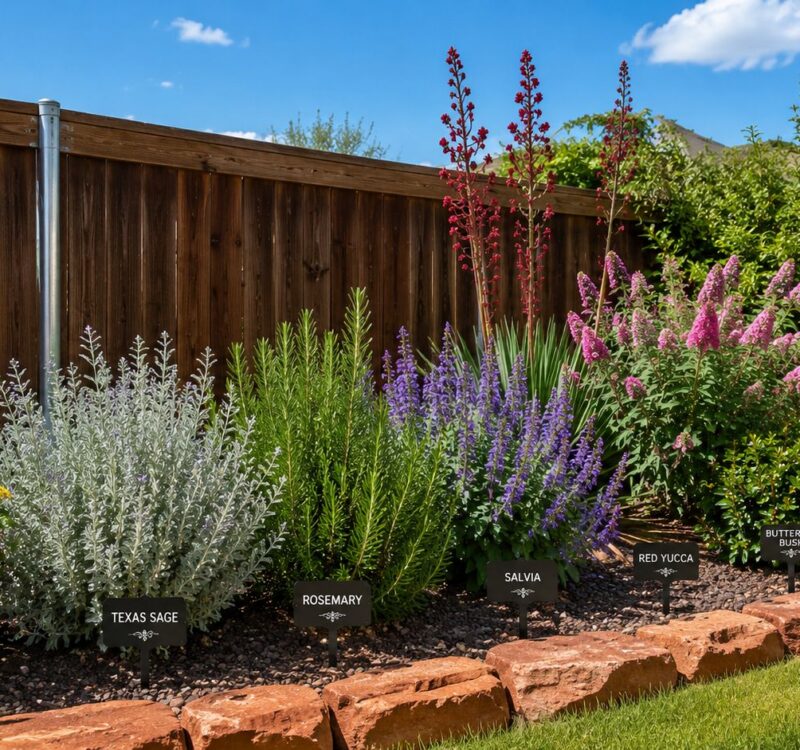
8 Best Shrubs for North Texas Landscapes in 2026
Permeable Paver Installation: A DFW Homeowner’s Guide

Zoysia Grass Fungus: Identify, Treat & Prevent in 2026
How to Improve Soil Quality: Easy Ways to Improve Soil
Take All Root Rot: Diagnose & Treat Your Lawn