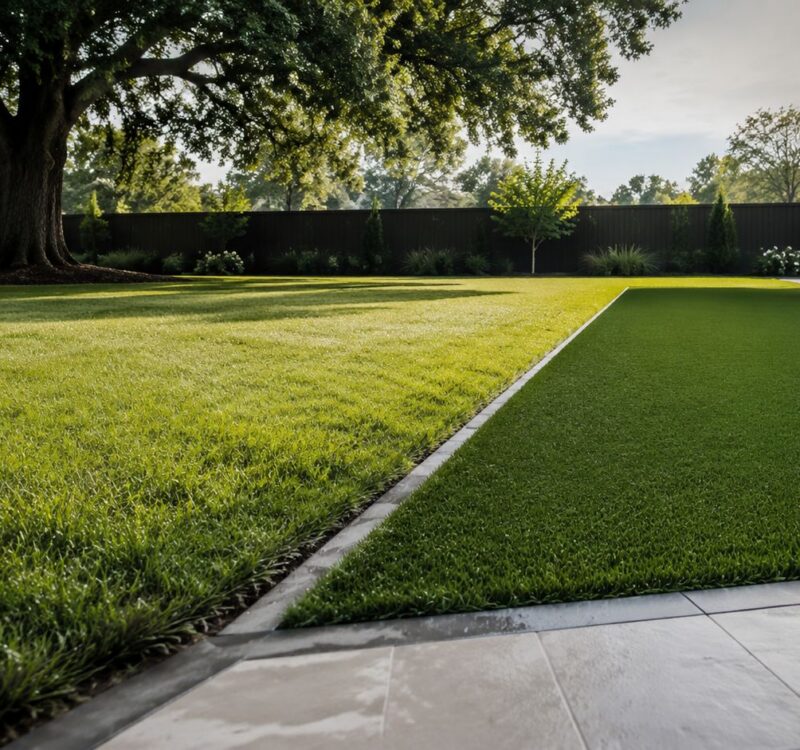
You step onto a North Texas patio in late July and can feel the difference between a yard that was set up for this climate and one that was not. In the stressed yard, turf fades by midafternoon, Indian hawthorn shows burned leaf margins, and water stands in one bed while the bed ten feet away has already baked into cracked clay.
That pattern shows up across Dallas-Fort Worth because our conditions punish generic plant care. Summer heat comes hard, rainfall swings from dry stretches to sudden downpours, clay soils seal over fast, and city watering restrictions leave little room for waste. Plants that perform well in other regions often struggle here unless irrigation, drainage, soil preparation, and maintenance are handled as one system.
On Rosewood Outdoor Group projects, we see the same trade-offs over and over in neighborhoods from Highland Park to Frisco. Extra water can keep a new planting alive through August, but too much water in heavy soil leads to root problems. Thick mulch helps soil hold moisture, but piled against trunks and crowns it creates a different set of issues. A clean plant palette may look sharp on install day, but if it ignores west exposure, reflected heat, or black clay movement, it usually costs more in replacements and service calls.
Good plant care in North Texas is rarely complicated. It is disciplined. The strongest plantings here are built on correct watering depth, soil-aware fertilization, practical plant selection, timely pruning, and drainage that moves water away without stripping beds dry. Get those fundamentals right, and the plantings have a much better chance of holding up through heat, storms, and watering limits.
1. Master Watering Schedules for North Texas Heat Stress
Watering mistakes cause more plant loss in North Texas than most insect problems. In summer, many homeowners react to heat by watering every day. That usually creates shallow roots, stressed turf, and shrubs that can't handle a missed cycle.
Deep, controlled watering works better here. Established plants need moisture down in the root zone, not a light rinse at the surface. On Dallas clay soils, that means slower application with enough soak time to penetrate instead of running into the street.
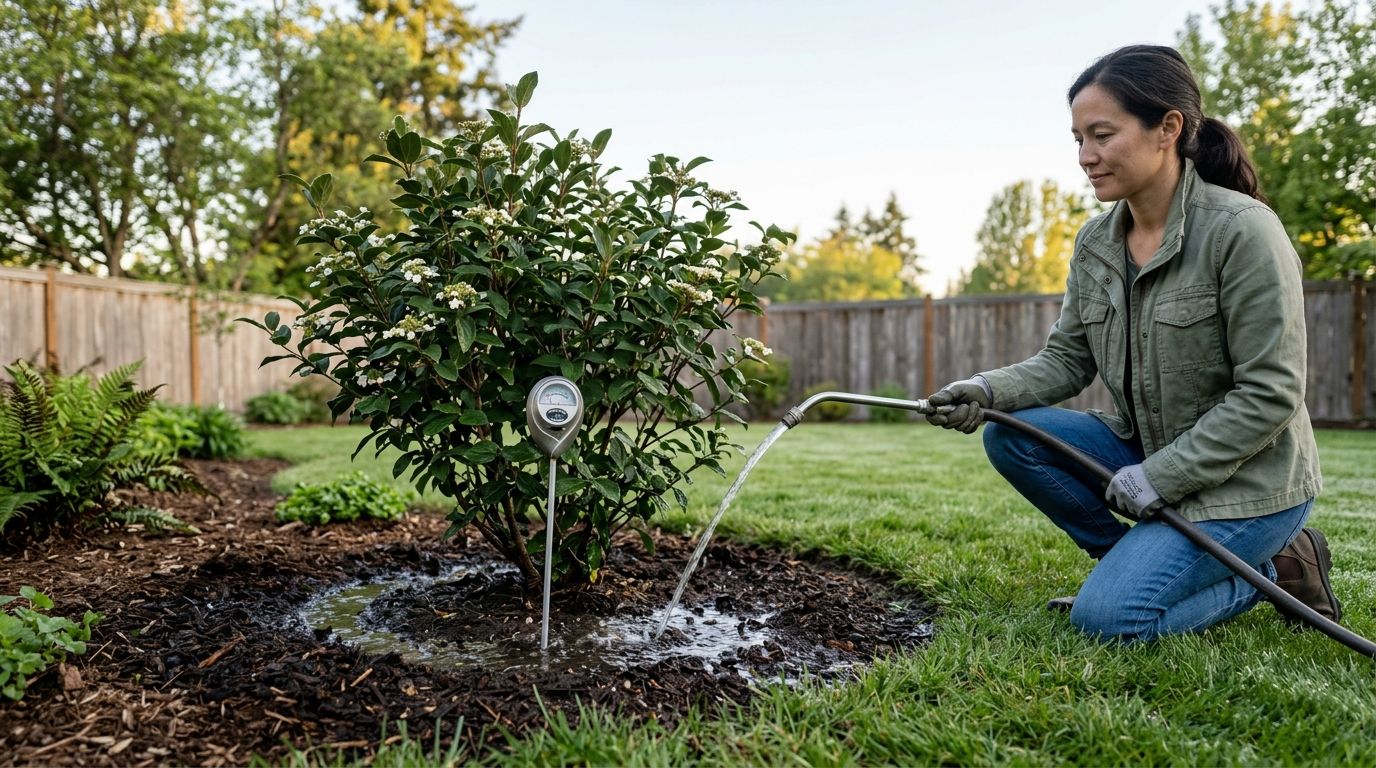
Check the soil before you change the controller
At Rosewood projects in Highland Park and Uptown, the best irrigation adjustments usually start with a simple soil check, not a guess from the sidewalk. Press a probe into the bed, dig a small inspection hole, or use the hand-feel method. If the top is dry but the soil below still holds moisture, don't add another cycle.
For indoor container plants and sheltered patio plants, overwatering is a major risk. The Smithsonian Gardens notes that overwatering is the second most critical factor in houseplant mortality, and that most plants die from too much water rather than drought. Their houseplant care guidance also recommends checking moisture by inserting a finger into the top layer before watering and keeping soil evenly moist with slight drying between waterings in the Smithsonian Gardens houseplant care sheet.
Practical rule: In North Texas heat, water earlier in the morning, then verify depth later in the day. Don't judge irrigation success by how wet the surface looks.
- Use drip in shrub beds: Drip irrigation applies water where roots need it and reduces splash on foliage.
- Cycle clay soils slowly: Shorter run times with soak intervals help water move in instead of off the site.
- Transition new plants carefully: Fresh installs need closer attention at first, then a gradual move to deeper, less frequent watering.
2. Implement Mulching Best Practices to Protect Soil and Roots
Mulch does real work in North Texas. It reduces surface evaporation, cushions roots against heat, slows weed pressure, and softens the crust that forms on clay after irrigation and rain. If a bed goes through summer without mulch, the soil usually tells on you first.
The trick is using the right material at the right depth. Too little disappears fast. Too much traps moisture against trunks and crowns, which invites decline.
What good mulch looks like in DFW beds
Shredded hardwood bark, composted arborist chips, and other natural mulches tend to perform best on local residential and commercial sites. They settle into the soil over time and improve texture instead of just covering it. On Rosewood installations around West Village and Highland Park, mulch is one of the easiest upgrades for stabilizing newly planted beds before peak summer stress arrives.
Apply it evenly and keep it pulled back from tree trunks and shrub stems. Mulch volcanoes are still one of the most common planting mistakes in high-end outdoor settings, and they never help.
A few practical rules matter more than fancy product labels:
- Keep the depth moderate: A consistent layer works better than mounds and thin spots.
- Refresh before heat spikes: Spring top-offs are easier than trying to rescue exposed roots in August.
- Choose natural products: Organic mulch improves soil over time. Rubber and heavily dyed options don't help the soil profile.
If you want a local timing guide, Rosewood explains the seasonal advantage in this Dallas and North Texas mulch timing article.
A bed with proper mulch usually needs fewer corrections later. Less crusting, fewer weeds, steadier moisture, and better root protection.
3. Diagnose and Manage North Texas Plant Diseases and Pests Proactively
Most pest and disease problems in DFW become expensive because they go unnoticed for too long. By the time a crape myrtle is fully coated, a rose bed has dropped leaves, or a holly is sticky from scale, the issue has already had time to spread.
Weekly scouting beats emergency treatment. Walk the property with purpose. Check undersides of leaves, interior branching, new growth, and stressed corners near reflective heat or poor airflow. North Texas summers create the exact mix that many fungal and insect issues like. Heat, humidity, irrigation overspray, and dense plant canopies.
Catch issues early and change the conditions
At Rosewood properties, the first response isn't always a spray application. It's often a correction in air movement, pruning, or irrigation timing. Plants packed too tightly near fences or walls stay damp longer and develop trouble faster. Beds watered late in the evening often stay vulnerable overnight.
Use clean bypass pruners, remove infected growth promptly, and disinfect tools between cuts. If you're seeing repeat disease pressure on the same plant year after year, the plant choice may be wrong for that location.
A proactive plant health program also matters for trees. If mature ornamentals or shade trees show canopy thinning, spotting, cankers, or branch dieback, targeted diagnosis matters more than guesswork. Rosewood covers that process in its tree disease treatment service overview.
- Inspect weekly in growing season: Small infestations are easier to isolate than mature ones.
- Prune for airflow: Thinning crowded interiors often reduces repeat fungal pressure.
- Water the soil, not the foliage: Wet leaves plus warm nights create avoidable disease conditions.
4. Apply Soil Testing and Targeted Nutrient Programs for DFW Clay Soils
North Texas soil often looks rich because it's dark and dense. That's misleading. Heavy clay can hold nutrients and still make them difficult for plants to use, especially when pH runs alkaline and drainage is uneven.
That's why fertilizing without a soil test wastes time. Yellow leaves might mean low nitrogen, but in many DFW growing areas they point to nutrient lockout, compaction, poor root oxygen, or irrigation problems. More product won't fix the wrong cause.
Feed the plant that's in front of you
For established planted areas, separate the site into zones before testing. Turf, foundation beds, tree rings, and narrow strips beside pavement don't behave the same way. A single property can have compacted construction fill in one area and better amended soil in another.
Rosewood crews often see chlorosis show up first on ornamentals planted against masonry or in overbuilt beds with limited rooting space. In those cases, soil improvement and drainage correction usually matter as much as fertilizer choice. Compost incorporation, mulch, and slower-release feeding programs create steadier results than repeated quick green-up products.
A practical nutrient plan usually includes:
- Testing before major corrections: Don't guess at pH or nutrient balance.
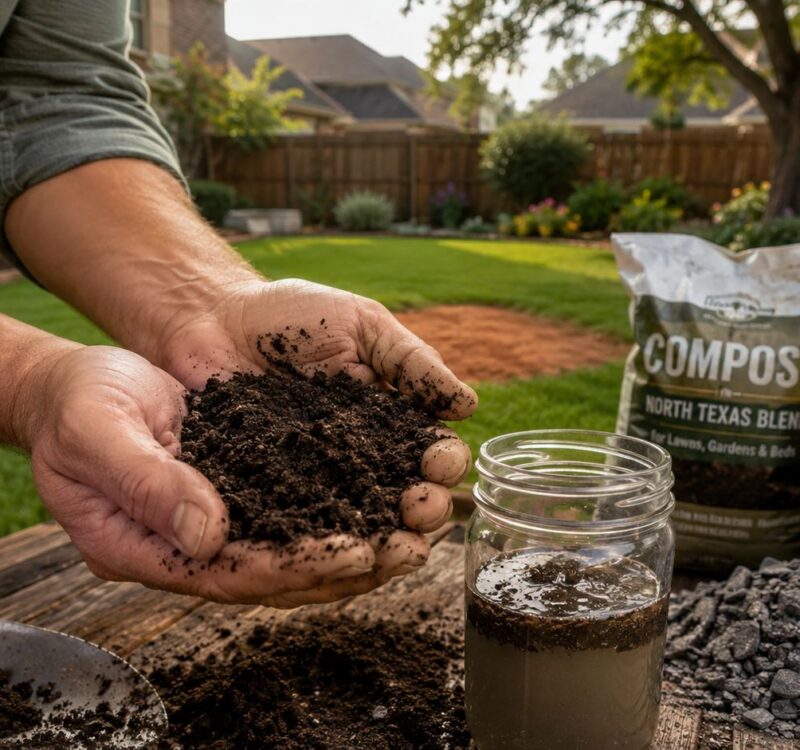
- Adding organic matter: Compost improves structure and helps clay work more like soil and less like brick.
- Using measured fertilizer applications: Slow-release products are safer than chasing color with frequent heavy feeding.
Field note: If a plant stays pale after feeding, stop blaming the fertilizer bag. Check pH, drainage, root space, and irrigation coverage.
5. Select and Establish Native Texas Plants for Reduced Maintenance and Resilience
Some of the best-looking outdoor spaces in North Texas use fewer exotic plants, not more. Native and well-adapted Texas species handle our heat, wind, alkaline soils, and water swings with less intervention once they're established.
That doesn't mean every yard should look wild or informal. Native planting can be highly structured. Masses of grasses, clean shrub groupings, and strong evergreen anchors can look just as polished as traditional ornamental beds, with less stress through late summer.
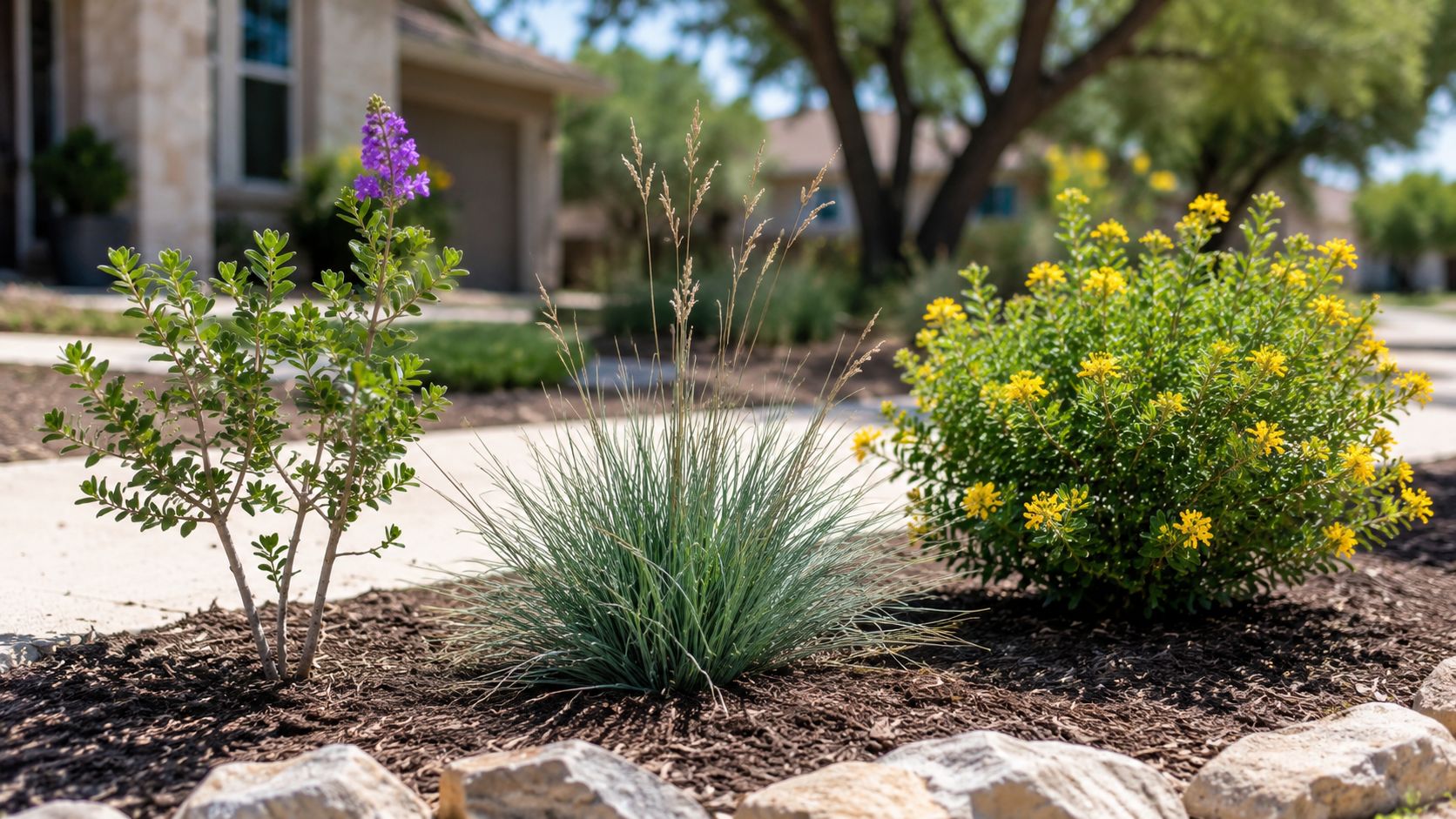
Build around plants that want to live here
Texas sage, inland sea oats, yaupon holly, Mexican feathergrass, red yucca, and selected native oaks all solve real North Texas problems when placed correctly. They tolerate reflected heat better than many imported shrubs and usually ask for less water once roots are established.
Rosewood frequently uses native and regionally adapted plant palettes where owners want lower maintenance without losing curb appeal. If you want ideas specific to local conditions, Rosewood's guide to native plants for North Texas landscapes is a useful place to start.
The biggest mistake with natives is assuming they need no establishment care. They do. They still need correct planting depth, mulch, and a disciplined watering period after installation.
- Match plant to exposure: Full sun natives still struggle in shade, and shade plants still burn in western exposure.
- Group by water need: Don't mix low-water shrubs into zones dominated by thirstier annual color.
- Plan for mature size: Native plants look best when they're allowed to hold their natural form.
6. Establish Proper Pruning Schedules and Techniques to Promote Plant Structure and Health
Bad pruning creates years of correction. In North Texas, that usually shows up as topped trees, hacked shrubs, ruined bloom cycles, and storm-damaged limbs that were never trained correctly in the first place.
Good pruning starts with timing. Spring bloomers set buds differently from summer bloomers. Shade trees need structure, not random shortening. Evergreen shrubs need selective thinning more often than blunt shearing.
Prune for form, not just size
On DFW properties, January and February are productive months for dormant pruning because structure is visible and many plants are less stressed by the work. Spring-flowering shrubs should usually be pruned after bloom, not before, or you'll remove next season's show without realizing it.
Crepe myrtles are the classic example. Selective thinning and canopy shaping preserve their branch architecture. Heavy topping ruins the form and invites weak regrowth. The same principle applies to many shrubs around patios and entries. If a plant constantly needs severe reduction, it was probably planted in the wrong spot.
A better pruning routine looks like this:
- Remove dead and crossing wood first: That solves health and structure issues before cosmetic shaping.
- Thin interiors selectively: Better light and airflow reduce stress in dense canopies.
- Limit total removal: Plants recover better when pruning stays measured and intentional.
Shortcuts show up fast in summer. So does good work.
7. Design and Maintain Effective Landscape Drainage to Prevent Water Damage and Plant Loss
North Texas can go from dry soil to standing water in one storm. Clay soils don't absorb fast, and many lots were graded more for construction speed than long-term grounds performance. That's why drainage is one of the most important plant care tips for this region, even though homeowners often think of it as a hardscape issue.
Plants can't stay healthy where roots sit in saturated soil. Turf thins out. Shrubs decline slowly. Mosquitoes show up. Foundation concerns follow.
Solve the water movement, not just the symptom
If a bed always puddles near the house or a low lawn corner stays soft for days, don't keep replacing plants there and hope for a different outcome. Regrading, swales, French drains, catch basins, and rain gardens each have a place depending on the site.
Rosewood sees this often on estate properties where beautiful planting beds fail because roof runoff or adjacent hardscape keeps pushing water into one low point. Once the flow path is corrected, plant performance usually improves because roots finally get oxygen again.
Water that doesn't leave the site properly will eventually show up as plant stress, erosion, algae, or structural trouble.
A few practical checks help:
- Watch the site during a storm: You'll learn more in ten minutes of rain than from a dry-weather guess.
- Protect low areas with purpose: Use drainage features that carry or absorb runoff, depending on the space.
- Maintain existing systems: A clogged basin or buried outlet can undo an otherwise solid design.
8. Establish Seasonal Maintenance Programs Aligned with North Texas Climate Cycles
A North Texas property can look fine in March, struggle by July, and show real decline after one hard freeze if maintenance happens only when something looks wrong. The work has to match the season before stress shows up.
That pattern is easy to see on Rosewood properties across Dallas and the northern suburbs. A bed that needs pre-emergent timing in late winter needs irrigation tuning by early summer and freeze prep in fall. Miss one window, and the next season gets more expensive.
Build the calendar around North Texas conditions
North Texas does not provide a steady growing season for its planted areas. We get heavy spring flush, storm swings, long heat, dry wind, warm fall stretches, and occasional winter cold that arrives fast. Maintenance programs need to follow those shifts, especially on sites with clay soil, mixed sun exposure, and municipal watering limits.
On our maintenance routes, the strongest results come from seasonal planning that is simple and consistent.
Late winter is the time for dormant pruning, ornamental grass cutbacks, bed cleanup, and irrigation inspections before demand rises. Spring is for mulch touch-ups, annual color rotation, weed control timing, and close monitoring of fresh growth. Summer work shifts toward water management, pest scouting, and protecting plants from heat stress instead of pushing new growth. Fall is the best time for many tree and shrub installations in North Texas, along with leaf management, turf recovery work, and cold-weather preparation.
Rosewood uses that schedule on both residential estates and commercial sites because it cuts down on avoidable losses. Crews can address issues while they are still small, and owners are not paying for repeated replacement of plants that failed from missed timing.
A practical seasonal program usually includes:
- Late winter: Structural pruning, pre-emergent applications, freeze damage assessment, irrigation startup checks
- Spring: Mulch refresh, fertilization based on plant needs, pest and disease monitoring, planting of heat-tolerant material
- Summer: Weekly stress checks, irrigation adjustments within local watering rules, limited pruning, deep watering for trees as needed
- Fall and early winter: Tree and shrub planting, leaf and debris cleanup, root-zone care, protection for cold-sensitive plants, system winterization
The goal is simple. Keep the property stable through the swings that are normal here, instead of trying to recover after each one.
9. Implement Hardscape Integration to Extend Living Space While Supporting Landscape Health
A North Texas backyard can look finished on install day and still create plant problems by the first full summer. I see it most often after a patio expansion, pool deck addition, or long run of walkways changes how heat and water move across the property.
Hardscape works best here when it is planned as part of the overall outdoor design, not dropped into it after the fact. In Dallas, Fort Worth, and the northern suburbs, that means accounting for reflective heat, fast storm runoff, shifting clay soils, and the water needs of nearby trees and foundation plantings.
Rosewood projects in Highland Park and on commercial properties around Dallas have shown the same thing repeatedly. The outdoor spaces that hold up well in August usually combine usable shade, correct finish grades, and enough open soil for roots to function. The ones that struggle are often overpaved, underdrained, or built too close to established trees.
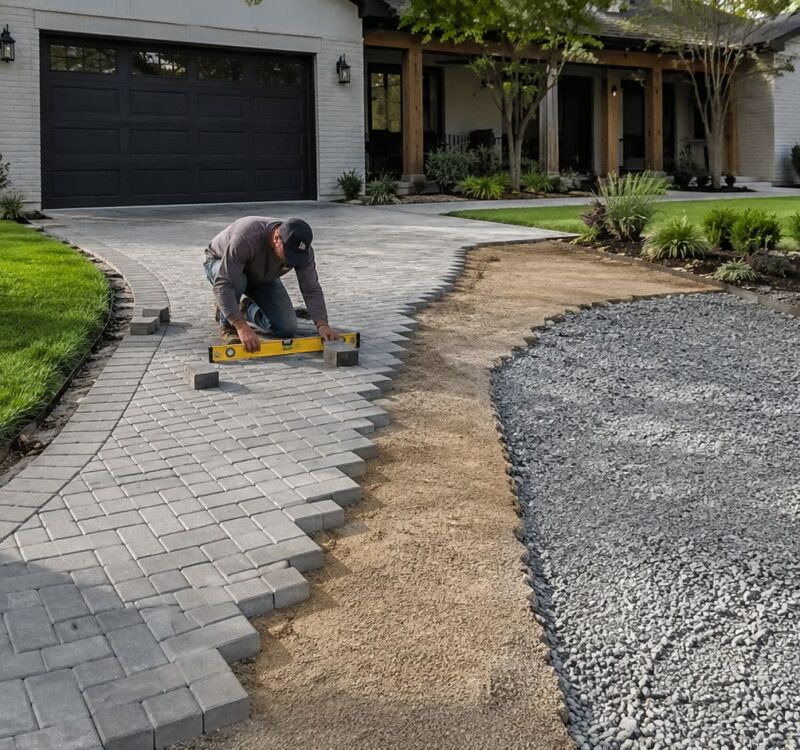
Material choice matters. Light-colored surfaces can reduce heat gain, but glare can become a problem near pools and west-facing seating areas. Natural stone and concrete pavers both perform well when the base is built correctly, but neither fixes poor drainage on its own. Permeable paving can help in selected areas, especially where runoff needs to be slowed before it reaches planting beds or low spots, but it still needs proper subgrade preparation in North Texas clay.
A few hardscape rules prevent expensive plant loss:
- Protect root zones during construction: Keep equipment and material storage out of the drip line of mature trees. Soil compaction and cut roots often show up months later as canopy thinning and branch dieback.
- Keep grade changes under control: Raising soil or patio base material against trunks, root flares, or shrub crowns traps moisture where it should not sit and reduces oxygen at the root zone.
- Use shade on purpose: Pergolas, well-placed trees, and planted borders make patios and seating areas more usable while reducing reflected heat stress on nearby plants.
- Move water where you want it to go: Direct runoff away from the house, away from low beds, and away from areas where clay already holds water after storms.
- Leave planting room: Narrow leftover strips between pavement and fences usually bake out in summer. Beds need enough width and soil volume to support long-term growth.
The goal is not just more outdoor square footage. The goal is a space people will use in July without creating chronic stress for the plantings that surround it.
10. Monitor and Optimize Irrigation System Performance for Water Efficiency and Plant Health
A North Texas irrigation system usually shows its mistakes in July. One bed stays soggy, another dries out by midafternoon, and the turf along the sidewalk throws water straight onto concrete. By the time those symptoms show up, roots have already been under stress for weeks.
In DFW, irrigation problems usually trace back to a short list. Poor pressure regulation, clogged or tilted heads, runoff on clay soils, and zones that force turf, shrubs, and seasonal color onto the same schedule. I see this often on older properties where the controller gets adjusted over and over, but the hardware never gets corrected.
At Rosewood Outdoor Group projects, the best water savings usually come from field adjustments, not bigger run times. A smart controller helps, but it cannot fix a spray head aimed at a fence or a rotor that is watering half a driveway. Good performance starts with coverage, pressure, and zoning that match the plant material and the site.
Use technology where it helps the site
Technology earns its place when it supports direct observation. Soil moisture sensors, weather-based controllers, and flow monitoring are useful on North Texas properties with mixed sun exposure, slopes, and changing seasonal demand. They are especially helpful where local water restrictions limit watering days and each cycle has to count.
Digital plant care tools are getting more attention, as noted earlier, but field conditions still decide results. For irrigation, the practical standard is simple. Match nozzle output, correct overspray, adjust schedules by season, and inspect the system before heat and drought expose every weak point.
One caution for patios, entries, and indoor-outdoor container areas. Watering problems are often blamed on low humidity when the underlying issue is poor root-zone moisture control. Light levels, drainage, pot size, and measured watering habits matter more than quick-fix advice, as discussed in this watering precision discussion for indoor plant care.
A solid inspection should cover more than whether the system turns on.
- Audit each spring and again in peak summer: Run every zone long enough to spot leaks, misting, blocked heads, dry arcs, and runoff before plants decline.
- Separate hydrozones: Turf, annual beds, foundation shrubs, and native or adaptive plantings need different precipitation rates and different schedules.
- Check pressure and head type: High pressure causes misting and waste. Mismatched nozzles create wet and dry patches even when timing looks correct on the controller.
- Adjust for season and restrictions: North Texas schedules should change with temperature, rainfall, day length, and city watering rules, not stay fixed from April through September.
- Watch the soil, not just the timer: If water is sheeting off clay or standing around crowns, shorten cycle length and use soak periods instead of adding more minutes.
The goal is even moisture in the root zone, not maximum green color at any cost. That approach protects plant health, cuts waste, and keeps North Texas outdoor plantings performing better through heat, drought, and watering restrictions.
North Texas Plant Care: 10-Point Comparison
| Practice | Implementation complexity | Resource requirements | Expected outcomes | Ideal use cases | Key advantages |
|---|---|---|---|---|---|
| Master Watering Schedules for North Texas Heat Stress | Medium, needs soil assessment and schedule management | Soil moisture probes or smart controller, time for monitoring, possible system adjustments | 30–50% water savings, stronger deep roots, reduced fungal issues | Residential & commercial DFW landscapes in summer heat/drought | Water efficiency, drought resilience, lower bills |
| Implement Mulching Best Practices to Protect Soil and Roots | Low, straightforward application with basic training | Bulk organic mulch, labor for application and annual refresh | 25–50% less watering, 70–90% weed suppression, moderated soil temps | Planting beds, tree rings, new and established beds | Moisture retention, weed control, soil improvement |
| Diagnose and Manage North Texas Plant Diseases and Pests Proactively | High, requires expertise and regular scouting | Trained technicians, diagnostic tools, selective treatments (IPM) | Prevents ~70–80% of losses, lowers emergency costs, reduces pesticide use | Mature ornamentals, high-value plantings, disease-prone sites | Early detection, targeted control, cost avoidance |
| Apply Soil Testing and Targeted Nutrient Programs for DFW Clay Soils | Medium, testing + tailored prescriptions | Laboratory soil tests, amendments (compost, chelated iron), expert interpretation | Improved vigor in 4–8 weeks, reduced fertilizer waste, corrected deficiencies | Clay/alkaline sites, chlorotic trees, new installations | Targeted inputs, cost-effective, long-term soil health gains |
| Select and Establish Native Texas Plants for Reduced Maintenance and Resilience | Low–Medium, design and sourcing considerations | Native plant stock, initial establishment watering, placement design | 40–60% lower water demand, >90% establishment success for proper sites | Low-maintenance landscapes, ecological designs, mass plantings | Low inputs, drought tolerance, supports pollinators |
| Establish Proper Pruning Schedules and Techniques to Promote Plant Structure and Health | Medium, species- and season-specific timing | Certified arborists/ trained pruners, proper tools, scheduled visits | Better structure, 30–50% reduction in fungal issues, longer plant life | Trees and shrubs in estates, formal landscapes, specimen plants | Improved health, safety, enhanced aesthetics |
| Design and Maintain Effective Landscape Drainage to Prevent Water Damage and Plant Loss | High, site-specific engineering and install | Grading, swales/French drains, civil/landscape contractors, ongoing maintenance | Prevents root rot and foundation damage, reduces erosion and mosquito habitat | Low-lying yards, compacted clay sites, properties with flooding | Protects structures and plants, manages stormwater, stabilizes soil |
| Establish Seasonal Maintenance Programs Aligned with North Texas Climate Cycles | Medium, scheduling and consistent execution | Recurring crew visits, materials (mulch, fertilizer), program management | Consistent curb appeal, fewer emergencies, extended landscape asset life | Managed estates, commercial properties, HOAs | Proactive care, cost efficiency, year-round performance |
| Implement Hardscape Integration to Extend Living Space While Supporting Landscape Health | High, complex design and construction | Designers, contractors, materials (pavers, pergolas), drainage/tree protection | Expanded usable outdoor space, higher property value, requires proper drainage | Outdoor living projects, entertainment-focused properties, high-end homes | High ROI, functional outdoor areas, cohesive design when integrated |
| Monitor and Optimize Irrigation System Performance for Water Efficiency and Plant Health | Medium–High, audit, sensors, and calibration | Irrigation audits, smart controllers, soil moisture sensors, trained techs | ~30–35% runtime reductions, leak detection, improved plant moisture balance | Large systems, water-restricted areas, commercial turf and mixed landscapes | Data-driven efficiency, automated adjustments, regulatory compliance |
Your Next Steps for a Thriving North Texas Landscape
Strong outdoor environments in Dallas-Fort Worth don't happen by accident. They're built through steady decisions that fit local conditions. If you improve watering depth, mulch correctly, watch for pests early, test your soil, choose plants that can handle alkaline clay and summer heat, prune with better timing, fix drainage problems, follow a seasonal maintenance rhythm, integrate hardscape carefully, and keep irrigation systems tuned, your property gets more resilient with every season.
That resilience matters because North Texas is demanding on plants. Summer heat exposes shallow watering habits fast. Heavy clay punishes poor drainage. Sudden downpours reveal grading issues that looked harmless in dry weather. Many gardens fail not because the owner ignored them, but because the plan wasn't appropriate for this region.
That's where practical local experience makes a difference. An outdoor area in Highland Park doesn't behave exactly like a retail frontage in Uptown or a backyard in a newer DFW subdivision. Exposure, soil compaction, tree canopy, hardscape heat, and drainage patterns all shift the right answer. Good plant care tips aren't just generic rules. They're adjustments made on real sites.
The encouraging part is that most of these fixes are manageable. You don't need to redesign everything at once. Start with the issue that's causing the most stress right now. If plants wilt and recover poorly, review watering and irrigation. If roots stay soggy, address drainage before replacing material. If shrubs are always overgrown, rethink pruning and plant selection together. If beds dry out too fast and look patchy, improve mulch and soil structure first.
For larger properties, a written maintenance plan helps more than most owners expect. Once the annual rhythm is clear, decisions get easier. Cleanup happens on time. Irrigation gets adjusted before the hottest stretch. Pruning aligns with bloom and structure. Plant health problems get caught earlier. Over time, that lowers waste and improves appearance because the planted areas are no longer operating in reaction mode.
Rosewood Group works across North Texas conditions every day, from estate properties to commercial sites, and that kind of regional familiarity matters. The best results usually come from combining installation quality with ongoing observation. Plants tell you what's wrong. The key is having a team that knows how to read those signs in this climate and respond with the right fix.
If your outdoor space needs expert attention, Rosewood Landscape Group can help with design, drainage, irrigation, hardscaping, plant health care, and ongoing maintenance customized to North Texas conditions. Whether you're upgrading a home outdoor area, protecting a luxury estate, or maintaining a commercial property in DFW, their team can build a practical plan that keeps outdoor spaces healthy, usable, and visually sharp year-round.
Related posts
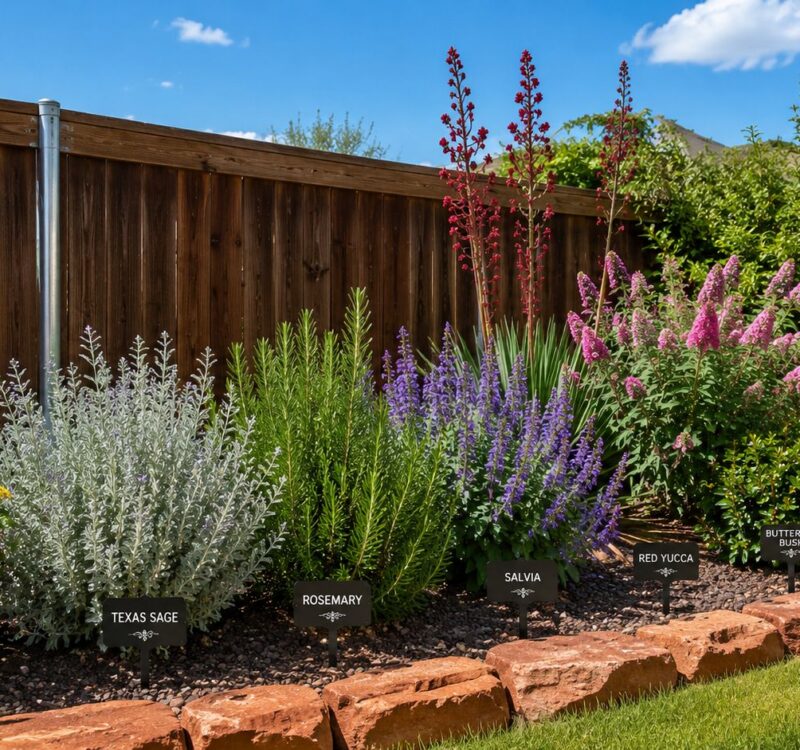
8 Best Shrubs for North Texas Landscapes in 2026
Permeable Paver Installation: A DFW Homeowner’s Guide

Zoysia Grass Fungus: Identify, Treat & Prevent in 2026
How to Improve Soil Quality: Easy Ways to Improve Soil

Take All Root Rot: Diagnose & Treat Your Lawn