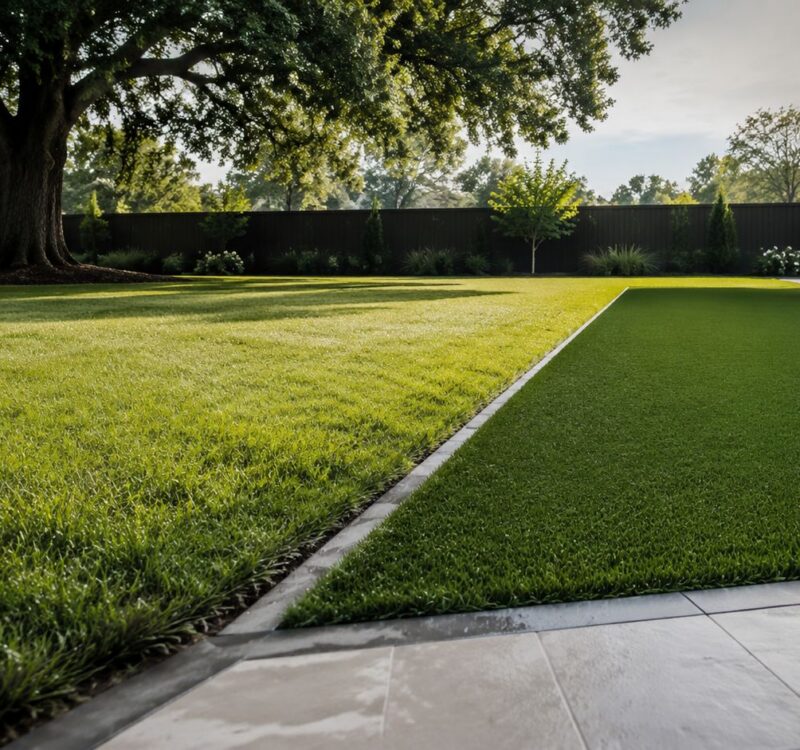
You do the right spring work. You mow on schedule, feed the lawn, keep irrigation dialed in, and then late winter shows up with poa annua, chickweed, and henbit scattered through the turf anyway. That usually isn't a spring problem. It's a fall timing problem.
In Dallas-Fort Worth, winter weeds get their start long before most homeowners notice them. A good fall pre emergent herbicide program stops that cycle before the lawn turns patchy and crowded. A weak one leaves gaps, and those gaps show up months later.
The part most homeowners miss is that a single fall treatment often isn't enough for North Texas. Our warm fall pattern stretches the weed germination window, and the first barrier can fade before winter is over. If you want cleaner turf going into spring, the playbook in DFW is usually a two-step fall approach, not a one-and-done application.
Why Fall Treatment Is Crucial for DFW Lawns
A lot of homeowners think of weeds when they can finally see them. By then, you're already behind.
Poa annua, chickweed, and other winter annuals don't wait for spring to get moving. They begin germinating in fall as the soil cools. That's why a lawn can look mostly clean in October, then look rough by late winter and early spring. The weed pressure was already building under the surface.

If you're already doing other seasonal outdoor maintenance, fall is also when a lot of DFW properties benefit from laying mulch in Dallas North Texas. The same season that helps beds reset is also the season that determines whether winter weeds take over the lawn.
Pre-emergent prevents. It doesn't rescue
This is the first thing to get right. Pre-emergent herbicide is a preventive barrier, not a cleanup product for visible weeds.
Practical rule: If you can already see the weed, pre-emergent isn't the tool that fixes it.
That matters because homeowners often apply a fall pre emergent herbicide after they spot early weeds and expect it to act like a curative treatment. It won't. It's designed to interrupt germination, not kill mature growth that has already rooted into the turf.
Why this matters more in North Texas
DFW lawns deal with a long shoulder season. Warm days can continue well into fall, then winter weeds settle in and keep pressure on dormant or semi-dormant turf. Bermuda, Zoysia, and St. Augustine all look a lot worse when winter annuals fill the open space.
A solid fall program helps in a few practical ways:
- Cleaner spring transition because fewer winter weeds are competing with turf for light and space.
- Less reactive spraying later since you're stopping a big part of the problem before it surfaces.
- Better visual uniformity through winter dormancy, especially in Bermuda where poa annua stands out fast.
- Less seed cycling from weeds that would otherwise mature and spread.
For DFW homeowners, this is often the single highest-value weed prevention step of the year. Miss fall, and you usually spend the rest of the cool season trying to manage a problem that was easier to prevent.
Pinpointing the DFW Pre-Emergent Timing Window
The calendar matters less than the soil. That's the mistake I see most often.
A lot of homeowners ask whether they should apply on Labor Day, by the first week of September, or by some other fixed date. In DFW, those shortcuts can burn you because one year cools down early and the next one hangs hot deep into fall. The better trigger is soil temperature, not the page on the calendar.
Use the 70 degree rule
Fall pre-emergent herbicides need to go down when soil temperatures consistently drop to approximately 70°F for several days, and applying outside that window reduces performance because the barrier can break down too early or miss the germination window if you wait too long, as explained in Andersons' pre-emergent timing guidance.
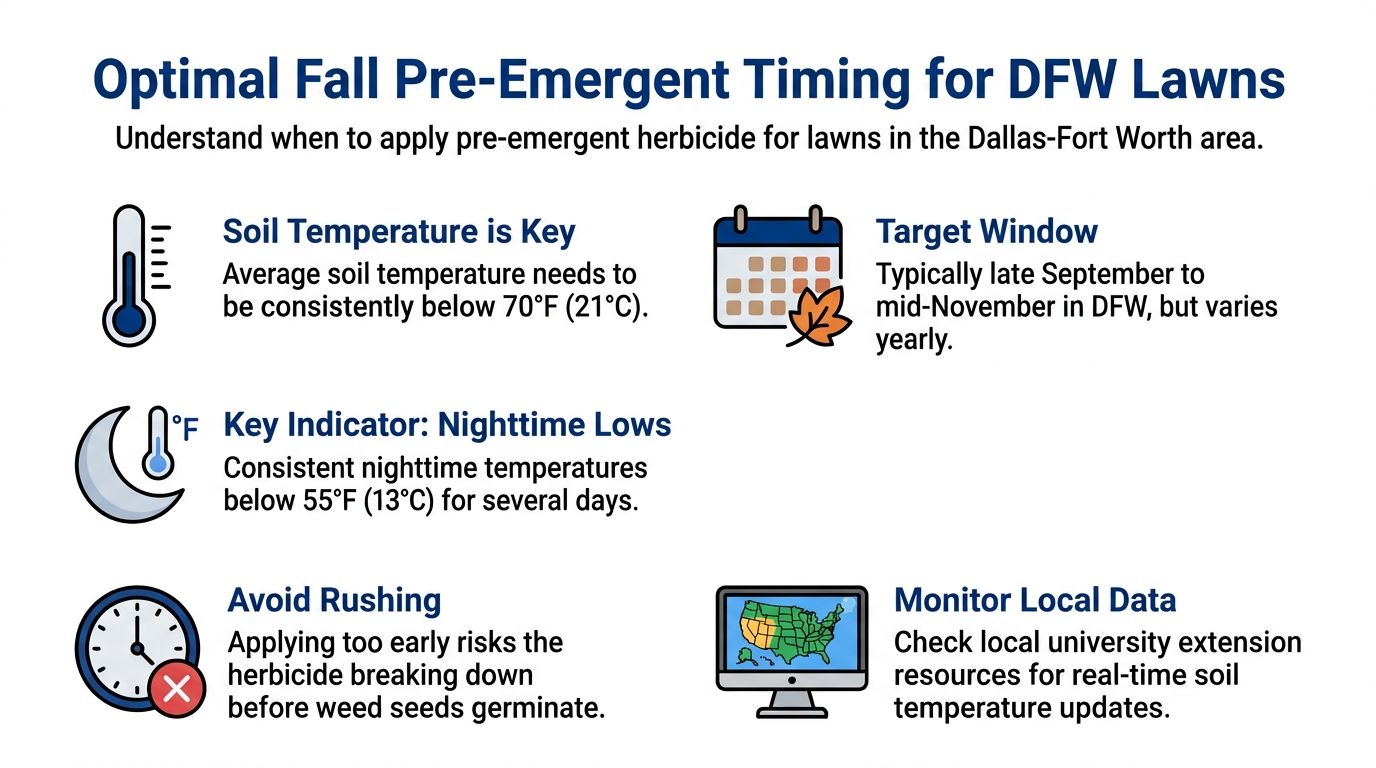
That's why rigid date advice often fails in North Texas. The region can swing hard from one fall to the next. A homeowner in one part of DFW may hit the right window while another waits too long, even though both used the same date.
If you want local lawn timing support, it helps to stay aligned with Dallas lawn care conditions and service realities rather than generic national advice.
What to watch in real life
You don't need fancy equipment, but you do need consistency. Check the upper layer of soil where weed seeds sit. That's the zone that matters.
A simple routine works well:
- Use a soil thermometer and check the same area consistently.
- Take readings over several days instead of reacting to one cool morning.
- Pay attention to exposed lawn areas that cool and warm faster than shaded zones.
- Don't chase air temperature alone because cool mornings can fool you if the soil is still warm.
In North Texas, timing by soil temperature is usually what separates an effective application from a wasted bag of product.
Why rushing is just as bad as waiting
Applying too early feels productive, but it often shortens the useful life of the barrier before the main flush of winter weeds starts. Waiting too long creates the opposite problem. The weeds begin establishing before the barrier is in place.
That's the balancing act in DFW. You're trying to hit the start of germination, not guess from memory. Homeowners who dial in this timing usually get better results than homeowners who apply “sometime in fall” and hope for the best.
Selecting the Right Herbicide for Your Texas Lawn
Once timing is set, product choice matters. Not every homeowner needs the same form, and not every label fits every grass type.
The first decision is usually granular vs. liquid. Both can work. The better choice depends on your equipment, your comfort level, and how evenly you can apply the material.
Granular vs liquid
Here's the practical difference:
| Option | Best for | Main advantage | Main risk |
|---|---|---|---|
| Granular | Most homeowners | Easier to apply with a broadcast spreader | Uneven spread pattern if the spreader isn't calibrated |
| Liquid | Experienced DIY users | More control in skilled hands | Coverage errors if spray pattern isn't consistent |
Granular products are the usual fit for DFW homeowners. They're straightforward, easier to store, and less equipment-heavy. Liquid products can be excellent, but they punish sloppy technique faster.
Focus on the label, not the marketing
For North Texas lawns, the real decision lives on the label. Check three things before you buy:
- Grass-type compatibility for Bermuda, Zoysia, or St. Augustine
- Target weed list so you know the product is intended for winter annual pressure
- Application rate because bag size means nothing if coverage doesn't match your lawn area
A standard 50 lb bag typically covers up to 8,000 square feet, but rates vary by product, so measuring the lawn first is critical for even coverage and correct purchasing, as noted by DoMyOwn's pre-emergent application guide.
That one detail saves a lot of mistakes. Homeowners often buy by guesswork, spread too light over a large yard, and then wonder why weeds break through in strips or broad patches.
What works best for a DFW homeowner
Most homeowners are better off with a product they can apply evenly and confidently than with a “stronger” product they use poorly. That usually means a well-labeled granular pre-emergent and a decent broadcast spreader.
A few practical buying notes help:
- Bermuda lawns usually tolerate standard fall pre-emergent programs well when the label supports it.
- Zoysia owners should still read carefully because dense turf can hide application misses until breakthrough appears later.
- St. Augustine lawns deserve extra caution. Don't assume every weed product is safe just because it says lawn herbicide.
If you're seeding or establishing new turf, stop and read every restriction first. Pre-emergent doesn't know the difference between desirable seed and weed seed. It blocks germination either way.
A Practical Guide to Applying Pre-Emergent
Good product and good timing still won't save a sloppy application. The barrier only works if it's even, activated, and left undisturbed.
The cleanest DIY results usually come from treating application day like a short job sequence instead of a quick pass across the yard.

Before the spreader moves
Start by cleaning the lawn surface. Pick up leaves, sticks, and loose debris. Mow to normal height so the material can reach the soil evenly instead of hanging up in overgrown leaf blades.
Then read the label. Not skim it. Read it. Application rates, turf restrictions, and watering instructions all matter more than brand preference.
How to get even coverage
Most homeowners should use a broadcast spreader. The goal is to create a consistent pattern with no skips and no heavy overlap.
Use this field routine:
- Measure the lawn area first so you know how much product should go down.
- Calibrate the spreader according to the product label.
- Apply the perimeter first to create a border.
- Fill the middle with straight, steady passes at a consistent walking speed.
- Slightly overlap each pass so you don't leave untreated lanes.
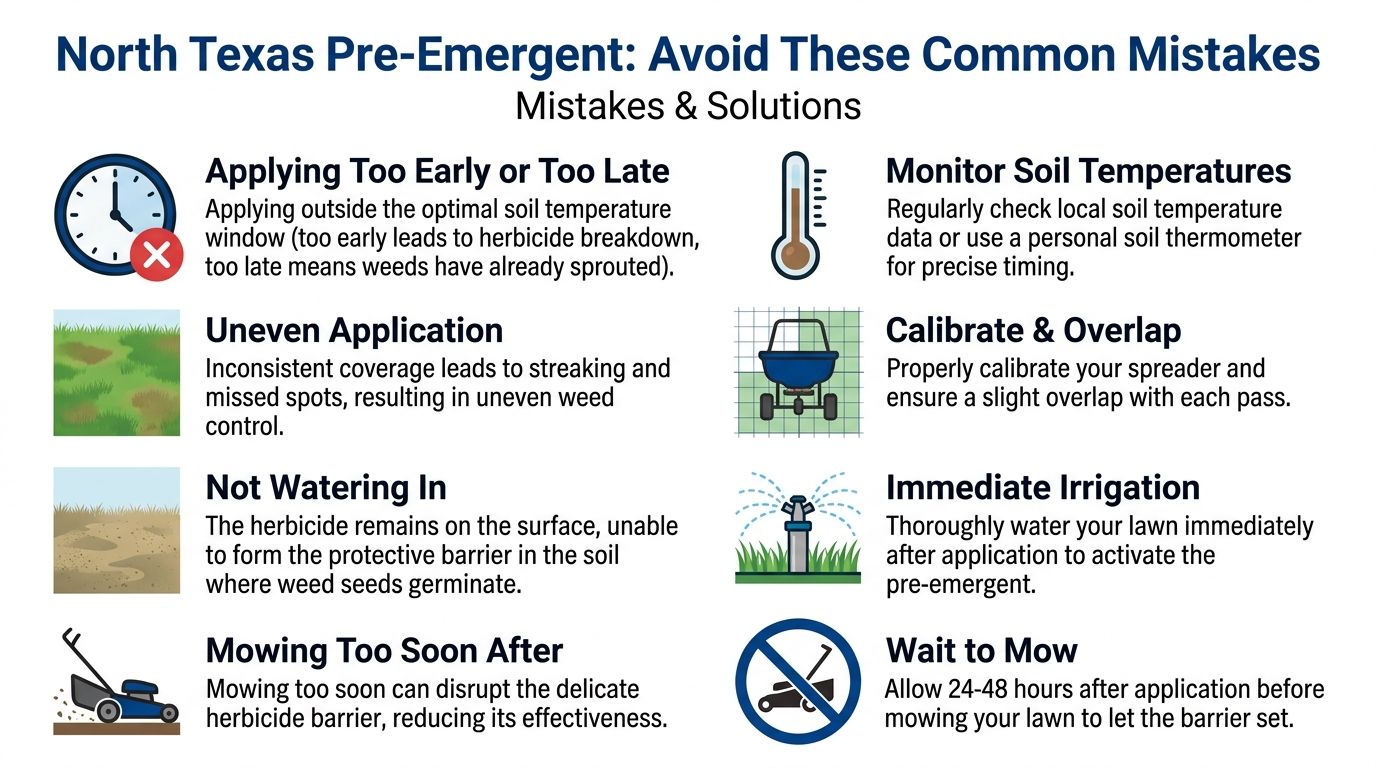
Uneven application is one of the most common reasons homeowners get streaky weed control. One missed strip becomes a visible strip of poa or chickweed later.
The lawn doesn't care how expensive the product was. It only responds to even coverage.
Watering in is not optional
This is the step people skip, and it costs them.
Pre-emergents need 0.25 to 0.5 inches of rainfall or irrigation within 48 hours to activate the barrier. Without that activation, efficacy can drop by 60 to 70 percent because the granules remain on the surface instead of moving into the soil where seeds germinate, according to WCN's pre-emergent timing and preparation article.
If rain is uncertain, plan to irrigate. Don't assume dew or a light sprinkle handled the job. It usually didn't.
A simple application-day checklist
- Prep the surface by mowing and clearing debris
- Use the correct amount based on measured square footage
- Walk a repeatable pattern with a calibrated spreader
- Water promptly so the barrier forms
- Leave the soil alone afterward instead of disturbing the treated layer
That last point becomes even more important in DFW, where a good first application can still fail later if the barrier gets broken or doesn't last long enough.
Avoiding Common North Texas Application Mistakes
The biggest myth in DFW lawn care is that one fall pre-emergent application handles the whole cool season. Sometimes it does. Often it doesn't.
North Texas stays warm long enough that many homeowners get an early fall barrier in place, then watch weeds show up later and assume the product “didn't work.” In reality, the barrier may have worked at first and then faded before winter was over.
The hidden second application window
In warmer climates like DFW, pre-emergents such as prodiamine can degrade in 60 to 90 days, and a second application 6 to 10 weeks after the first is often necessary to maintain a continuous barrier. That two-step approach can reduce winter weed density by 60%, based on Horizon's guidance on fall pre-emergent timing.
That's the piece missing from most DIY advice.
If your first treatment goes down in early fall, you may still have a gap before true winter dormancy. That gap is where late breakthrough starts. Chickweed, lawn burweed, and other winter weeds don't need a huge opening. They just need the barrier to weaken enough.
A one-pass fall program is often good enough for cooler regions. DFW isn't one of them.
Mistakes that quietly ruin results
The second application matters, but it isn't the only problem area. These mistakes also show up all the time:
Applying after weeds are already up
Pre-emergent won't clean up established weeds. If you can see the infestation, you need a different tool for those plants.Aerating or dethatching after application
Mechanical disruption breaks the barrier you just paid to create. If the soil needs that work, do it beforehand.Applying before seeding or new lawn establishment
This is a common self-inflicted wound. Pre-emergent blocks desirable seed too, so it's the wrong move for fresh establishment.Treating bag rate like a suggestion
Light coverage creates holes in the barrier. Heavy overlap can stress desirable turf, depending on the product and grass type.
What the two-step plan looks like
For many DFW properties, the practical approach is simple:
| Step | Purpose | What to watch |
|---|---|---|
| First fall application | Catch the first germination window | Time it to the cooling soil, not a fixed date |
| Second fall application | Extend the barrier deeper into the season | Make sure the first treatment doesn't expire before winter ends |
This isn't about using more product for the sake of it. It's about matching the program to North Texas conditions. Homeowners who keep seeing late winter breakthrough despite “doing a fall application” are often missing this second window.
When Professional Lawn Care Is the Smarter Choice
DIY pre-emergent works when the lawn is simple, the timing is right, and you're willing to stay disciplined. That said, some properties make the job harder than it looks.
Large lawns are the obvious example. It takes real time to measure the area, buy the right amount, calibrate the spreader, and apply evenly without missing strips. Corner lots, heavy shade transitions, slopes, and mixed turf areas also raise the difficulty level. So do properties with recurring weed pressure that keeps showing up even after a homeowner thinks they handled fall correctly.
When hiring out makes sense
Professional help is usually the smarter choice when any of these are true:
- You have a large or irregular property where even coverage is harder to achieve
- You've had repeat winter weed issues and want a more disciplined treatment plan
- You don't have the equipment to spread product evenly and water it in correctly
- You're managing the entire property, not just the lawn, and want treatment timing coordinated with seasonal work
For many homeowners, consistency offers significant value. A professional crew doesn't guess on timing, skip calibration, or forget the second fall window. That can save a season of frustration and a lot of reactive weed control later.
If you're weighing the time and complexity against the results you want, it's worth reading why professional landscape maintenance matters in Dallas climate. Lawn weed prevention tends to work best when it's part of a broader, well-managed property care plan.
If you want a cleaner lawn through winter and a smoother spring green-up, Rosewood Landscape Group can help build and execute a fall weed-prevention plan that fits North Texas conditions. From timing and product selection to full-property grounds care, their team serves DFW homeowners who want the job handled correctly the first time.
Related posts
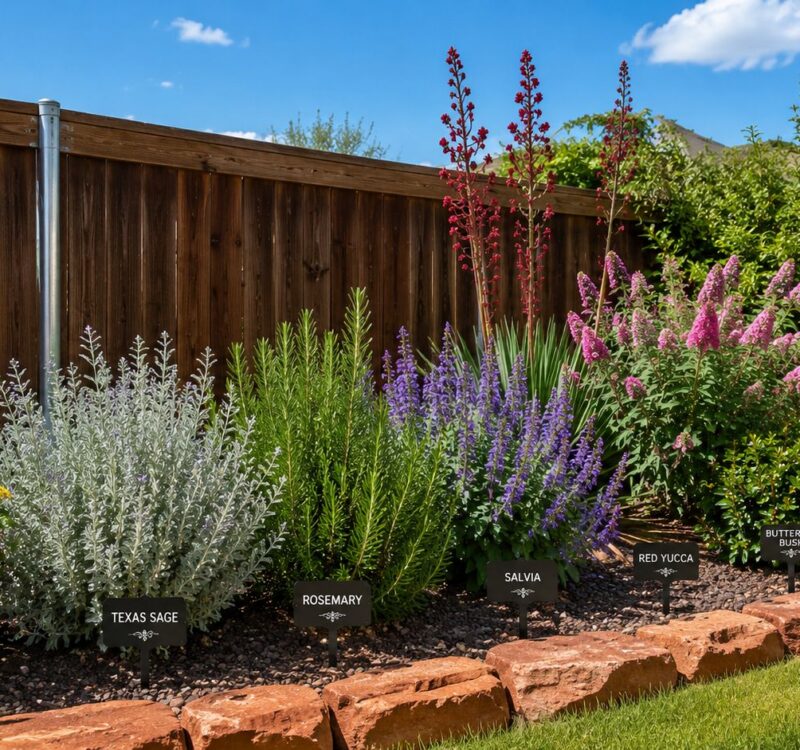
8 Best Shrubs for North Texas Landscapes in 2026
Permeable Paver Installation: A DFW Homeowner’s Guide
Zoysia Grass Fungus: Identify, Treat & Prevent in 2026
How to Improve Soil Quality: Easy Ways to Improve Soil
Take All Root Rot: Diagnose & Treat Your Lawn