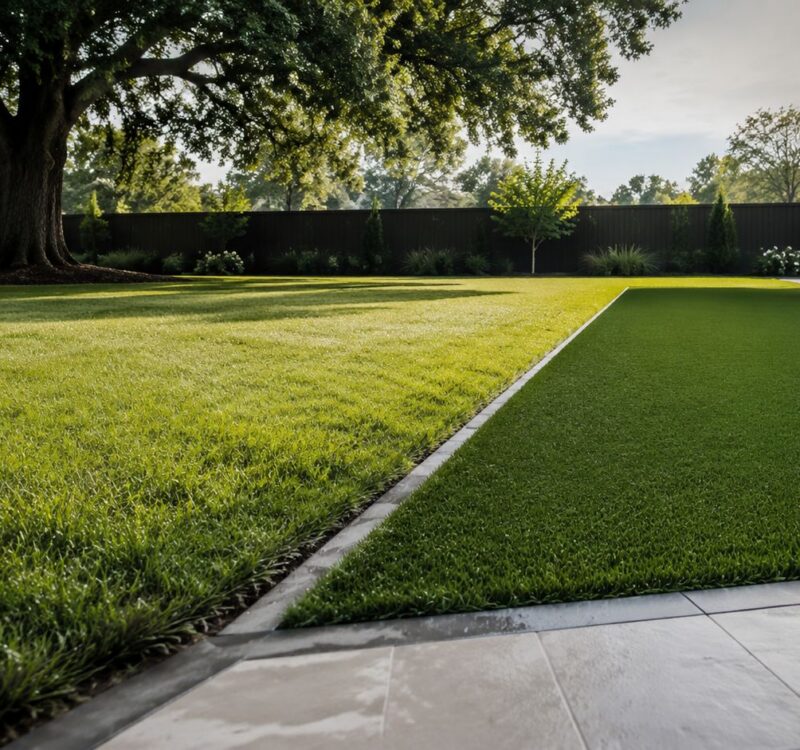
After a hard North Texas storm, the same scene plays out all over DFW. Water sits in the side yard. The lawn feels spongy for days. Mulch washes out of beds, and the strip along the foundation stays dark and wet longer than it should. Homeowners usually notice the puddle first. Then they start noticing the bigger problems around it.
A bad drainage pattern doesn't stay in one place. Water near the house can work against the foundation. Saturated turf thins out. Mosquitoes move in. Beds slump, roots struggle, and every rain seems to undo the cleanup from the last one. In this part of Texas, clay soil makes all of it worse because water doesn't move through it easily, and once that soil gets compacted, simple surface fixes often disappoint.
Most drainage problems can be identified before anyone rents equipment or buries pipe. That's the practical way to approach how to fix yard drainage problems in DFW. First figure out whether the issue is grading, compaction, roof runoff, a low collection point, or a mix of those. Then choose the least invasive fix that will hold up in North Texas soil.
That Familiar Sight a Waterlogged DFW Yard
In Dallas-Fort Worth, a yard can look fine on a dry afternoon and turn into a shallow pond after one thunderstorm. The back corner fills up. Water tracks along the fence line. A side yard becomes the route every roof downspout seems to favor. By the next morning, the sun is back out, but the ground still squishes under your shoes.
That frustrates people because they've usually already tried something. They added soil to a low spot. They spread more mulch. They pointed a splash block away from the house and hoped for the best. Then the next storm proves the problem isn't cosmetic. The water returns to the same places because the underlying path never changed.
What makes this more serious than a muddy lawn
The first concern is usually convenience. You want to use the yard. Kids and dogs track mud inside. Grass declines in the same saturated patches. But drainage problems also push toward structural damage and damage to the grounds if they keep repeating.
A soaked perimeter can keep water too close to the foundation. Beds can erode. Roots can sit in oxygen-starved soil. In clay-heavy neighborhoods across DFW, wet and dry cycles are rough on both lawns and hardscapes.
Poor drainage is rarely one isolated issue. It usually shows up as a chain reaction that starts with runoff and ends with damaged turf, erosion, or water pressure where you don't want it.
The good news homeowners usually don't hear
The fix isn't always a major excavation project. Some yards need regrading. Some need a collection point and pipe. Others mainly need roof runoff controlled, compacted soil opened up, and a better path for surface flow. The important part is matching the solution to the reason the water is staying put.
Homeowners get into trouble when they treat every wet spot the same way. In North Texas, that often means dumping topsoil into a low area without dealing with the tight clay under it. That can leave you with a higher low spot that still won't drain.
How to Diagnose Your Yard's Drainage Problem
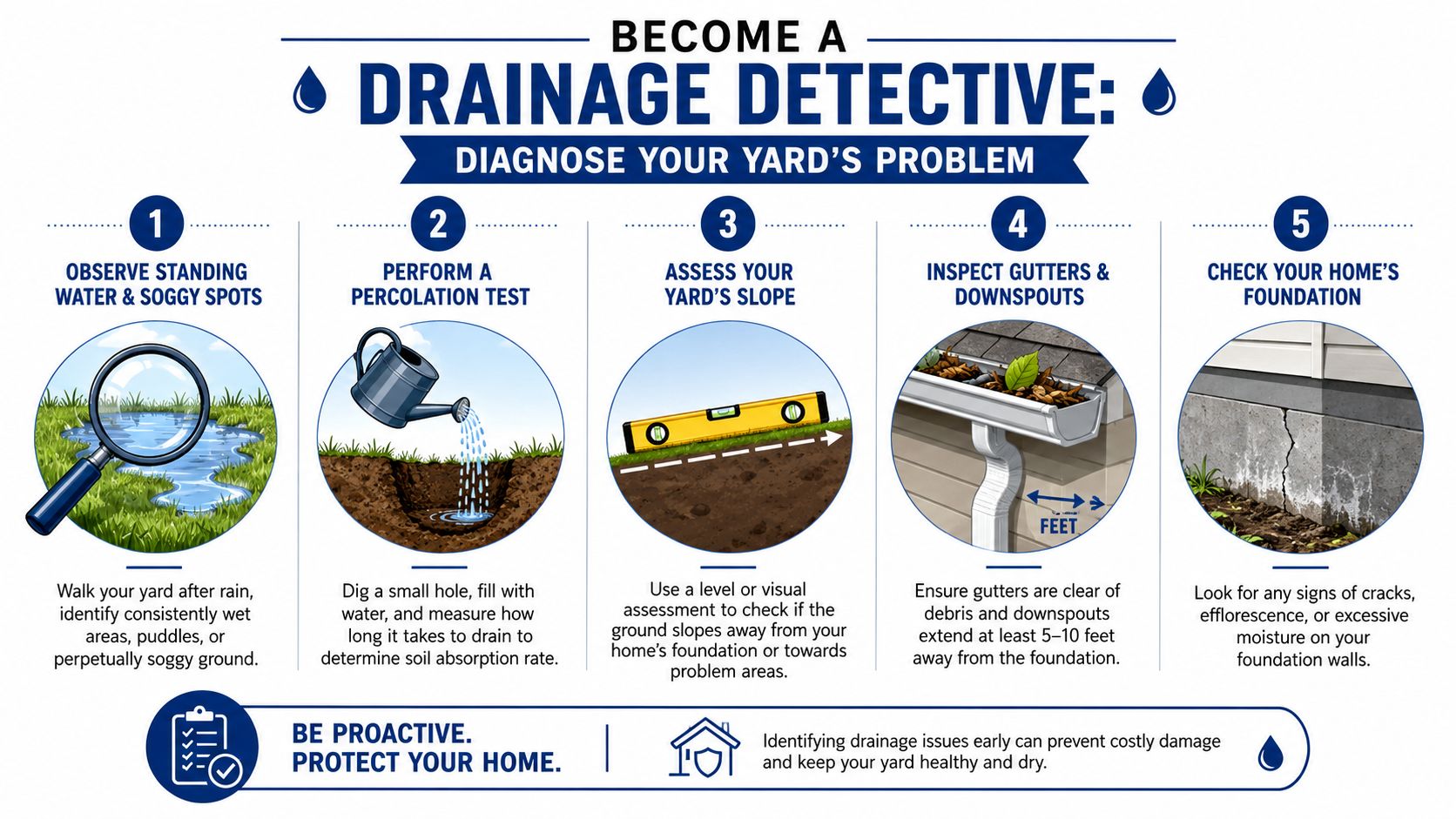
Before you buy pipe, gravel, or a load of soil, walk the yard like an inspector. Drainage problems leave clues. The puddle matters, but so do the worn channels, algae, soggy turf, and places where water seems to pause before moving again.
Start with what the yard shows you
Walk the property during rain if you can. If not, go out as soon as the storm passes.
Look for these signs:
- Recurring wet zones: If the same patch stays soft after every storm, that area is either too low, too compacted, or receiving more runoff than the soil can absorb.
- Bare or thinning turf: Grass often declines where roots stay waterlogged. In St. Augustine lawns, yellowing can also overlap with moisture stress patterns discussed in this guide to St. Augustine grass yellowing.
- Erosion marks: Washed mulch, exposed roots, and narrow channels in the soil show where runoff is picking up speed.
- Foundation warning signs: Damp soil against the house, splashback on the wall, or moisture staining near the slab edge deserve attention.
- Low collection points: Water usually has a destination, even if it's the wrong one. Find the lowest point where it gathers.
Run a simple percolation test
One of the most useful yard tests is also one of the simplest. A percolation test described here uses a hole filled with water, then measures how far the water level drops over 1 hour. If it drops less than 1 inch per hour, the soil is likely compacted or clay-heavy, and surface grading alone probably won't solve the problem.
That matters because it tells you whether you're dealing with a flow problem, a soil problem, or both.
Use this quick process:
- Dig the hole: Put it in the problem area.
- Fill it with water: Let the water sit in the hole.
- Check the level after 1 hour: Measure how much it dropped.
- Read the result: Fast drainage points to a grading or runoff issue. Slow drainage points to compacted or clay-heavy soil that needs amendment or a subsurface solution.
Practical rule: If the soil can't accept water, moving water across the surface is only half a fix.
Check slope and roof runoff together
A lot of drainage calls trace back to the same combination. The yard has only a weak fall away from the house, and one or two downspouts dump a lot of roof water into already slow soil.
Use a long board and a level if you want a more careful read, but even a visual pass helps. Ask three direct questions:
- Does the ground move water away from the house or toward it?
- Do downspouts discharge into a low area?
- Does a patio edge, raised bed border, or fence line trap water instead of letting it move out?
If the answer is yes to more than one, you probably don't have a single-cause problem.
Understanding the Root Causes of Poor Drainage in North Texas
A lot of DFW drainage problems start before the first puddle shows up. The yard may look fine after a rain for a while, then one wet season exposes what was buried all along. Tight clay, packed subsoil, and runoff that has nowhere useful to go.
North Texas yards behave differently because the soil behaves differently. Our clay expands when wet, shrinks when dry, and compacts fast under construction traffic, mowers, and regular foot traffic. Once that surface seals over, water stops soaking in at a useful rate. It ponds, runs sideways, or collects in the same low spot every storm.
The soil compaction paradox
This is one of the most common mistakes I see. A homeowner fills a low area with a few inches of topsoil, the yard looks smoother for a while, and the next heavy rain leaves the same area muddy again.
The reason is simple. New soil on top does not fix compacted clay underneath. In fact, it can make the problem harder to read. Water moves through the loose top layer, hits the dense clay below, and stalls. The surface looks improved, but the drainage profile is still broken.
That is the compaction paradox in North Texas. Adding soil can improve appearance while making the drainage problem more persistent if the underlying clay was never loosened, amended, or rerouted with a proper collection system.
Why DFW lots struggle more than homeowners expect
A lot can be graded "close enough" and still perform badly in clay. Small errors matter here. A shallow dip near a fence, a patio edge that traps flow, or a side yard that receives two downspouts can overload soil that already drains slowly.
Builder site prep is a big part of it. Equipment compresses the subsoil, then sod goes down over a hard layer. Years later, the grass may still grow, but water will not move through that zone the way it should.
Common causes in this region include:
- Compacted subsoil after construction: The surface may look finished, but the soil below is often dense and sealed.
- Poor distribution of runoff: Water may technically move away from the house but still collect in one bad corner or side yard.
- Hard surfaces and edging: Patios, walkways, metal edging, and fence lines can trap or redirect flow.
- Roof concentration: A single downspout can dump a surprising amount of water into clay that is already near capacity.
A yard can have more than one of these at the same time. That is why one simple fix often disappoints.
Some drainage problems are really erosion problems
Standing water gets attention, but fast-moving water can do just as much damage. If runoff is cutting channels through a bed, washing mulch downhill, or exposing roots along a slope, the problem is no longer just drainage. It is also soil loss. In those cases, erosion control methods for sloped North Texas yards usually matter as much as pipe or grading.
There is also a maintenance tax that many generic guides skip. French drains clog. Downspout outlets bury over. Catch basins fill with sediment. Swales lose shape over time. In clay soil, every drainage system needs some upkeep or performance drops year by year.
The practical takeaway is this. In North Texas, poor drainage usually comes from a combination of clay soil, compaction, concentrated runoff, and obstacles that interrupt flow. If you only treat the wet spot on top, the underlying cause is still sitting underneath.
Your First Line of Defense DIY Drainage Solutions
You walk into the backyard the morning after a storm, and the same spots are still holding water. In North Texas, that usually means the clay is sealed up, runoff is concentrating somewhere it should not, or both. The first DIY moves should reduce how much water reaches the problem area and give the soil a better chance to absorb what is left.
Fix the easy water first
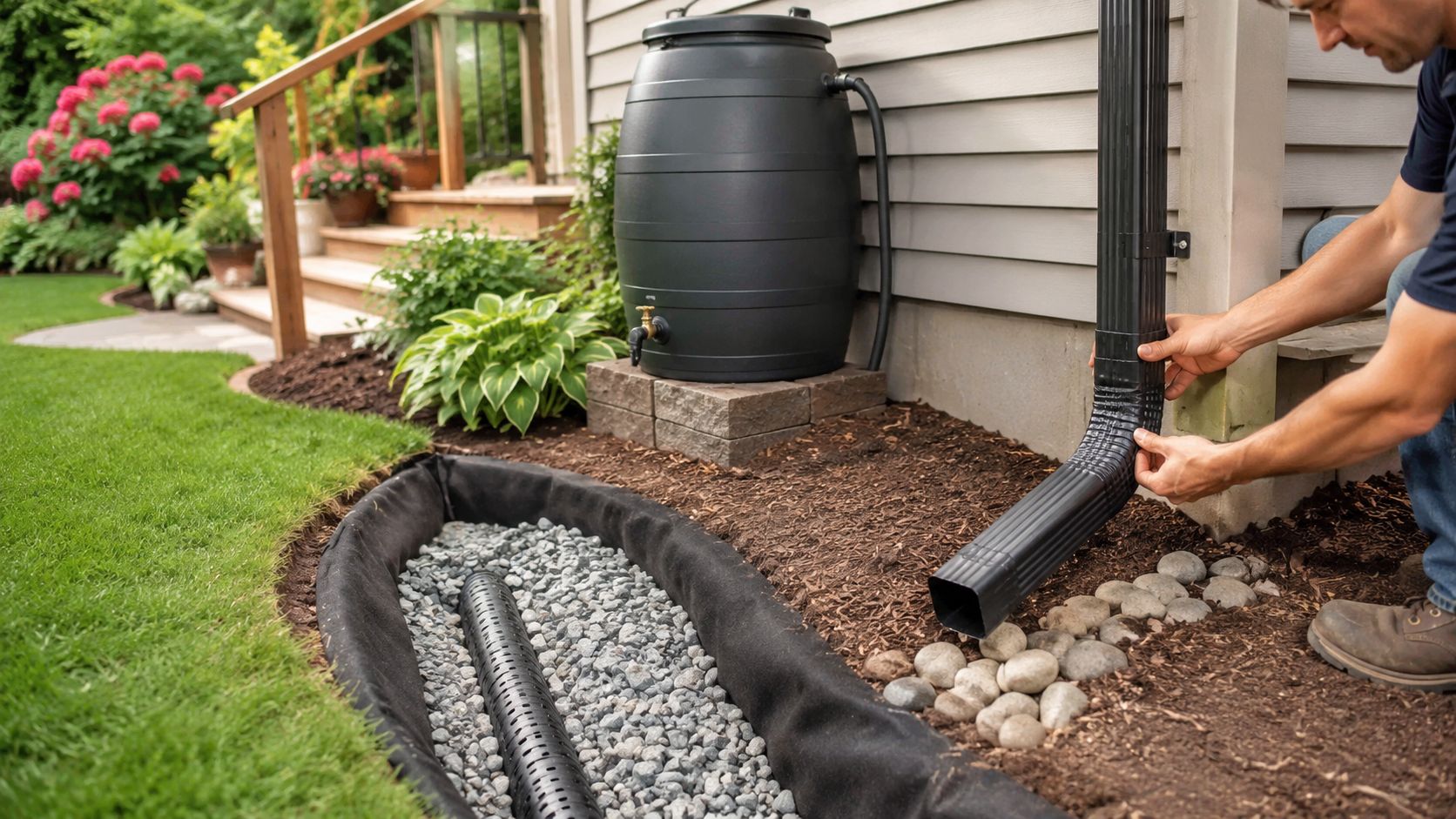
Start with the roofline. A clogged gutter or a downspout dumping beside the slab can overload clay fast, even in a modest rain.
Handle these jobs first:
- Clean gutters and outlets: Leaves, shingle grit, and debris force overflow right next to the house.
- Extend downspouts: Send roof water to an area that can spread it out and drain, not into a side yard pocket or planting bed along the foundation.
- Clear surface obstructions: Metal edging, built-up mulch, and packed debris often create a small dam that keeps water trapped.
These are simple fixes, but they matter. I have seen plenty of yards improve just by getting roof water farther away and removing one or two blockages.
Improve the soil before adding height
This is the part many generic guides miss. In DFW clay, adding topsoil over compacted ground can make the problem worse. Water moves through the new layer, hits the tight clay underneath, and stops. That is the soil compaction paradox. The yard looks higher for a while, but the soggy layer is still there.
If a wet area drained poorly during your soil test, start with aeration and organic matter before bringing in fill. A practical soil check from a university drainage publication with a 12-inch test hole method can help you judge whether the soil is draining well or staying slow enough to justify loosening and amending it first.
For shallow low spots needing reshaping, use a topsoil and compost blend. Avoid straight clay fill. Blend the new material into the existing surface if you can. A hard layer change underground often creates another place for water to perch.
Small DIY projects that actually help
Some homeowner fixes do work when the drainage problem is limited and you have a clear outlet.
- Shallow swales: Good for guiding sheet flow across the yard without creating a trench. They need enough slope to keep water moving.
- Low berms: Useful for deflecting runoff away from a bed, patio edge, or foundation area.
- Rain garden pockets: Best where water can collect temporarily away from the house and soak in over time.
- Core aeration with compost topdressing: Often the best first step for mildly soggy turf in heavy clay.
A buried pipe is usually not the first DIY answer. If you have no reliable discharge point, the pipe just relocates the problem and adds future maintenance.
Know the trade-offs before you dig
Every drainage fix comes with a maintenance tax. Swales need reshaping after seasons of mowing and foot traffic. Berms settle. Catch areas silt in. Downspout extensions clog or get crushed. Even a small rain garden needs occasional cleanup so it keeps holding and releasing water the way it should.
That is why I tell homeowners to be honest about upkeep. The best solution is not the one that looks impressive on installation day. It is the one you will still maintain two years from now. If you want to compare what usually stays DIY and what usually turns into a system job, this overview of yard drainage solutions for North Texas homes is a useful reference.
When DIY stops making sense
DIY is still reasonable when you are dealing with minor pooling, one bad downspout, a shallow low spot, or compacted turf. Call for help when water sits near the foundation, crosses property lines, needs significant grade correction, or has to move around patios, utilities, retaining walls, or fence constraints.
Those jobs need more than effort. They need a drainage plan that fits the lot and the way North Texas clay behaves.
Professional Drainage Solutions Compared
Once the easy fixes are off the table, the job shifts from spot treatment to system design. In DFW, that matters because heavy clay does not forgive sloppy work. Water may sit on top of compacted soil, then move sideways in ways homeowners do not expect. A fix that looks good right after installation can still fail if the grade, outlet, and soil conditions were never addressed together.
The main professional options are regrading, French drains, catch basin systems, swales, and dry wells or other subsurface dispersal features. Each solves a different problem. The right choice depends on how water moves across your lot, where it can legally discharge, and whether the clay will absorb anything at all.
What separates one solution from another
Homeowners often ask for a French drain by name when the underlying problem is surface flow, poor slope, or a low area that was created over time. That is a common mistake in North Texas. Pipe does not fix a yard that was never graded to move water in the first place.
The clay-soil trap shows up here all the time. Someone adds topsoil to raise a low spot, but the compacted clay underneath stays hard as concrete. Water still cannot move down, so the new soil turns into a shallow bowl or a sponge sitting on a plate. If you want a clearer picture of how contractors compare yard drainage solutions for North Texas homes, use that as a reference while you weigh what your lot needs.
Slope requirements matter more than homeowners think
A drainage system lives or dies on pitch. According to guidance on grading and French drains from ITM's article on common yard drainage problems and solutions, ground near the house should slope away at a minimum of 1 inch for every 1 foot, identified there as a 2% grade. The same source says a French drain trench should keep a consistent 1% slope, or 1 inch of fall per 8 feet of run.
Those numbers matter more in clay than in sandy soil. If the surface is a little flat, water ponds. If the pipe loses fall in one section, sediment settles out and the line starts acting like a storage tube instead of a drain. I see this after rushed installs where the trench depth looked close enough on install day, then one season later the low section is holding mud.
Professional Drainage Solutions for DFW Homes
| Solution | Best For | Estimated Cost (per linear ft / project) | Maintenance Level |
|---|---|---|---|
| Regrading | Water moving toward the house, shallow low spots, poor surface flow | Varies by site and soil volume | Low to moderate |
| French drain | Subsurface interception, chronic soggy areas, long runoff paths | Varies by layout, depth, and outlet complexity | Moderate |
| Catch basin and pipe | Low points where water collects and needs to be captured quickly | Varies by number of basins and discharge route | Moderate |
| Surface swale | Redirecting sheet flow across open lawn areas | Varies by shaping and finish work | Low to moderate |
| Dry well or similar subsurface dispersal feature | Sites with a workable discharge strategy and room away from structures | Varies by soil response and site constraints | Moderate |
Where each option works best
Regrading is usually the best fix when the surface itself is wrong. It solves the cause instead of collecting water after it pools. The trade-off is disruption. Soil work can affect turf, planting beds, sprinkler coverage, patio edges, and fence lines.
French drains make sense when subsurface or shallow lateral water needs to be intercepted and carried to a real outlet. In DFW clay, they need clean gravel, filter fabric where appropriate, consistent fall, and a discharge point that stays lower than the drain line. Without that outlet, you are just burying a maintenance problem.
Catch basins and pipe work well where runoff naturally concentrates, such as the bottom of a swale, a patio edge, or a low corner between houses. They move water fast, but they also collect leaves, grit, and roof debris. That maintenance tax should be part of the buying decision, not an afterthought.
Swales are one of the most practical answers on larger open lots. A broad, shallow swale can move a surprising amount of water across the surface without depending on buried pipe. The downside is appearance. Some homeowners do not like seeing that contour in the yard, even when it works better and needs less intervention.
Dry wells and other subsurface dispersal features are the most oversold option in clay-heavy neighborhoods. They can help on the right property, especially when paired with pretreatment and enough separation from structures. But if the surrounding soil infiltrates poorly, the well can fill and stay full. That is why these systems need real soil judgment, not guesswork.
The best professional solution follows the actual water path on your lot and respects what North Texas clay will and will not do.
When you should stop troubleshooting and call for help
Call a pro when any of these show up:
- Water holds near the foundation: Grade errors here can turn into slab and moisture problems.
- The fix requires major soil movement: Correcting slope with clay is heavy work and easy to get wrong.
- There is no clear outlet: Every drain system needs somewhere for the water to go.
- Patios, retaining walls, utilities, or pool decking affect the route: Those details limit what can be built and how deep lines can run.
- More than one cause is in play: Compaction, roof runoff, low spots, and bad grading often overlap in the same yard.
A good contractor should be able to show you the entry point, the flow path, the discharge point, and the upkeep the system will require. If they only talk about installing more pipe, keep looking.
Protect Your Investment With Proper Maintenance
The day after a good drainage install, the yard usually looks solved. Then fall leaves hit the grates, mulch washes into a basin, or an outlet slowly disappears under turf. In North Texas, that upkeep starts sooner than many homeowners expect because clay soil moves, seals over, and sheds fine sediment into every low point.
The maintenance tax is real
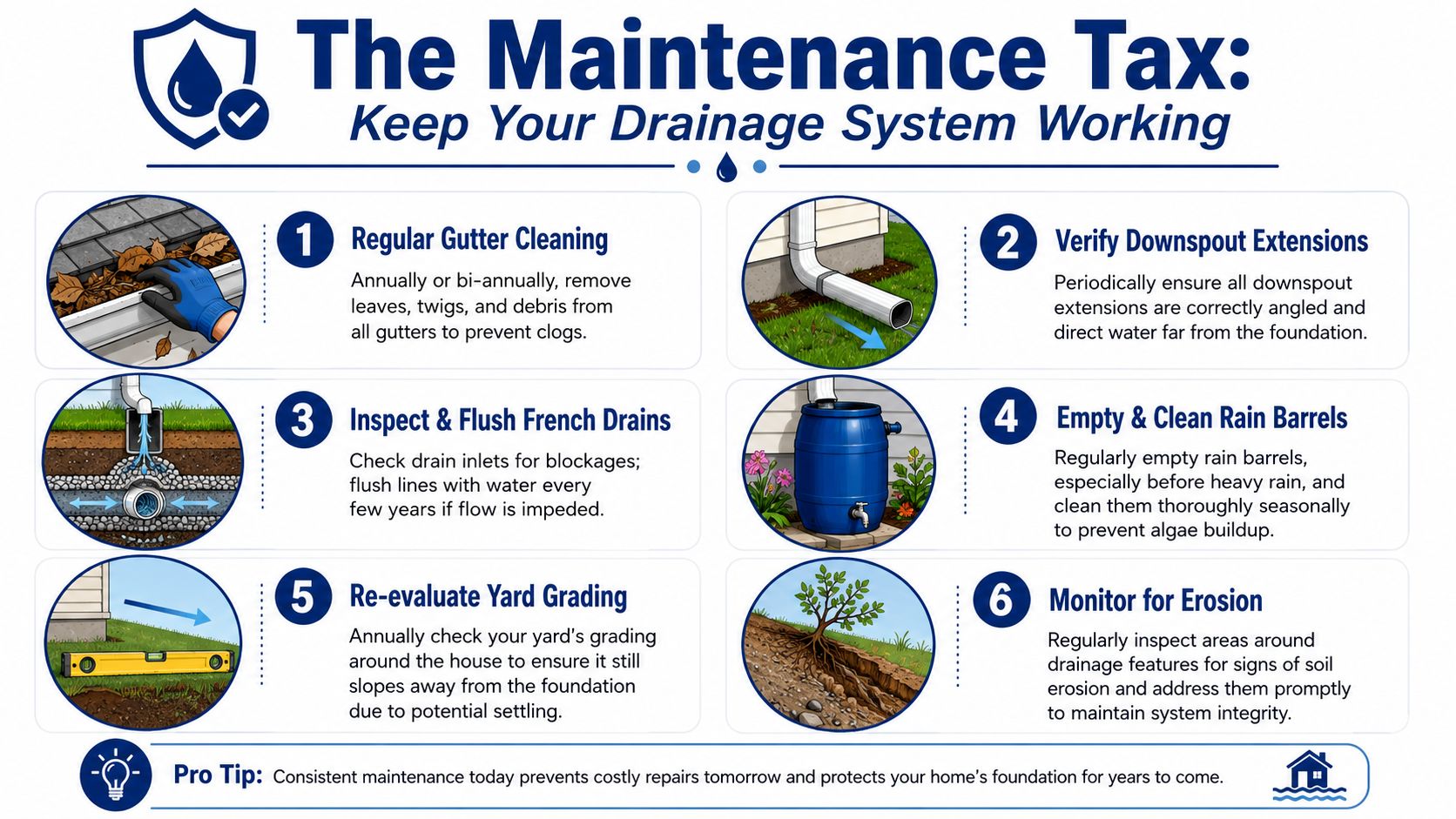
Every drainage system comes with a maintenance burden. That is true whether you installed a simple swale, a catch basin and pipe run, or a larger grading correction. Homeowners usually budget for installation and skip the part that keeps the system working year after year.
Clay-heavy DFW lots make that more noticeable. Water carries sediment off bare spots, compacted areas seal up, and even a well-built system can lose performance if the intake or discharge gets restricted. I see this often after someone adds a little topsoil to “help” a soggy area. If the compacted clay below was never opened up or regraded, the added soil can wash, settle, and feed more buildup into the drains instead of fixing the problem.
The failure is often simple. Water cannot get in, or it cannot get out.
What homeowners should actually check
Skip vague reminders to check things “once in a while.” Check the spots that fail first, especially after a hard storm and again when leaves start dropping.
Use a routine like this:
- Catch basins and grates: Clear leaves, mulch, and sediment before they seal over the opening.
- Drain outlets: Confirm the discharge point is still exposed and not buried by soil, turf, or debris.
- Swales and shallow channels: Repair thin grass and small erosion cuts before runoff turns them into trenches.
- Gutters and downspouts: Keep roof water from dumping more flow into the yard than the system was meant to carry.
- Grade near the foundation: Watch for settling or added soil that changes the slope and sends water back toward the house.
One check matters more than homeowners realize. Run water through the system occasionally and confirm it exits where it should. A drain line can look fine at the grate and still be holding water because the outlet is blocked or the pipe has filled with silt.
Maintenance protects the original investment
A lot of “failed” drainage work is neglected drainage work. The original design may have been sound, but North Texas yards do not stay frozen in place. Clay expands and shrinks. Soil settles. Bed edging shifts. Grass creeps over edges. Small changes add up until runoff starts missing the collection points or backing up where it used to move.
That is the part generic guides miss. The install is only half the job. The other half is keeping the water path open as the yard changes with weather, irrigation, roots, and soil movement.
Homeowners can handle basic cleaning and visual checks. Call for help if an outlet keeps silting in, a swale is washing out repeatedly, the grade near the slab has changed, or standing water shows up even though the drains are clear. Those are signs the problem is no longer routine upkeep. It is a performance problem.
If your yard stays soggy after every storm, the smart move is to diagnose it before spending money on the wrong fix. Rosewood Landscape Group helps DFW homeowners solve drainage issues with practical site evaluation, grading, drainage installation, and long-term yard support built for North Texas conditions.
Related posts
8 Best Shrubs for North Texas Landscapes in 2026
Permeable Paver Installation: A DFW Homeowner’s Guide
Zoysia Grass Fungus: Identify, Treat & Prevent in 2026
How to Improve Soil Quality: Easy Ways to Improve Soil
Take All Root Rot: Diagnose & Treat Your Lawn