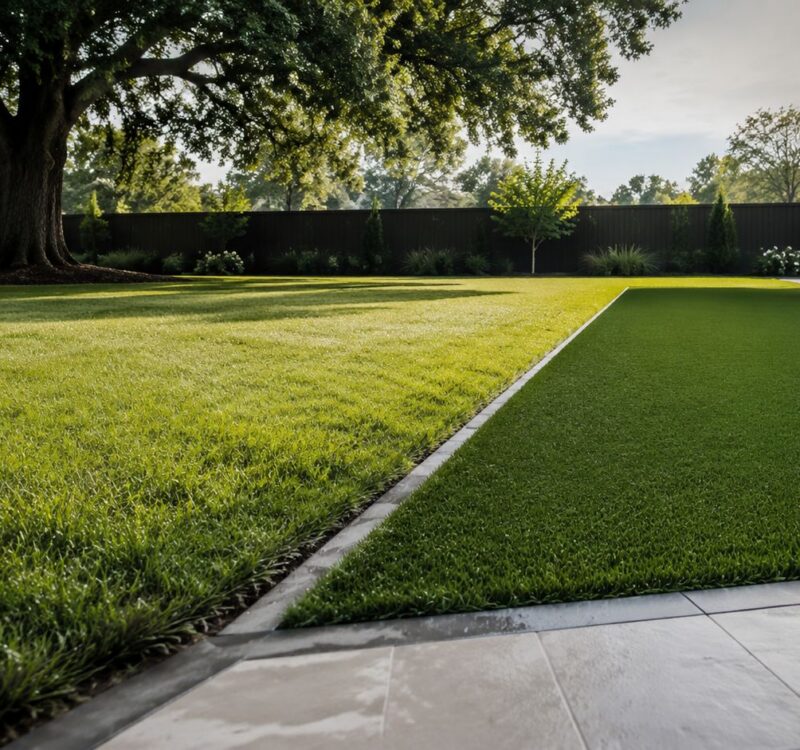
Another blistering North Texas summer, another round of fried lawn edges, drooping shrubs, and beds that looked promising in April but tired by July. If you're standing in the yard wondering whether to water more, replace everything, or give up on the whole idea of curb appeal, you're not alone. Most yard failures here aren't caused by a lack of effort. They're caused by plant choices that don't match DFW heat, wind, clay soil, and watering realities.
The fix usually isn't adding more irrigation. It's choosing plants that already know how to live here. The best North Texas drought tolerant plants don't just hang on through summer. They keep structure, hold color, and recover better when weather swings from heat to hard rain to a late cold snap.
Good plant selection also makes the rest of the outdoor areas easier to manage. Beds need less rescue watering. Irrigation can run more efficiently. Seasonal pruning becomes straightforward instead of constant damage control. And when you pair the right plants together, the planted space looks intentional instead of like a random collection of survivors.
Below are eight plants I keep coming back to for DFW outdoor spaces. Some are strong backbone plants. Some carry seasonal color. Some solve specific site problems like hot reflected heat, berms, slopes, or exposed entry beds. All of them can earn their space when they're planted in the right place and maintained the right way.
1. Texas Red Oak (Quercus texana)
If you want real shade in a North Texas outdoor area, Texas Red Oak deserves a serious look. This is the kind of tree that gives a property presence. It works on large residential lots, estate properties, and commercial sites where a thin ornamental tree would disappear against the building.
What makes it valuable isn't just drought toughness after establishment. It's the combination of native adaptability, strong canopy potential, and reliable fall color. In neighborhoods around Highland Park and on older North Texas residential streets, mature oaks often become the anchor of the grounds long after smaller accent plants have changed several times.
Where it works best
Texas Red Oak fits spaces where you have room to think long term. Parking lot islands, broad front yards, side lawns, and neighborhood entries are all good candidates. In heavy-use areas, it's also helpful that this tree doesn't rely on pampered conditions to look appropriate.
For broader planning, tree placement matters as much as tree selection. A good guide to choosing the right trees for North Texas landscapes can help you avoid the usual mistakes, especially undersizing the planting area or crowding foundations.
Practical rule: Don't plant this tree for what it looks like in the nursery. Plant it for the canopy it will need later.
A few field-tested notes matter with red oaks:
- Give it separation: Leave enough distance from driveways, structures, and other canopy trees so the crown can develop naturally.
- Mulch correctly: Keep mulch over the root zone, but off the trunk. Piling mulch against bark creates preventable health problems.
- Water well early on: Young trees need consistent establishment watering, then less frequent, thorough soaking as roots move outward.
Texas Red Oak is a good example of what works in North Texas when patience is part of the plan. It isn't a quick fix, but it becomes a garden asset in a way few smaller drought-tolerant plants can.
2. Esperanza (Tecoma stans)
Esperanza is one of the easiest ways to get loud summer color without building your whole bed around thirsty annuals. When it's happy, it blooms hard in bright yellow and keeps going through heat that flattens weaker shrubs. In retail, office, and residential plantings, it reads from a distance, which is part of its value.
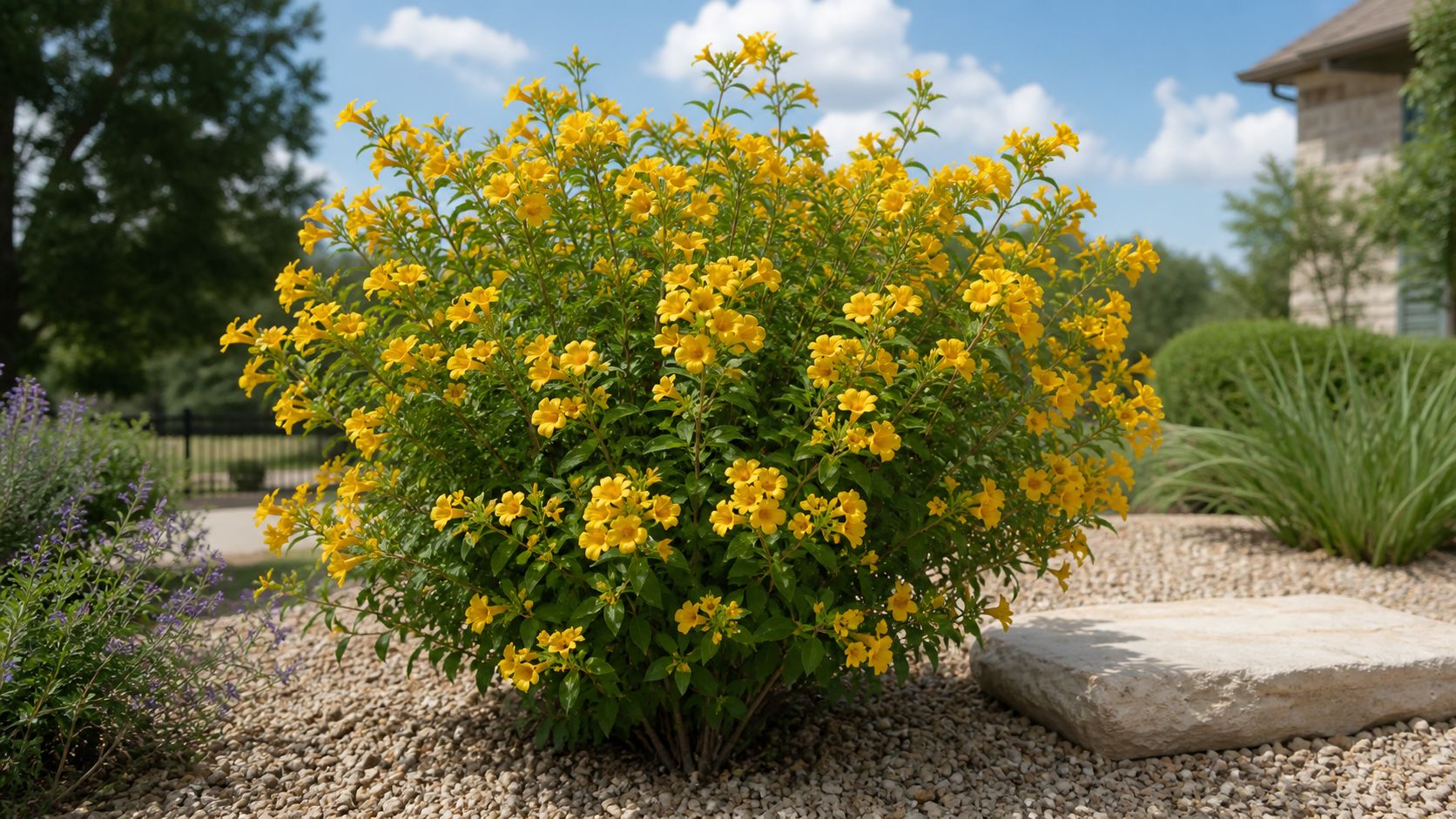
The trade-off is that Esperanza needs drainage and sun. In thick, poorly drained clay or a shaded side yard, it usually disappoints. In a hot south-facing bed, a gravel-mulched courtyard, or a bright median-style planting, it can look exactly like it belongs there.
How to keep it from turning leggy
Most Esperanza problems aren't really drought problems. They're placement problems. The North Texas Water Resources Institute notes that poor placement and overwatering are the primary reasons drought-resistant plants fail, and that drip irrigation is preferred because it reduces evaporation and puts water at the root zone in water-wise areas, especially when plants are grouped by water needs through hydrozoning and the outdoor area is balanced among native plants, turfgrass, and hardscape in equal thirds, according to Dean Minchillo's recommendation for North Texas design in this Texas A&M water-wise landscape article.
That guidance lines up with how Esperanza behaves in the field. Put it on spray irrigation with turf and you usually get weak growth, excess water, or both. Put it in a dry, sunny hydrozone with drip and it settles into a much more dependable shrub.
Use it well with pairings like these:
- With grasses: Softens the bold yellow flowers and gives the bed movement.
- With dark evergreen structure: The blooms stand out against yaupon, wax myrtle, or deep green hardscape-adjacent backgrounds.
- With stone or gravel mulch: Improves the visual fit and helps avoid the overwatered look.
If winter knocks it back, don't panic. In DFW, that's often part of the cycle. Cut it back in early spring, then let the new growth reset the plant.
3. Autumn Sage (Salvia greggii)
Autumn Sage is one of the most dependable small shrubs you can plant for long-season color in North Texas. It doesn't need rich soil, constant feeding, or babying. It does need sun, decent drainage, and enough room to keep its natural mounded form.
That combination makes it useful in places where clients want beds to stay active without becoming high-maintenance. I've seen it work equally well in formal front-yard borders, HOA entries, and looser native-style plantings where pollinator activity is part of the appeal.
Why designers keep using it
Autumn Sage fills a gap that many shrubs can't. It stays compact enough for smaller beds, but it doesn't disappear visually. The foliage gives fine texture, and the flower colors let you tune the palette. Red reads classic Texas. Coral and pink soften limestone-heavy designs. White can cool down a hotter planting mix.
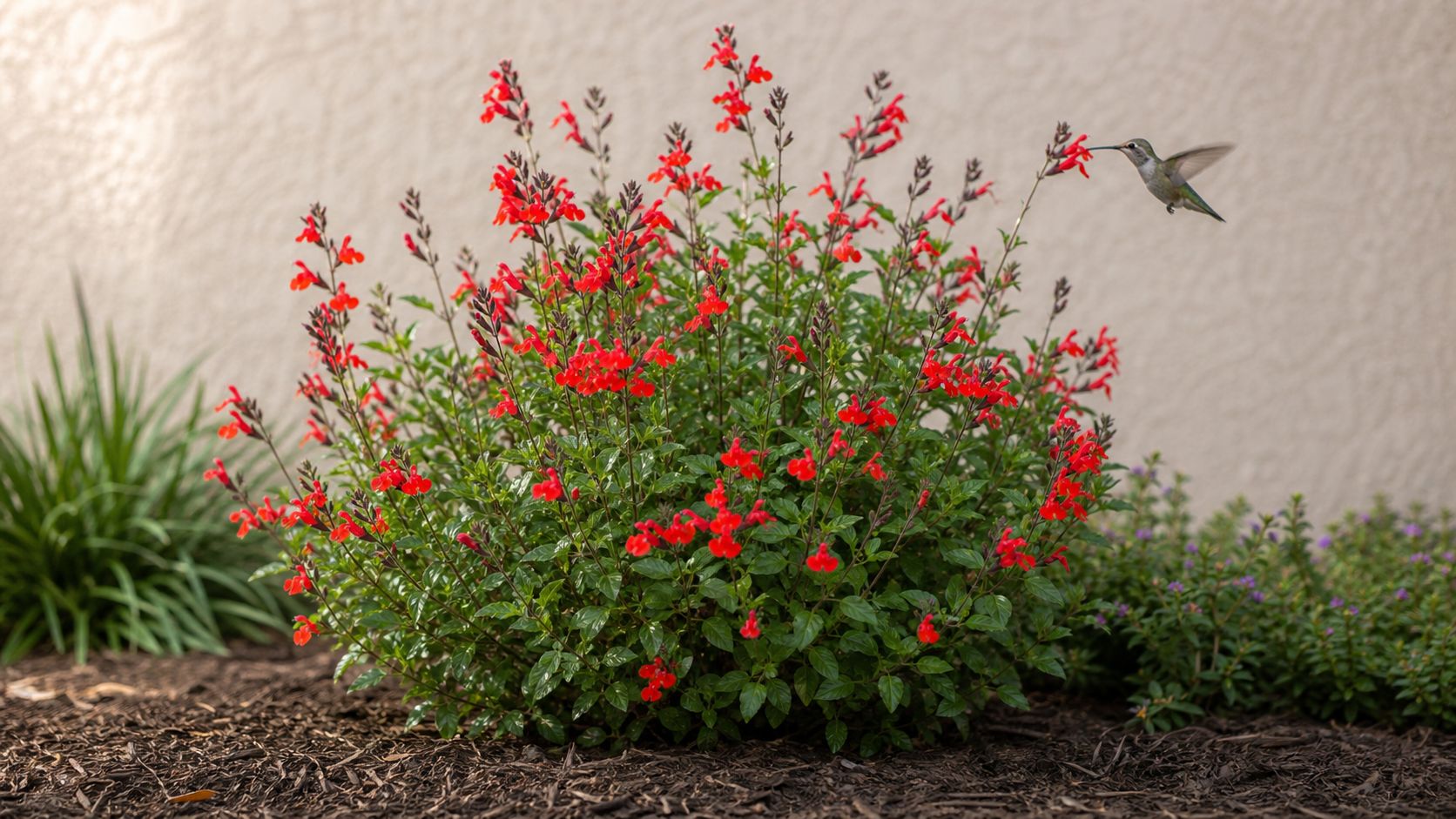
It also pairs well with larger drought-tolerant anchors. Use it at the feet of oaks, alongside boulders, or repeated through a bed to tie mixed plantings together. At the Dallas Arboretum and in many water-wise gardens across the region, repeated salvia masses do a lot of visual work without looking fussy.
A native landscape only looks messy when spacing and pruning are neglected. Autumn Sage proves that point fast.
A few practical notes make a big difference:
- Cut it back in early spring: Hard renewal pruning keeps it dense instead of woody and open.
- Don't crowd it: Tight spacing kills air movement and creates a lumpy, overgrown look.
- Skip unnecessary fertilizer: Too much fertility often gives you floppy growth instead of a tighter, cleaner plant.
Among North Texas drought tolerant plants, this one is hard to beat for low-water color that still looks refined enough for high-visibility properties.
4. Desert Rose (Adenium obesum)
Desert Rose isn't a default North Texas outdoor plant, and that's exactly why it can be so effective. Used well, it gives a courtyard, patio, pool terrace, or entry sequence a sculptural focal point that softer native plantings can't provide. The swollen trunk, sparse branching, and bold flowers make it feel more like living architecture than a standard shrub.
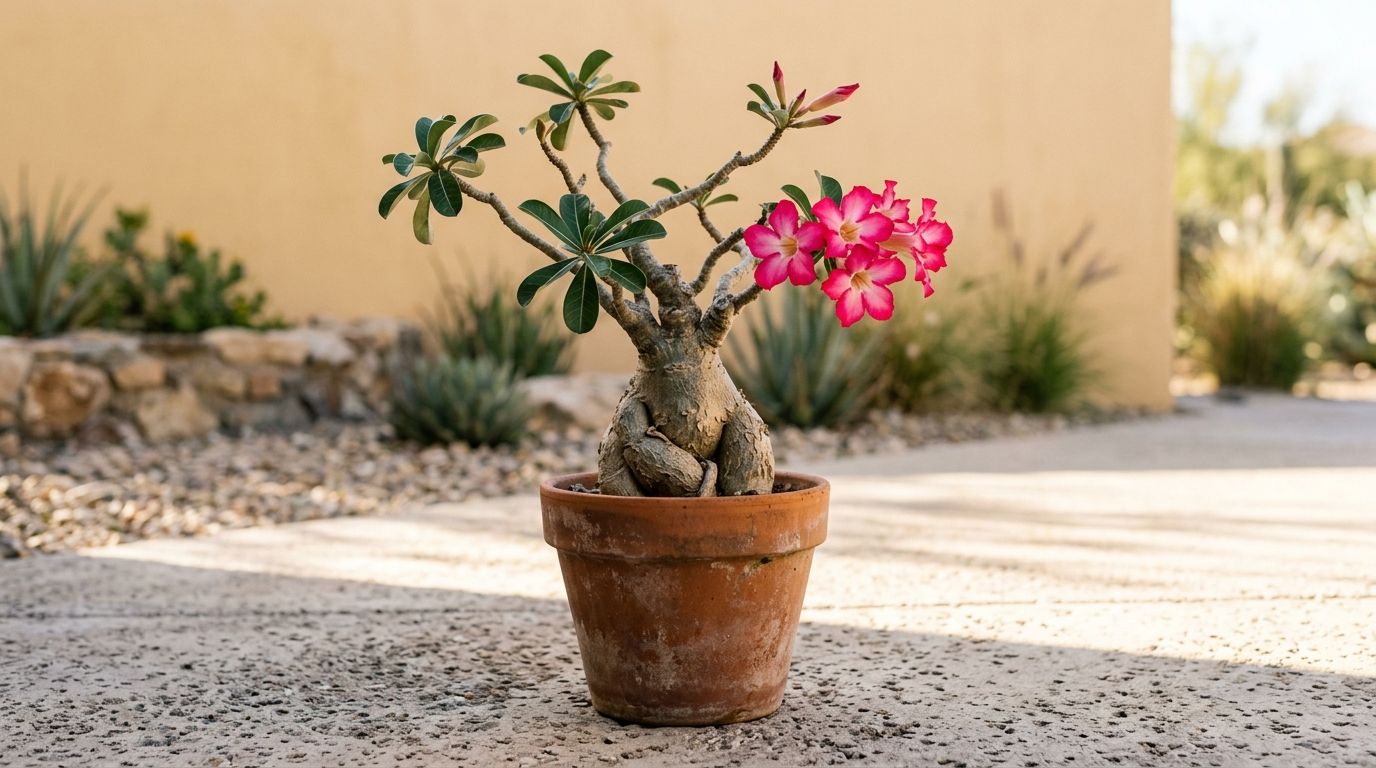
The catch is obvious. This isn't a plant for exposed open beds through every North Texas winter. It works best in containers, protected courtyards, covered patios, and highly controlled garden spaces where you can manage cold exposure.
Best use in DFW landscapes
Think of Desert Rose as a specialty accent for modern homes, hospitality settings, or luxury estates where containers are already part of the design language. In Uptown-style hardscape settings, it works well with concrete, steel, decomposed granite, and large ceramic or terracotta pots. In more traditional homes, it needs careful placement or it can look disconnected from the rest of the property.
What doesn't work is treating it like a carefree shrub and leaving it in heavy wet soil. That usually ends with rot, especially after rain or cool weather.
Use these guidelines:
- Choose a fast-draining mix: Cactus or succulent soil is the baseline, not an upgrade.
- Let containers dry down: Constant moisture defeats the whole point of growing this plant.
- Plan for cold moves: If a plant needs winter protection, decide where it goes before the first front arrives.
Desert Rose belongs on this list because drought tolerance isn't just about native sweeps and naturalistic beds. In the right setting, containerized succulents can carry a big part of the low-water design story.
5. Fragrant Sumac (Rhus aromatica)
Fragrant Sumac is one of those plants designers value more over time. It doesn't scream for attention in the nursery, but on a difficult site it earns its keep. Slopes, berms, transition areas under trees, and naturalized edges are where it really starts to make sense.
Its low, spreading habit is useful when you need something broader than a perennial but lower than a hedge. On commercial properties with detention edges or residential lots with awkward grade changes, that growth pattern solves design problems while still fitting the drought-tolerant goal.
A smart plant for problem areas
This is a plant I like for the spaces that often get filled with the wrong thing. Turf struggles on slopes. Thirstier shrubs look sparse without extra irrigation. Groundcovers can wash out or disappear. Fragrant Sumac holds the middle ground.
It also brings seasonal change. Fall color can be strong, and the branching habit gives the bed substance even when flowers aren't the main event. In native-style estate grounds, it layers well beneath larger trees and around boulder groupings.
Field note: If you want a bed to look settled into the land instead of pasted on top of it, Fragrant Sumac helps.
Its best uses include:
- Slope stabilization: The spreading habit helps cover ground where mowing is awkward or erosion is a concern.
- Understory planting: It works under more open-canopy trees where filtered light and dry conditions make other shrubs struggle.
- Natural transitions: It bridges formal lawn or hardscape edges to more ecological plantings.
The trade-off is that it can feel too loose for very tight formal gardens. If the bed needs crisp geometry all year, you'll spend time controlling spread and edging. In a more natural composition, that's much less of an issue.
6. Flame Acanthus (Ruellia brittoniana 'San Ysidro')
Flame Acanthus earns attention late, which is one reason I like using it. A lot of plantings in North Texas fade after early summer. This plant starts carrying more of the visual load when the season gets harsher and many flowering perennials have already slowed down.
Its orange-red blooms are especially effective in hot-color plantings and pollinator gardens. Hummingbirds find it quickly, which gives it value beyond color alone. In residential gardens, that makes the yard feel active. In commercial beds, it adds movement and interest without relying on constant maintenance.
Keep the drainage sharp
Flame Acanthus likes heat and sun. It doesn't like sitting in wet clay. If you're planting into a bed with compaction issues, fix that first. Loosen the soil, improve drainage in the root zone, and don't trap it in a low spot where irrigation runoff collects.
The Covington's drought-tolerant plant guide for North Texas points to the Texas A&M AgriLife Earth-Kind database using a 1 to 10 drought-tolerance scale and notes that North Texas-suitable plants in that commercial guide meet a minimum 7.5 rating, while also identifying species such as Red Yucca and Dwarf Wax Myrtle as having high heat tolerance and low water needs. The same guide says fall planting, finished by late October, is ideal for major North Texas outdoor planting projects, while spring planting from mid-March through June can still work but carries late-freeze vulnerability into April for woody perennials.
That timing principle matters with Flame Acanthus too. Give it enough runway to root before extreme weather, and it rewards you. Rush planting into a stressful window and you'll spend the season trying to catch it up.
I like pairing it with:
- Autumn Sage: Similar toughness, different flower form.
- Esperanza: Strong yellow-orange contrast in sunny beds.
- Gravel mulch and stone: Keeps the planting visually crisp and suits the plant's dry look.
7. Prairie Coreopsis (Coreopsis tinctoria)
Not every drought-tolerant outdoor area needs to be built around shrubs and trees. Prairie Coreopsis is proof that seeded color still has a place in North Texas when the site and the expectation are right. It works best in drifts, meadow edges, roadside-style installations, and larger informal spaces where a little seasonal looseness is part of the design.
For HOAs, larger residential properties, and certain commercial sites, it's a practical way to fill space with color without pretending that every bed needs a rigidly clipped look. In the right setting, it reads as intentional and regional.
Where it shines, and where it doesn't
Prairie Coreopsis performs best when you let it behave like a wildflower instead of forcing it into a formal border. That's the key distinction. It can be excellent in broad seeded areas near trails, perimeter beds, mailbox commons, and pollinator zones. It usually isn't the right answer for a narrow front foundation bed that needs to look identical every week.
The visual effect improves when it's massed. A few scattered plants look accidental. Repeated drifts look designed. Pair it with sturdier perennials and low shrubs so the space doesn't go empty once bloom cycles shift.
Use it smartly:
- Prepare the site first: Weed competition ruins more wildflower attempts than drought does.
- Seed where you can tolerate reseeding behavior: That's part of the charm, but it needs room.
- Mix structure with softness: A nearby evergreen shrub, bunch grass, or stone edge helps frame the display.
This is one of the most flexible North Texas drought tolerant plants for clients who want a more regional, less manicured outdoor aesthetic.
8. Escarpment Live Oak (Quercus fusiformis)
If Texas Red Oak gives you deciduous structure and fall color, Escarpment Live Oak gives you year-round presence. It's evergreen, dense, and well suited to projects that need screening, shade, and a more permanent visual backbone.
In North Dallas residential properties and refined commercial settings, this tree often works better than a larger, broader live oak when space is tighter. It still has the strength and character people want from an oak, but with a scale that fits more properties.
A long-game tree with real design value
Escarpment Live Oak is a heritage mindset tree. You plant it knowing the grounds will improve as the canopy matures. It works at entries, on side property lines where evergreen screening matters, and in front yards that need structure even in winter.
The biggest mistake with this tree is underestimating future spread or setting it in poorly drained soil. Good siting matters. So does establishment care. The North American Native Plant Society notes that drought-tolerant plants still need deep but infrequent watering during the first 12 to 18 months, and that misconception is causing losses because many online lists talk only about mature drought tolerance. Their update also says the no-water myth appears in 80% of online plant lists and links recent DFW water restriction updates to a 25% increase in new plant deaths when homeowners skip that establishment phase in this native perennial watering guidance.
New trees don't fail because they're weak drought plants. They fail because people treat newly planted roots like established roots.
That applies directly to live oaks. Water thoroughly, taper gradually, and don't confuse low-water maturity with zero-care installation. When properly established, Escarpment Live Oak becomes one of the most valuable trees in North Texas gardens.
North Texas Drought-Tolerant Plants: 8-Plant Comparison
| Plant | Implementation complexity | Resource requirements | Expected outcomes | Ideal use cases | Key advantages |
|---|---|---|---|---|---|
| Texas Red Oak (Quercus texana) | Moderate, needs adequate space and fall planting; disease monitoring | Moderate for 3–5 yr establishment (deep, infrequent watering); low thereafter | Large 40–50 ft shade canopy, vibrant red fall color, long lifespan | Large residential estates, commercial parks, shade and windbreaks | Native, drought-adapted once established; deep roots, high longevity, wildlife value |
| Esperanza (Tecoma stans) | Low–Moderate, select well-draining sunny site; annual pruning | Low once established; good drainage essential; spring pruning | 6–8 ft flowering shrub with long summer–fall bloom; can die back in hard winters | Focal shrubs, screens, specimen plantings in warm, well-drained sites | Prolific yellow blooms, fast growth, hummingbird attractor, drought-hardy if drained |
| Autumn Sage (Salvia greggii) | Low, easy to plant; occasional rejuvenation pruning | Very low after establishment; prefers good drainage | 3–4 ft mounded perennial with extended bloom (spring–fall) and pollinator value | Mass plantings, borders, water-wise residential and commercial landscapes | Native, very low water and maintenance, long bloom period, readily available |
| Desert Rose (Adenium obesum) | Moderate, best in containers for winter protection; careful siting | Very low water; requires excellent drainage and frost protection | Architectural 3–6 ft succulent with sculptural caudex and showy blooms | Container focal points, modern estates, protected courtyards, patios | Striking sculptural form, minimal watering, high visual impact; container mobility |
| Fragrant Sumac (Rhus aromatica) | Low, simple planting; may need edge control in formal sites | Very low after establishment; tolerates poor soils | 2–4 ft spreading shrub with red-orange fall color and winter berries | Erosion control, slopes, understory layers, naturalistic massings | Native, excellent drought tolerance, erosion control, wildlife food, low maintenance |
| Flame Acanthus (Ruellia 'San Ysidro') | Low, plant in full sun; manage self-seeding and annual pruning | Very low once established; needs good drainage; annual cutback | 2–3 ft compact mounds with bright orange-red blooms June–frost | Pollinator gardens, perennial borders, commercial color beds | Vibrant long-season color, heat/drought tolerant, attracts hummingbirds, fast establishment |
| Prairie Coreopsis (Coreopsis tinctoria) | Low, direct-seed or bed prep; germination needs moisture | Very low once established; seed-based plantings; minimal inputs | 1–2.5 ft airy wildflower drifts with prolific warm-colored blooms | Mass meadow plantings, pollinator gardens, economical large-scale color | Extremely cost-effective, rapid bloom, self-seeding, high pollinator value |
| Escarpment Live Oak (Quercus fusiformis) | Moderate, careful siting and soil amendment for clay sites | Moderate during 3–5 yr establishment (regular deep watering); low after | Evergreen 25–35 ft tree with year-round foliage, screening and wildlife value | Residential screening, privacy, year-round landscape structure | Evergreen native oak, drought-tolerant once established, durable canopy, wildlife support |
Design and Build Your Resilient North Texas Landscape
The right plant list is only the start. A successful drought-tolerant site in DFW depends on how those plants are arranged, how water is delivered, how grade changes move runoff, and how the site is maintained after installation. A tree that thrives in one spot can struggle a few yards away if drainage, reflected heat, root competition, or irrigation overlap are wrong.
That's why the best results usually come from designing in layers. Start with canopy and evergreen structure. Add medium-scale shrubs for mass and screening. Then use perennials and seasonal color where they can do visible work without carrying the whole bed. Texas Red Oak and Escarpment Live Oak create long-term framework. Esperanza, Autumn Sage, Flame Acanthus, and Fragrant Sumac fill the middle with color, texture, and ecological value. Prairie Coreopsis and Desert Rose handle two very different accent roles, one naturalistic and one architectural.
Water management should follow the planting design, not fight it. Drought-tolerant trees and shrubs shouldn't share the same irrigation habits as turf. Sunny raised beds need a different approach than shaded foundation zones. Drip irrigation, smart zoning, and soil preparation all matter more than commonly realized, especially in North Texas clay. If the installation ignores those basics, even strong plants can become high-maintenance.
Maintenance also changes when the plant palette improves. You're no longer spending every summer trying to rescue the wrong shrub in the wrong bed. Instead, the work becomes more predictable. Spring cutbacks, occasional structural pruning, irrigation checks, mulch renewal, drainage corrections, and plant health monitoring keep the garden stable without constant replacement.
For homeowners, HOAs, and property managers, that's the key payoff. A resilient outdoor space doesn't mean a sparse one. It means the property still looks composed when summer gets harsh, watering rules tighten, or seasonal weather swings hit at the wrong time.
If you want that kind of outcome, design matters as much as plant selection. Rosewood Group is one option in the Dallas-Fort Worth market for outdoor design, installation, irrigation, drainage, plant health care, and ongoing maintenance. For a full-property approach, it's worth treating your yard as a system instead of a collection of individual plants. That's how North Texas drought tolerant plants perform the way people hope they will.
If you're ready to turn a stressed outdoor space into one that fits DFW conditions, Rosewood Landscape Group can help plan, install, and maintain a water-wise outdoor environment with the right plant mix, irrigation approach, drainage strategy, and ongoing care for your property.
Related posts
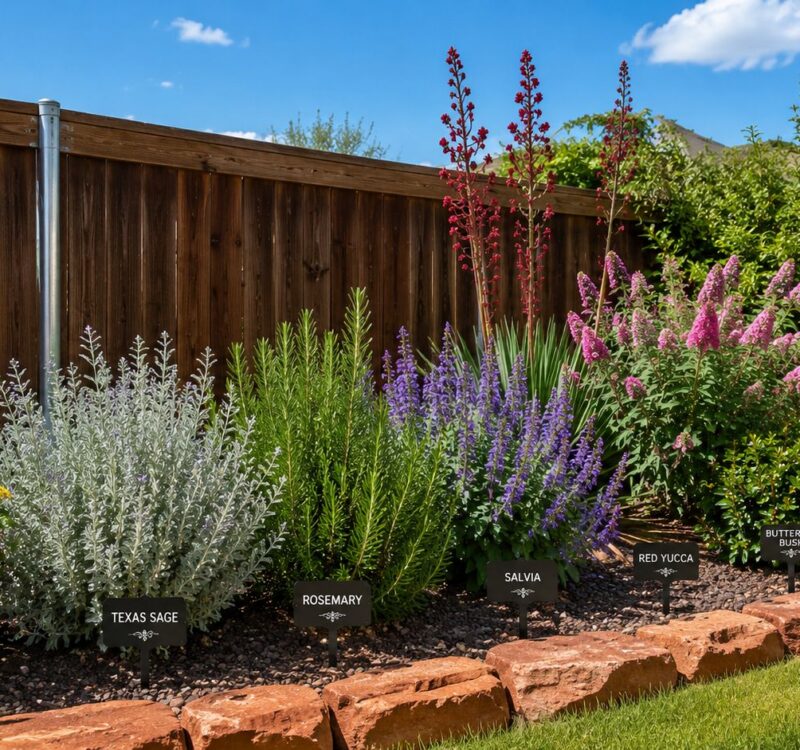
8 Best Shrubs for North Texas Landscapes in 2026
Permeable Paver Installation: A DFW Homeowner’s Guide
Zoysia Grass Fungus: Identify, Treat & Prevent in 2026
How to Improve Soil Quality: Easy Ways to Improve Soil
Take All Root Rot: Diagnose & Treat Your Lawn