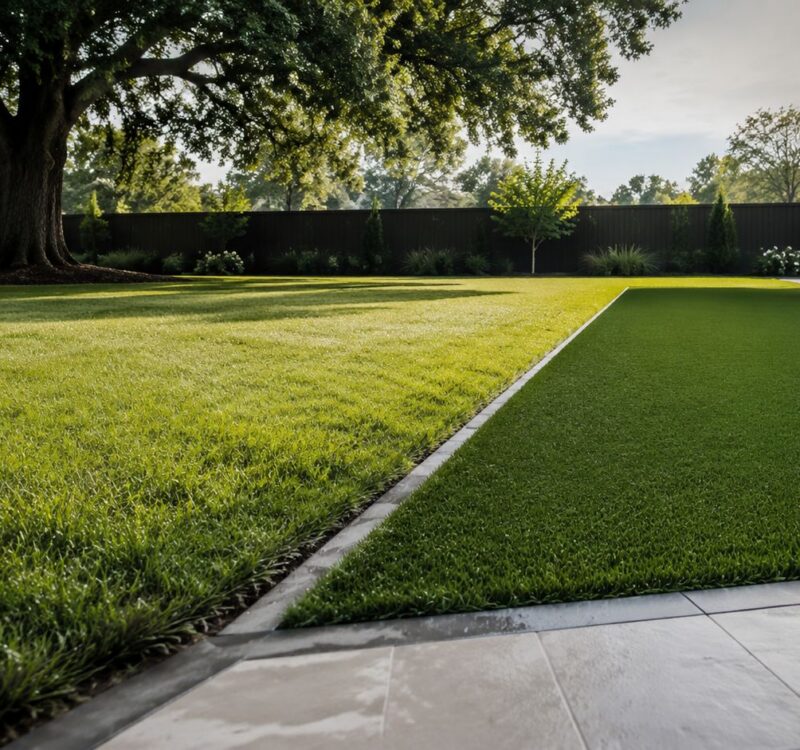
You're probably standing in the backyard with two competing ideas in your head. One is the picture you want: shade, color, maybe a place to sit, maybe raised beds, maybe less lawn and fewer headaches. The other is what you have: hard clay, brutal summer heat, runoff after a storm, and a yard that doesn't behave the way it looked on the property listing.
That gap is where most garden projects go wrong.
In Dallas-Fort Worth, how to plan a garden isn't mainly about picking pretty plants. It's about making good decisions before you spend money. A garden that looks good in spring but turns into a water-hungry, pruning-heavy mess by year three was never really planned. It was assembled.
A good plan works on three timelines at once. It needs to look good soon, establish well over the next few seasons, and still make sense when shrubs mature, trees cast more shade, irrigation parts need service, and your enthusiasm for weekend maintenance becomes more realistic. That's the difference between a yard you enjoy and a yard you manage.
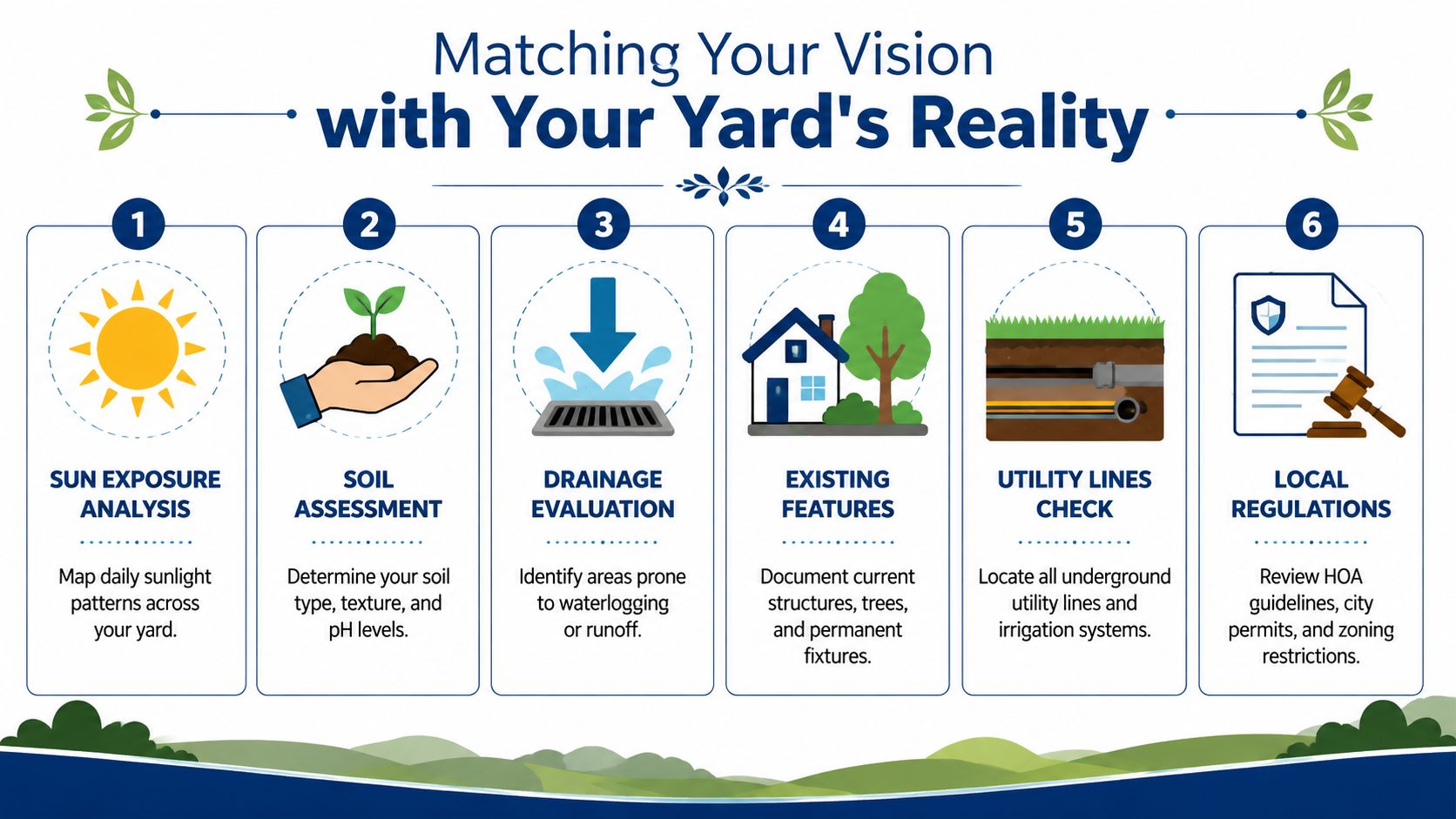
Matching Your Vision with Your Yard's Reality
Most homeowners start with style. That's fine, but function has to come first. If you don't know what the garden needs to do, you'll keep changing direction and buying plants that don't fit the site.
Start with a simple question: What do you want this space to do for your household?
A quiet morning patio needs a different layout than a kid-friendly yard. A pollinator garden has different priorities than a low-water foundation bed. If you want vegetables, herbs, and a social patio in the same space, those uses need to be ranked, not vaguely combined.
Start with purpose, not plants
Write down the essential requirements. Keep it short.
- Daily use: Do you need a path to the side gate, trash cans, AC equipment, or a hose bib?
- Comfort: Where do you want shade in the afternoon, especially during DFW summers?
- Maintenance tolerance: Are you willing to deadhead, prune, fertilize, and hand-water, or do you want something that can stay presentable with lighter attention?
- Seasonality: Do you care more about spring color, summer toughness, winter structure, or edible production?
That list becomes your filter. It prevents the common mistake of designing for a photo instead of designing for your actual life.
Clemson Extension's garden planning guidance is useful here because it treats planning as a layout-and-timing exercise, not a shopping trip. They advise putting the plan on paper before buying anything, giving food gardens at least six hours of direct sun, and placing taller plants on the north side so they don't shade shorter crops, all of which helps reduce unnecessary work and impulse buying in the first place. Clemson Extension's planning guide lays that out clearly.
Read the site like a designer
You don't need surveying equipment. You need a sketch, a tape measure, and a few rounds of observation.
Walk the yard in the morning, midday, and late afternoon. In North Texas, the difference between morning sun and reflected west sun is huge. A spot that seems bright at 10 a.m. can become punishing by 5 p.m., especially near fences, masonry, turf edges, and south-facing walls.
Mark these items on paper:
- Sun and shade: Track where full sun lasts.
- Drainage patterns: After rain, where does water stand, sheet-flow, or cut channels?
- Slope: Even a mild grade affects patios, planting beds, and runoff.
- Fixed elements: Trees, utility boxes, downspouts, gates, AC units, pool equipment, and existing irrigation.
- Access to water: Clemson also recommends keeping gardens close to a water supply because vegetables are especially vulnerable during drought, which applies just as much to newly installed ornamentals in DFW heat.
Practical rule: If a bed is hard to water, hard to reach, or hard to mow around, it will become a problem faster than you think.
Respect North Texas conditions early
DFW yards usually punish wishful thinking. Clay soil can stay sticky after rain and hard as brick in summer. Storms can dump water fast. Wind can shred tender growth. Heat reflects off stone, fences, and house walls, creating microclimates that are harsher than the rest of the yard.
That's why the first sketch matters so much. A paper plan lets you move circles and rectangles around for free. Rebuilding a bed edge, moving a tree, or correcting drainage after installation is the expensive version of the same decision.
Designing Your Garden Layout and Flow
Once the site is mapped, stop thinking in terms of isolated beds. Think in terms of movement, use, and enclosure. The strongest gardens feel coherent because the paths, patio edges, turf areas, and planting masses were considered together.
A lot of first-time designs fail for one simple reason. They place objects in the yard without creating relationships between them. A patio lands in one spot, a bed wraps another, a stepping-stone path wanders through the middle, and nothing feels intentional.
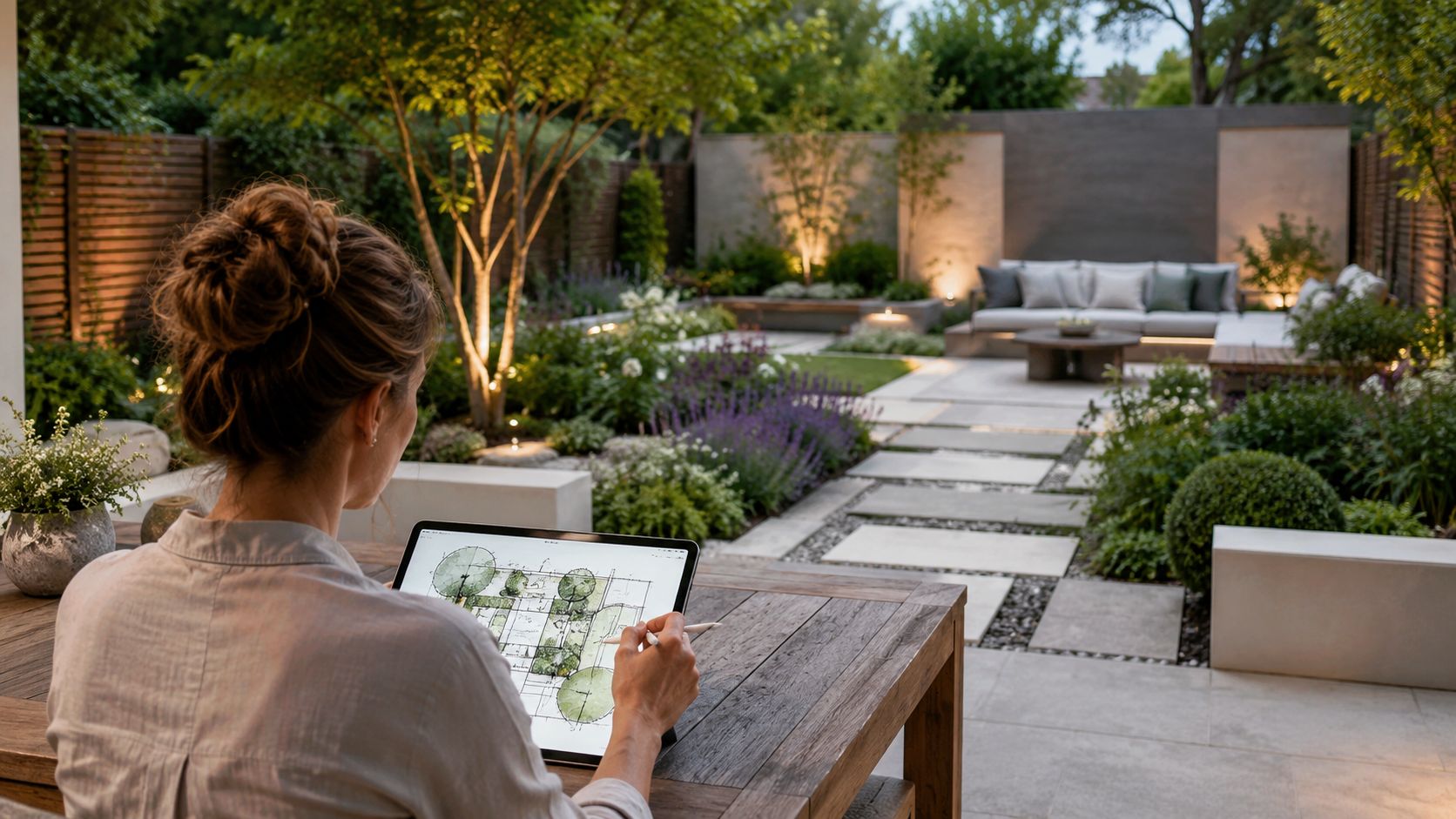
Create outdoor rooms first
A fast way to plan is to draw rough bubbles over your base map. One bubble might be dining. Another might be lawn or play. Another might be screening. Another might be a pollinator border or raised vegetable zone.
This keeps you from making the classic mistake of over-designing the edges while ignoring how people move through the yard.
Use layout questions like these:
| Area | What it needs | Common mistake |
|---|---|---|
| Patio or seating zone | Shade, drainage, access from the house | Too small for furniture circulation |
| Lawn or open play space | Clean edges, sun, usable shape | Breaking it into awkward leftover strips |
| Planting beds | Depth for layering, irrigation access | Making them too narrow for shrubs to mature |
| Utility access routes | Direct movement to gates and equipment | Hiding them until service is needed |
Pathways should work, not just look good
In a plan on paper, every path looks usable. In real life, wheelbarrows, hoses, trash bins, and people carrying groceries all expose bad spacing.
Denver Urban Gardens recommends internal footpaths 18 inches to 2 feet wide to improve usability and reduce soil compaction, and they also note that raised beds can improve drainage while vertical gardening helps maximize space and sunlight for vining crops. Their garden planning resource is especially helpful for thinking spatially instead of treating the garden like a plant list.
That width is a good minimum for productive garden paths. For the main routes near a house or patio, many homeowners find they want more room once they use the space.
A path that only works when nothing is growing into it is too narrow.
Hardscape, grade, and planting need one conversation
Many DFW projects get expensive. A homeowner installs a patio, then realizes runoff now dumps into the planting bed. Or they add steps later and discover the grade change was never resolved correctly. Or they put raised beds where drainage swales should have gone.
Hardscape planning belongs in the layout stage because it controls how the whole yard functions. Retaining edges, steps, steel edging, decomposed granite paths, gravel utility runs, and raised beds all affect water movement and maintenance.
If you want a deeper look at combining layout with North Texas site conditions, this guide on designing a yard that thrives in North Texas is a useful local reference.
A good layout also leaves breathing room. Don't pack every edge with curves just because curves feel “designed.” Straight lines often perform better in side yards, utility zones, and modern homes. Broad, simple bed lines are easier to mow against, easier to edge, and easier to keep looking clean.
Building the Foundation with Soil Water and Drainage
A DFW garden can look finished the day it goes in and still fail within a season. The usual pattern is familiar. Water stands in the beds after a storm, the clay bakes hard in July, a few plants decline, and the irrigation gets turned up to compensate. That is how a good-looking install turns into a high-maintenance problem.
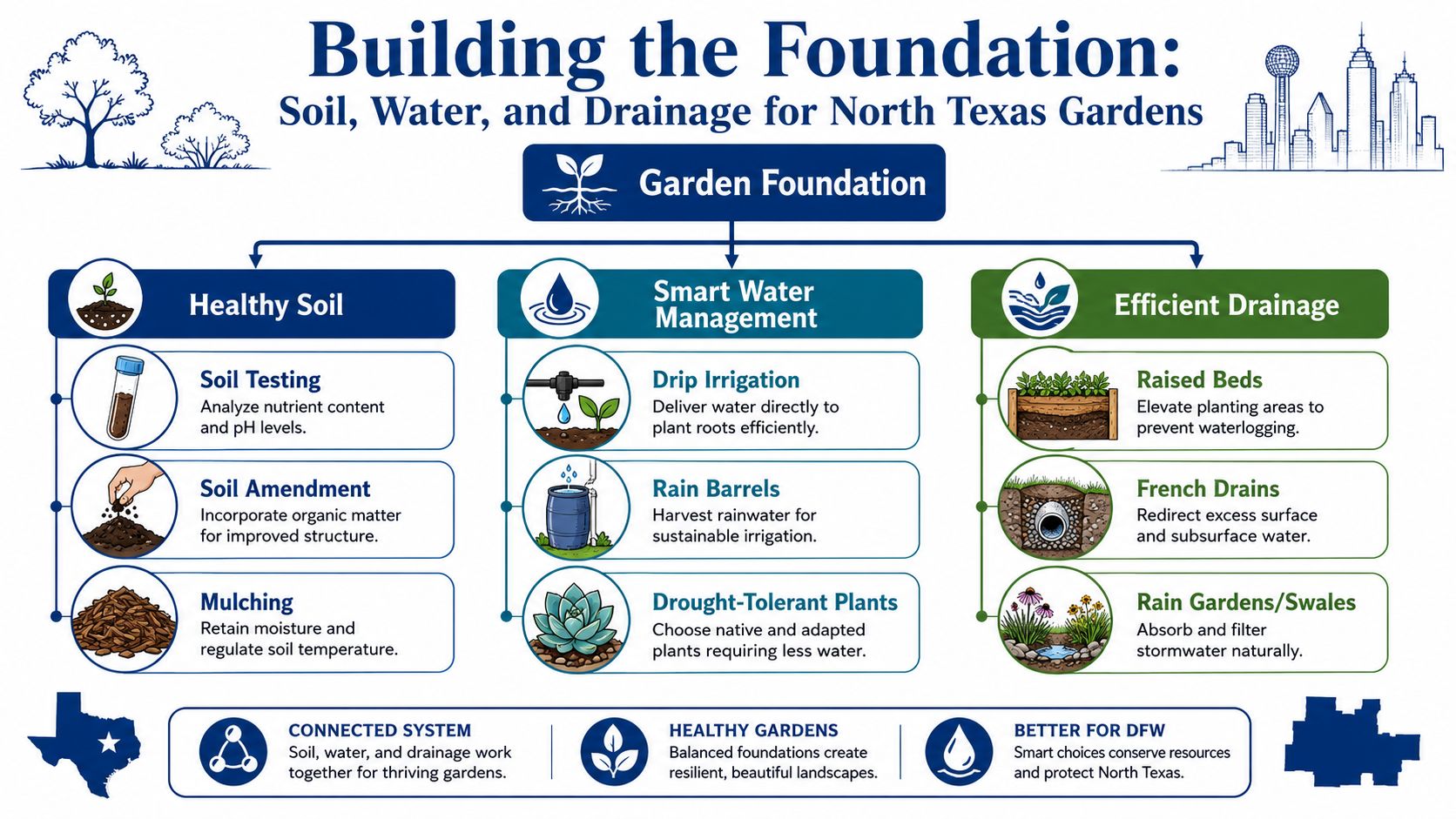
The long-term performance of the garden is decided below grade and around it. Soil structure, runoff paths, bed height, and irrigation zoning determine whether year three is easier than year one, or more expensive.
Treat clay soil like a construction condition
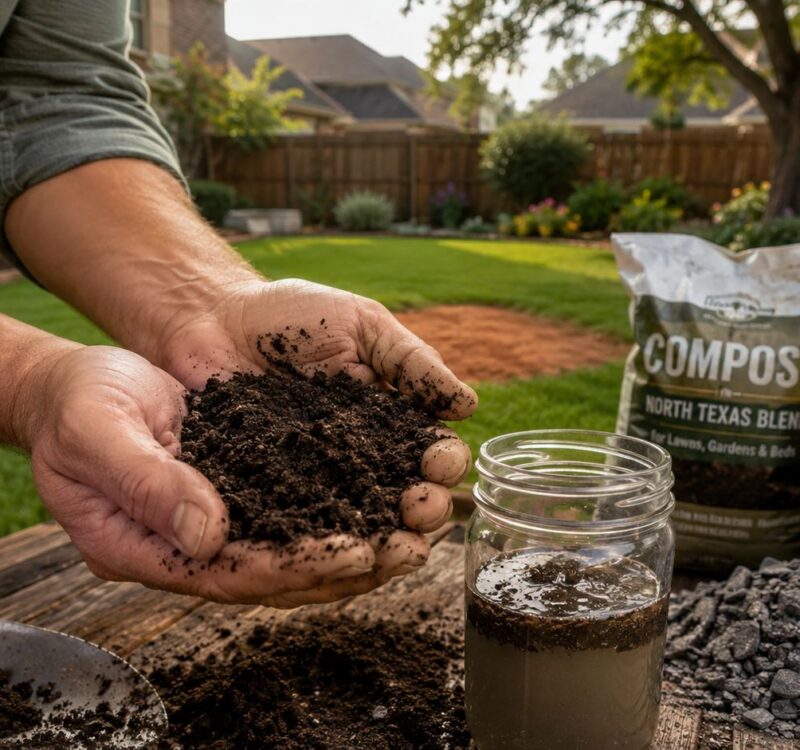
North Texas clay can be fertile, but it has to be handled correctly. Wet clay compacts fast. Dry clay shrinks, cracks, and sheds water differently than it did a month earlier. Roots end up dealing with two extremes instead of a stable growing environment.
That is why spot-fixing individual planting holes usually backfires. Digging a soft pocket in otherwise dense soil often creates a sump where water collects and lingers. The plant may survive the first season, then struggle once roots hit the surrounding clay.
A better approach is to improve the whole bed area so the root zone behaves more consistently over time.
- Add organic matter across the full planting area: Work amendments into the bed, not just into isolated holes.
- Mulch every bed consistently: Mulch buffers soil temperature, slows evaporation, and reduces surface crusting after heat and wind.
- Stay off wet soil: Working heavy clay when it is saturated destroys structure and creates compaction that lasts for years.
- Raise bed grades where drainage is slow: In many DFW yards, a slightly raised planting area gives roots the air and drainage they need.
This is one of the clearest trade-offs in garden planning. Raised beds and broad soil prep cost more up front than digging a few holes and setting plants. They usually save money later because the plants establish faster, decline less often, and need less replacement.
Water for both drought and downpours
A watering plan that only considers summer heat is incomplete. North Texas gets long dry stretches, but it also gets intense storms that expose every grading mistake in an afternoon. A bed that floods three times a year will never perform like one that drains correctly, no matter how carefully it is planted.
Group plants by actual water use and exposure. Shrubs near reflected heat from paving should not share the same schedule as shade perennials on the north side of the house. Annual color, foundation plantings, and established drought-tolerant areas should not all be tied to one irrigation assumption.
Site check: If downspouts, swales, bed elevations, irrigation coverage, and root-zone drainage have not been considered together, the plan is not finished.
Look at the yard during or right after a storm if possible. That is when the site tells the truth. You will see where water leaves the roof, where it stalls, where mulch floats away, and where soil starts moving.
If runoff is already carving channels, exposing roots, or washing mulch into the sidewalk, fix the water behavior before adding more plants. That may mean regrading, reshaping beds, extending downspouts, or adding stabilization work. This guide to erosion control for North Texas gardens and yards is a useful reference if the site already shows washout or slope problems.
Hardscape details affect drainage and safety
Steps, terraces, and patio edges belong in foundation planning because they change how water moves and how the garden ages. A step set too low can catch runoff. A patio with the wrong pitch can dump water into a bed. A retaining edge in the wrong place can trap moisture where roots need drainage.
Fine Gardening notes that outdoor steps are more comfortable and safer when tread depth and riser height are proportioned correctly, and risers should stay within a reasonable height range for usability. Their step design guidance is worth reviewing before hardscape is built.
The practical point is simple. Grade changes improvised in the field rarely age well in DFW clay. Soil movement, heavy rain, and daily use will expose those shortcuts fast.
Selecting Plants That Thrive in North Texas
A lot of plant problems in DFW aren't really plant problems. They're planning problems. The wrong species went into the wrong exposure, the spacing was too tight, the irrigation was too general, or the mature size was ignored because the nursery container looked manageable.
If you want a garden that still works in year five, plant toughness has to outrank impulse.
Build the palette around adaptation
In North Texas, the safest bias is toward native or well-adapted plants that can handle heat, dry stretches, clay soil, and occasional weather swings. That doesn't mean the garden has to look sparse or severe. It means the bones of the design should be resilient.
The trap I see often is over-collecting. Homeowners buy one of this, one of that, a few annuals for instant color, then end up with a mixed planting that looks busy and requires individual attention for everything.
High Mowing Seeds gives a discipline that applies well beyond vegetable beds: use successive planting by working backward from a target harvest or bloom window using days to maturity, and keep your initial palette to 5 to 10 species per season so you can learn how they behave over time. Their garden planning approach is a good reminder that restraint usually improves results.
That same idea works in ornamental design. Fewer, better-chosen plants in stronger groupings will almost always outperform a scattered collection.
Use a simple selection filter
Before anything goes on the buy list, check it against these standards:
- Exposure fit: Can it take the actual afternoon heat of the spot?
- Water fit: Will it live comfortably on the same schedule as nearby plants?
- Mature size: Will it outgrow the bed, the window, the walk, or the foundation line?
- Maintenance profile: Does it need frequent shearing, deadheading, dividing, or replacement to stay attractive?
- Season role: Is it carrying spring color, summer structure, winter form, or habitat value?
Some of the prettiest plants at the nursery are the worst long-term employees in a North Texas landscape.
DFW plant selection guide
Use this as a planning framework, not a strict planting list. The point is to build each bed with a clear role and a clear light condition.
| Category | Full Sun | Part Shade | Key Feature |
|---|---|---|---|
| Shrubs | Texas sage, dwarf yaupon holly | Oakleaf hydrangea, abelia | Structure and seasonal mass |
| Perennials | Salvia, black-eyed Susan | Turk's cap, columbine | Recurring color and pollinator support |
| Ornamental grasses | Gulf muhly, little bluestem | Inland sea oats | Movement and low-input texture |
| Groundcovers | Lantana, trailing rosemary | Ajuga, cast iron plant | Soil coverage and edge softening |
| Edibles and herbs | Peppers, basil, okra | Parsley, some leafy greens | Productive planting with clear use |
This is also where succession matters. Don't design for one good month. Mix plants so something carries the bed after spring peaks fade. Trees and shrubs provide structure. Perennials bring rhythm. Grasses keep the composition from going flat. Seasonal color should support the design, not carry the whole thing.
For more local direction on choosing lower-input plantings, this guide to drought-tolerant landscaping for Dallas-Fort Worth homeowners gives a practical North Texas lens.
Creating Your Timeline Budget and Maintenance Plan
A DFW garden usually gets expensive in one of two ways. Homeowners try to build everything at once and run out of money before the hard parts are done, or they spend freely on plants and decorative finishes, then discover the yard still holds water, the irrigation misses key areas, or the summer maintenance load is far heavier than expected.
A good plan accounts for year one, but it also holds up in year three, five, and ten. That means deciding what gets built first, what can wait, and what level of upkeep you can realistically handle through a North Texas summer.
Phase the work so the yard improves in the right order
Phasing is not a compromise. In many DFW projects, it is the smarter path.
Start with the work that is expensive to redo or disruptive to finished beds. If drainage is poor, if runoff cuts through the yard during storms, or if grade changes are needed to protect the house and patio, handle that first. After that, install paths, edging, irrigation lines, lighting sleeves, and any other buried or messy items. Then prepare planting areas and install the long-term framework before spending money on decorative layers.
A practical sequence usually looks like this:
Fix drainage and grading problems first
Standing water, erosion, and runoff patterns need to be corrected before planting begins.Install construction items and utilities
Patios, walkways, edging, irrigation, conduit, and lighting runs should go in before beds are finished.Prepare beds and irrigation zones
Shape beds, improve soil where needed, mulch, and group areas by water demand.Plant the structure first
Trees, screening shrubs, anchor perennials, and grasses carry the garden long term.Add the finish layer last
Annual color, containers, decorative stone, and small accessories can come later.
That order prevents a common mistake. Paying twice for the same area.
Budget for the parts you do not notice right away
In North Texas, the cost drivers are often below grade or hidden in the setup work. Clay soil can require extra bed preparation. Drainage corrections can involve regrading, catch basins, or drain lines. Irrigation may need new zones or changes in pressure and coverage. None of that looks exciting on install day, but it determines whether the garden settles in cleanly or struggles from the start.
Keep the budget in two columns. One column is required work that protects the investment. The other is finish work that improves the appearance but can wait if needed.
A useful worksheet includes:
- Demolition and site prep
- Soil work and mulch
- Drainage and irrigation
- Masonry, paths, edging, and other built features
- Plants by size and quantity
- Labor
- Contingency for site surprises
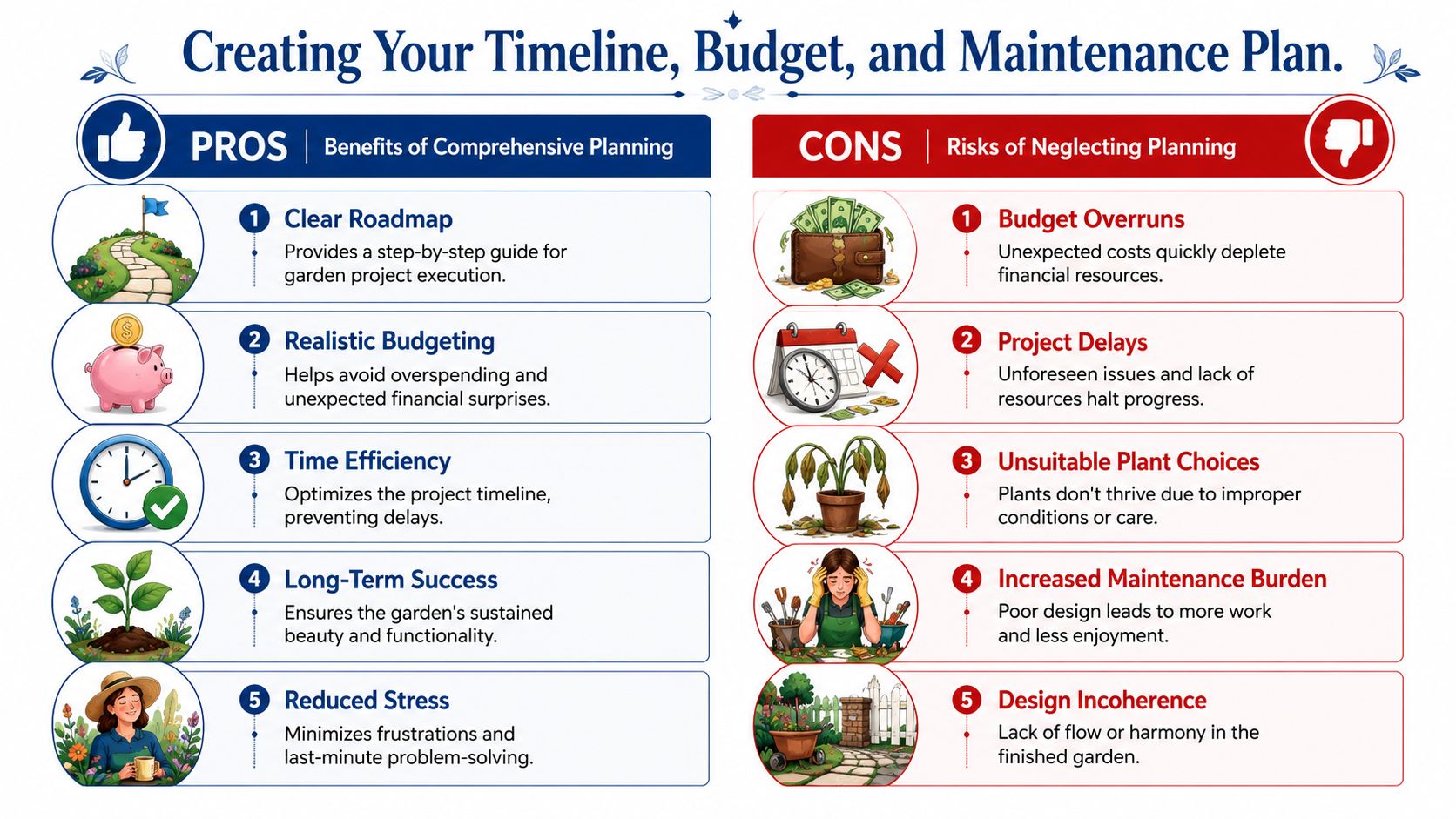
If the budget tightens, cut back on extras first. Do not short the drainage, irrigation, or bed prep to make room for more plants. That trade-off usually looks fine for a season, then becomes expensive.
Decide what maintenance will look like before anything is installed
A lower-maintenance garden is planned, not discovered later. Turf takes regular mowing, edging, feeding, and watering. Oversized shrubs create a pruning cycle that never really ends. Large seasonal flower beds look good in peak color, but they also need repeated replacement, fertilizing, and cleanup.
Ask these questions early:
| Decision | Lower-maintenance choice | Higher-maintenance choice |
|---|---|---|
| Open area | Smaller, purposeful turf zones | Large lawn used mostly for appearance |
| Shrub sizing | Plants that fit naturally | Fast growers that need repeated shearing |
| Irrigation | Zoned by need | One schedule for everything |
| Seasonal color | Limited, strategic use | Large rotating beds needing frequent refresh |
The key is matching the design to the time and effort available in July and August, not just what sounds good in spring. If you want a yard that still works years from now, choose plants that can hold their shape without constant cutting, keep lawn areas intentional, and group water use logically so one thirsty pocket does not drive the schedule for the entire garden.
DIY also needs an honest line. Planting, mulching, and simple bed work are often manageable for a homeowner. Drainage correction, irrigation layout, grading, retaining work, and steps usually need experienced installation because mistakes show up fast in heavy rain and summer heat. A DFW company handling planning, drainage, irrigation, hardscaping, installation, and ongoing property services can make sense once a project moves beyond straightforward planting.
Build the garden you can afford to maintain well. That is the version that lasts.
Conclusion Bringing Your DFW Garden to Life
A well-planned North Texas garden doesn't happen because the plant list looked good. It happens because the site was read thoroughly, the layout respected how people move, the soil and water issues were handled early, and the plant choices matched the climate instead of fighting it.
That's what makes a garden last.
If you take anything from this process, let it be this: plan for the yard you'll live with in year three, five, and ten. The best gardens in DFW aren't the ones with the most features. They're the ones that still look settled, usable, and manageable after the newness wears off.
If you want help turning a rough idea into a workable plan, Rosewood Landscape Group works with Dallas-Fort Worth homeowners on garden design, drainage, irrigation, hardscaping, and long-term property improvements that fit North Texas conditions.
Related posts
8 Best Shrubs for North Texas Landscapes in 2026
Permeable Paver Installation: A DFW Homeowner’s Guide
Zoysia Grass Fungus: Identify, Treat & Prevent in 2026
How to Improve Soil Quality: Easy Ways to Improve Soil
Take All Root Rot: Diagnose & Treat Your Lawn