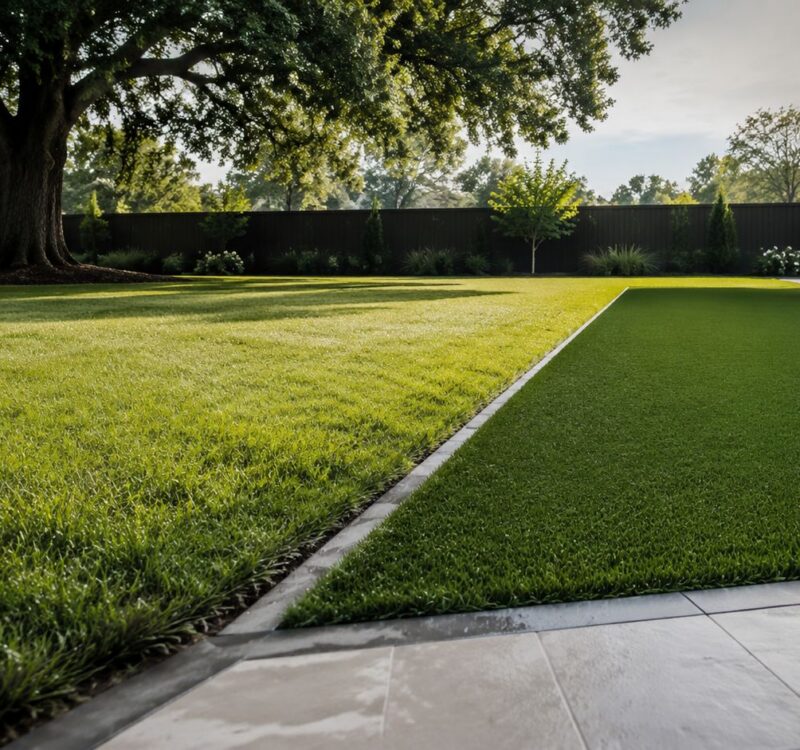
By the time most North Texas homeowners start looking into xeriscaping, they're already frustrated. The lawn is thinning out in the hottest parts of the yard, the sprinkler system seems to run constantly, and every hard rain leaves water rushing to the curb instead of soaking into the ground. You're not trying to build a desert scene. You just want an outdoor area that looks intentional, survives Texas weather, and stops fighting your site.
That's the right reason to consider xeriscaping in Texas. Done well, it doesn't look sparse or harsh. It looks settled, regional, and easier to live with. In DFW, the key is not just picking drought-tolerant plants. It's matching those plants to sun exposure, heavy clay soil, drainage patterns, and the way your property handles both August heat and fast storm runoff.
The New Texas Lawn Why Xeriscaping Makes Sense
A conventional lawn asks a lot from a North Texas property. It wants steady water, regular mowing, seasonal repair, and soil conditions that many DFW lots don't have. When the site is mostly clay, partly sloped, and exposed to brutal afternoon sun, turf often turns into a high-effort compromise.
That's why more homeowners are shifting away from the idea that the whole front or back yard needs to be grass. A better design for this region uses turf where it serves a purpose, then builds the rest of the yard with durable planting beds, shade, mulch, and water-wise plants that are suited to the climate.

What xeriscaping actually is
Xeriscaping is water-wise outdoor design, not a yard full of rock. It starts with planning. You reduce unnecessary turf, group plants by water needs, improve soil, direct water where it helps, and use mulch to protect roots and slow evaporation.
In practice, a good DFW xeriscape still has structure and softness. It might include a canopy tree over a seating area, evergreen shrubs for screening, native grasses for movement, flowering perennials near the entry, and a smaller lawn panel only where people use it.
Practical rule: If a feature needs constant correction to survive your site, it probably doesn't belong in that spot.
Why the math works in Texas
The water side of the equation is straightforward. According to the Texas Water Development Board's Residential Xeriscape Project, xeriscaping can achieve an average water reduction of 40 percent in residential sites, which translates to 123 gallons per day in reduced consumption.
That matters in DFW because the biggest lawn problems usually show up at the same time. Heat stress, runoff, uneven irrigation, and rising water use all stack on top of each other.
A xeriscape addresses those issues together:
- Less thirsty area: You're not irrigating every square foot like it's prime lawn.
- Better plant fit: Adapted and native plants handle local swings better than water-hungry basics.
- Lower weekly labor: Less mowing, edging, patching, and replacing.
- Cleaner performance: The same Texas Water Development Board report notes lower chemical use at xeriscaped sites, which is another practical benefit for homeowners trying to reduce inputs.
What it doesn't mean
It doesn't mean stripping the yard bare and covering everything with decorative gravel. That approach usually looks hotter, drains poorly, and creates plant stress in our summers. It also misses the point. Good xeriscaping in Texas is about efficiency and resilience, not deprivation.
If you want a yard that still looks polished in July and doesn't fall apart after a hard storm, xeriscaping isn't a downgrade from a traditional lawn. In North Texas, it's often the smarter upgrade.
Your Xeriscape Blueprint Site Assessment and Planning
The best xeriscapes look effortless because the planning work happened first. Before you remove turf or shop for plants, walk the property like a designer would. The site will tell you where opportunities are and where the expensive mistakes usually start.
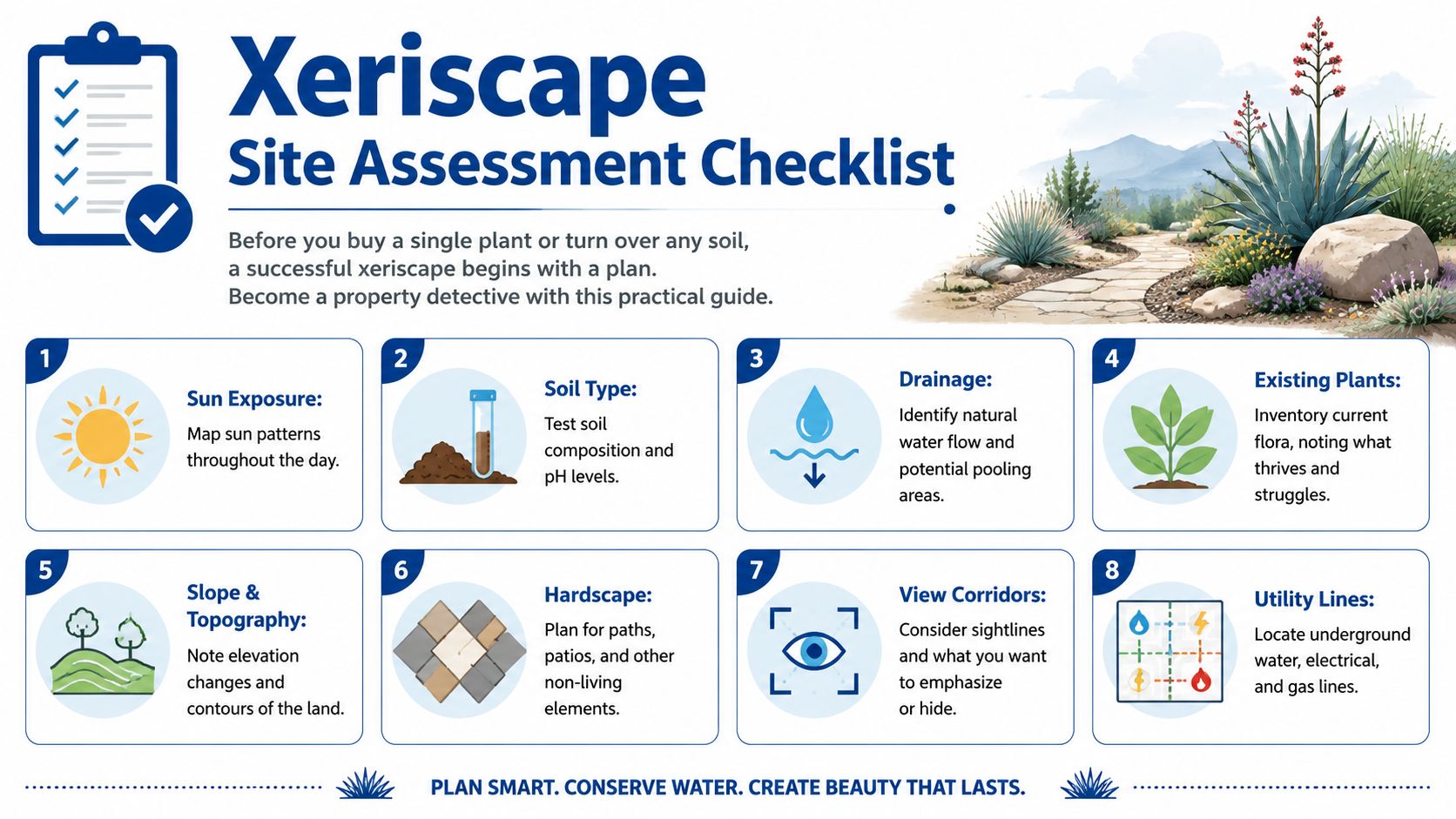
Map sun before you map plants
North Texas light is uneven across a single lot. The front yard may get reflected heat off the street, while the back fence line stays shaded until late morning. One side yard may bake. Another may stay damp longer because the house blocks afternoon sun.
Sketch a rough plan of the property and note these conditions:
- Full sun zones: Areas that stay exposed through the hottest part of the day.
- Morning sun spots: Often easier for flowering plants and foundation beds.
- Afternoon shade pockets: Better for plants that dislike reflected heat.
- Heat traps: Places near pavement, masonry, pool decking, or south-facing walls.
This one exercise keeps people from placing the right plant in the wrong microclimate. A plant that's “drought tolerant” can still fail if it's wedged against a west-facing wall with compacted clay and no airflow.
Watch where water actually moves
The most useful site visit often happens during or right after a storm. You don't need a technical survey to learn a lot. You need to notice where runoff starts, where puddles hold, and where downspouts dump water too quickly.
Look for three things:
- Fast exits where water races off the property.
- Dead-flat low spots where it sits too long.
- Transition areas where runoff could be slowed and redirected into planting zones.
These observations shape the entire plan. In many North Texas yards, the best-performing xeriscape isn't flat and uniform. It has subtle grade changes, bed edges that guide water, and low areas designed to receive runoff rather than reject it.
A site plan doesn't need to be fancy. A hand sketch with notes on sun, slope, and drainage is enough to prevent costly rework.
Audit what stays and what goes
Most yards already have useful bones. A mature tree may be worth designing around. An older shrub mass may be overgrown but still providing privacy. A concrete walk may be perfectly functional even if the surrounding planting is not.
As you evaluate the yard, separate elements into three buckets:
| Keep | Modify | Remove |
|---|---|---|
| Healthy trees, sound hardscape, successful plantings | Oversized beds, poor edging, inefficient spray zones | Struggling turf, failed shrubs, cluttered accents |
That's also the stage to think about appearance standards if you're in a managed neighborhood. If you need ideas that keep the design intentional and neighborhood-friendly, these HOA-friendly xeriscaping ideas and options show the kind of structure that usually gets better acceptance than a loose, improvised conversion.
Don't skip utility and access planning
Beautiful plans fall apart when no one checks practical constraints. Mark irrigation valves, hose bibs, gas lines, electrical routes, drainage inlets, and service paths. If crews need wheelbarrow access to the backyard, that matters. If a new bed blocks AC access, that matters too.
A workable xeriscape plan usually answers these questions before installation starts:
- Where will runoff go on purpose
- Which zones need irrigation and which don't
- Where larger plants will sit at mature size
- How people will move through and use the yard
- What needs to stay accessible for maintenance
That blueprint does more than organize the install. It keeps the outdoor space from becoming a collection of isolated fixes.
Building a Healthy Foundation with Soil and Drainage Prep
North Texas clay is the reason many xeriscape projects disappoint. People swap plants, add gravel, and expect drought tolerance to solve everything. Then the first long rain turns beds soggy, roots sit in compacted soil, and plants decline even though they were supposed to be “easy.”
Foundational work starts below grade. If the soil can't drain, breathe, and absorb water at a reasonable pace, the rest of the design is compromised.
What heavy clay changes
Clay soil holds nutrients well, but it often drains slowly and compacts hard. In summer, it can bake into a dense surface that sheds water. In wet periods, it can stay saturated longer than many roots can tolerate. That swing is why some plants in DFW die from drought stress in one season and root stress in the next.
Start by digging test holes in different parts of the yard. Don't assume the whole property behaves the same. Front builder-fill near the street, shaded side yards, and back fence drainage zones often perform very differently.
A practical prep approach usually includes:
- Compost: Helps improve structure and root environment.
- Expanded shale: Commonly used in North Texas to help open clay and improve aeration.
- Selective grading: Redirects surface flow without creating abrupt drainage problems.
- Defined bed lines: Keeps mulch where it belongs and water moving where you want it.
Mulch beats rock in most planted areas
One of the biggest mistakes in xeriscaping in Texas is treating gravel as the default finish for every bed. In North Texas clay, that usually creates more heat at the root zone and does little to improve infiltration where the soil is already tight.
A better finish for most planted beds is shredded or chipped mulch. According to Nativo's Texas xeriscaping guide, a common misconception is that xeriscaping means replacing everything with gravel. In Texas's clay-heavy soils, mulch is essential for water permeation, and integrating a rain garden helps capture stormwater to nourish plants without irrigation.
That's an important distinction. Mulch moderates soil temperature, slows crusting, and supports healthier moisture movement into the root zone.
Gravel has a place on paths, utility strips, and some accent areas. It usually shouldn't be the dominant answer for living planting beds in North Texas.
Why rain gardens belong in DFW xeriscapes
A rain garden sounds specialized, but the concept is simple. It's a shallow planted depression placed where runoff naturally wants to go. Instead of pushing every gallon to the street, you slow it down and let the garden absorb it.
This matters in DFW because many lots face both drought and sudden heavy rainfall. A rain garden helps the property respond to both. During storms, it accepts runoff from roofs, downspouts, or gently sloped lawn areas. Between storms, that captured moisture supports plants longer than a standard raised bed would.
A workable rain garden for a residential yard usually follows these principles:
- Place it in a natural collection zone, not against the foundation.
- Keep the basin shallow, so it blends with its surroundings.
- Use water-tolerant native or adapted plants that can handle periodic saturation and dry spells.
- Mulch the basin, rather than filling it with decorative stone.
- Provide an overflow path, so major storms still have a safe exit.
The result doesn't look like a ditch. Done properly, it reads as a planted feature bed that happens to perform drainage work. That's the nuance many generic xeriscape guides miss, and it's one of the most useful adjustments for North Texas sites.
The North Texas Plant Palette Drought-Tolerant Beauties
A good xeriscape in DFW shouldn't look like a survival exercise. It should look layered and settled. The best ones combine canopy, evergreen structure, seasonal bloom, and ground-level texture so the yard still has shape in winter and color in the growing season.
In North Texas, the strongest plant palettes usually come from a mix of native and well-adapted species. Natives often handle local swings best. Adapted plants can widen your design options when they're placed carefully and not forced into impossible spots.
Build the yard in layers
When homeowners say they don't want a xeriscape to look empty, they're usually reacting to poor composition, not the water-wise concept itself. Sparse designs happen when everything sits at one height or when too much area is given to bare gravel.
A fuller look comes from layering:
- A tree layer for shade, scale, and relief from reflected heat
- A shrub layer for year-round mass and screening
- A perennial layer for bloom and seasonal change
- A groundcover or grass layer to knit the beds together
That mix is what gives the outdoor space presence even when some plants are resting between bloom cycles.
North Texas Xeriscape Plant Recommendations
| Plant Type | Common Name (Botanical Name) | Sun Needs | Water Needs | Notes/Highlights |
|---|---|---|---|---|
| Tree | Live Oak (Quercus virginiana) | Full sun | Low once established | Strong shade tree for large spaces |
| Tree | Cedar Elm (Ulmus crassifolia) | Full sun to part sun | Low to moderate | Reliable regional tree with good toughness |
| Tree | Mexican Plum (Prunus mexicana) | Full sun to part sun | Moderate while establishing, then lower | Spring bloom and strong seasonal character |
| Tree | Red Oak (Quercus shumardii or similar regional oak selection) | Full sun | Moderate while establishing | Good fall color and canopy presence |
| Shrub | Texas Sage (Leucophyllum frutescens) | Full sun | Low | Handles heat well, silvery foliage, bloom after humidity and rain |
| Shrub | Yaupon Holly (Ilex vomitoria) | Full sun to part shade | Low to moderate | Evergreen structure, useful for hedging or screening |
| Shrub | Dwarf Wax Myrtle (Morella cerifera) | Full sun to part sun | Moderate | Soft texture and strong screening use |
| Shrub | Agarita (Mahonia trifoliolata) | Full sun | Low | Tough native with distinctive form |
| Perennial | Blackfoot Daisy (Melampodium leucanthum) | Full sun | Low | Long bloom period and tidy habit in the right drainage |
| Perennial | Autumn Sage (Salvia greggii) | Full sun | Low to moderate | Reliable flower color and pollinator value |
| Perennial | Mealy Blue Sage (Salvia farinacea) | Full sun | Moderate, then lower | Vertical bloom spikes and easy color |
| Perennial | Gulf Muhly (Muhlenbergia capillaris) | Full sun | Low to moderate | Soft movement and standout seasonal texture |
| Perennial | Damianita (Chrysactinia mexicana) | Full sun | Low | Compact mounding habit and bright yellow flowers |
| Groundcover | Horseherb (Calyptocarpus vialis) | Part shade to shade | Low to moderate | Useful in softer, shadier spaces |
| Groundcover | Frogfruit (Phyla nodiflora) | Full sun to part shade | Low to moderate | Good for naturalized areas and pollinator support |
| Groundcover | Silver Ponyfoot (Dichondra argentea) | Full sun to part sun | Low | Excellent trailing texture for edges and raised areas |
| Accent Grass | Little Bluestem (Schizachyrium scoparium) | Full sun | Low | Upright native grass with seasonal color shift |
How to combine them so the yard looks intentional
A front yard often benefits from a strong evergreen backbone. Yaupon holly or Texas sage can establish the structure, with salvias and blackfoot daisy woven in front. Add one small ornamental tree or a properly placed shade tree and the planting starts to read as deliberate rather than improvised.
Backyards usually allow more freedom. That's where grasses such as gulf muhly or little bluestem can soften edges around patios or transition zones. Silver ponyfoot works well spilling over a stone edge or raised planter. Horseherb and frogfruit fit better in informal spaces than in a tightly clipped entry sequence.
If you're comparing plant mixes for different exposure zones, these drought-tolerant landscaping tips for Dallas-Fort Worth homeowners can help you think through plant selection in a more site-specific way.
Plants don't fail just because they need less water. They fail when the soil, light, and drainage don't match what the root system can handle.
What usually works less well
Some homeowners overcorrect and choose only the toughest, grayest plants they can find. That can make the planting scheme feel monotonous. Others mix cottage-style moisture lovers into blazing west exposures and end up chasing stress with extra irrigation.
A stronger approach is to keep the palette disciplined. Repeat a few reliable shrubs. Use perennials in drifts instead of one-offs. Let one or two accent grasses carry movement. Reserve special plants for the spots that support them.
That's how a North Texas xeriscape stays attractive without turning into a collection of experiments.
Smart Watering and Hardscape Integration
A xeriscape still needs infrastructure. Water-wise planting reduces demand, but poor irrigation design can waste that advantage fast. In DFW, the best systems water thoroughly and precisely, then get out of the way.
Hardscape matters just as much. If the yard includes the right paths, patios, and usable surfaces, you need less turf to make the property functional.
Upgrade how water is delivered
Traditional spray irrigation often throws water where you don't need it. Pavement gets wet. Wind carries mist off target. Slopes shed water before it can soak in. That's especially wasteful in planting beds.
Drip irrigation solves many of those issues by delivering water at the root zone. It's not glamorous, but it's one of the most important upgrades in xeriscaping in Texas.
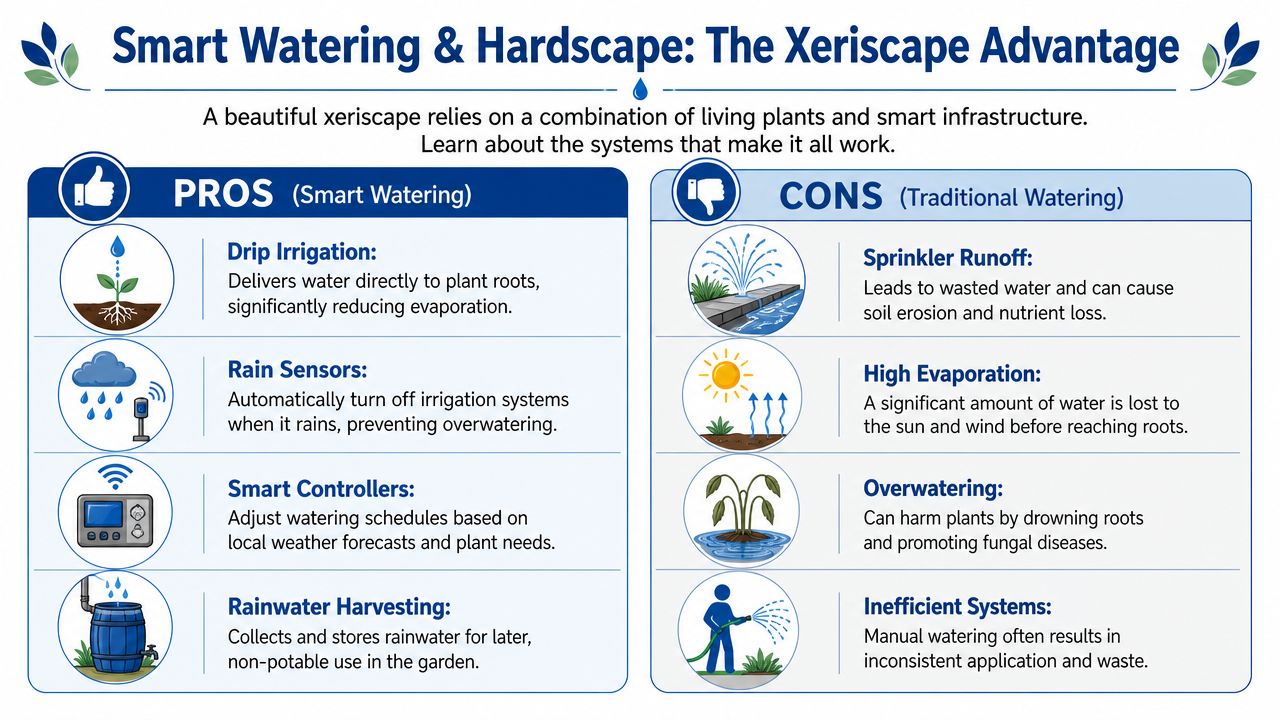
A sensible irrigation setup often includes:
- Drip lines in beds: Better for shrubs, perennials, and grouped plantings.
- Separate zones: Turf, shade beds, and full-sun beds shouldn't be watered the same way.
- Rain sensors: Stop unnecessary cycles when weather already handled the job.
- Smart controllers: Adjust scheduling based on conditions rather than a fixed routine.
For homeowners evaluating upgrades or repairs, a professionally designed water irrigation system is usually the difference between a xeriscape that settles in and one that gets overwatered into decline.
Use hardscape to reduce thirsty square footage
Not every area needs to be planted, and not every open area should stay lawn. Good hardscape gives the yard purpose. It also reduces water demand without making the space feel stripped down.
Think in terms of function first:
| Yard Need | Better Xeriscape Move |
|---|---|
| Outdoor dining | Patio or paver terrace |
| Service route | Gravel or stepping-stone path |
| Soggy passage area | Raised walk or stabilized path |
| Small gathering zone | Seat wall or decomposed granite court |
Permeable surfaces are especially useful where runoff is part of the problem. They can slow surface flow and make the area feel more connected than isolated concrete pads.
What to avoid
The common failure pattern is mixing efficient plants with inefficient delivery. A homeowner removes lawn, keeps old spray heads, and waters new low-water beds like turf. The result is shallow rooting, disease pressure, and wasted water.
The second mistake is overbuilding hardscape without considering heat. Large expanses of dark masonry or exposed rock can raise surface temperatures around nearby planting. In DFW, that often means the west side of the house becomes even harder on plants than it was before.
Choose hardscape that supports how you live outside. Then let irrigation support the planting, not compensate for poor layout.
Managing Your Project Budget and Finding Help
A xeriscape can be installed all at once, but it doesn't have to be. In fact, many of the best projects are phased because that approach gives homeowners room to make smarter decisions about priorities, drainage, and where to invest first.
The key is to think in scopes, not just in wish lists.
Spend first on what the site needs most
If the property has drainage issues, compacted clay, and a failing irrigation layout, those items usually deserve attention before decorative upgrades. A beautiful planting plan installed into poor soil and bad water movement won't hold up.
A practical order of operations often looks like this:
- Correct drainage and grading problems
- Improve soil in target bed areas
- Update irrigation by zone
- Install major hardscape
- Plant trees and structure shrubs
- Add perennials, accents, and finishing layers
That sequence isn't flashy, but it protects the investment.
Phasing can make the project better
A phased plan works well for homeowners who want a complete vision without doing everything in one season. Phase one might convert the front yard and solve visible drainage issues. Phase two might handle the backyard entertainment zone. Phase three might add specialty beds, lighting, or a smaller side-yard project.
Phasing also helps with plant establishment. A new shade tree, for example, changes microclimate over time. If you rush every planting decision on day one, you may miss opportunities the site will offer once that canopy starts developing.
A smart landscape budget doesn't start with the plant list. It starts with the conditions that could make the plant list fail.
How to choose a contractor for xeriscaping in Texas
Plenty of companies can install plants and mulch. Fewer can read a North Texas lot correctly. If you're hiring help, ask questions that reveal whether the contractor understands clay soil, stormwater behavior, and irrigation zoning rather than just the visual side of the project.
Use a short screening checklist:
- Ask about clay soil prep: They should be able to explain how they handle compaction and amendment in planted areas.
- Ask about drainage strategy: Look for practical answers about grading, runoff capture, overflow routing, and bed design.
- Ask how they separate irrigation zones: Beds and turf should not be treated as one watering problem.
- Ask for local examples: North Texas experience matters because regional conditions are specific.
- Ask about maintenance expectations: A competent installer should tell you what the xeriscape will need after install, not pretend it will maintain itself.
It also helps to ask whether they can support the full job, including irrigation, drainage, hardscape, and plant health follow-up. The more coordination gaps in a project, the more likely details get missed.
Keep the design realistic
The budget trap is trying to force a luxury look onto a site that first needs remediation. If the yard floods at one corner and bakes at another, the solution isn't more decorative material. It's a cleaner site plan with the right priorities.
A realistic xeriscape budget usually feels disciplined, not cheap. It puts money into systems and structure first, then into finish layers that enhance the appearance over time.
Your Xeriscape Maintenance Calendar
Xeriscapes need less repetitive work than traditional lawns, but they still need attention. The difference is that the work becomes more seasonal and more intentional. You spend less time reacting and more time doing a few key tasks at the right moment.
That's a better fit for North Texas anyway. Our outdoor environments don't move through gentle, predictable seasons. They move through swings of heat, storm activity, and occasional winter cold. A maintenance calendar keeps the yard from drifting out of balance.
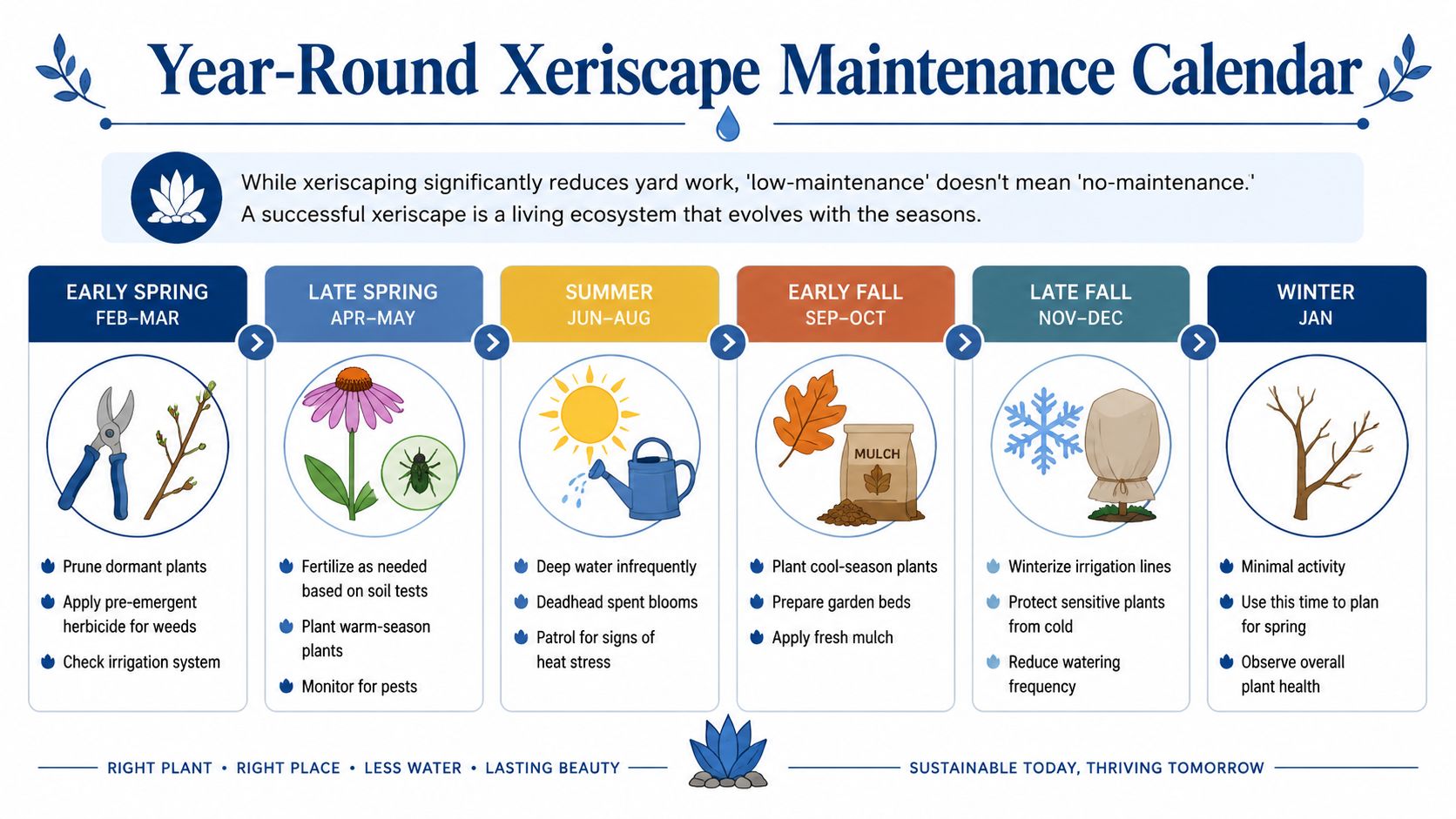
Early spring and late spring
Late winter into early spring is when you clean up structure. Cut back dormant ornamental grasses and perennials before fresh growth pushes. Check drip lines, emitters, valves, and controllers before the hotter months arrive. Refresh bed edges so the garden keeps its definition.
As spring progresses, install warm-season additions and watch how new growth responds to each zone. This is also the time to stay ahead of weeds before they seed into mulch and open soil.
A good spring checklist includes:
- Pruning: Remove dead or winter-damaged growth.
- Irrigation review: Check for clogged emitters, leaks, or poor coverage.
- Mulch touch-up: Refill thin areas to protect roots before summer.
- Plant monitoring: Note anything struggling in a spot that may be too wet, too shaded, or too hot.
Summer management
Summer in DFW is less about doing more and more about doing the right things less often. Deep, infrequent watering encourages stronger rooting than daily shallow cycles. Deadheading some perennials keeps the display cleaner, but don't over-prune heat-stressed plants.
Watch for symptoms, not just dryness. A plant can look stressed because of reflected heat, poor drainage, or overwatering, not only because it wants more irrigation.
Use this summer rhythm:
| Task | What to do |
|---|---|
| Watering | Water deeply and avoid constant shallow cycles |
| Inspection | Check for heat stress, runoff, and clogged emitters |
| Grooming | Remove spent blooms where appearance matters |
| Protection | Keep mulch in place around exposed root zones |
Fall and winter care
Early fall is an excellent time for planting in North Texas. The soil is still warm, but the air is less punishing. That gives roots a better runway to establish. It's also the right time to top off mulch and reset any bed lines that softened over the summer.
Late fall and winter are quieter, but they're not empty. Protect sensitive plants when freezes threaten. Reduce irrigation frequency as growth slows. Use winter to evaluate the bones of the outdoor area, especially evergreen massing, spacing, and any drainage spots that became obvious during storm season.
The easiest xeriscapes to maintain are the ones that were planted with enough room to mature. Crowding creates future pruning, disease, and replacement work.
A simple seasonal rhythm to remember
- Spring: Clean up, repair, re-edge, and check irrigation.
- Summer: Water correctly, observe stress, and avoid overreacting.
- Fall: Plant, mulch, and refine the beds.
- Winter: Protect, inspect, and plan adjustments.
That's the maintenance mindset that works best. Xeriscaping in Texas isn't about abandoning the yard. It's about managing outdoor areas that finally work with the region instead of against it.
If you're ready to turn a struggling lawn into a water-wise North Texas outdoor space, Rosewood Landscape Group can help with design, drainage, irrigation, hardscaping, and installation suited to DFW conditions. The strongest xeriscapes start with a site plan that fits your property, your neighborhood, and the way you use your outdoor space.
Related posts
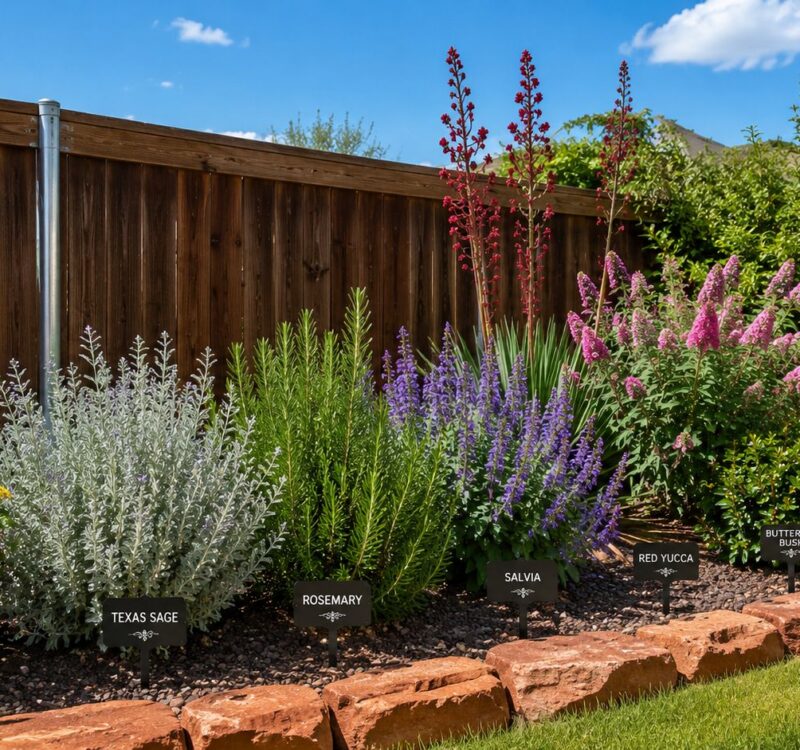
8 Best Shrubs for North Texas Landscapes in 2026
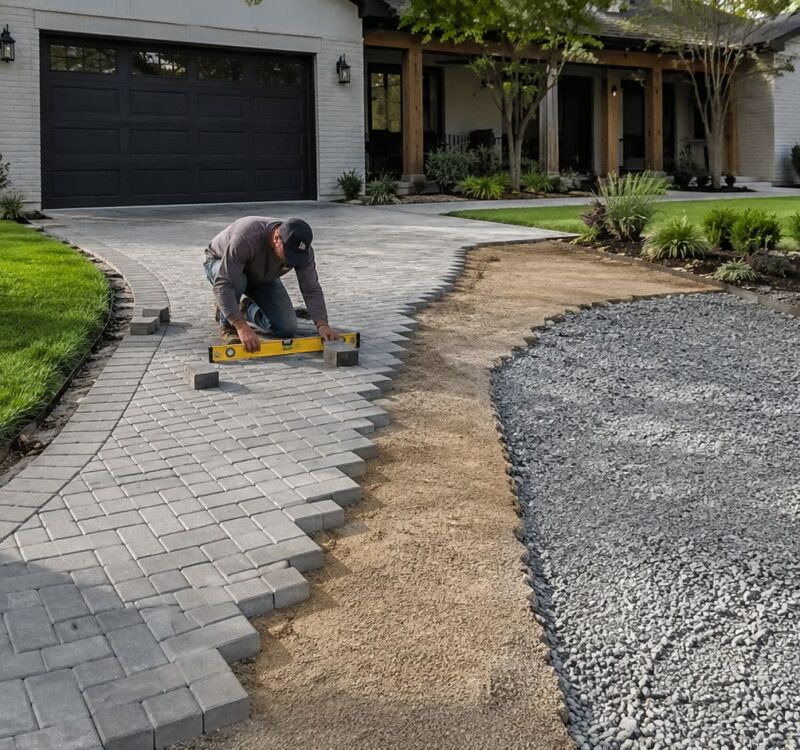
Permeable Paver Installation: A DFW Homeowner’s Guide
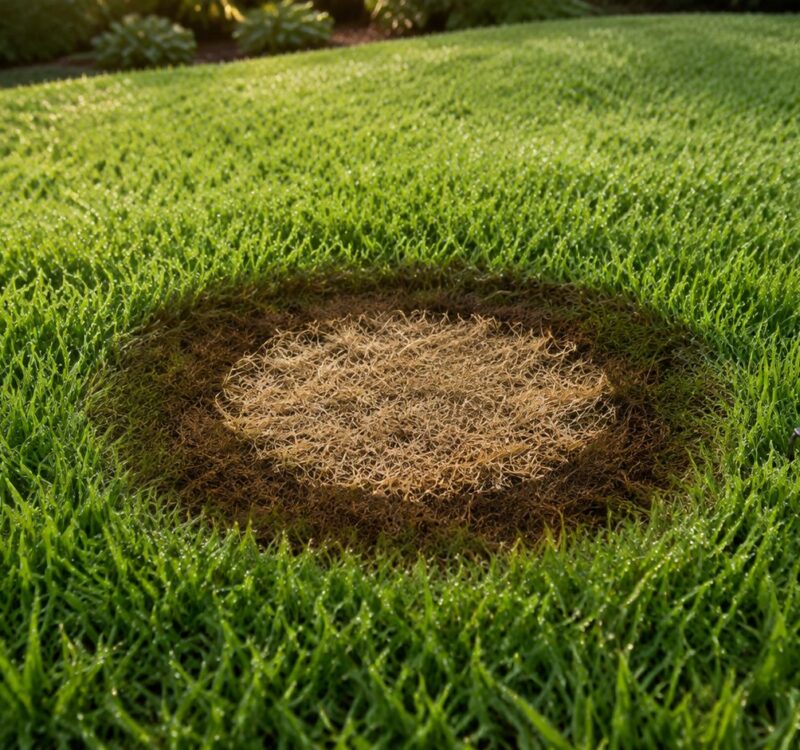
Zoysia Grass Fungus: Identify, Treat & Prevent in 2026
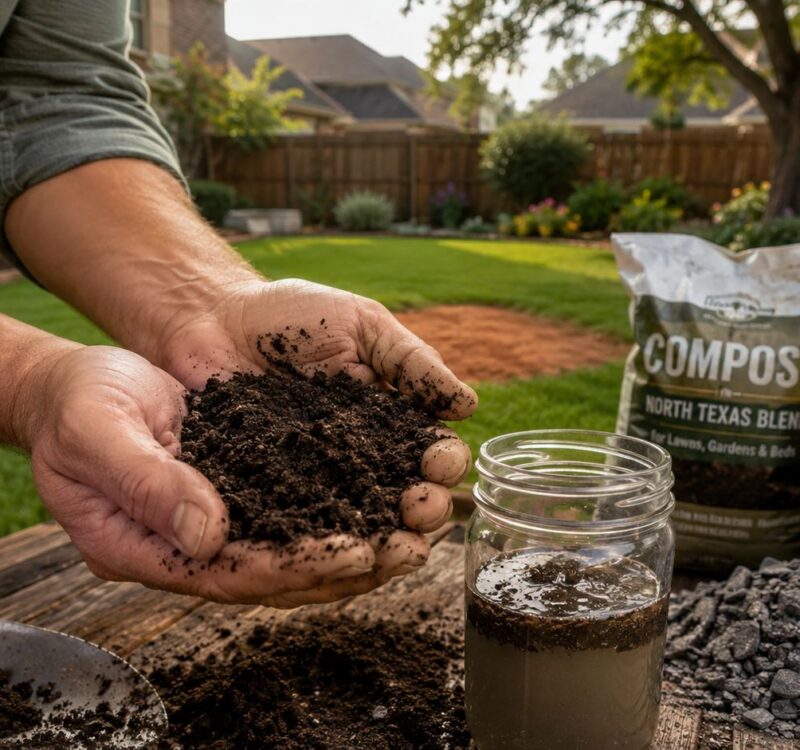
How to Improve Soil Quality: Easy Ways to Improve Soil
Take All Root Rot: Diagnose & Treat Your Lawn