Tired of a scorched lawn every August and a flooded patio after every spring storm? That's a familiar North Texas cycle. Clay soil holds water when you don't want it, then turns hard and unforgiving when the heat settles in. Add long summer stretches, sudden freezes, and intense rain, and a pretty yard can fail fast if the plan only focuses on plants.
Good North Texas outdoor design approaches work as systems, not isolated upgrades. The best results come from matching planting, grading, irrigation, shade, and hardscape so the whole property functions better year-round. In North Texas, 2026 design trends are leaning toward native and climate-adapted plant palettes, efficient irrigation, and function-first outdoor living spaces that can handle heat, drought, and freezes while still looking refined, according to IBISWorld's Texas landscape design industry outlook.
That shift makes sense on the ground. Homeowners want less guesswork, fewer seasonal failures, and outdoor spaces they'll use. Businesses want curb appeal that doesn't fall apart after weather swings or require constant reactive work.
Here are eight practical ideas that hold up in real DFW conditions.
1. Native Texas Plant Palettes and Xeriscaping
North Texas outdoor spaces usually improve when you stop fighting the site. Native and climate-adapted plants are a strong fit because they're better matched to local heat, alkaline soils, drought periods, and winter swings than many thirstier ornamental schemes.
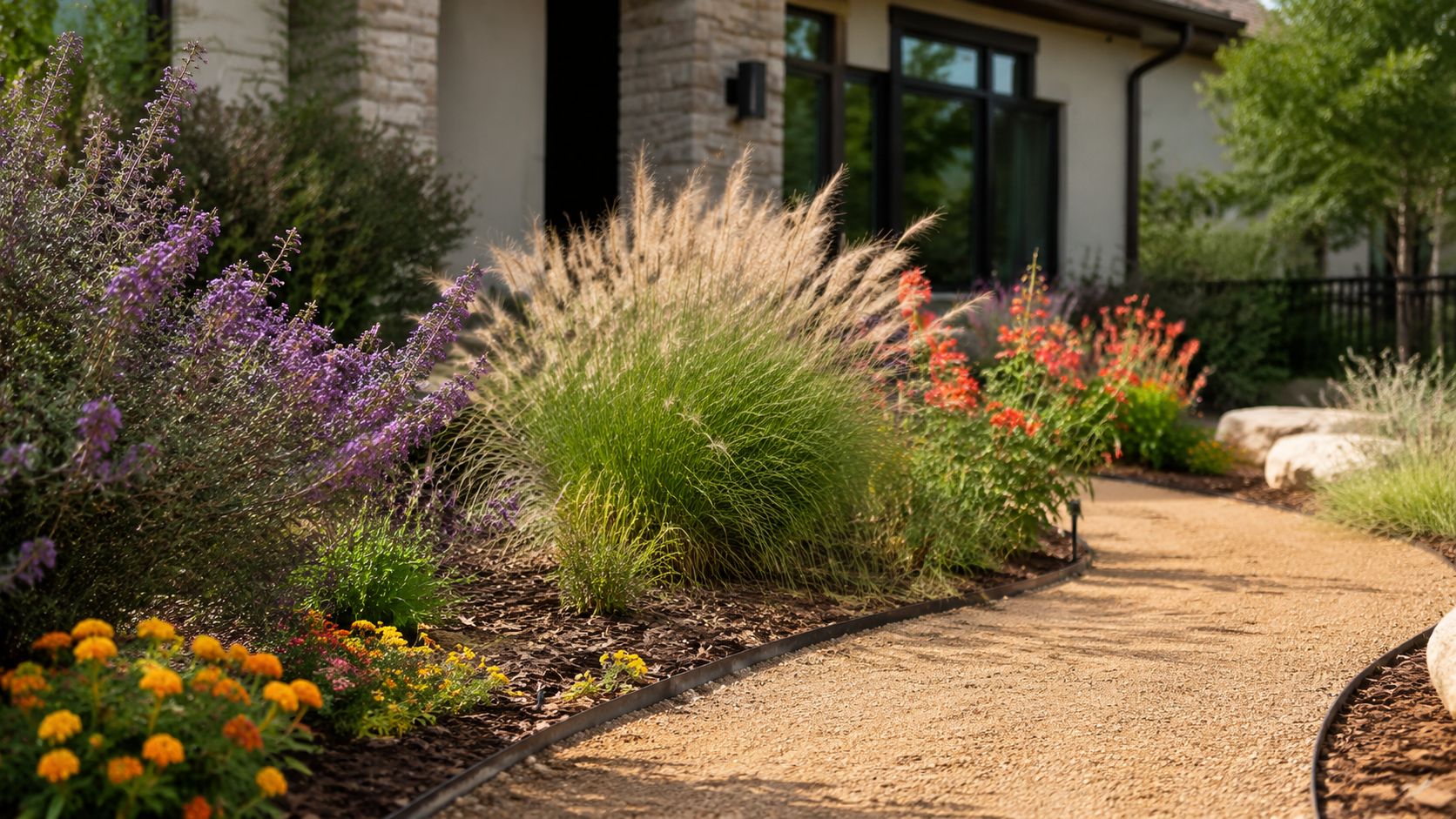
A lot of people hear “xeriscape” and picture gravel with a few scattered succulents. That's not the only path. A well-built native palette can feel structured, lush, and high-end when you layer grasses, flowering perennials, evergreen anchors, and mulch correctly.
Build the palette around survival first
Texas SmartScape promotes native and adapted plants, reduced turf, and organic compost to improve soil structure. The same program also notes that mulch can cool soils by up to 10 degrees during summer, which matters when beds are exposed to DFW sun for long stretches, as explained through Texas SmartScape's North Texas water-wise landscaping guidance.
That's why the plant list shouldn't come first. Start with bed shape, irrigation method, sun exposure, and mulch coverage. Then choose plants that fit those conditions.
- Use hydrozones: Keep trees, shrubs, and perennials with similar water needs together so irrigation can be set accurately.
- Reduce turf intentionally: Swap awkward lawn corners, hell strips, and narrow side yards first. Those areas usually waste the most water and deliver the least value.
- Layer seasonally: Mix spring bloomers, summer performers, and grasses or seed heads that still carry the bed in fall and winter.
Practical rule: In North Texas, broad masses of a few dependable plants usually outperform a long wishlist of one-offs.
One smart approach is to phase the change instead of tearing out the whole yard at once. The Rosewood team's own guidance on drought-tolerant landscaping tips for Dallas-Fort Worth homeowners fits that reality well. Start with the hottest, hardest-to-maintain section of the property, get the irrigation and mulch right, then expand from there.
2. Hardscape Integration and Outdoor Living Spaces
Some yards fail because they ask plants to do jobs that hardscape should handle. If people walk the same route every day, gather near the grill, drag chairs across a lawn, or step out onto soggy ground after rain, that space needs durable structure first.
In North Texas, outdoor living areas aren't just decorative upgrades. They solve wear patterns, reduce maintenance in high-traffic zones, and make the property usable through more of the year.
Make the space comfortable before you make it expensive
Patios, outdoor kitchens, seat walls, fire features, and pergolas work best when they're planned around drainage, sun angle, and heat reflection. A beautiful paver patio that bakes in the afternoon or ponds at the edges after every storm becomes a frustration fast.
The practical sequence is simple. Grade first, route runoff second, pour or install surfaces third, and finish with shade and planting. That order prevents expensive rework.
Most patio problems aren't material problems. They're grading and heat-management problems that got ignored during design.
Good materials matter too. In full sun, lighter pavers are often more comfortable than darker ones. Permeable systems can help where runoff is an issue. Shade structures should align with the space's actual use, especially over dining areas and outdoor kitchens.
For homeowners planning a cooking and entertaining zone, Rosewood's outdoor kitchen design plans for DFW backyards are useful because they connect layout decisions with utility routing, traffic flow, and climate reality. That's the difference between a hardscape feature that photographs well and one that gets used weekly.
3. Smart Irrigation Systems and Water Management
Most irrigation problems in North Texas aren't caused by a lack of water. They come from applying water in the wrong place, at the wrong time, with the wrong hardware.
Spray heads that hit sidewalks, beds watered like turf, tree roots getting shallow frequent cycles, and broken schedules left unchanged from spring into peak summer all create stress. The outdoor areas look uneven because the system is uneven.
Match the irrigation to the landscape, not the other way around
Modern irrigation technology in Dallas-Fort Worth can monitor real-time soil moisture and adjust watering schedules using live weather data, according to Texas SmartScape's regional landscape education resources. That matters because North Texas weather shifts quickly, and rigid timer-based watering often wastes water while still missing plant needs.
A better setup usually includes separate zones for turf, shrubs, and trees, plus drip irrigation in planting beds. Turf can need one pattern. Foundation shrubs need another. Trees need slower, deeper watering over a wider area.
Three upgrades usually produce the biggest improvement:
- Separate plant types: Turf zones should not share valves with shrubs or perennial beds.
- Use drip in beds: Drip keeps water low and targeted, which helps with disease pressure and overspray.
- Rework schedules seasonally: Spring, peak summer, and winter should not run on one unchanged program.
New plantings need more attention during establishment than mature ones. That's where property owners often under-water one week, panic-water the next, and create avoidable plant loss. Smart controllers help, but they don't replace site checks. Someone still needs to inspect emitters, coverage, runoff, and dry pockets.
The best irrigation system is the one that disappears into the background because the grounds stay stable.
4. Landscape Drainage Solutions and Stormwater Management
A lot of North Texas outdoor designs look great in dry weather and collapse during the first serious storm. Water exposes every shortcut. Bad grading turns patios slick, low spots drown root zones, mulch floats, and runoff starts carving channels through turf and beds.
Drainage isn't glamorous, but it's often the most important upgrade on the property.
Fix the water path before replacing plants
Clay-heavy soils common in North Texas don't forgive sloppy runoff management. Water tends to move slowly through the ground and quickly across the surface. That combination creates pooling near foundations, erosion on slopes, and muddy lawn edges where traffic compacts the soil even more.
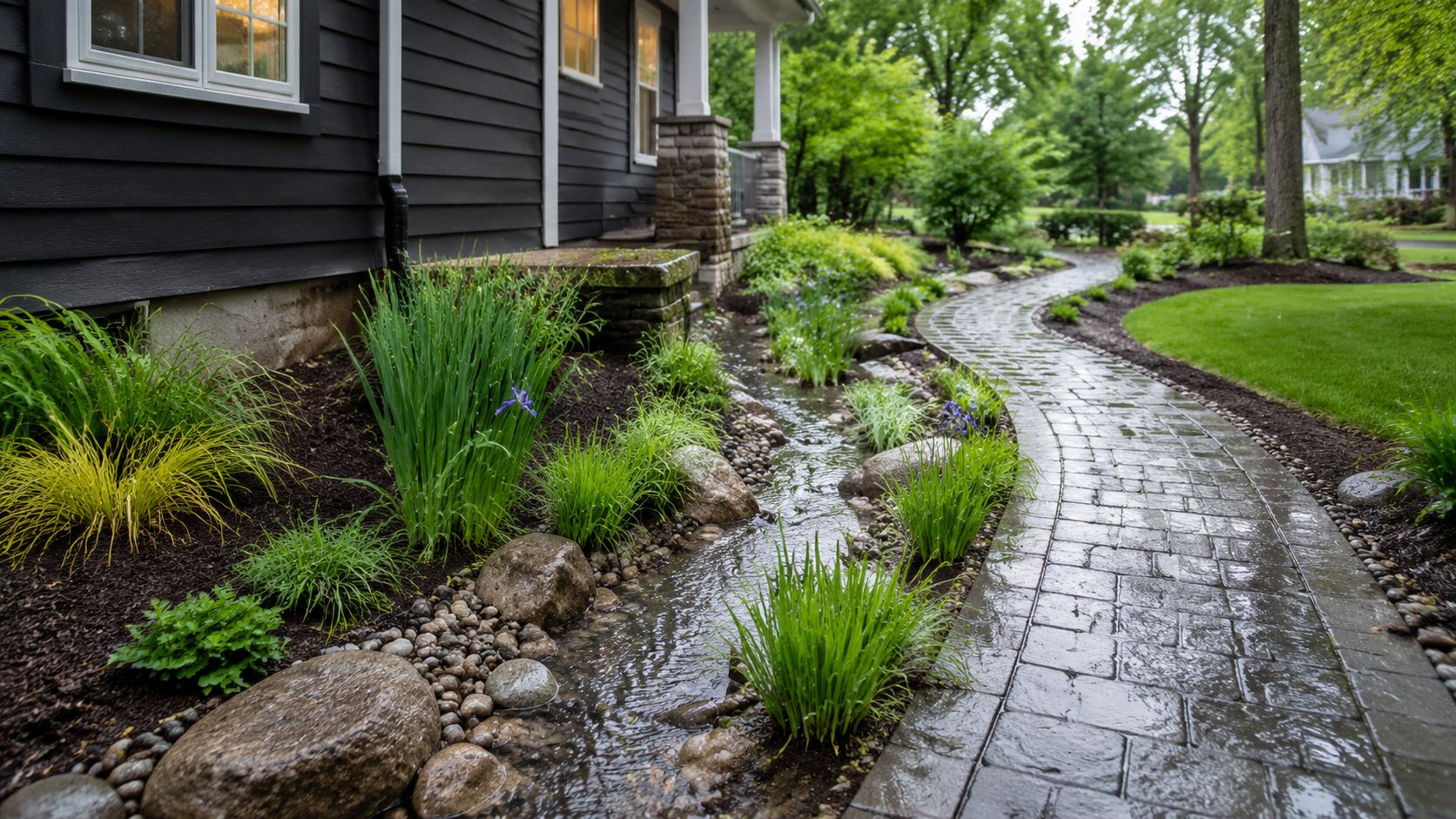
The best first step is to study the site during or right after rain. You need to see where water collects, where it exits, and where it stalls. From there, solutions might include swales, catch basins, French drains, dry creek beds, or regrading.
A few patterns show up repeatedly:
- Foundation pooling: Often needs grading correction and collection points, not just a drain pipe.
- Slope washout: Usually improves with terracing, root mass, stone control, and better flow direction.
- Patio edge flooding: Often ties back to hardscape pitch and outlet capacity.
For properties with visible washouts or unstable slopes, erosion control landscaping services are often the right starting point because erosion rarely stays cosmetic. It spreads into planting failure, muddy runoff, and structural wear around adjacent surfaces.
Well-designed drainage features can also look intentional. A dry creek bed, rain garden, or planted swale can solve a site problem and add character at the same time.
5. Synthetic Turf and Lawn Alternatives
Traditional lawn has its place, but not every square foot of a North Texas yard should be turf. Full-sun strips, pet runs, side yards, narrow backyard corridors, and shaded areas under heavy tree competition often become expensive problem zones instead of useful lawn.
That's why lawn alternatives have become more practical than ideological. In many cases, the question isn't whether grass is good or bad. It's where real grass makes sense and where it doesn't.
Use synthetic turf where function matters most
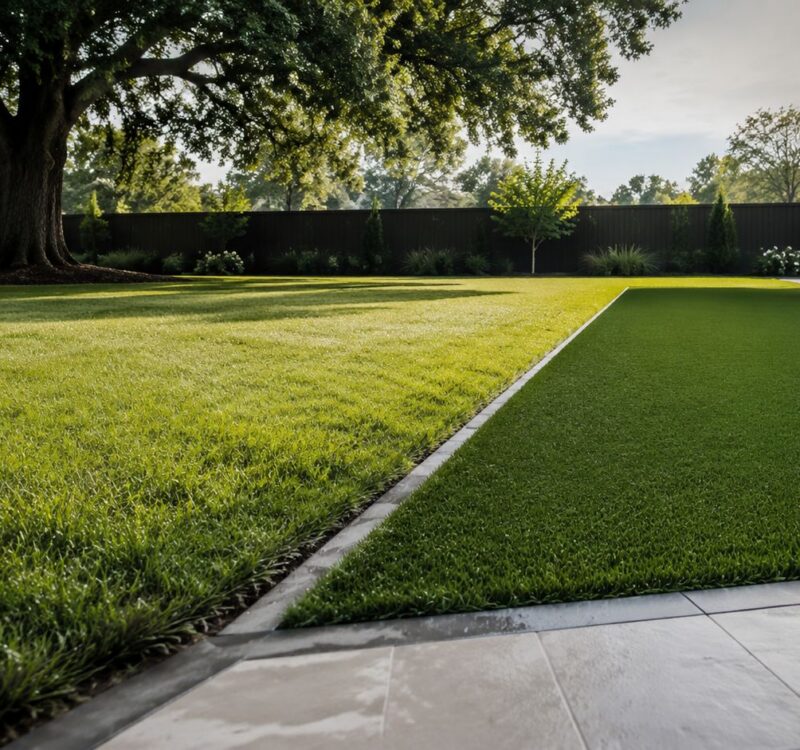
Synthetic turf works best in targeted areas. Think play zones, dog runs, small entertaining spaces, or visual green panels next to hardscape. Those are the places where homeowners usually want a clean surface, low mud, and year-round consistency.
Used well, synthetic turf can reduce maintenance headaches. Used poorly, it can make a yard feel flat, hot, and artificial. The difference is installation quality and how it's blended with the rest of the property.
Don't replace every living surface just because one part of the lawn performs badly. Fix the bad zone with the right material.
A balanced plan often includes synthetic turf near active spaces, native planting beds around the perimeter, and hardscape to break up the field effect. That combination usually looks better than wall-to-wall artificial grass.
Before installation, check these points:
- Base preparation: Poor compaction and drainage below the turf create failure faster than commonly anticipated.
- Heat exposure: Open full-sun areas need realistic discussion about surface warmth.
- Edge detailing: The seams and transitions around beds, walks, and curbs are what make turf look polished or cheap.
For homes with kids or pets, synthetic turf can be a smart tool. It just shouldn't be treated as a cure-all for the entire outdoor space.
6. Seasonal Color and Plant Health Care Programs
An outdoor space can have a strong design and still look tired for much of the year if no one manages plant health. In North Texas, shrubs can get stressed by heat, annual color can burn out early, and trees can decline gradually while the symptoms are easy to miss.
That's why seasonal care matters. The goal isn't constant replacement. The goal is to keep the framework healthy so the property always has some structure, color, and vigor.
Treat plant health as ongoing maintenance, not emergency repair
Many owners only call for help when plants already look rough. By then, the fix is often more expensive and slower than basic proactive care would've been.
A stronger program usually combines soil attention, mulch renewal, irrigation checks, pruning timing, and monitoring for common stress signals. In North Texas, even a good plant can struggle when it's planted too low, overwatered in clay, or left exposed after mulch breaks down.
A practical annual rhythm looks like this:
- Spring: Refresh beds, adjust irrigation, feed where appropriate, and replace winter losses.
- Summer: Watch for heat stress, coverage gaps, and moisture inconsistency.
- Fall: Install reliable seasonal color and prepare shrubs and perennials for cooler weather.
- Winter: Prune selectively, inspect structure, and plan replacements before spring demand rises.
The visual difference between a property with completed outdoor improvements and a consistently good-looking property usually comes from this layer of care. The planting design creates the framework. Ongoing plant health work keeps it presentable under weather pressure.
Good color rotation also depends on restraint. Fewer annual varieties in stronger groupings usually read cleaner than overly mixed seasonal beds.
7. Landscape Design and Master Planning for Properties
A lot of expensive outdoor renovation work underperforms because it was installed in the wrong order. The patio went in before drainage. The new shrubs were planted before irrigation was corrected. The front yard got upgraded while the backyard still had grading problems.
Master planning prevents that kind of waste.
North Texas has a large and active outdoor improvement market. The Texas outdoor design industry reached $894.8 million in 2026, after average annual growth of 3.4 percent from 2021 through 2026, with 3,080 businesses operating in the sector, according to IBISWorld's Texas industry data. That level of activity gives property owners plenty of options, but it also means many projects get sold as isolated upgrades instead of coordinated plans.
Phase the work so each step supports the next one
A good master plan accounts for use, budget, weather exposure, utilities, drainage, and maintenance tolerance. It also leaves room for phased installation. That matters because many homeowners don't need to rebuild the whole property at once. They need a clear sequence.
For example, a phased plan might start with drainage and irrigation corrections, move to hardscape and shade structures, then finish with planting beds and seasonal detail. That order protects the investment and reduces rework.
The underserved gap I see often is transition planning. Many homeowners want to convert parts of their lawn to a more native, resilient look, but they don't want the yard torn up all at once. Texas A&M AgriLife guidance on low-maintenance landscaping tips in Travis County supports lower-maintenance approaches, and that aligns with a phased “native conversion” model that starts small and stays functional.
That kind of planning is especially useful for families with pets, children, or active outdoor routines. They need improvement without losing the yard completely during the transition.
8. Pollinator Gardens and Ecological Landscape Design
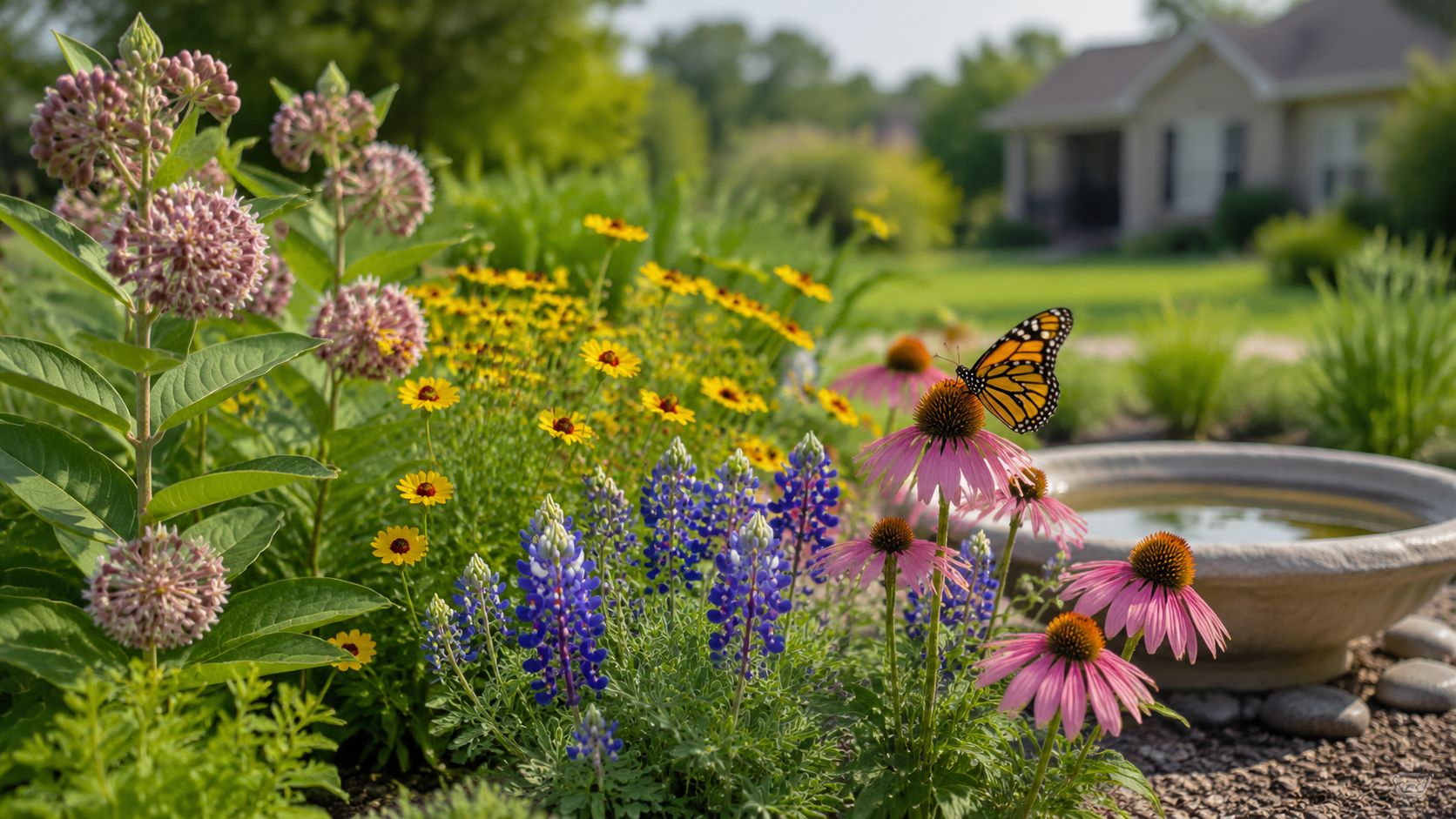
Pollinator gardens work best in North Texas when they're designed like real garden spaces, not loose seed mixes scattered into a corner. If the bed looks chaotic, gets weedy, or lacks structure in winter, many homeowners lose confidence before the garden matures.
A better ecological outdoor space pairs habitat value with strong layout. You can support pollinators and still keep the property crisp, legible, and easy to maintain.
Keep the habitat intentional
By 2025, Dallas-Fort Worth outdoor design trends had already shifted away from traditional lawns as homeowners rethought turf and created pollinator gardens and native planting spaces that support sustainability and water efficiency, according to Texas SmartScape's North Texas landscape trend guidance. That shift tracks with what many contractors see in the field. People want property designs that do more than sit there.
The strongest pollinator beds usually combine repeated plant masses, clear edges, mulch, and a bloom sequence that carries from spring into fall. They also include host plants, not just nectar plants.
A few design moves make a big difference:
- Repeat key plants: Large drifts are easier for pollinators to locate and easier for people to read visually.
- Use structural anchors: Native grasses, evergreen forms, or shrubs keep the bed from disappearing in the off-season.
- Control the edges: Stone, steel edging, or crisp mow lines make ecological beds look deliberate.
A pollinator garden should still look designed from the street, even when it's supporting a lot of life inside the bed.
For commercial properties, HOAs, and front yards in visible neighborhoods, that balance matters. The more intentional the layout, the easier it is to win support for ecological planting.
8-Point Comparison of North Texas Landscape Ideas
| Approach | Implementation complexity | Resource requirements | Expected outcomes | Ideal use cases | Key advantages |
|---|---|---|---|---|---|
| Native Texas Plant Palettes & Xeriscaping | Moderate, requires species expertise, soil prep and 12–18 month establishment | Low ongoing water and maintenance; moderate upfront irrigation and soil amendments; expert selection recommended | 50–75% water reduction; resilient, low‑maintenance landscape; pollinator support | Residential and commercial properties seeking water savings and ecological value | Significant water savings, low maintenance after establishment, rebate eligibility, wildlife support |
| Hardscape Integration & Outdoor Living Spaces | High, professional design and structural installation with drainage and material considerations | High upfront cost ($15k–$100k+), skilled contractors and durable materials; low plant labor long term | Defined outdoor living zones, increased property value, durable low‑maintenance areas | Luxury estates, entertainment yards, commercial gathering spaces | Customizable amenities, durability, reduces high‑traffic planting maintenance, strong ROI |
| Smart Irrigation Systems & Water Management | Moderate, irrigation audit, multi‑zone design, sensor/controller programming, winterization | Moderate upfront ($3k–$15k), controllers, sensors, and periodic maintenance | 20–50% water savings; improved plant health; measurable utility rebates | Any irrigated landscape needing water efficiency (residential, commercial, HOAs) | Automated optimization, remote monitoring, reduced overwatering and labor |
| Landscape Drainage Solutions & Stormwater Management | High, professional site assessment, grading, excavation and engineered systems | Variable (typically $2k–$25k+), heavy equipment, materials and ongoing inspections | Prevents foundation damage and pooling; reduces erosion and flood risk; stabilizes soil | Sites with pooling, clay soils, slopes or flood‑prone conditions | Protects structures, reduces repair costs, improves stormwater compliance and landscape stability |
| Synthetic Turf & Lawn Alternatives | Moderate, precise base preparation, drainage installation and professional laying | High initial cost ($8–$18/sq ft); low ongoing water/mowing; periodic infill replenishment | Year‑round green with no irrigation; low maintenance; potential heat absorption in summer | Play areas, pet runs, drought‑restricted lawns, commercial sites focused on water conservation | Eliminates watering and mowing, consistent appearance, allergy reduction, rebate eligibility |
| Seasonal Color & Plant Health Care Programs | Low–Moderate, recurring scheduled services, soil tests and seasonal installations | Recurring service fees, plant/material costs and regular labor for rotations and treatments | Sustained plant vigor, predictable seasonal color, reduced emergency replacements | Properties seeking curated year‑round appearance: estates, commercial sites, HOAs | Prevents decline, predictable costs, extends plant life and enhances curb appeal |
| Landscape Design & Master Planning for Properties | Moderate–High, comprehensive site analysis, iterative design and detailed construction documents | Upfront design fees ($500–$5,000+), coordination with contractors; phasing can spread costs | Cohesive long‑term plan, phased implementation, maximized property value and reduced risk | Large estates, multi‑phase renovations, clients wanting strategic, cohesive plans | Prevents piecemeal work, clarifies budget and scope, improves implementation fidelity |
| Pollinator Gardens & Ecological Landscape Design | Moderate, requires native species knowledge, habitat features and multi‑year establishment | Moderate planting and sourcing costs, low chemical inputs; initial maintenance for 2–3 years | Increased biodiversity, seasonal color and habitat value; supports migratory species | Conservation‑minded properties, schools, public spaces and migration‑corridor yards | Supports wildlife and pollinators, reduces pesticides, educational/community engagement and conservation recognition |
Ready to Create Your North Texas Oasis?
The best North Texas outdoor design concepts don't come from chasing trends one feature at a time. They come from solving site problems first, then building beauty on top of function. That usually means thinking beyond plant lists. Drainage, irrigation, grading, hardscape, shade, and plant selection all affect whether a yard thrives or becomes a repeating repair project.
North Texas makes that systems approach necessary. Summers punish shallow-rooted turf and poorly mulched beds. Clay soil exposes drainage mistakes. Sudden cold snaps damage plants that looked fine for months. The outdoor setting has to handle all of it without becoming high-maintenance in the process.
That's why the strongest results usually start with priorities. Maybe your immediate issue is standing water by the patio. Maybe it's a front lawn that burns out every year. Maybe it's an outdoor area you don't use because it's too hot, too muddy, or too exposed. Once that first problem is addressed properly, the next upgrade becomes easier to plan and more likely to last.
For many properties, phased work is the smartest route. Fix irrigation and drainage first. Add hardscape where foot traffic is already wearing the yard out. Replace weak lawn zones with native beds or turf alternatives where they make sense. Then finish with seasonal color, shade, and detail planting. That approach tends to protect the budget and improve the whole property more logically.
It also helps to work with a team that can connect all those pieces. Rosewood, a company specializing in grounds care services, serves the Dallas-Fort Worth area, with work spanning design, installation, irrigation, hardscaping, drainage, seasonal services, and plant health care. For homeowners, HOAs, and commercial properties, that kind of coordination can make a big difference when the goal is grounds that look good and perform well under North Texas conditions.
If you're ready to move from patchwork fixes to a complete plan, a site inspection is the right first step. Seeing the drainage patterns, sun exposure, plant stress, traffic routes, and structural opportunities on the ground usually reveals what should happen first and what can wait. That's how you turn ideas into an outdoor space that truly functions.
If you want a practical plan for your property, Rosewood Landscape Group can inspect the site, identify the biggest pressure points, and help map out design, drainage, irrigation, planting, and hardscape improvements for your North Texas outdoor space.
Related posts
8 Best Shrubs for North Texas Landscapes in 2026
Permeable Paver Installation: A DFW Homeowner’s Guide
Zoysia Grass Fungus: Identify, Treat & Prevent in 2026
How to Improve Soil Quality: Easy Ways to Improve Soil
Take All Root Rot: Diagnose & Treat Your Lawn