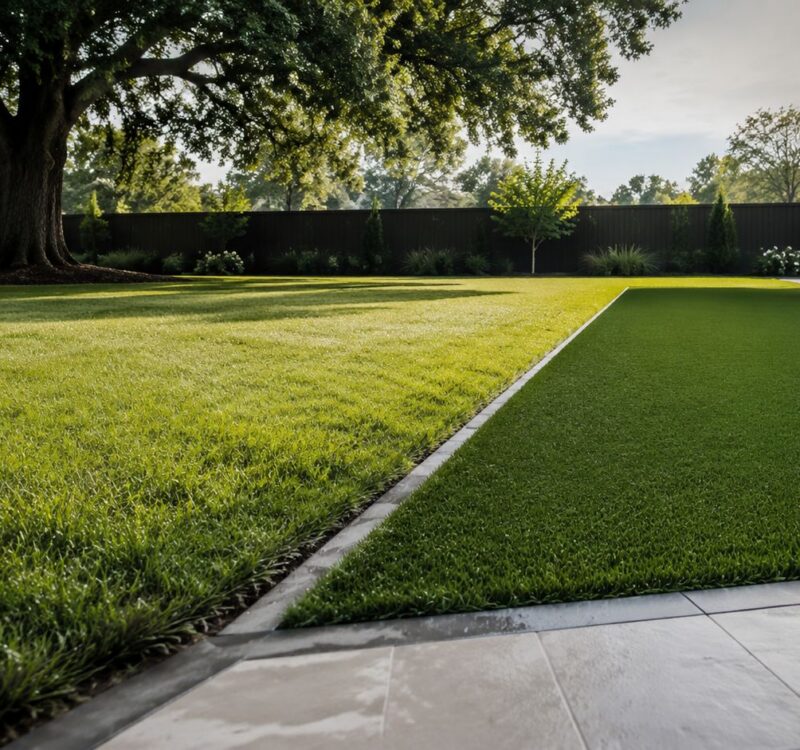
You're probably standing in the same place a lot of Dallas-Fort Worth homeowners start. You want a backyard kitchen that feels permanent, clean, and easy to use on a Friday night in October, not a project that looks tired after one brutal summer. That gap comes down to materials.
A good outdoor kitchen doesn't fail all at once. The problems show up in pieces. A countertop starts staining. Hardware develops rust bloom. A door goes out of alignment. A finish gets chalky in the sun. In North Texas, heat, UV exposure, wind-blown dust, storms, and humidity all work on the kitchen every day, even when nobody's cooking.
The right outdoor kitchen materials handle that abuse without asking for constant rescue. The wrong ones look fine in a showroom and then struggle outside. That's the difference that matters in DFW.
Designing a Kitchen That Thrives in the Texas Climate
Step onto a North Texas patio in late July at 5 p.m. The stone is still throwing heat, the grill area is hotter than the air, and every exposed surface has been baking for hours. That is the ultimate test for an outdoor kitchen in DFW. Materials that look good in a showroom often start failing fast in that setting.
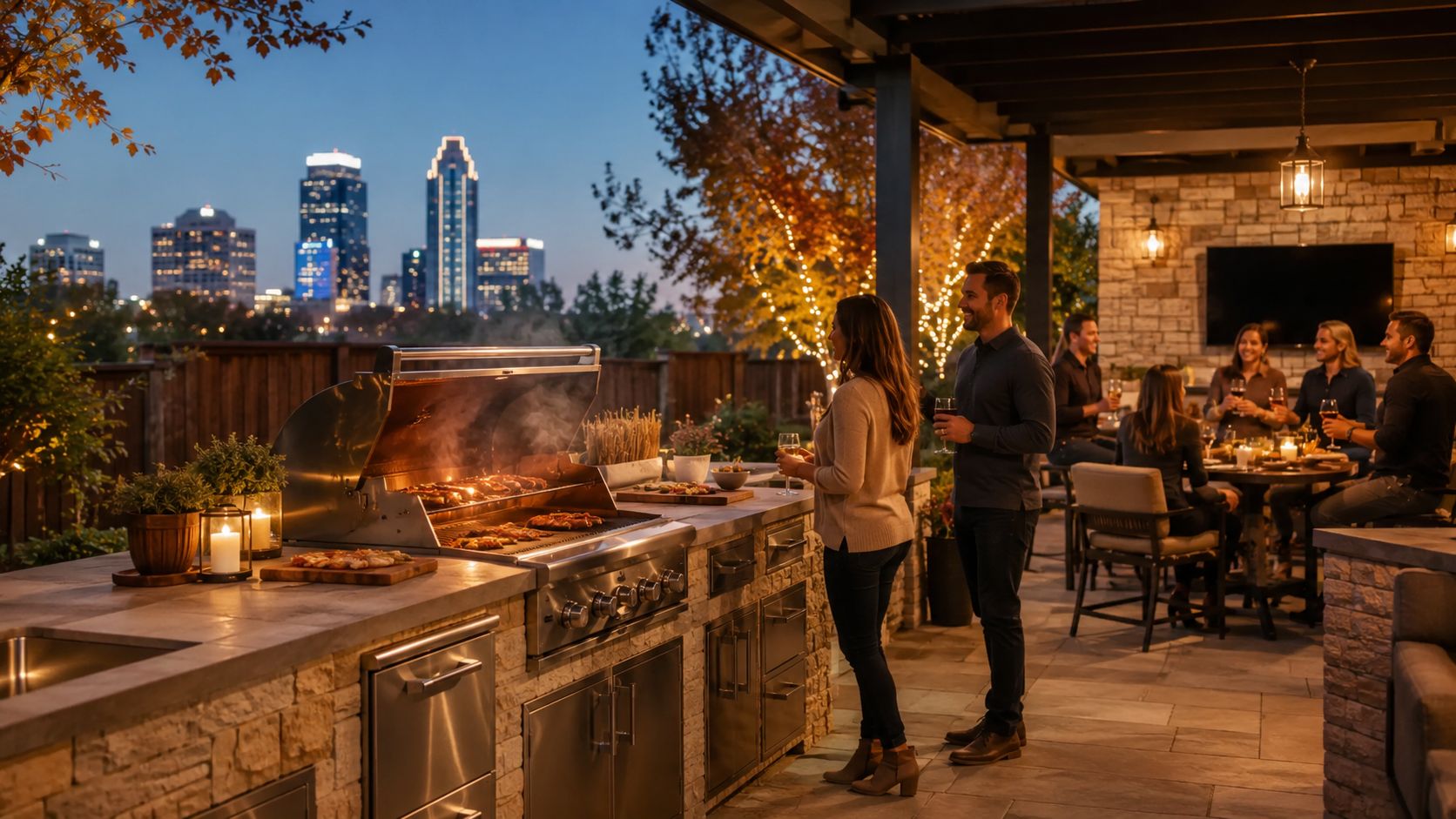
Homeowners often start with color, door style, or appliance brand. In this climate, those come after exposure, drainage, and heat load. I design these spaces to survive August first and look good second, because a beautiful kitchen that warps, fades, or traps moisture becomes an expensive repair project.
What DFW does to weak materials
North Texas puts materials through constant expansion, contraction, and UV punishment. Summer sun dries out finishes. Sudden storms force water into joints, fastener penetrations, and cabinet cavities. Humid stretches are followed by intense heat, which is exactly how cheaper finishes blister, low-grade metals corrode, and porous surfaces start showing stains that never fully come out.
The site matters as much as the material itself. A kitchen on the west side of the house takes a different beating than one under solid cover. Pool splash changes metal recommendations. Poor drainage shortens the life of everything near grade. If the project also includes irrigation updates, it helps to review how North Texas irrigation systems fit into a complete overall property plan, because overspray, runoff, and drainage mistakes age outdoor finishes faster.
Practical rule: In DFW, choose materials based on full sun, heat, water, and maintenance tolerance first. Appearance comes after that.
The filter that prevents expensive mistakes
Before any material makes the final cut, run it through four jobsite questions:
- Can it stay stable in direct sun for years: Some finishes fade, chalk, or grow brittle much faster than clients expect.
- Can it handle concentrated heat near grills and burners: Localized hot zones destroy weak adhesives, coatings, and substrates.
- Will it resist water, grease, and food stains: Outdoor use is messy, and porous surfaces create ongoing maintenance.
- Can one part be repaired without tearing apart the whole kitchen: Serviceability matters once the kitchen has weathered a few Texas seasons.
That approach saves money because it catches the hidden failures early. In DFW, the best material choice is usually the one that looks slightly less exciting on a sample board and performs better after five summers.
The Unseen Hero: Framing and Cabinetry Materials
By August in Dallas, the grill is hot before anyone turns it on. Add reflected heat off the patio, a few hard rain cycles, and constant UV, and the hidden parts of an outdoor kitchen start deciding how long the whole build will last. Framing and cabinetry carry that load. If they warp, corrode, or hold moisture, the finish materials on top of them follow.
Stainless steel needs a grade callout
“Stainless steel” is not a complete specification. In DFW, that missing detail causes a lot of avoidable failures.
304 stainless steel works well for many inland projects, especially when the kitchen has solid cover and good ventilation. It gives you a clean look, solid durability, and a price point that fits more builds. But 304 is not my first choice for every location.
316 stainless steel is the better spec for exposed hardware, sink areas, appliance trim, and any kitchen near a pool or spa. Chlorides from splash and chemical exposure speed up corrosion, and Texas humidity does the rest. The weak spots usually show up first at hinges, screws, drawer slides, and cut edges, not on the big flat panels clients notice in the showroom.
Ask for the grade on every component, not just the cabinet face.
Side-by-side trade-offs in DFW
Here's how the main cabinetry approaches usually perform on local projects.
| Cabinet material | Best use case | Main advantage | Main risk |
|---|---|---|---|
| 304 stainless steel | Covered or less exposed inland kitchens | Clean look, durable baseline | Corrosion shows sooner at hardware and seams in harsher conditions |
| 316 stainless steel | Poolside, humid, or premium long-term builds | Better resistance at the parts that usually fail first | Higher cost |
| Marine-grade polymer or HDPE | Low-maintenance cabinet systems | Won't rust, won't absorb moisture | Design options can feel more utilitarian |
| Masonry framing with finish cladding | Built-in custom hardscape kitchens | Stable, permanent, integrates well with patios and seat walls | Finish failure still happens if detailing and substrate choices are poor |
What I specify most often
A mixed-material approach usually makes the most sense here.
- Use 304 stainless where exposure is controlled: Covered cabinet bodies and less vulnerable panels often perform well with 304 in inland DFW settings.
- Use 316 at the failure points: Hinges, handles, fasteners, drawer slides, sink surrounds, and exposed trim benefit from the upgrade.
- Use HDPE for owners who want low upkeep: It handles moisture well and avoids rust problems entirely.
- Use masonry framing for fully built-in kitchens: It suits projects where the outdoor kitchen is part of the larger hardscape, but the cladding, substrate, and venting details still need to be right.
What fails first in Texas heat
The cabinet box is rarely the first problem. Hardware is.
Low-grade hinges start binding. Cheap powder-coated parts chip at the corners. Thin stainless panels can oil-can in heat. Poorly detailed seams hold water, and once corrosion starts, it stains nearby finishes and keeps spreading. I also see failure where installers mix metals carelessly. A good cabinet shell paired with weak screws or bargain drawer slides is still a weak system.
Wood-based cabinet boxes are another common mistake outdoors, even when they are sold as “weather resistant.” In full DFW exposure, repeated heat and humidity cycles swell panels, loosen fasteners, and break down finishes faster than clients expect.
Cabinetry is a structural decision disguised as a finish selection. Get the framing, hardware, and exposure rating right, and the kitchen has a chance to look good after five Texas summers. Get them wrong, and the repair list starts early.
Choosing the Best Outdoor Kitchen Countertops for DFW
By late August in Dallas-Fort Worth, an outdoor countertop can be taking full afternoon sun, radiant heat off the grill, grease splatter, drink spills, and a hard rain all in the same week. That is why countertop selection in North Texas is a performance decision first and a style decision second.
The short list that holds up outside
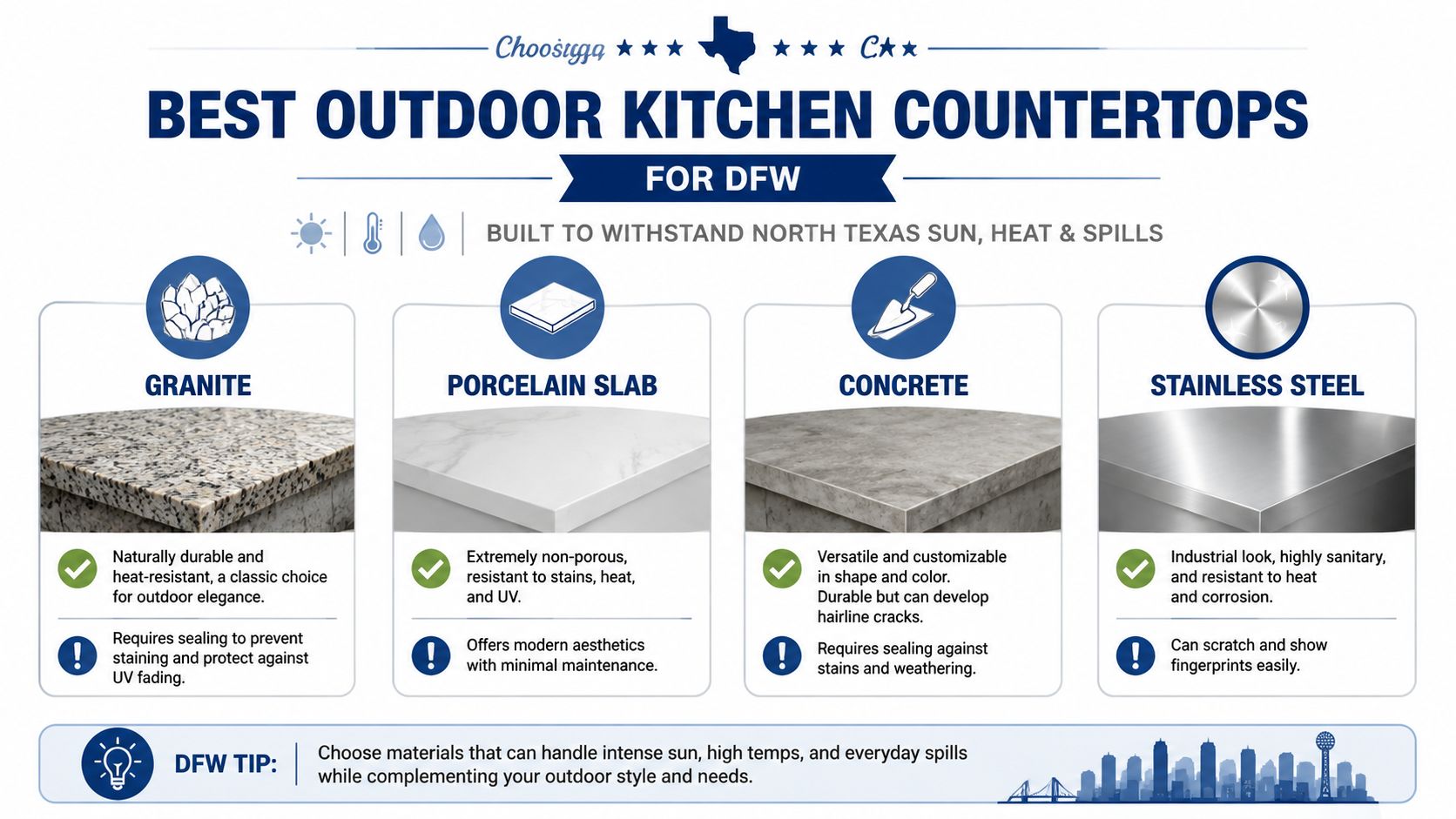
For long-term outdoor use in DFW, I put sintered stone and porcelain slabs at the top of the list. They handle UV exposure well, resist staining, and stay more stable through heat swings than many materials people still try to use outside. As noted in weatherproofing guidance for outdoor kitchen surfaces, these surfaces are among the best options for outdoor kitchens because they are non-porous, UV-stable, and thermally stable, with sintered stone offering extremely low water absorption.
That matters here. DFW kitchens do not just face normal outdoor wear. They deal with long periods of high heat, intense sun, sudden storms, humidity, and warm-cool cycling that exposes weak materials fast.
DFW Outdoor Countertop Material Comparison
| Material | UV Resistance | Heat Resistance | Stain Resistance | Maintenance Level |
|---|---|---|---|---|
| Sintered stone | Excellent | Excellent | Excellent | Low |
| Porcelain slab | Excellent | Excellent | Excellent | Low |
| Granite | Good, but depends on upkeep | Excellent | Good when sealed | Moderate |
| Concrete | Varies by mix and finish | Good | Fair to good with sealing | Moderate to high |
| Stainless steel | Excellent | Excellent | Good | Moderate |
What works, what needs care, and what I would skip
Quartz is an indoor material. I still see it specified outdoors because it looks good in a showroom and the color selection is broad. In full Texas sun, the resin binders are the problem. UV exposure can discolor the surface and weaken it over time, especially on west-facing kitchens with no shade.
Granite still earns its place. If a client wants natural stone, granite is usually the safest way to get it. The catch is maintenance. Some slabs are denser than others, some dark colors show residue more than owners expect, and every granite top outdoors needs sealing if you want better stain resistance and easier cleanup.
Concrete is a design choice with baggage. It can look great in the right project, especially on more contemporary builds, but it is not a low-maintenance option in this climate. Hairline cracking, surface etching, inconsistent coloration, and ongoing sealing are all common. I only recommend it for clients who like the look enough to accept the upkeep.
Stainless steel has a narrow but valid role. It makes sense in prep-heavy kitchens, commercial-style layouts, or covered spaces where the owner wants a crisp utilitarian finish. In full sun, though, it gets hot, shows fingerprints, and can feel harsh next to warmer hardscape materials.
Buy the countertop for the exposure it will get in July, not for how it looked in an indoor sample rack.
How I'd rank countertops in DFW
For most outdoor kitchens in the Metroplex, this is the order I trust:
- Sintered stone for the best mix of durability, stain resistance, and low upkeep.
- Porcelain slab for strong outdoor performance and a cleaner, more modern look.
- Granite for clients who want real stone and will keep up with sealing.
- Concrete for design-driven projects where maintenance and cracking risk are already understood.
- Stainless steel for selective use in modern or prep-focused zones.
Edges and installation details matter too. A great slab paired with poor overhang support, weak substrate work, or badly placed seams can still fail early.
In North Texas, the best countertop is the one that still looks right after repeated summers, not the one that wins on a showroom sample board.
Selecting Safe and Stylish Outdoor Kitchen Flooring
Flooring gets less attention than cabinets and countertops, but it controls how the whole kitchen feels underfoot. If the patio surface is slick after rain, hard to clean, or too hot to walk on, the space won't get used the way you planned.
Start with the barefoot test
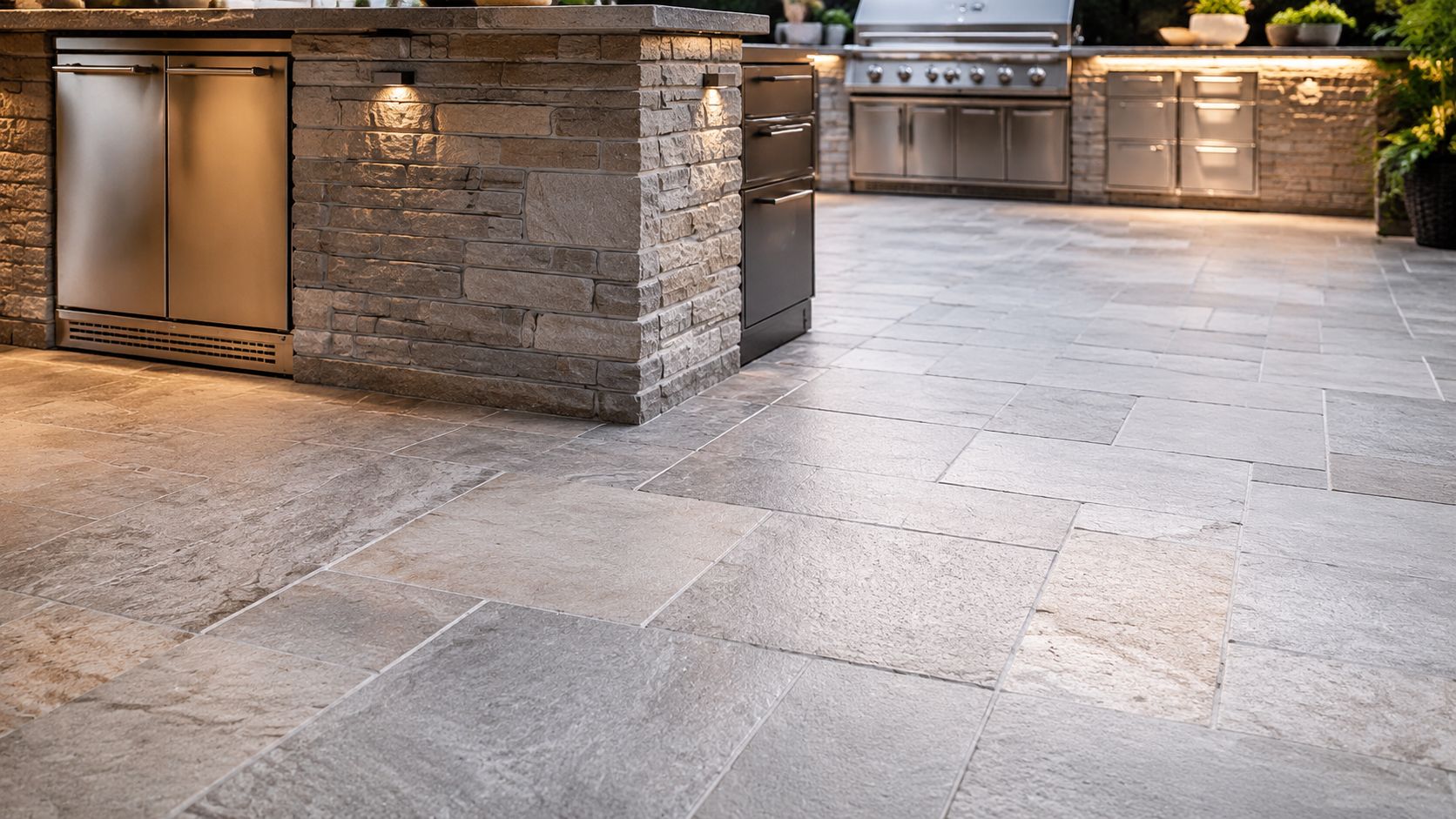
The first flooring question is simple. Can you comfortably cross it in July?
Dark surfaces absorb more heat. Dense materials with the wrong finish can get punishing in full sun. That doesn't mean dark paving is always wrong, but it does mean you need to think about shade, orientation, and how much direct afternoon exposure the space gets. A surface that looks dramatic in a sample board can become miserable on a west-facing patio.
Good flooring choices for DFW often include:
- Porcelain pavers: Strong option for low absorption, clean lines, and easier cleanup.
- Travertine: Popular because lighter tones tend to feel better underfoot and the material suits pool-adjacent spaces.
- Sealed concrete: Flexible from a design standpoint and often cost-effective, but finish quality and control joints matter.
Slip resistance matters more than people expect
Outdoor kitchens generate grease, water, and foot traffic. Add a nearby pool, a summer storm, or even sprinkler overspray, and a smooth floor can become hazardous.
Look for texture that gives real traction without turning the surface into a dirt trap. That balance is important. Too smooth and it gets slick. Too rough and it becomes annoying to clean.
A practical evaluation usually comes down to three questions:
- How does it behave when wet: Ask to see the finish in conditions closer to actual use.
- Will pollen and dust lodge in the texture: DFW yards get both.
- Can spilled grease be cleaned without permanent shadowing: Outdoor cooking always creates some mess.
A kitchen floor should support movement, not make people think about every step they take with a tray or hot pan.
Match flooring to use, not just style
Travertine works well in many entertainment-focused spaces because it softens the feel of a hardscape kitchen and often stays more comfortable than darker dense paving. Porcelain pavers fit homes aiming for a sharper, more architectural look. Sealed concrete can be excellent when the slab is properly detailed and the finish is chosen with heat and slip in mind.
The mistake is treating flooring as background. It isn't. It affects comfort, cleaning, and safety every single day.
Finishing Touches That Ensure Longevity
A solid cabinet system and a durable countertop can still be undermined by cheap finishing details. Most outdoor kitchen failures start at edges, penetrations, joints, and hardware. That's where water sits, rust starts, and maintenance gets annoying.
Hardware has to match the cabinet spec
If you remember one detail from this whole guide, make it this. Visible hardware should be marine-grade quality. Handles, hinges, latches, fasteners, and sink accessories live at the exact points people touch, clean, and inspect most often.
Even in otherwise decent kitchens, credibility can be lost. A door face may still look good while the screws stain around it. A nice sink base can be ruined by low-grade faucet hardware. The failure looks cosmetic at first, but it usually points to deeper shortcuts.
Backsplashes and vertical finishes
Backsplashes need the same common-sense filter as countertops. Outdoor-rated tile and well-detailed stone surfaces can work well. The right choice depends on how exposed the wall is, how easy it is to clean, and whether the grout and joints are suitable for an exterior environment.
Use backsplash materials that do two things well:
- Handle routine cleanup: Grease splatter and smoke residue shouldn't become permanent.
- Respect movement and weather exposure: Vertical surfaces still expand, contract, and get wet.
If the kitchen is tied into adjacent hardscape, details like edge transitions and terminations matter just as much as the face material. A messy edge cheapens the whole installation.
The sink, faucet, and small metal parts
Sinks and faucets sit in a high-use zone where water, soap, food acids, and weather all meet. That's why I prefer keeping the metal specification consistent. If the cabinet hardware is upgraded for outdoor exposure, the sink setup should be too.
One weak link can create headaches fast:
- Low-grade faucet bodies can pit or stain.
- Inferior drawer slides start binding.
- Cheap fasteners leave rust streaks on surrounding materials.
- Mixed-metal shortcuts age unevenly and look patched together.
For adjacent hardscape details, clean transitions also matter. If you're refining the edges around patios, kitchen pads, and planting beds, landscape edging options for DFW properties help lock the space together visually and practically.
Small metal parts decide whether an outdoor kitchen ages gracefully or starts looking neglected around the corners.
A simple way to review finish selections
When you review the spec sheet, don't stop at “cabinets” and “countertops.” Ask for the exact material and grade of:
- Hinges
- Drawer slides
- Pulls and knobs
- Sink basin
- Faucet body
- Mounting screws and exposed fasteners
That five-minute review prevents a lot of expensive disappointment.
Integrating Your Kitchen with a Cohesive Hardscape Design
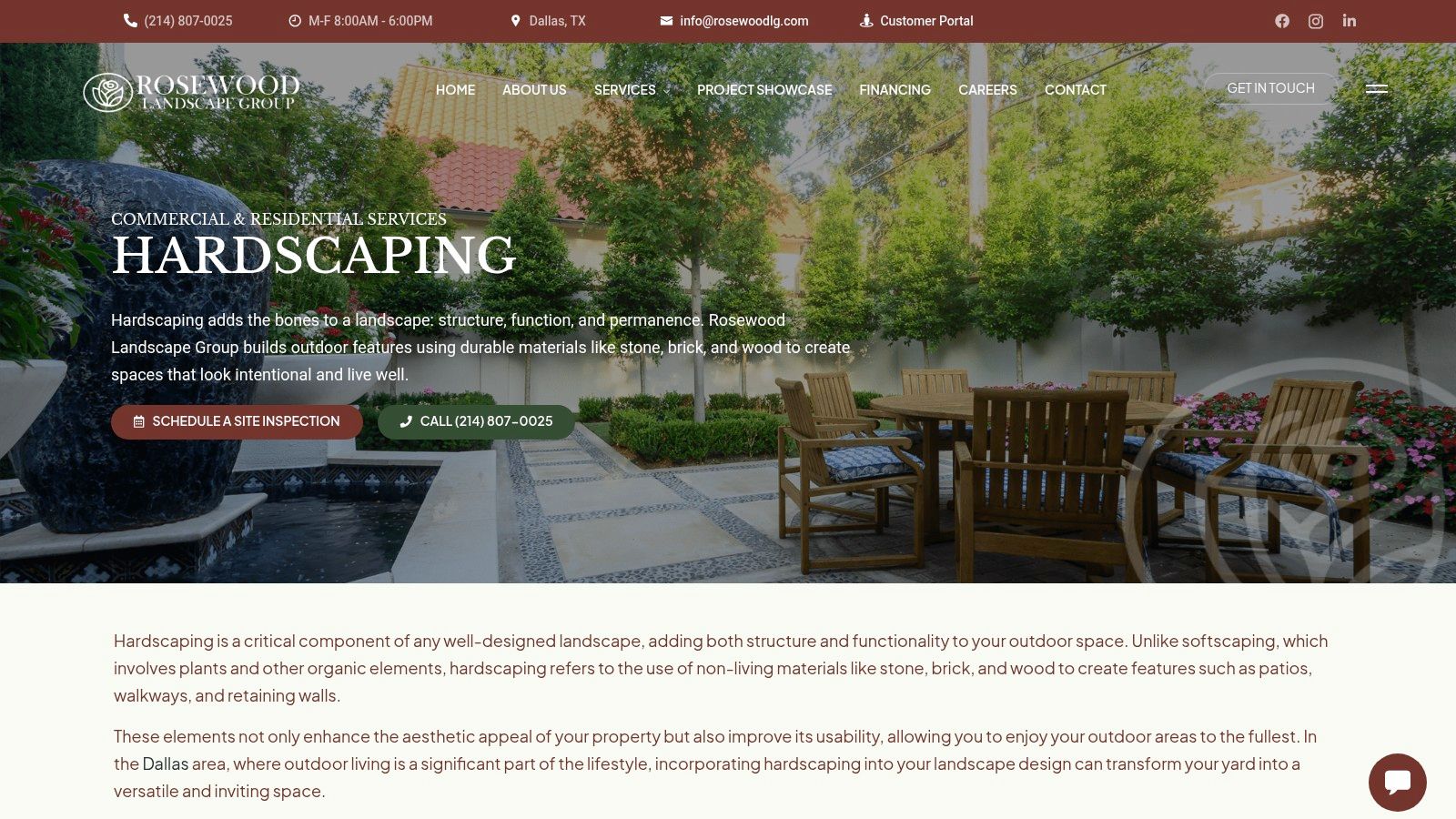
An outdoor kitchen shouldn't look dropped into the yard at the end of the project. The best ones feel anchored to the patio, the grade changes, the pool deck, the seat walls, and the architecture of the house.
Why disconnected kitchens feel wrong
A kitchen can use durable outdoor kitchen materials and still miss the mark if the surrounding hardscape doesn't support it. You notice it in circulation first. There's not enough landing space. The grill backs into a walkway. The floor material shifts abruptly. Seating feels like an afterthought.
Material harmony fixes a lot of that. A masonry kitchen that picks up tones from the home's brick or stone usually feels more permanent. A porcelain-clad kitchen can work beautifully too, especially when the patio paving, coping, and wall surfaces are coordinated instead of competing.
Two design directions that work
You don't have to match everything exactly. In fact, that can flatten the space. Usually one of these approaches works better:
- Complementary palette: The kitchen pulls from the patio and house materials, but uses a cleaner or more refined finish to stand apart.
- Intentional contrast: The kitchen becomes its own zone with distinct cabinetry or countertop choices, while still respecting the broader color family of the yard.
The second approach works especially well in larger backyards where the outdoor kitchen functions like a separate room.
Hardscape first, appliance second
The best planning sequence starts with the site. Sun exposure, wind direction, path of travel, drainage behavior, and seating zones all influence which materials make sense and where they should go. Appliance selection matters, but it shouldn't lead the design.
If you're planning the full space rather than just the island, it helps to review outdoor kitchen design plans for integrated hardscape layouts. The kitchen works better when the patio, shade, and circulation are solved at the same time.
The kitchen should feel like it belongs to the house and the yard, not like a premium grill station searching for a place to sit.
That's also where long-term value comes from. Cohesive design reads as intentional. Buyers and guests both notice the difference, even if they can't name exactly why it feels better.
Your DFW Outdoor Kitchen Material Questions Answered
Can you use wood in an outdoor kitchen in DFW
Yes, but only where it is protected and easy to maintain.
In North Texas, wood is usually the first material homeowners ask for and one of the first I try to limit. Summer heat, UV exposure, rain, and humidity cycles are hard on it. Boards dry out, finishes fade, and joints move. Wood can still make sense for a soffit, a ceiling detail, or a decorative panel under solid cover, but it is a poor choice for the main cabinet system or any exposed work surface.
If the goal is a kitchen that still looks sharp after several DFW summers, metal, masonry, porcelain, and sintered surfaces are the safer path.
What are the common cost tiers for material packages
Costs usually separate by material category more than by kitchen size alone.
An entry-level package often uses masonry construction, a simpler finish palette, and a more basic countertop. Mid-range projects step up in countertop quality, appliance integration, and finish precision. Premium kitchens climb fast once you add full stainless cabinetry, large-format slab work, specialty appliances, detailed lighting, and custom vent hoods or shade structures.
In real projects, the budget usually shifts fastest at three points. Cabinet construction, countertop material, and the amount of custom finish work. That is why two kitchens with a similar footprint can land in very different price ranges.
What's the most durable low-maintenance material combination
For long-term performance in DFW, I would specify:
- Cabinetry and exposed hardware: 316-grade stainless in the highest-exposure areas
- Countertops: sintered stone or porcelain slab
- Flooring: light-colored slip-resistant porcelain pavers, or dense stone selected for traction and heat performance
- Backsplash and trim: outdoor-rated finishes with tight, simple joint lines
- Fasteners and touch points: marine-grade components
That combination holds up well under intense sun, high surface temperatures, and regular cleaning. It also avoids the usual problem materials, such as porous tops that stain, dark flooring that gets too hot, or low-grade metals that start showing corrosion early.
If you're ready to build a kitchen that will last in North Texas, Rosewood can help you plan the materials, hardscape, and layout as one cohesive project. Our team designs and installs outdoor living spaces across DFW with a clear understanding of how local heat, sun, drainage, and daily use affect long-term performance.
Related posts
8 Best Shrubs for North Texas Landscapes in 2026
Permeable Paver Installation: A DFW Homeowner’s Guide
Zoysia Grass Fungus: Identify, Treat & Prevent in 2026
How to Improve Soil Quality: Easy Ways to Improve Soil
Take All Root Rot: Diagnose & Treat Your Lawn