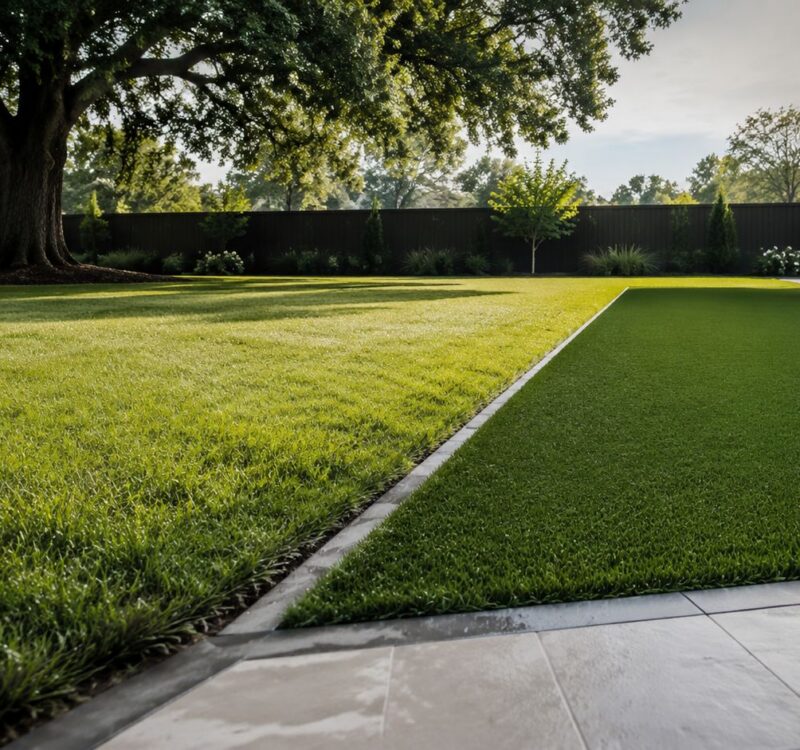
You clean up the beds, spread fresh mulch, edge the line with a shovel, and two weeks later the lawn is already creeping back in. After a hard North Texas storm, mulch washes onto the turf, the bed line goes soft, and the whole front yard starts looking less finished than it did on install day.
That's usually the point where homeowners realize edging isn't a cosmetic extra. It's the line that keeps an outdoor area organized, mowable, and easier to maintain. In Dallas-Fort Worth, that line has to deal with clay soil, punishing heat, irrigation, and sudden heavy rain. Some materials hold up. Some look good for one season and then start buckling, lifting, or breaking.
Defining Your Landscape with the Right Edging
A crisp bed line does more than tidy up a yard. It keeps mulch where you paid to put it, gives mowing a cleaner path, and makes the whole property read as maintained instead of patched together. In North Texas, that line also has to stay put through summer heat, shrinking clay, and the kind of rain that can move loose material in one storm.
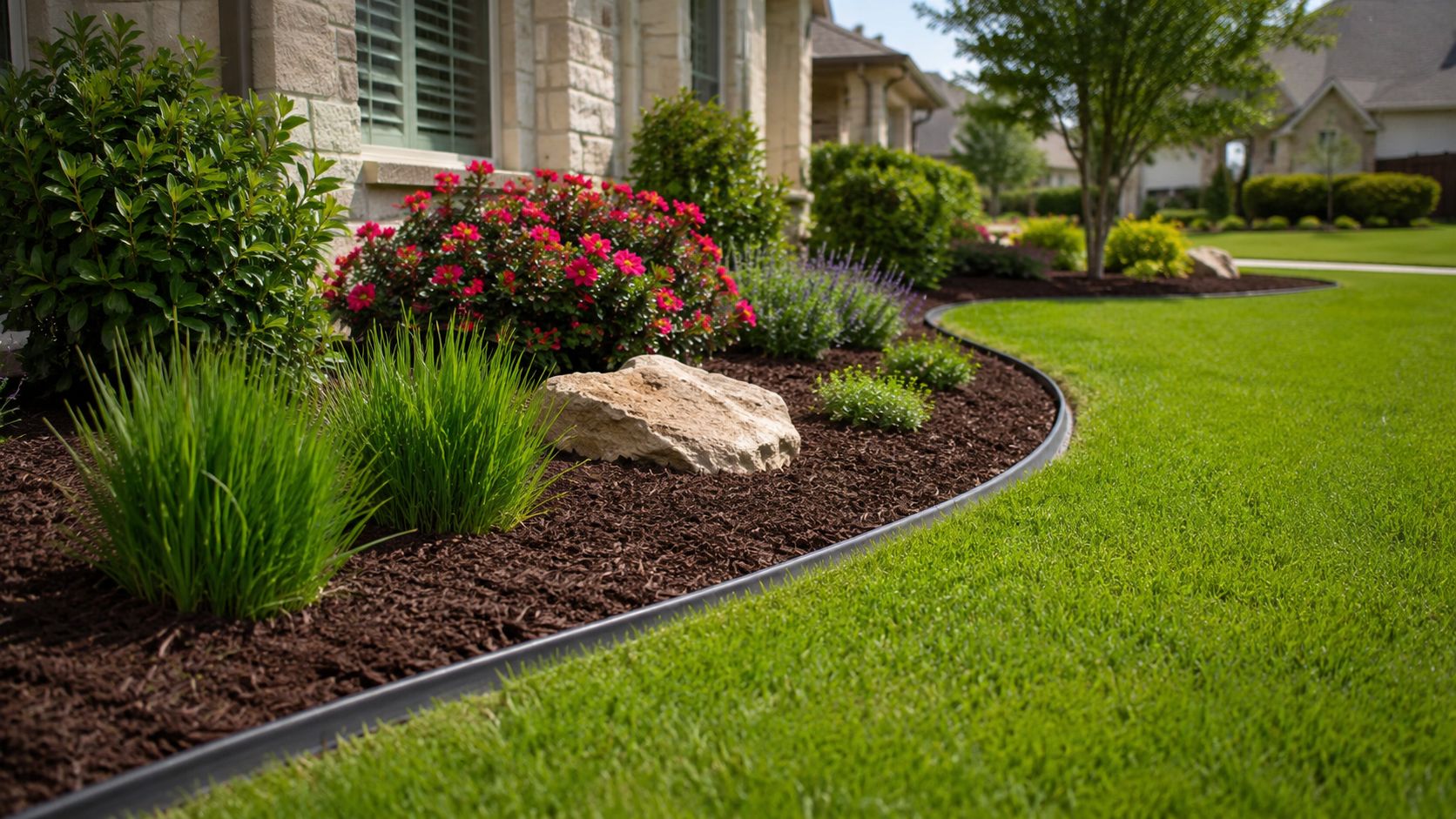
That climate matters more than many homeowners expect. In DFW, edging is not just a finish detail. It is a control point between turf, planting beds, gravel, and paving. If it flexes too much, shifts out of grade, or opens at the joints, bermuda and St. Augustine will find the gap, mulch will drift, and the bed line will start looking worn long before the plants do.
What edging is really doing
The visual role is obvious. The practical role is what saves maintenance time.
A good edge separates materials cleanly, slows grass creep into beds, and gives the mower and string trimmer a defined boundary. That last part gets overlooked. In real yards, edging fails as often from repeated equipment contact as from age alone. If the product cannot take normal maintenance without chipping, rolling, or pulling loose, it becomes one more thing that needs repair every season.
A messy edge makes even healthy plants look neglected. A clean edge makes an ordinary planting bed look designed.
Why generic advice falls short in DFW
Many big-box store guides and generic online tutorials show edging in loose topsoil or mild climates where the ground stays more stable. That is not what installers deal with across Dallas-Fort Worth. Here, heavy clay expands when wet, tightens up hard in drought, and puts pressure on anything shallow or weak. Add irrigation, mower traffic, and sudden runoff, and the wrong material starts showing problems fast.
That is why the best choice is not always the cheapest or the one that looks best in a product photo. Thin metal can give a sharp, low-profile line and usually performs well where a clean modern edge is the goal. Brick, stone, or concrete can make more sense where the border needs more visual weight or has to hold steady near walks, driveways, or grade changes. Plastic often looks fine on install day, then starts lifting, wavering, or turning brittle under Texas sun.
The right edging for this region has to do two jobs at once. It needs to look clean from the street and hold its line after a hot August, a week of rain, and a full season of mowing.
Core Criteria for Choosing Landscape Edging
A border that looks straight on install day can look rough by the end of one North Texas summer. Clay swells after heavy rain, bakes hard in drought, and pushes weak edging out of line. Choose based on site conditions first, then appearance.
Aesthetics and architectural fit
The edge should support the house and planting design, not pull attention from them. Thin metal suits cleaner architecture, simple bed lines, and yards where the planting shape does the visual work. Brick and stone add more presence and usually fit traditional homes, especially when they tie into existing masonry, walks, or patios. Timber gives a softer, more informal look, but it can also make a front bed feel bulky.
Restraint usually gives the better result.
If the yard already has strong texture from gravel, pots, retaining walls, or mixed plant material, a quiet edge keeps the design from looking busy. If the bed needs more structure, a heavier border can help define it. Projects that tie edging into paving, steps, or other hardscaping features usually look more intentional than edging chosen as a stand-alone product.
Durability and lifespan
Durability in DFW comes down to shape retention, stake hold, and resistance to routine abuse. Heat matters. So do mower wheels, string trimmers, irrigation overspray, runoff, and soil movement.
Rigid materials usually hold a cleaner line over time. Flexible products can work on curves, but in clay soil they are also more likely to creep, ripple, or heave if the installation is shallow or the stakes are light. That is why the smartest question is not "What is cheapest per foot?" It is "What will still look straight after storms, summer heat, and a full mowing season?"
High-visibility areas need stronger edging than back corners or utility zones. Along a front walk or driveway, minor movement stands out fast.
Installation and cost
Material price is only part of the cost. Labor, base preparation, trenching, anchoring, and future resets often decide whether a border stays affordable.
Some products go in quickly but need touch-ups every season. Others take more effort up front and save time later because they stay put. Curves, tree roots, tight access, and long sight lines also change the equation. A slightly crooked edge disappears in a side yard. Across the front of a home, it shows immediately.
Good installation matters as much as material choice. Straight lines need careful layout. Masonry edging needs proper base prep. Metal needs clean transitions and secure connections. Without that, even a stronger product can look sloppy within a year.
Maintenance reality
Maintenance is where weak choices show up.
Before choosing a material, check these four things:
- Equipment contact: If mower decks or trimmer line will hit the edge often, use a profile that can take repeated contact without bending, chipping, or pulling loose.
- Soil movement: Expansive clay puts pressure on shallow or lightly staked edging. Products that look fine in loose soil often shift here.
- Drainage and runoff: Low spots and downspout discharge can wash mulch, expose edging, or undermine sections after storms.
- Repair tolerance: If the goal is low upkeep, avoid anything that depends on frequent restaking, re-leveling, or section replacement.
The best choice is usually the one that still looks clean after ordinary maintenance, not the one that looks best on the shelf.
A Detailed Comparison of Edging Materials
A border can look straight on install day and still fail within a year. In North Texas, a true test comes after a hot summer, a few hard storms, and repeated mower contact. Material choice changes how often you reset sections, replace pieces, or live with a line that never looks clean again.
Here is a practical comparison of the edging materials homeowners ask about most.
| Material | Typical Cost (per linear ft) | Expected Lifespan | Installation Difficulty |
|---|---|---|---|
| Metal | Higher than basic plastic | Long-term, often suitable for permanent borders | Moderate to high |
| Stone or paver | Moderate to high | Long-term when base prep is done well | High |
| Brick | Moderate | Long-term with proper base and alignment | Moderate to high |
| Concrete | Moderate to high | Long-term permanent option | High |
| Plastic | Most economical | 3 to 5 years for standard plastic | Low to moderate |
| Timber | Moderate | Varies with wood type, moisture, and maintenance | Moderate |
| Benderboard | Moderate | Varies by product and site conditions | Moderate |
| Gravel | Low to moderate | Ongoing maintenance rather than a fixed lifespan | Moderate |
| Living edging | Low material cost, higher upkeep over time | Depends on pruning and plant health | Moderate |
Metal edging
Metal is one of the few options that usually performs the way people expect in DFW. It holds a crisp line, disappears visually, and works well in modern designs or anywhere the planting already carries enough texture and color.
The trade-off is installation accuracy. Cheap stakes, weak connections, or rushed curves show up fast. Steel has more rigidity. Aluminum resists corrosion better and is easier to form. For patios, paver work, and other permanent installs, metal often fits naturally with broader hardscaping services because it defines planting beds without competing with the masonry.
Stone and paver edging
Stone and paver edging brings more visual weight. That matters near entries, along walkways, and around homes that need a stronger architectural edge than metal can provide.
It also asks more from the installer. If the base is thin, soft, or uneven, pieces start to settle at different rates. In clay soil, that unevenness becomes obvious sooner than homeowners expect. Stone can last a long time, but only if the base, drainage, and alignment are handled correctly from the start.
Brick edging
Brick works well on homes where the exterior already uses brick and the border should feel tied to the house. It can be laid flat for a quieter look or stood up for a more defined edge.
I like brick where the style is traditional and the bed lines are not overly complex. I am more careful with it on long sweeping runs across expansive front yards, because small alignment errors accumulate and become visible. In North Texas clay, brick that is not set on a stable base tends to telegraph every bit of movement through uneven joints and wandering lines.
Concrete edging
Concrete curbing gives a continuous edge that handles mower traffic well and creates clear separation between turf and beds. It suits larger front yard beds, drive edges, and areas where the goal is permanence.
That permanence cuts both ways. If the bed shape needs to change later, concrete is the hardest option to revise. It also needs good layout and drainage planning before the pour. A clean install looks finished for years. A bad one is expensive to correct.
Plastic edging
Plastic is attractive for one reason. It is cheap and easy to install.
That convenience usually does not last long in DFW conditions. Heat makes standard plastic more prone to warping. Clay movement can push it upward or leave it wavy. Repeated trimmer and mower contact speeds up the decline. I only consider it for short-term use or low-priority areas where appearance is not critical.
Timber edging
Timber has a casual look that fits rustic or informal gardens. It is also approachable for homeowners who want a simple weekend project.
In North Texas front yards, it is rarely the strongest long-term choice. Wood can rot, split, twist, and shift, especially where irrigation keeps the soil damp or mulch stays piled against it. Even before it fails structurally, it often starts looking worn faster than metal, masonry, or concrete.
Benderboard
Benderboard helps create loose curves where a rigid material would fight the design. It is common around decomposed granite paths, gravel areas, and softer bed shapes.
Performance depends heavily on product quality. Better material can hold up reasonably well in the right setting. Lower-grade products tend to ripple, fade, or deform in strong sun. In clay soil, that loss of shape makes the border read as accidental instead of intentional.
Gravel edging
Gravel works better as a transition band than as a true edge. It can look sharp in dry-style planting, around modern architecture, or between paving and beds where a softer visual break is enough.
It does not stay neat on its own. Gravel migrates into turf, weeds root into it, and runoff can move it downhill. Without a solid restraint on the outside edge, it slowly loses definition.
Living edging
Living edging uses plant material to define the line instead of a hard border. It can be attractive, especially where a softer garden style is the goal and the planting plan is disciplined.
It also needs the most upkeep. Plants do not stop grass invasion well, and they do little to hold mulch in place during heavy rain. I use living borders as a visual layer, not as the only edge where clean separation matters.
Best Edging Options for the North Texas Climate
A bed edge can look perfectly straight in March and start heaving, separating, or washing out by the end of a North Texas summer. That is the true test here. Expansive clay swells after heavy rain, shrinks during heat, and keeps stressing any material that was chosen for price alone.
In DFW, the best performers are usually the ones with real rigidity and a clean installation. Flexible products have a narrow window where they make sense. They can work in low-visibility areas or short-term installs, but they rarely stay crisp for long in full sun, shifting soil, and hard runoff.
What holds up in DFW
For most properties in North Texas, three categories do the heavy lifting.
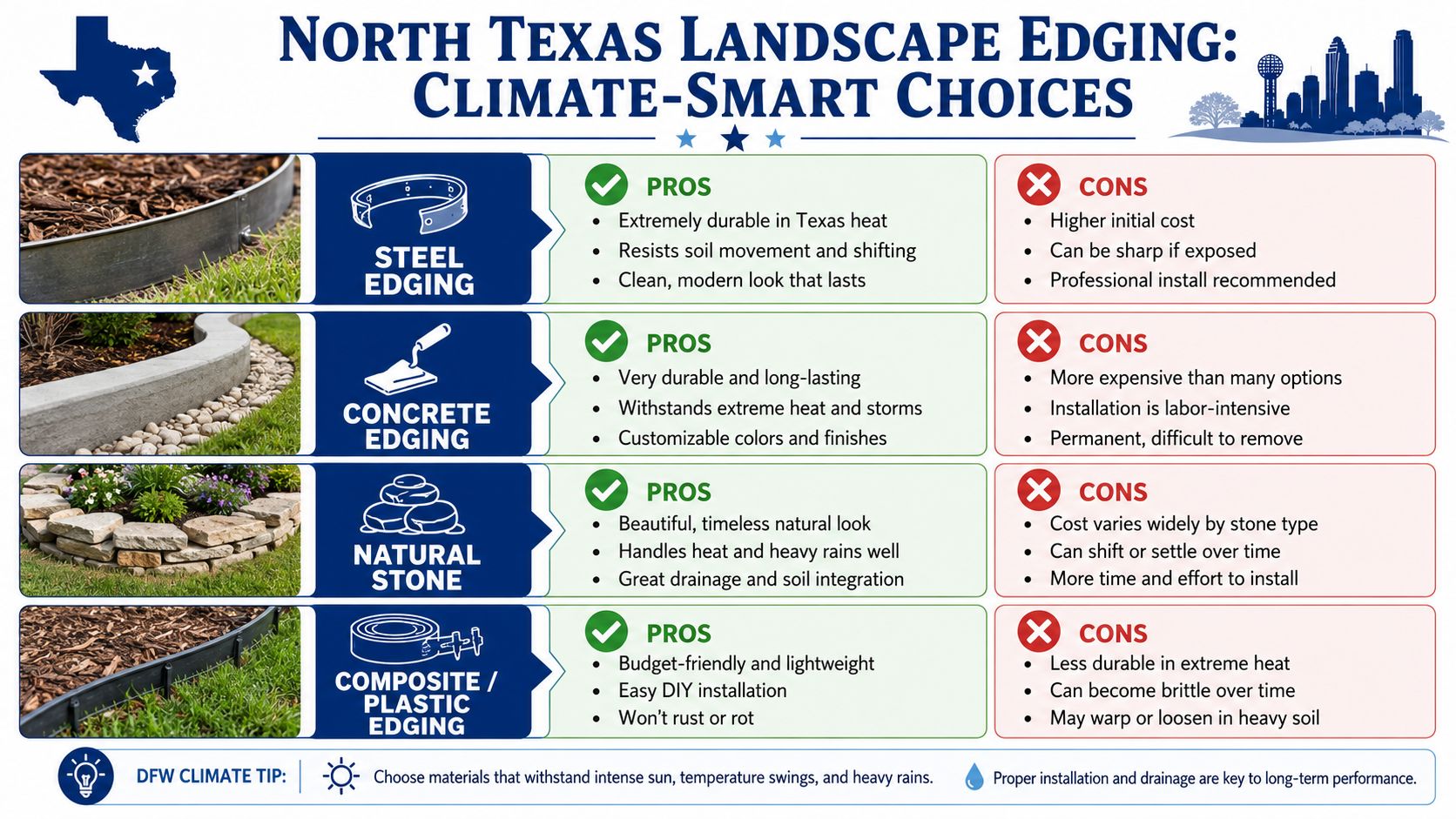
- Metal for clean lines: Steel or aluminum works well where you want definition without a bulky border. It handles straight runs and broad curves well, and it usually stays visually quiet even after planting fills in.
- Stone or paver for visible structure: These make more sense near entries, along walkways, and around homes that need stronger architectural presence. They also hold up well where the edge needs to read as part of the hardscape.
- Concrete for permanence: Concrete is a practical choice where mower contact is constant, bed lines need to stay fixed, or washout has been a recurring problem.
What usually starts failing first
Plastic is usually the first material I question for front-yard use in this region. In shaded, protected spots, it can get by. In exposed areas with long summer sun, clay movement, and maintenance traffic, it tends to lose shape, lift, or create a wavy line that makes the whole bed look tired.
Timber has its own limits. It can still fit the right design, especially in informal spaces, but irrigation overspray, trapped moisture, and soil contact shorten its useful life. In North Texas, that trade-off needs to be intentional, not accidental.
Drainage changes the result
The material is only half the decision. Water movement often determines whether the edge still looks sharp two years later.
A raised profile can help hold mulch on a mild slope. The same profile can also trap runoff at a low point and push water where you do not want it. On lots with drainage problems, edging should support the grade instead of fighting it. That is one reason drought-tolerant landscaping strategies for Dallas-Fort Worth homeowners matter here. Planting style, water use, and border design all affect how the site performs after a storm.
A clean edge that disrupts drainage is still a bad install.
The local recommendation
If you want the safest choice for most DFW homes, use a rigid material and install it to match the way the site drains. Metal usually gives the best balance of clean appearance and long-term performance on modern and transitional homes. Stone, brick, and concrete often feel more appropriate on traditional homes or areas with heavier hardscape.
The wrong choice is usually the one that ignores local conditions. North Texas punishes weak materials, loose installation, and any edge detail that does not respect clay soil, runoff, and maintenance traffic.
Design Tips for a Professional Finish
In North Texas, a border can look crisp on install day and sloppy by August if the line ignores heat, mowing traffic, and clay movement. The polished result usually comes from restraint. Fewer lines, cleaner curves, and materials that fit the house and the maintenance routine.
Use shape with intention
Start with the view from the street and the driveway. That is where bad geometry shows up first.
Formal homes look better with straight runs, broad arcs, and repeated angles that match the architecture. Softer curves work well around cottage-style planting beds or more natural settings, but they still need control. In the field, the lines that age best are simple enough to read at a glance and strong enough to survive small shifts in mulch, turf, and seasonal growth.
Tight little bends are a common mistake. In DFW clay, those fussy curves also tend to reveal movement faster because every slight heave or gap becomes visible.
Match the edge to the house and the maintenance plan
Good edging should fit the architecture, but it also has to fit how the property is cared for.
- Modern homes: Thin steel edging usually gives the cleanest result. It keeps the focus on plant massing and hard lines instead of calling attention to the border itself.
- Traditional brick homes: Brick, chopped stone, or concrete pavers usually feel more grounded and consistent with the house.
- Rustic or informal yards: Timber and natural stone can work, but only where the rest of the material palette supports that look and the owner accepts the upkeep.
I also look at who is maintaining the property. A high-profile stone edge can look great, but if it catches mower decks or forces constant string trimming, the finish does not stay professional for long.
Organize the yard in clear zones
Strong edging helps organize use, not just outline planting beds. It should make the yard easier to read and easier to maintain.
Separate turf from gravel. Define the edge where a patio meets planting. Give utility zones a cleaner boundary so they do not bleed into decorative areas. Those choices create order, and they keep materials from mixing after storms or irrigation cycles. If you want to see how that kind of planning gets handled from layout through installation, this step-by-step landscape build process for Dallas homeowners and businesses shows what happens before the finish details go in.
Small choices that improve the final look
A few field decisions make more difference than the material itself:
- Hide transitions carefully: If one edging type meets another, place that change at a corner, gate, path joint, or natural termination point.
- Leave mowing room: Set the line where crews can mow cleanly without scalping turf or beating up the border every week.
- Control reveal: Too much exposed edge looks bulky. Too little disappears under mulch, Bermuda runners, or washed-in soil after a storm.
- Repeat nearby materials: If the property already uses steel, brick, or stone in fences, paving, or retaining work, carry that language into the bed edges where it makes sense.
- Respect scale: Narrow front foundation beds usually need quieter edging than large side-yard or pool areas. Oversized borders can make a smaller yard feel crowded.
The best-looking finish usually feels obvious once it is built. That is the goal. Clean lines, logical transitions, and a border that still looks intentional after a North Texas summer.
DIY Installation vs Hiring a Professional Landscaper
A bed edge can look straight on install day and still fail by August. In North Texas, clay heaves, summer heat bakes exposed material, and heavy rain finds every weak spot in the layout.
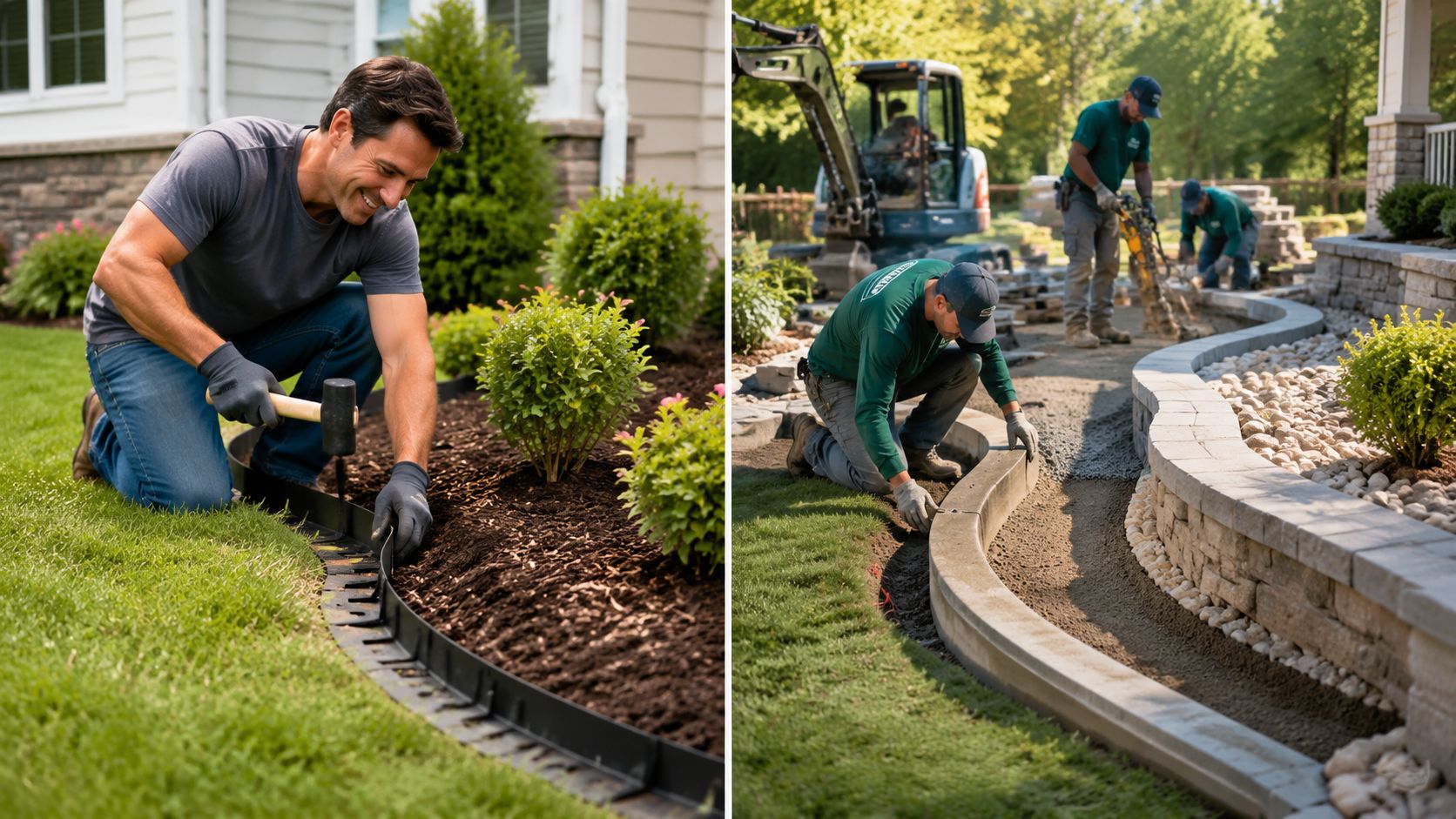
Good DIY candidates
Homeowners can handle simple jobs if the material is forgiving and the area is small. Basic plastic edging, light bender board, and short brick runs in flat beds usually fit that category.
The test is not whether the product is sold as easy to install. The test is whether you can hold a clean line, set a consistent height, and keep the edge from shifting after irrigation and storms. In DFW clay, a rushed install often looks fine for a few weeks, then starts to ripple, lean, or creep upward.
Where pros earn their keep
Steel, stone, and concrete are less forgiving. Long straight runs are also less forgiving. Every dip shows. Every bad joint shows. Every grade mistake shows once mulch washes, turf spreads, or runoff cuts under the edge.
Professional crews bring more than labor. They bring layout discipline, better cutting tools, compaction equipment, and field judgment. That matters on lots with slope changes, tight radiuses, existing irrigation, tree roots, or drainage flow that has to keep working after the border goes in.
The difference between a homeowner install and a professional one usually shows up after a full season of heat, rain, mowing, and irrigation.
The real trade-off
DIY saves labor cost up front. It also puts the correction work on you if the line wanders, the reveal ends up uneven, or the material settles out of position.
Hiring a crew makes more sense when:
- The material is expensive to fix: Stone, concrete, and premium metal cost more to remove and reset than to install correctly the first time.
- The site has drainage or grade issues: Water movement across clay soil needs to be handled correctly or the edge becomes part of the problem.
- The area is highly visible: Front entries, foundation beds, and walk approaches need tighter layout and cleaner transitions.
- The border connects to other site work: Irrigation, drainage, turf repair, and hardscape sequencing affect the final result.
For homeowners planning a larger outdoor project, this guide to how a professional landscape build process works for Dallas homeowners and businesses gives useful context on what gets coordinated before the finish work goes in.
Achieve a Flawless Finish with Rosewood Landscape Group
A border that looks clean in April can heave, lean, or wash out by August if it was the wrong choice for North Texas soil and weather. In DFW, a good finish depends on two things. The material has to suit the site, and the installation has to account for clay movement, hard rain, irrigation, and routine mowing.
That is where experienced field judgment matters. On one property, the right answer is a simple steel edge set to hold a crisp line through summer heat. On another, the smarter choice is a heavier border that can handle slope, runoff, and repeated storm wash without shifting out of grade.
Rosewood Group handles design, installation, drainage, irrigation, and hardscape work across Dallas-Fort Worth. That matters when the border is tied to bed shape, water movement, mower access, and the finished look of the property, not just a narrow strip of material at the edge.
If you want help sorting through edging options for your property, contact Rosewood Landscape Group for a site inspection and a practical recommendation based on your soil, drainage, architecture, and maintenance goals.
Related posts
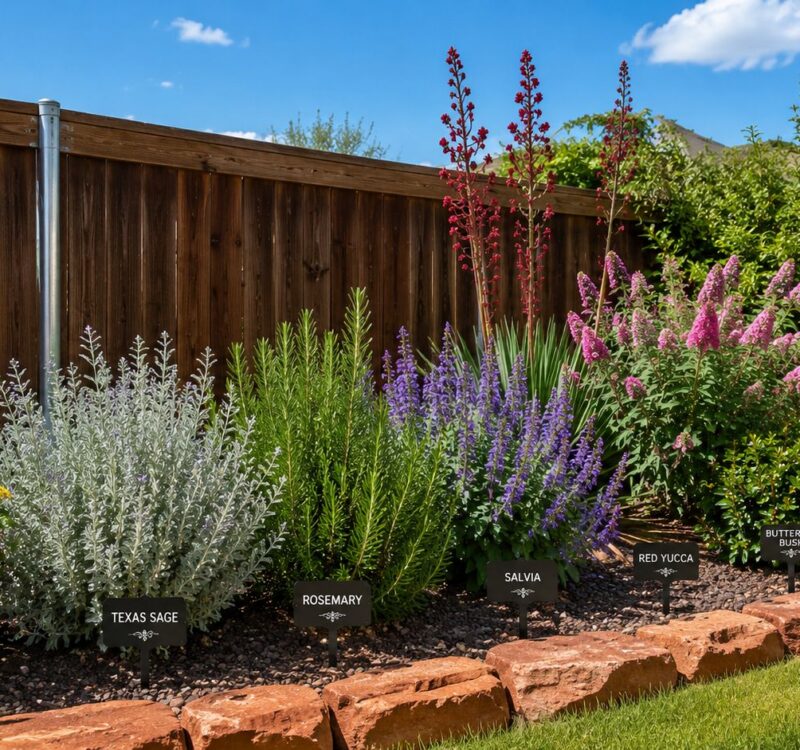
8 Best Shrubs for North Texas Landscapes in 2026
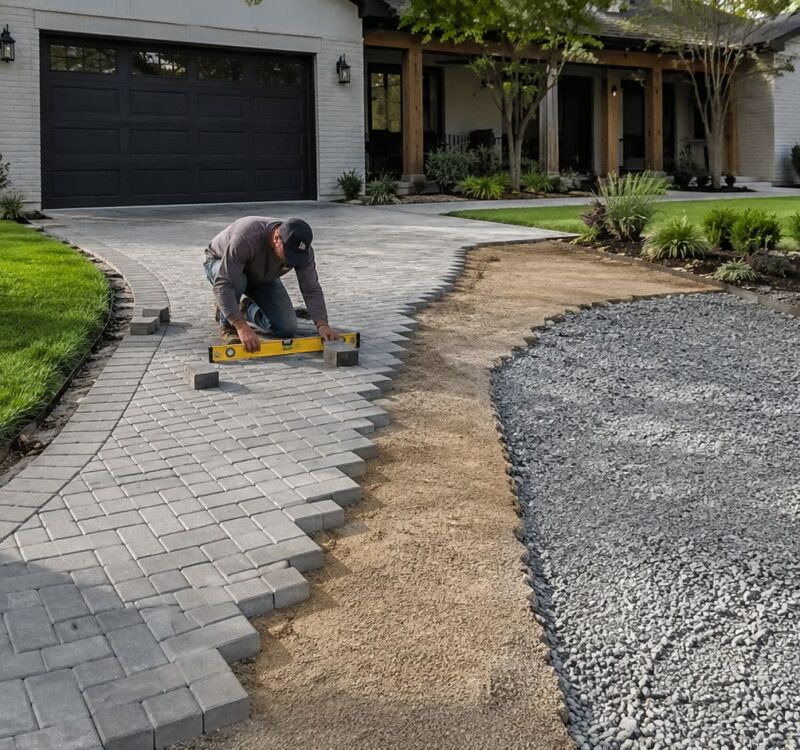
Permeable Paver Installation: A DFW Homeowner’s Guide
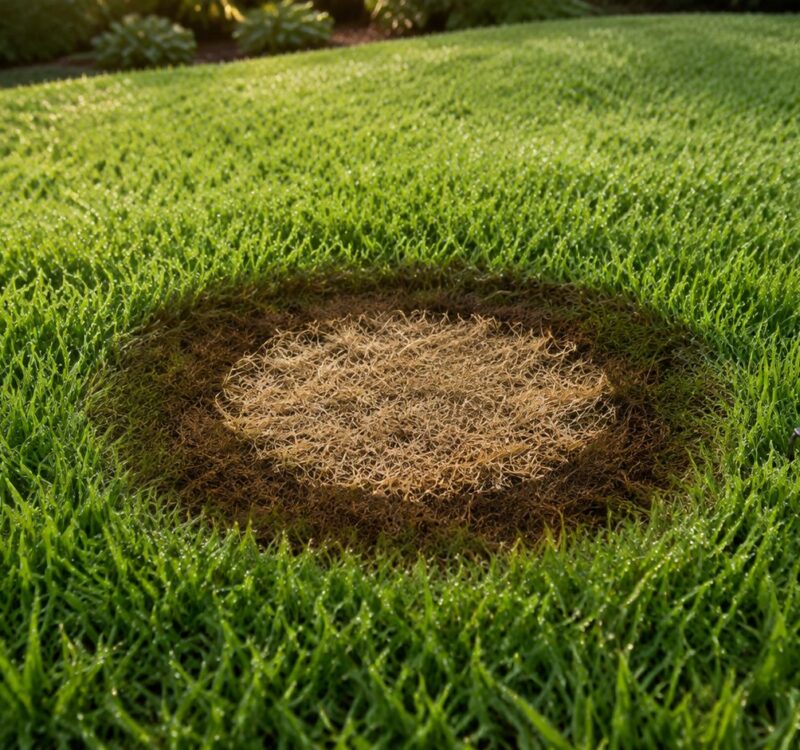
Zoysia Grass Fungus: Identify, Treat & Prevent in 2026
How to Improve Soil Quality: Easy Ways to Improve Soil
Take All Root Rot: Diagnose & Treat Your Lawn