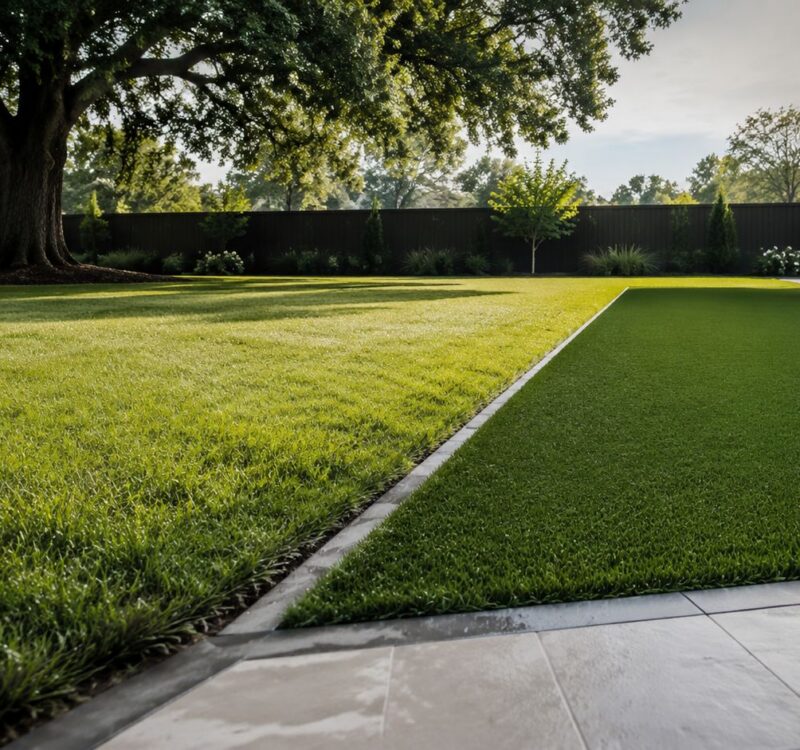
After dinner, the patio often calls louder than the living room. In Dallas, that invitation usually ends the moment the sun drops and the yard turns into a flat black backdrop. The grill is still warm, the stone terrace still holds the day's heat, and the planting you invested in disappears into shadow.
A single porch light doesn't solve that. It floods one zone, leaves the rest murky, and makes the grounds look accidental. Good outdoor lighting design does the opposite. It stretches the evening, shapes what the eye notices, and gives the property a sense of composition after dark.
That shift isn't niche anymore. The global landscape lighting market was estimated at USD 13.20 billion in 2024 and is projected to reach USD 22.01 billion by 2030, growing at a CAGR of 8.9%. Homeowners want outdoor spaces that feel finished, usable, and visually calm at night.
Beyond the Patio Light Your Outdoor Transformation
In North Texas, the best outdoor rooms have a second life after sunset. A pool deck can feel harsh in daylight and elegant at night. A modest front walk can gain a sense of arrival. A live oak that looks heavy in the afternoon can read like sculpture when lit correctly.
The mistake I see most often is treating lighting as a last-minute accessory. Someone adds a few path lights, maybe a flood on the back fence, and expects atmosphere. What they get is scattered brightness with no hierarchy. The eye doesn't know where to rest.
A thoughtful plan turns the property into a sequence. The drive feels welcoming. The entry feels clear. The patio feels inhabited. The garden beds become soft edges instead of dark voids. Even before anyone sits down outside, the house feels more complete.
For Dallas homeowners already thinking about how hardscape, planting, and outdoor living areas work together, the same design thinking applies after dark. The ideas in these Dallas landscape design tips for outdoor living carry further when light is part of the composition rather than an afterthought.
A well-lit landscape shouldn't look bright. It should look legible, comfortable, and intentional.
North Texas properties especially benefit from that restraint. Stone, stucco, steel edging, clipped hedges, ornamental grasses, and broad lawns all react differently to light. If every fixture shouts, the yard feels commercial. If each beam has a job, the scene feels effortless.
The Three Layers of Professional Lighting Design
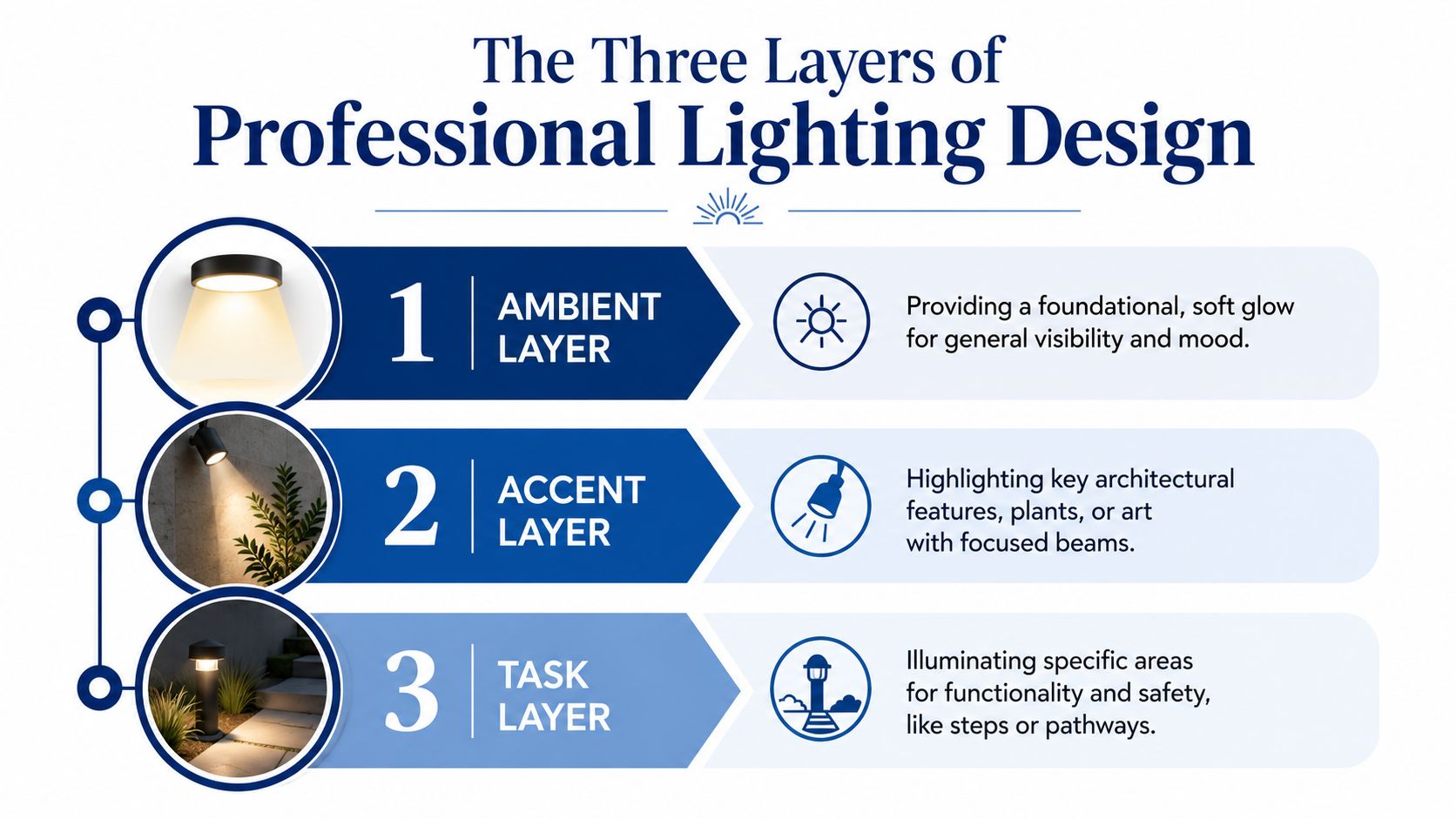
A strong lighting plan works like a painting built in glazes. The first layer establishes mood. The next gives structure. The last adds drama. Skip a layer and the result feels thin.
Ambient light shapes the mood
Ambient light is the background wash. It isn't meant to announce the fixture. It gives the yard a low, breathable glow so the space feels inhabited instead of abandoned.
On a Dallas patio, that might come from softly lit seat walls, subtle spill around planting beds, or a gentle downlight effect from a pergola. The point is comfort, not brightness. You want enough illumination for faces, furniture, and movement to register naturally.
Ambient light also helps with contrast control. If the only bright object is the back door, everyone moves toward it visually. A little surrounding glow keeps the scene balanced.
Task light handles safety and use
Task light is practical, but it still needs finesse. This layer covers walkways, steps, gate transitions, grill zones, and any spot where footing matters.
The professional difference is that task lighting guides movement without producing glare. People should notice the path, not the bulb. On stairs, that usually means a soft wash across the tread or riser instead of a beam in the eye.
Here's how the three layers differ in real use:
| Layer | Primary job | Best use |
|---|---|---|
| Ambient | Establishes overall mood | Patios, lawns, general garden glow |
| Task | Improves function and safety | Paths, steps, entries, cooking zones |
| Accent | Creates focus and drama | Trees, specimen plants, columns, stone walls |
Accent light gives the landscape memory
Accent lighting is what people remember the next day. It's the narrow beam on a beautiful trunk, the light catching limestone texture, the quiet emphasis on a fountain or sculpture. Used sparingly, it creates rhythm.
Used badly, it creates clutter.
A few rules keep accent lighting elegant:
- Choose focal points first. Start with the strongest tree, the entry composition, or a key architectural detail.
- Vary intensity. Not every object deserves equal emphasis. Depth comes from contrast.
- Leave darkness in the plan. Shadow gives light its shape. A fully illuminated yard has no mystery.
- Match beam to subject. Tight beams suit vertical trunks and columns. Broader washes suit layered planting and low stonework.
The most expensive mistake isn't underlighting. It's lighting everything the same way.
When these layers work together, the outdoor space stops looking pieced together. It feels composed.
Choosing Your Tools Fixtures and Bulbs
The fixture sets the character of the light. The lamp determines how that character reads on stone, foliage, and architecture. Get either one wrong, and even a well-planned design can feel harsh, flat, or dated within a season.
Match the fixture to the job
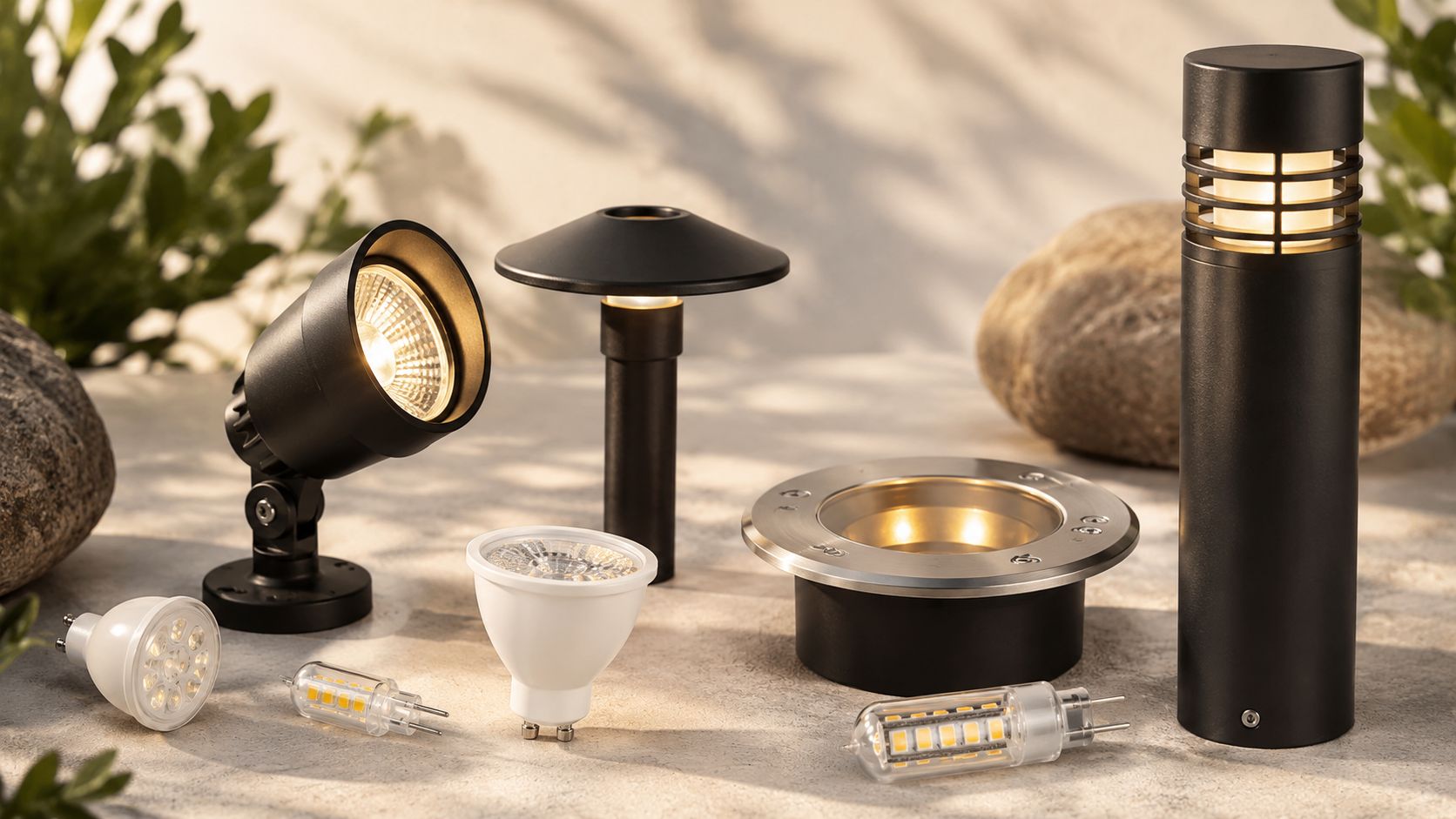
A good fixture choice starts with the subject, not the catalog page. The beam shape, shielding, finish, and mounting method all affect what the eye notices after dark.
A spotlight that gives a cedar elm presence will usually feel too sharp along a walk. A path light that handles circulation near the front entry may vanish in a deep shrub bed. Hardscape lights are useful where you want the source to disappear into stonework. Downlights mounted in trees or structures cast a gentler, more natural wash over patios and turf.
The main fixture families each solve a different problem:
- Spotlights and uplights for trees, columns, chimney masses, and other vertical features
- Wash lights for broader planting beds, façades, and low walls
- Path lights for walks, garden edges, and transitions
- Hardscape lights for steps, seat walls, and capstones
- Downlights for overhead illumination from canopies, arbors, and architectural structures
In Dallas, durability deserves the same attention as beam spread. Long summers bake finishes, irrigation leaves mineral residue on lenses, and our clay soils swell and shift enough to tilt cheap stakes out of alignment. I have seen budget fixtures look acceptable on day one, then cloud, wobble, or corrode long before the planting around them reaches its stride.
LED earns its place through control and service life
LED is the standard because it gives better control with less maintenance. Quality systems offer tighter beam options, steadier color, lower energy use, and less heat at the source than older lamp types.
That matters in a garden designed to mature over time. If a fixture needs constant relamping or the color drifts from one area to another, the whole composition starts to feel patchy. Good LED lamps and integrated fixtures hold the scene together and reduce service calls, which matters more in North Texas where heat shortens the life of inferior components.
Color and output determine whether the property looks natural
Two specifications carry most of the visual load. Color temperature sets the mood. Color Rendering Index affects how accurately materials and plants show their true color.
For most residential outdoor spaces, 2700K to 3000K is the right range. PacLights' outdoor lighting guidance notes that this warmer range supports a relaxed, natural look. Go cooler and limestone can turn gray, brick can lose warmth, and people tend to look washed out.
CRI matters just as much. A lamp with poor color rendering can make buff stone look lifeless and flatten the difference between deep green yaupon and the softer gray-green tones in Texas sage. A good lamp lets materials read the way they do at dusk, only clearer.
Output needs restraint. Dense evergreen masses such as wax myrtle or yaupon holly absorb light and often need a tighter, stronger beam. Fine-textured plants like muhly grass or Mexican feather grass respond better to a softer wash with fewer lumens. Too much output bleaches the planting and calls attention to the fixture. Too little leaves the composition muddy.
Professional selection delivers lasting value. The right fixture is not just attractive on install day. It stays aligned, ages well in Dallas weather, and gives you a system that can be serviced cleanly as trees grow, beds change, and the property matures.
Mastering Light Placement and Techniques
A Dallas yard can look balanced at dusk, then fall apart after dark because one fixture throws glare across the walk or a mesquite canopy is lit from the wrong side. Placement decides whether the night view feels composed or patched together.
Uplighting and downlighting create very different moods
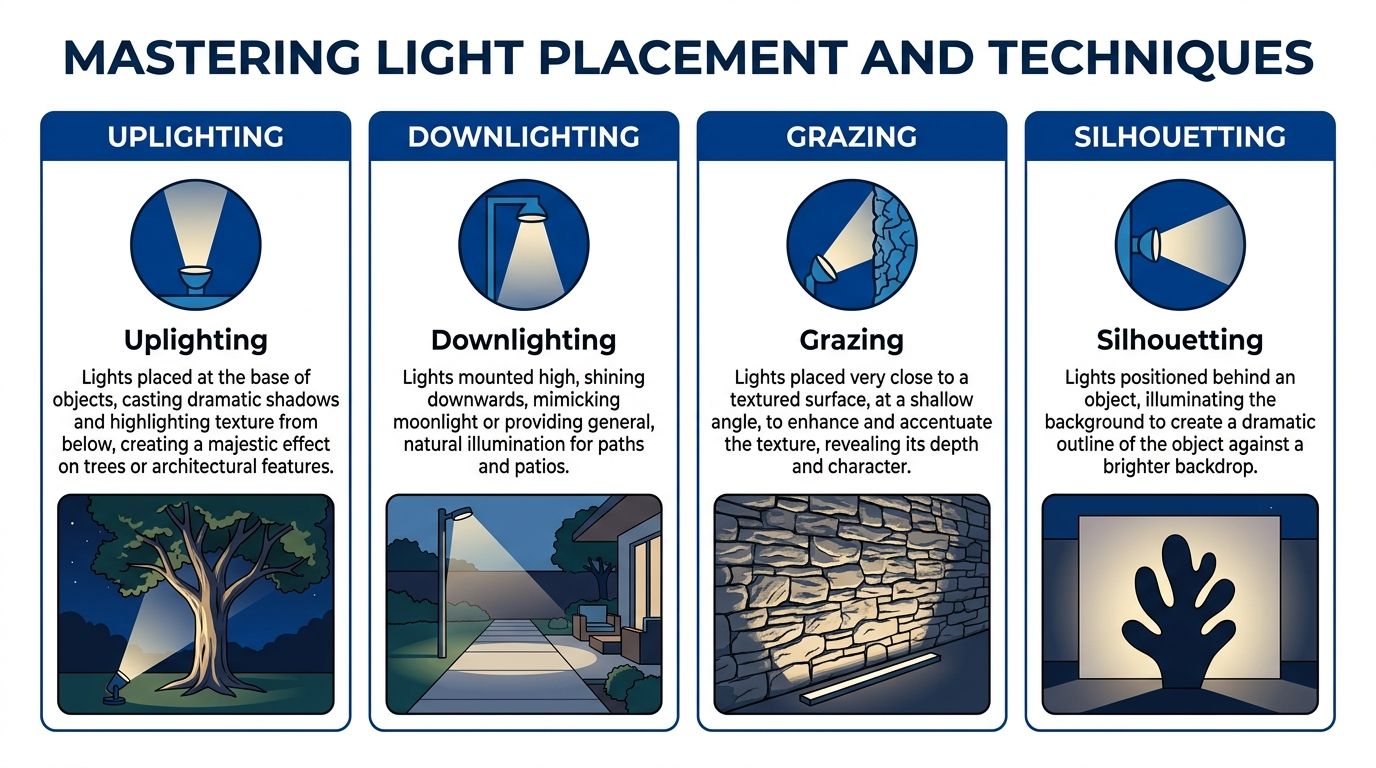
Uplighting starts near grade and pushes the eye upward. It suits trunks, entry columns, stone piers, and plant forms with strong branching. Used well, it gives an object weight and presence. Used carelessly, it creates hot spots and glare that read more like security lighting than design.
Downlighting comes from above, usually from a canopy, structure, or eave. It spreads light across paving and planting in a softer pattern that feels closer to natural moonlight. This approach often works better around seating areas because people see the space, not the source.
A simple rule helps here. Use uplighting when the subject itself should feel sculptural. Use downlighting when the ground plane and the experience of moving through the space matter more.
| Technique | Best for | Visual effect |
|---|---|---|
| Uplighting | Trunks, façades, specimen plants | Dramatic, sculptural, vertical emphasis |
| Downlighting | Patios, seating areas, open lawn, paths | Soft, natural, overhead glow |
Grazing and silhouetting reveal form
Grazing puts the fixture close to a textured surface and aims the beam along it at a shallow angle. On North Texas limestone, brick, or heavily jointed masonry, that raking light pulls out shadow lines the way side lighting reveals brushwork on a painting. A flat wall gains depth without adding visual clutter.
Silhouetting does the opposite. The background gets illuminated so the object in front reads as a dark shape. This works especially well with agaves, ponyfoot, sculptural shrubs, and small trees with clean branching.
Service access matters as much as visual effect.
A hidden fixture should still be reachable after a summer of growth, fresh mulch, and irrigation cycles. I have seen too many pretty installs turn into expensive maintenance jobs because the fixtures disappeared into overgrown liriope or got buried at the edge of a shifting bed.
Technical placement rules that prevent common failures
Good composition still depends on disciplined installation. Path lights should guide movement without creating a row of bright dots. In practice, that means moderate spacing, shielded light, and careful aiming so the beam lands on the walking surface instead of in someone's eyes.
Transformer capacity needs the same restraint. Leave room for voltage drop and future additions. A system pushed to its limit on day one rarely ages well, especially on larger properties where cable runs are long.
Several field rules save a lot of trouble later:
- Bury cable at a proper depth. Shallow wire gets exposed during edging, replanting, and erosion after heavy rain.
- Use wet-location connections and protect them from irrigation. In Dallas clay, water can sit where you do not expect it, then bake hard when the heat returns.
- Add glare control near eye level. Louvers, baffles, and shields make a visible difference along entries, pool decks, and reflective paving.
- Give tree-mounted fixtures space. Trees grow, bark shifts, and hardware that is cinched too tightly can damage the tree and distort the aiming point over time.
North Texas placement takes extra discipline
DFW conditions punish careless work. Expansive clay soil heaves and cracks. Heat hardens wire jackets and dries beds so thoroughly that a fixture set perfectly in spring can tilt by August. Fast-growing plant material can swallow a low-mounted accent light in one season.
That is why placement has to account for the yard you will have later, not just the one photographed after installation. Set fixtures where they can be adjusted. Keep them clear of aggressive root flare and irrigation overspray. Anticipate how hollies, ornamental grasses, and perennials will fill in.
The best night lighting ages gracefully. It still looks intentional after a drought, a wet fall, and a few years of growth.
Smart Controls and Energy Efficiency
A well-designed outdoor lighting system should change with the evening. The lighting at 6:30, when family members are coming home and guests are finding the front walk, should feel different from the lighting at 10:00, when the pool terrace settles down and the yard becomes background rather than stage.
That flexibility starts with control strategy, not gadgets.
Controls turn a fixed install into a flexible environment
Zoning does the heavy lifting. Separate the front entry, paths, entertaining areas, architectural accents, and key trees, and the property becomes easier to live with. You can keep the arrival sequence bright enough for safety, lower the terrace to a warmer, quieter level after dinner, and leave only a few focal points on overnight.
Astronomical timers are reliable because they adjust with the season. In North Texas, that matters. Summer evenings stretch long, and winter darkness arrives early. A timer that follows sunset keeps the system consistent without constant reprogramming.
Dimming matters just as much. Homeowners often ask for more light than the space really needs, especially before they see the system at night. Once eyes adapt, lower levels usually look richer and more expensive. Surfaces hold texture, stone reads more naturally, and glare stays under control.
App control has value when it is tied to a clear plan. The best use is not novelty. It is fine-tuning. Good controls let the lighting support how the property is used, especially in homes shaped by Dallas outdoor living trends for 2026, where kitchens, pools, lounges, and front entries all need different scenes.
Efficiency works best when it supports design
Energy efficiency starts with restraint. Fewer well-placed fixtures, properly aimed and dimmed, usually produce a better result than a yard crowded with inexpensive units pushing light in every direction.
That matters for long-term service too. In Dallas heat, cheap drivers and bargain lamps tend to show their weaknesses faster. Controls help reduce run time, but fixture quality still determines how gracefully the system ages through long summers, irrigation exposure, and dust.
I also prefer control systems that can be adjusted without turning routine maintenance into a scavenger hunt. If a mature holly blocks a beam two years from now, or a homeowner wants a quieter front elevation after repainting the house, the system should be easy to revise. Serviceability is part of efficiency. Time spent chasing buried problems or replacing failed components is waste, even if the wattage looks good on paper.
Good controls do not rescue weak design. They let a strong design stay useful, comfortable, and beautiful over time.
Budgeting Safety and DFW Considerations
A Dallas homeowner usually sees the same thing at first. A patio glows, the front walk is readable, and the yard looks finished for a season or two. Then August heat cooks a few cheap drivers, clay movement tugs at buried connections, and a fixture near the beds disappears behind one year of growth. Budgeting for outdoor lighting starts there. The key question is not what it costs to install. It is what it costs to keep attractive, safe, and serviceable on North Texas ground.
What pushes a project into the premium range
Price follows coordination as much as fixtures. Ventures Design reports that 70% of premium landscape lighting systems exceed $25,000 due to complexities like embedding PVC sleeves in hardscapes during construction, while smart automation demand has increased by 35% and can add $8,000 to $15,000 to base costs.
That pattern fits high-end residential work. Masonry columns, recessed step lights, seat walls, custom paving, and pool edges all ask for planning before the stone is set and the concrete is poured. Retrofitting later often means more labor, more visible compromise, and fewer good fixture positions.
Homeowners investing in Dallas outdoor living trends for 2026 are often building several evening zones at once. An entry sequence, dining terrace, pool deck, and garden room may each need different light levels and different concealment methods. That increases cost, but it also protects the result from looking pieced together.
A lower budget can still produce beautiful work. The design just has to be disciplined. I would rather light fewer features well, with room for future expansion, than scatter inexpensive fixtures across the property and spend the next three years correcting glare, failures, and awkward wiring routes.
Safety starts with the right system
For residential properties, 12V low-voltage systems are typically the right foundation. They are better suited to wet conditions around irrigation, pets, children, and storms, and they allow more flexibility in fixture placement without treating the yard like a commercial electrical site.
A few priorities matter on every project:
- Use low-voltage architecture for the main lighting system. It fits residential use and simplifies safe distribution across planting beds, paths, and gathering areas.
- Choose components rated for water and weather exposure. Beds, turf edges, and hardscape joints all see irrigation, rain, and humidity.
- Keep splice points and drivers accessible. Hidden equipment should still be reachable without cutting into stone or excavating half the yard.
- Coordinate with code-compliant electrical work. Transformers, line-voltage feeds, and specialty features still need disciplined installation.
Good safety planning is quiet. You notice it years later when service work is straightforward and the system still behaves predictably after storms.
DFW conditions punish shortcuts
North Texas is hard on outdoor systems. Expansive clay soil shifts with drought and heavy rain. Long summers fade finishes and expose weak housings. Hail tests lenses, stakes, and mounting methods. Plants that look tidy at install can put on serious growth after one wet spring, especially hollies, loropetalum, and ornamental grasses used around Dallas homes.
Those are not minor maintenance quirks. They shape the specification from the start. Fixture metals, lens strength, wire routing, mounting details, and access points all need to account for heat, soil movement, and aggressive seasonal growth.
That is why the cheapest option often becomes the expensive one. On North Texas properties, durability and service access are part of the design, not an upgrade added at the end.
When to Hire a Pro for Your Lighting Design
DIY kits can handle a small walkway. They rarely produce a complete nightscape that still performs well after the outdoor space matures. The hidden challenge isn't getting light into the yard. It's keeping the system balanced, serviceable, and visually calm over time.
Design quality shows up years later
Professional work solves problems before they appear. Fixture aiming anticipates plant growth. Transformer sizing leaves room for expansion. Cable routes account for maintenance access, future hardscape work, and irrigation realities.
That long view matters because failure often starts in places the homeowner can't easily see. Prestonwood Landscape reports that 45% of post-installation lighting failures stem from hidden but inaccessible components, and over 60% of tree-mounted fixtures require seasonal recalibration due to canopy growth and sway. Those are design problems as much as maintenance problems.

A professional plan protects both beauty and access
A seasoned designer thinks beyond the installation day:
- Service routes stay reachable. Hidden doesn't mean buried beyond repair.
- Tree-mounted fixtures remain adjustable. Growth and movement are expected, not treated as surprises.
- Optics match real plant habits. Dense canopies, airy grasses, and broad shrubs each need different treatment.
- The scene stays edited. More fixtures don't automatically create more luxury.
The right professional also understands local conditions. In Dallas, that means accounting for heat, heavy clay, irrigation patterns, hail exposure, and the plant palette common to North Texas estates and neighborhoods.
If you're investing in a long-term outdoor environment rather than a quick visual upgrade, it helps to work with a team that handles outdoor lighting design and installation in DFW as part of a broader strategy. The lighting will always perform better when it responds to the property as a whole, not as an isolated add-on.
The best landscape lighting design doesn't look installed. It looks as if the property simply knows how to glow after dark.
If you're ready to turn a dark yard into a refined, usable nightscape, Rosewood Landscape Group can help you plan it with the discipline it deserves. Their team works across the Dallas-Fort Worth metroplex on outdoor design, installation, and ongoing property care, which means the lighting can be coordinated with planting, hardscape, drainage, and long-term maintenance from the start.
Related posts
8 Best Shrubs for North Texas Landscapes in 2026
Permeable Paver Installation: A DFW Homeowner’s Guide

Zoysia Grass Fungus: Identify, Treat & Prevent in 2026

How to Improve Soil Quality: Easy Ways to Improve Soil
Take All Root Rot: Diagnose & Treat Your Lawn